
Tokayev and Vučić Open a New Chapter in Kazakhstan–Serbia Relations
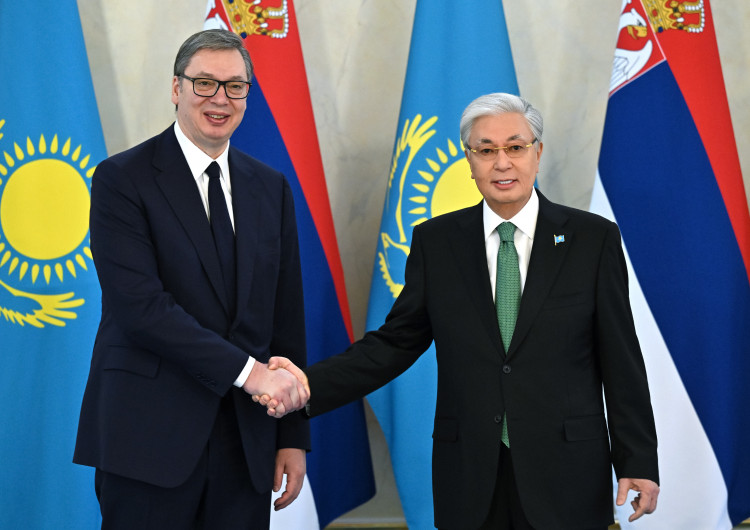
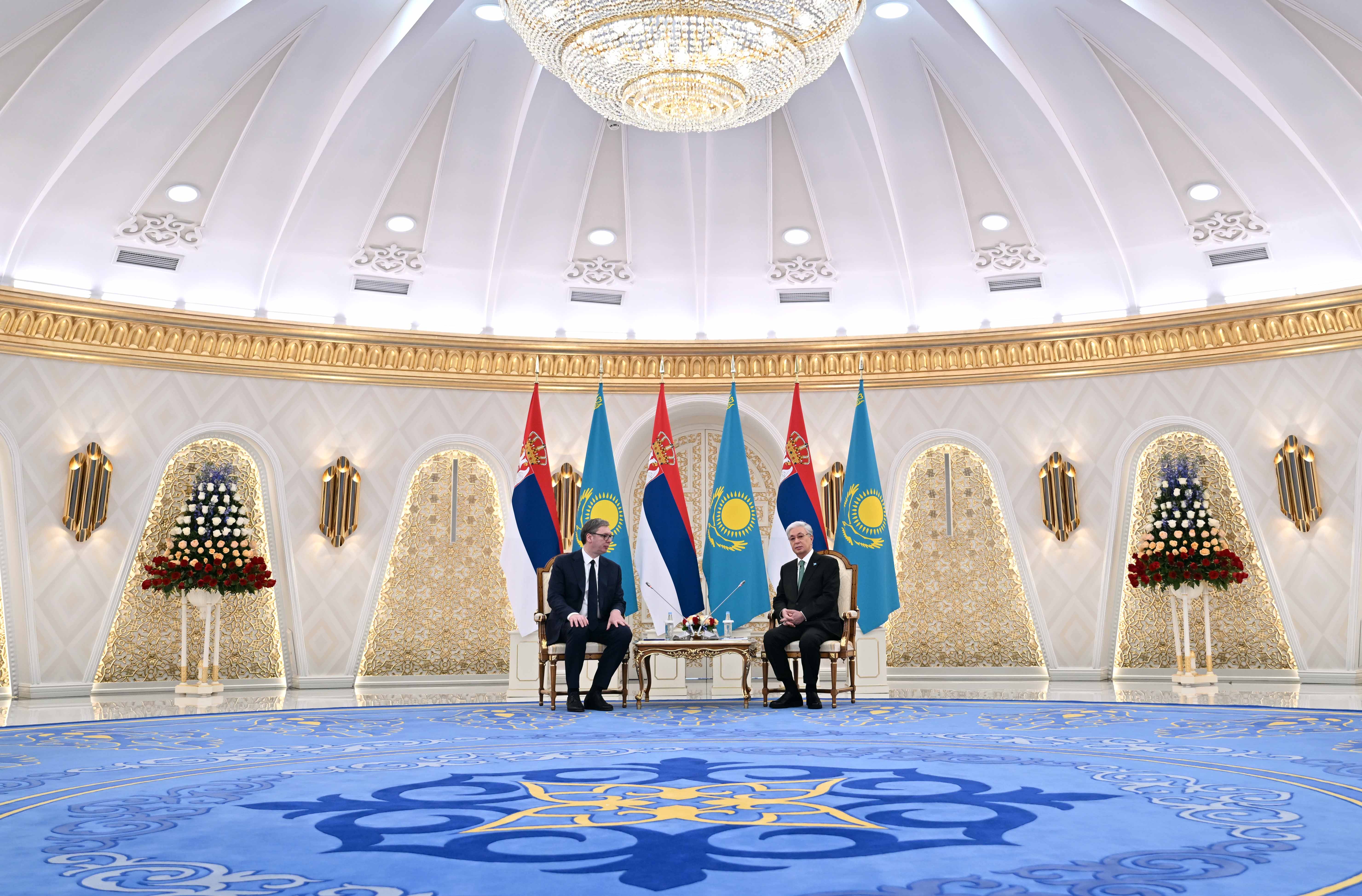
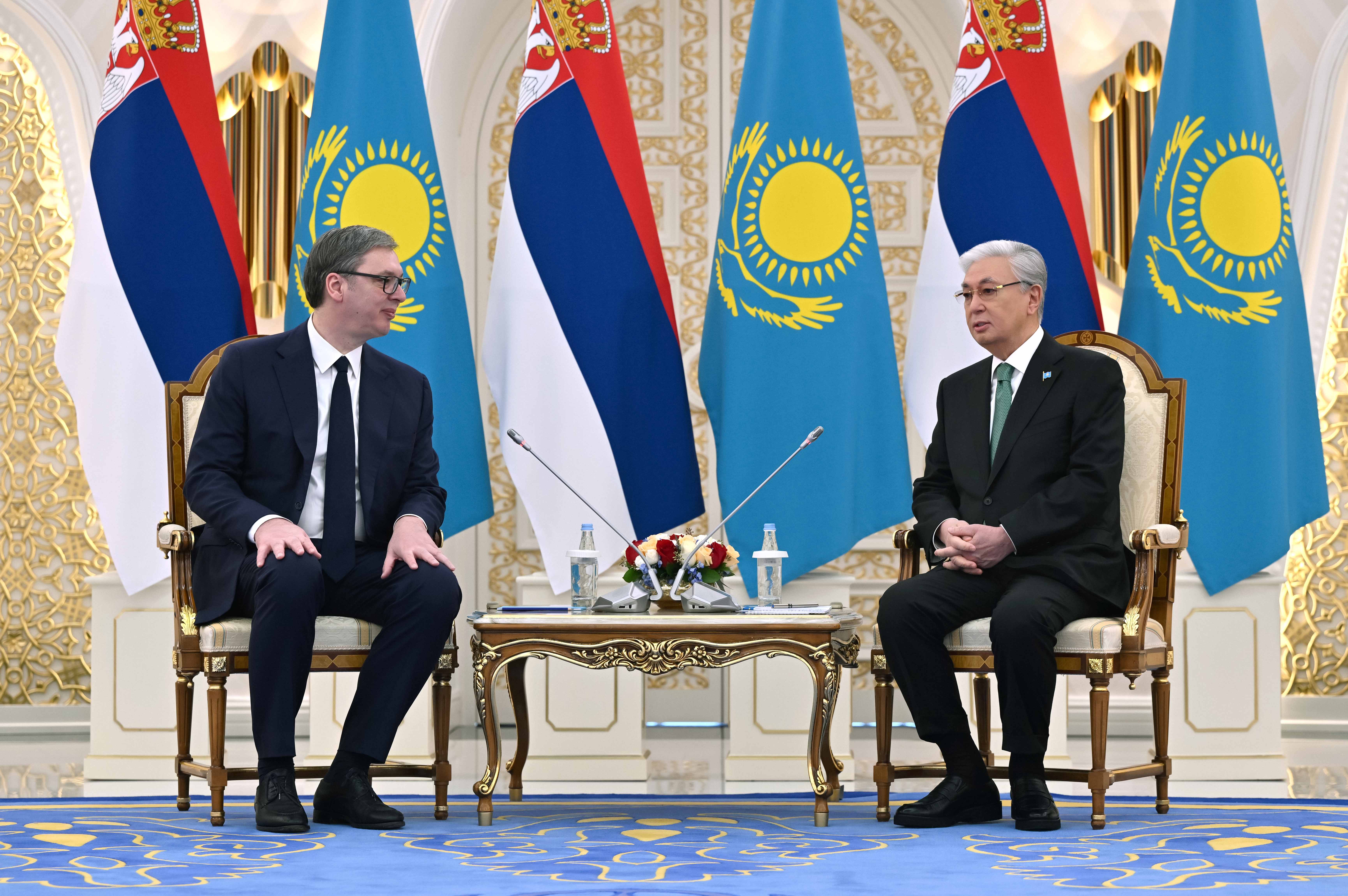
Astana turned into a stage for strategic diplomacy this week as President Kassym-Jomart Tokayev welcomed Serbian leader Aleksandar Vučić to the Akorda for an official visit — a meeting that may mark a new phase in relations between Central Asia and the Balkans, DKNews.kz reports.
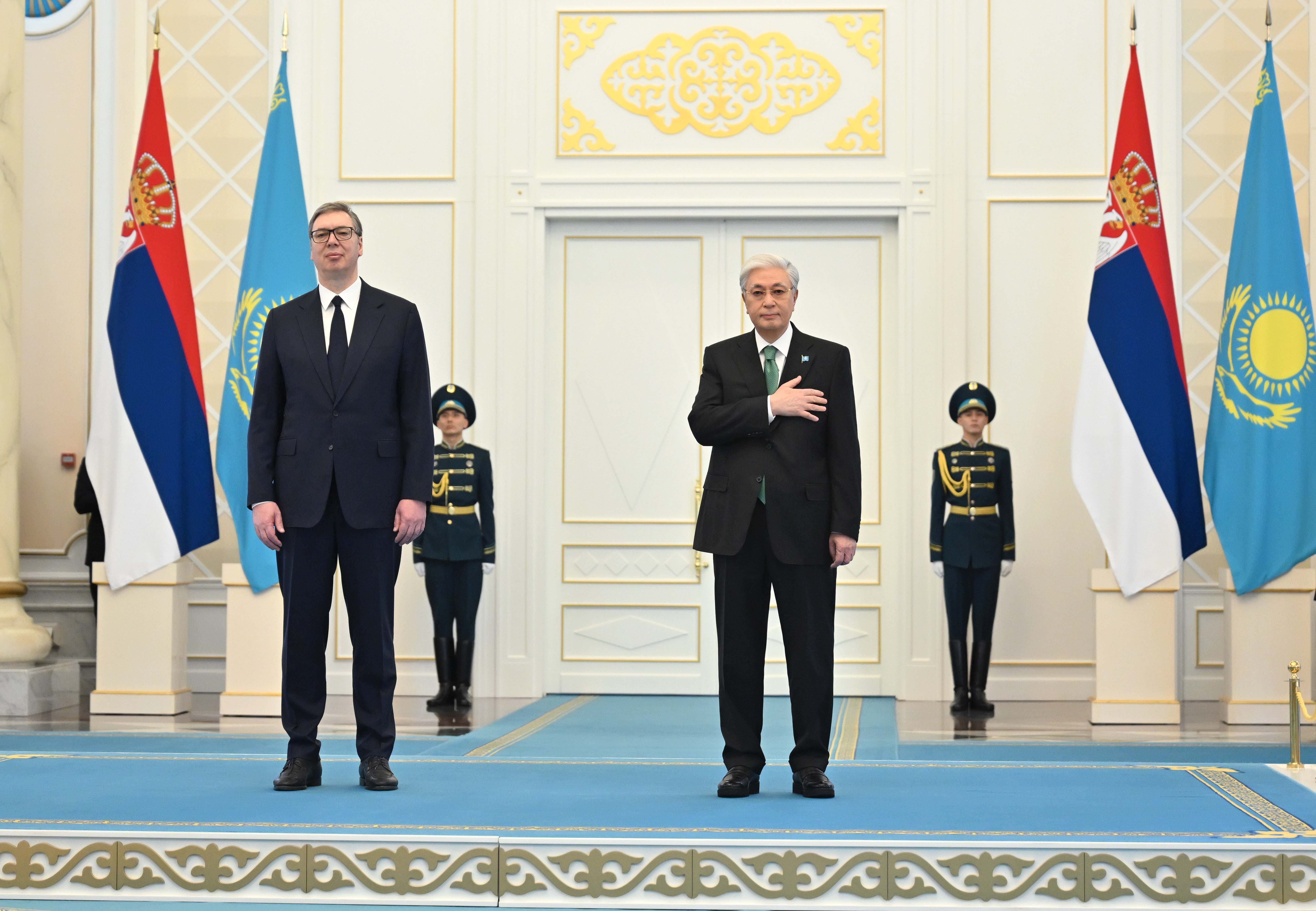
A ceremonial honor guard, national anthems, and formal introductions set the tone. But beyond the protocol, the message was clear: Kazakhstan and Serbia are ready to deepen cooperation — not just politically, but economically, technologically, and strategically.
Why This Visit Matters
The timing is symbolic. Kazakhstan and Serbia are approaching the 30th anniversary of diplomatic relations, and both leaders emphasized that their partnership has matured into something strategic.
“Kazakhstan regards Serbia as a very important strategic partner in Europe,” Tokayev stated, highlighting expanding economic ties, humanitarian cooperation, and growing business engagement.
More than 60 Serbian companies now operate in Kazakhstan, and trade relations are steadily increasing. The recent launch of a direct Astana–Belgrade flight is expected to accelerate business, tourism, and cultural exchanges.
But this visit wasn’t about ceremonial speeches alone — it was about future-oriented cooperation.
From Artificial Intelligence to Energy: A Broader Agenda
President Vučić did not hide his ambitions. He openly expressed interest in elevating cooperation in:
- Artificial Intelligence
- Information technologies
- Energy
- Defense industry
- Data centers
- Construction and infrastructure
“I believe our friendship will reach a new level,” Vučić said, signaling Serbia’s readiness to expand economic cooperation and attract Kazakh investment.
One of the more sensitive topics discussed was the unresolved issue of granting fifth freedom air rights to Kazakhstan’s airline SCAT — a technical but important matter that could significantly enhance air connectivity between Europe and Central Asia.
Both sides expressed confidence that the issue can be resolved through dialogue.
Business First: Economic Cooperation at the Core
The economic dimension dominated the talks.
The Presidents reviewed cooperation in:
- Trade and investment
- Transport and logistics
- Agriculture
- Critical minerals
- Digitalization
- Construction
- Tourism
Tokayev praised the work of the Intergovernmental Commission on Trade and Economic Cooperation, while also welcoming a strong Serbian business delegation to Astana.
A meeting of the Kazakhstan–Serbia Business Council was held just a day before the high-level talks — a signal that both governments are backing diplomacy with practical economic tools.
Serbia expressed particular interest in involving Kazakh companies in major construction projects, potentially turning them into flagship initiatives not only for Serbia but for the broader Balkan region.
Strategic Alignment on the Global Stage
Beyond economics, the leaders underlined shared views on major international issues. Tokayev thanked Serbia for supporting Kazakhstan’s international initiatives — a subtle but important diplomatic gesture.
Vučić, in turn, praised Kazakhstan’s socio-economic progress, calling it “a symbol of development for the entire world.”
This exchange reflects a broader geopolitical reality: Kazakhstan continues to position itself as a bridge between Europe and Asia, while Serbia seeks diversified partnerships beyond its immediate region.
A Partnership With Momentum
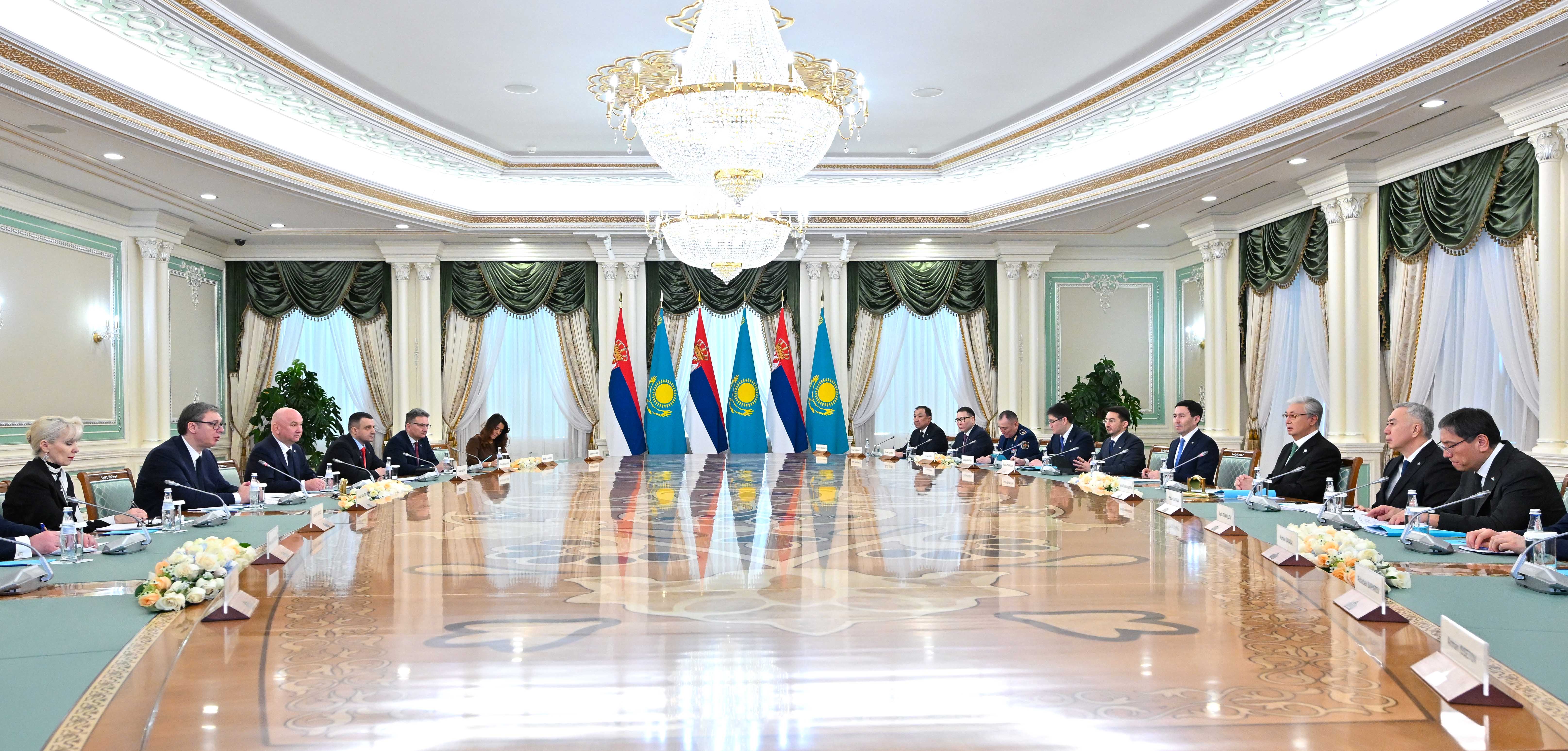
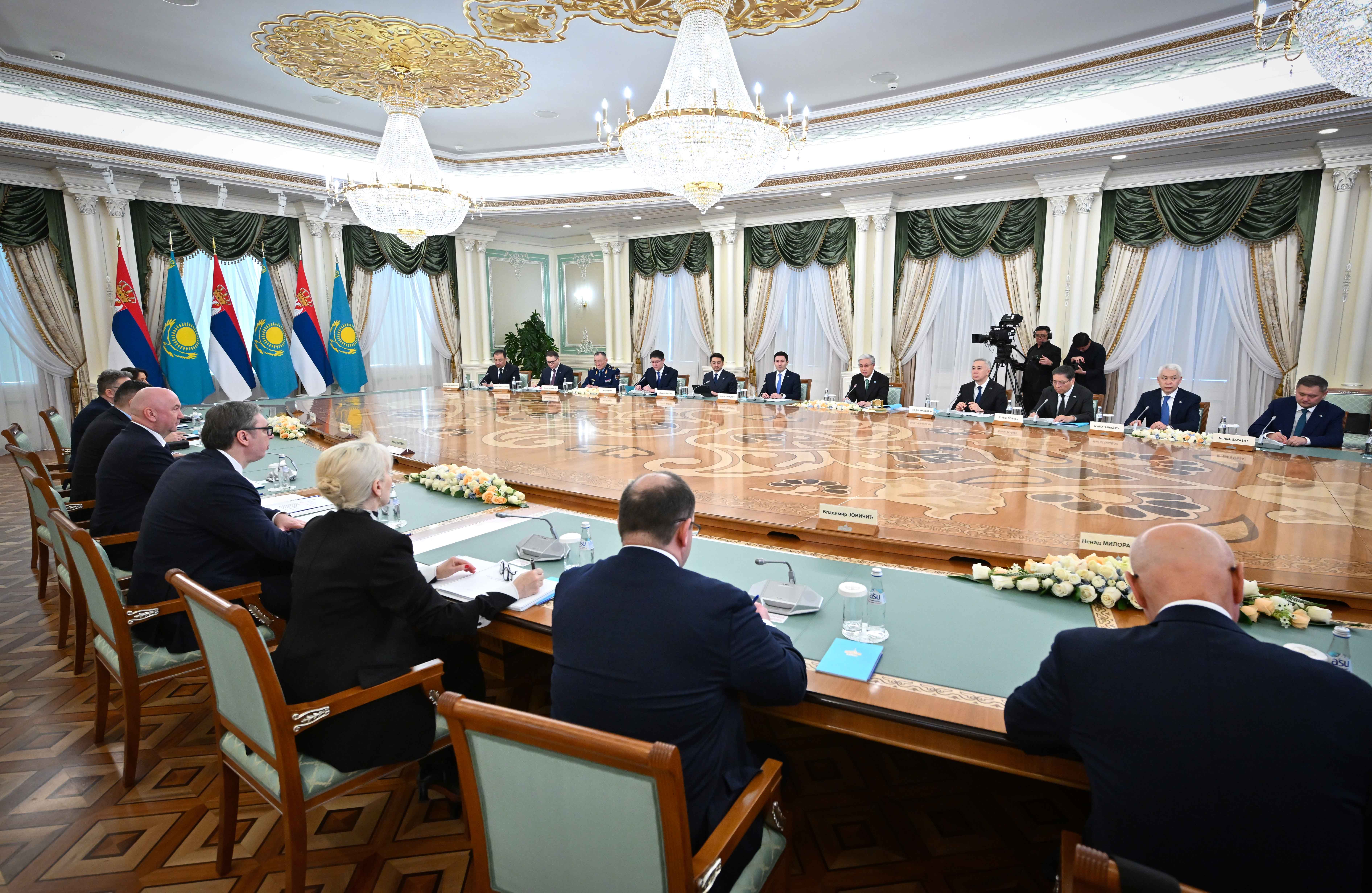
The expanded-format talks involving official delegations demonstrated that this was not a symbolic meeting but a working visit with substance.
Political dialogue between Astana and Belgrade remains constructive. Interparliamentary ties are strengthening. Government agencies and business communities are expanding contacts.
And with a direct flight now linking the two capitals, physical distance between Central Asia and the Balkans is shrinking.
What Comes Next?
If the agreements and discussions translate into concrete projects — particularly in AI, energy, logistics, and infrastructure — this visit could become a turning point.
The invitation extended by Vučić for Tokayev to visit Serbia suggests that diplomatic momentum will continue.
As Kazakhstan looks westward and Serbia looks eastward, their strategic intersection may become one of the more interesting emerging partnerships connecting Europe and Central Asia.
And judging by the tone in Akorda, both presidents are determined to make it happen.