
Kazakhstan and Indonesia are giving fresh momentum to their diplomatic ties, signaling a growing partnership between Central Asia and Southeast Asia, DKNews.kz reports.
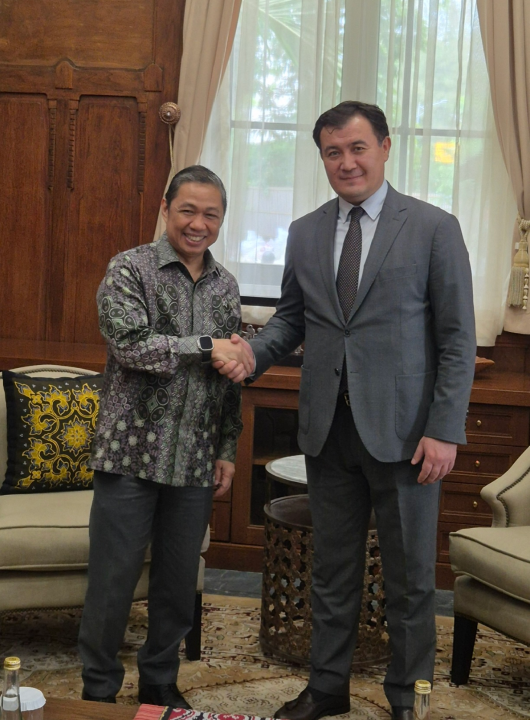
Deputy Minister of Foreign Affairs of Kazakhstan Alibek Bakayev paid a working visit to Jakarta this week, where he held high-level talks with Vice Minister of Foreign Affairs of Indonesia Anis Matta and Director General for Multilateral Cooperation Tri Tharyat.
But this was more than just a protocol meeting — it was a strategic dialogue about the future.
A Partnership Beyond Geography
At first glance, Kazakhstan and Indonesia may seem worlds apart. One is the largest landlocked country in the world, located in the heart of Eurasia. The other is the largest archipelago on the planet, stretching across Southeast Asia.
Yet both nations share something important: active diplomacy, growing economies, and influential roles in the Muslim world and multilateral institutions.
During the talks, the officials discussed expanding cooperation across political, trade, economic, cultural, and humanitarian spheres. The message was clear — relations are moving beyond formal friendship toward practical partnership.
Focus on the United Nations and the Islamic World
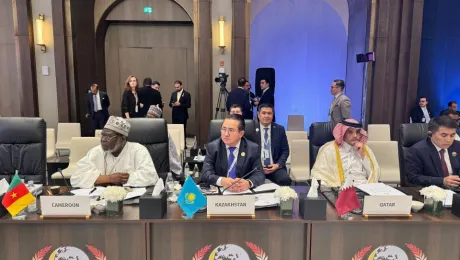
A key part of the discussion centered on strengthening cooperation within the United Nations and the Organization of Islamic Cooperation (OIC).
Kazakhstan has consistently positioned itself as a mediator and advocate for dialogue, while Indonesia plays a prominent diplomatic role in Southeast Asia and within the Islamic world. By coordinating positions in international organizations, both countries aim to amplify their voices on the global stage.
One of the important topics was the Palestinian issue. Both Kazakhstan and Indonesia participate in the Board of Peace and International Stabilization Forces, and their coordinated approach reflects shared principles regarding peace, sovereignty, and humanitarian concerns.
Water Security and Global Stability
Interestingly, water issues also featured prominently in the discussions — a topic of growing global concern.
For Kazakhstan, water security is a strategic priority due to regional climate challenges in Central Asia. Indonesia, meanwhile, faces its own environmental and climate-related pressures as a vast island nation. Cooperation in this area signals a forward-looking agenda focused on sustainability and long-term stability.
This reflects a broader trend: modern diplomacy is no longer limited to politics alone. Climate resilience, environmental security, and sustainable development are now core elements of foreign policy.
Mutual Support on the International Stage
The two sides also agreed to continue supporting each other’s international initiatives. In today’s complex geopolitical environment, strategic partnerships are built not only on trade flows but on coordinated diplomatic efforts.
For Kazakhstan, strengthening ties with Indonesia expands its presence in Southeast Asia. For Indonesia, closer cooperation with Kazakhstan deepens its engagement in Central Asia — a region gaining increasing global attention due to connectivity routes and geopolitical shifts.
What This Means Going Forward
The visit demonstrates that middle powers like Kazakhstan and Indonesia are actively shaping their own diplomatic agendas rather than waiting for global powers to set the tone.
As both countries continue to pursue multi-vector foreign policies, such dialogues become essential building blocks for broader cooperation across regions.
The agreement to maintain close interaction on international issues shows that this partnership is not symbolic — it is structured, strategic, and evolving.
In a world marked by uncertainty, expanding dialogue between emerging regional leaders may become one of the most important factors in maintaining global balance.
And this week in Jakarta, Kazakhstan and Indonesia took another confident step in that direction.