


Geneva — In a world where cyberattacks can paralyze cities, disrupt economies, and shake governments, one thing is becoming increasingly clear: cybersecurity no longer starts with software — it starts with infrastructure, DKNews.kz reports.
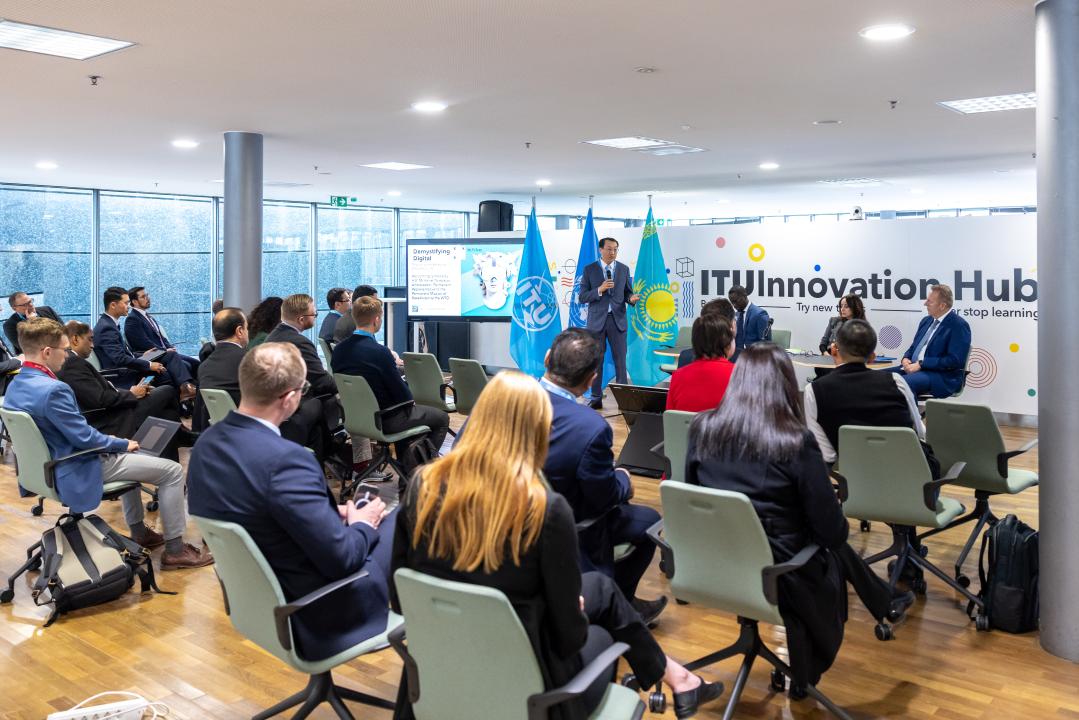
This idea took center stage in Geneva, where Kazakhstan’s Permanent Mission to the World Trade Organization, together with the International Telecommunication Union (ITU), hosted a timely and forward-looking briefing titled “Telecommunications as the Backbone of Cybersecurity.”
Why telecom matters more than ever
At first glance, cybersecurity is often associated with firewalls, encryption, and hackers. But experts at the event made a deeper point: none of these protections matter if the underlying telecommunications infrastructure is weak.
Think of telecom networks as the “roads” of the digital world. If those roads are unstable, everything built on top — from banking apps to government services — becomes vulnerable.
Kazakhstan’s Permanent Representative, Kairat Torebayev, put it simply: strong and resilient telecom infrastructure is not just technical — it is economic. It underpins the entire digital economy.
And in today’s reality, where even a brief outage can cost millions, resilience is no longer optional.
A global problem that requires global solutions
One of the key themes in Geneva was cooperation.
Cyber threats don’t respect borders. A vulnerability in one country can quickly become a global issue. That’s why international organizations like the ITU are pushing for coordinated approaches — shared standards, joint responses, and collective resilience.
Experts at the briefing highlighted growing challenges:
- Increasingly sophisticated cyberattacks
- Rising dependence on digital services
- Expanding attack surfaces with 5G and IoT
The takeaway? No country can tackle cybersecurity alone anymore.

Kazakhstan’s digital leap — more than just ambition
What made the discussion particularly interesting was Kazakhstan’s own transformation story.
Over the past few years, the country has been quietly building one of the most advanced digital ecosystems in the region.
Some numbers stand out:
- 1,300+ public services available online
- 24th place globally in the UN E-Government Development Index
- $2.5 billion invested in telecom infrastructure in just three years
But beyond the цифры, there is a clear strategy.
Damir Seissembekov, head of the Telecommunications Committee, emphasized that telecom development isn’t just a sector — it’s a driver of everything else: digital government, fintech, education, and even national security.
The bold goal: 100% internet coverage
Perhaps the most ambitious part of Kazakhstan’s plan is the “Accessible Internet” national project.
The goal is straightforward but powerful:
100% internet coverage across the country by 2027
In a nation with vast степи and remote regions, this is no small task.
But the implications are huge:
- Equal access to digital services
- Reduced urban-rural divide
- Stronger national cybersecurity through unified infrastructure
Because here’s the key insight — fragmented networks are harder to secure. A fully connected system is not just more inclusive, but also more defensible.
From infrastructure to influence
What happened in Geneva wasn’t just another дипломатическая встреча.
It signals something bigger: Kazakhstan is positioning itself as an active player in shaping global digital policy — not just following trends, but contributing to them.
By linking telecom development directly with cybersecurity, the country is aligning itself with one of the most important conversations of the next decade.
The bigger picture
As the world becomes more digital, the line between infrastructure and security continues to blur.
The message from Geneva is clear:
- Cybersecurity starts long before a cyberattack
- It begins with how networks are built
- And it depends on how countries work together
In that sense, telecommunications is no longer just about connectivity — it’s about protection, stability, and trust.
And for Kazakhstan, this is not just a policy direction.
It’s a strategic bet on the future.