

Kazakhstan and India are entering a new phase of partnership—one that blends tradition with technology, diplomacy with business, and shared history with future ambitions, DKNews.kz reports.
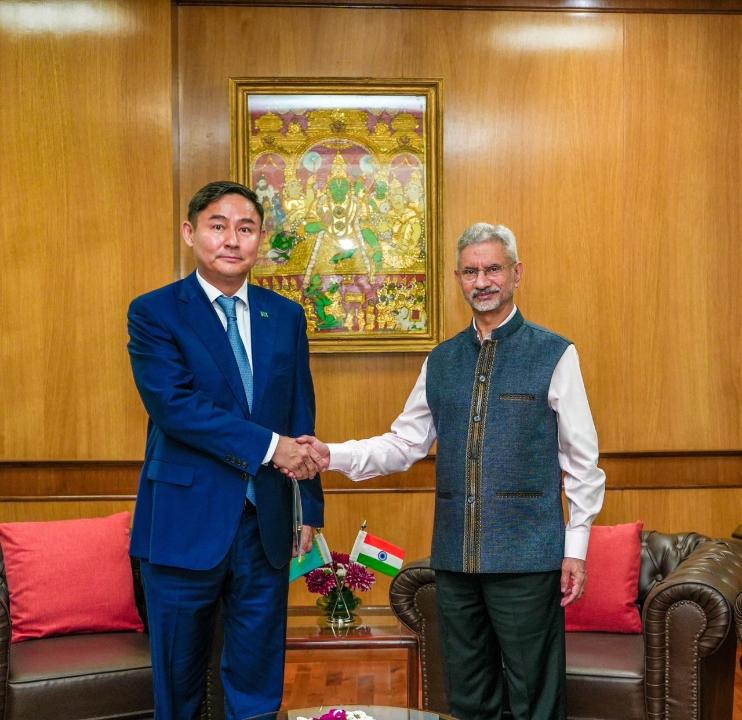
A recent meeting between Kazakhstan’s Ambassador to India, Azamat Yeskarayev, and India’s Minister of External Affairs, Subrahmanyam Jaishankar, signals that relations between the two countries are not just stable—they are accelerating.
More Than Diplomacy: A Relationship Rooted in History
At first glance, Kazakhstan and India may seem like distant partners. But as Ambassador Yeskarayev emphasized, the connection goes far beyond formal agreements.
For over 30 years, the two nations have built diplomatic ties—but their relationship is also shaped by deeper cultural and civilizational links dating back centuries along ancient trade routes.
And today, that historical connection is evolving into something far more strategic.
A Symbolic Moment for New Beginnings
The timing of the meeting was not случайный. It coincided with Chaitra Navratri and the Hindu New Year—symbols of renewal in Indian culture.
Yeskarayev used this moment deliberately, framing the current stage of cooperation as a “new beginning” for Kazakhstan–India relations.
On the other side, Jaishankar reciprocated warmly, congratulating Kazakhstan on Nauryz, the spring festival that marks renewal across Central Asia.
The message from both sides was clear: this partnership is entering a fresh chapter.
Energy, Uranium, and Strategic Interests
Behind the diplomatic language lies something very concrete—energy.
India, one of the fastest-growing economies in the world, is actively seeking reliable energy partners. Kazakhstan, rich in natural resources, is a natural fit.
During the talks:
- India expressed strong interest in long-term oil and gas contracts
- The uranium cooperation agreement was highlighted as a key success
- Both sides acknowledged the importance of energy security amid instability in the Middle East
This is not just trade—it’s strategic alignment.
From AI to Global Platforms
One of the most interesting aspects of the discussion is how future-focused the partnership has become.
Kazakhstan’s Prime Minister recently visited India for the India AI Impact Summit 2026, signaling a shift toward:
- Digital transformation
- Artificial intelligence
- Technological collaboration
This suggests that Kazakhstan is not just positioning itself as a resource partner—but as a participant in the global tech ecosystem.
BRICS and Big Diplomacy
Another major topic was BRICS, where India holds the chairmanship in 2026.
Plans are already being discussed for a potential state visit by President Kassym-Jomart Tokayev to New Delhi, possibly aligned with the BRICS Summit in September.
If it happens, this could become a defining moment:
- Elevating Kazakhstan’s role in global platforms
- Strengthening Central Asia–South Asia connections
- Expanding influence beyond regional borders
Business Giants Enter the Picture
The partnership is also moving into the corporate world.
Kazakhstan is looking to deepen ties with major Indian conglomerates such as:
- Tata Group
- Reliance Industries
This could mean:
- New investments in Kazakhstan
- Joint industrial and infrastructure projects
- Stronger private-sector cooperation
What It All Means
This meeting wasn’t just another дипломатическая встреча. It revealed a bigger trend:
Kazakhstan is actively diversifying its global partnerships
India is looking north toward Central Asia for energy and influence
Both countries are aligning in a world that is rapidly changing
From uranium to AI, from cultural diplomacy to global summits—the Kazakhstan–India relationship is becoming multi-layered and future-oriented.
The Bottom Line
In a time of global uncertainty, partnerships like this matter more than ever.
Kazakhstan and India are not just strengthening ties—they are redefining what cooperation looks like in the 21st century.
And if the current momentum continues, this partnership may soon become one of the most important bridges between Central and South Asia.