


Mangystau has gained global status.
Five rock-cut mosques in Kazakhstan have been inscribed on the UNESCO World Heritage List. Along with international recognition, however, the region now faces strict requirements governing restoration, construction and tourism pressure.
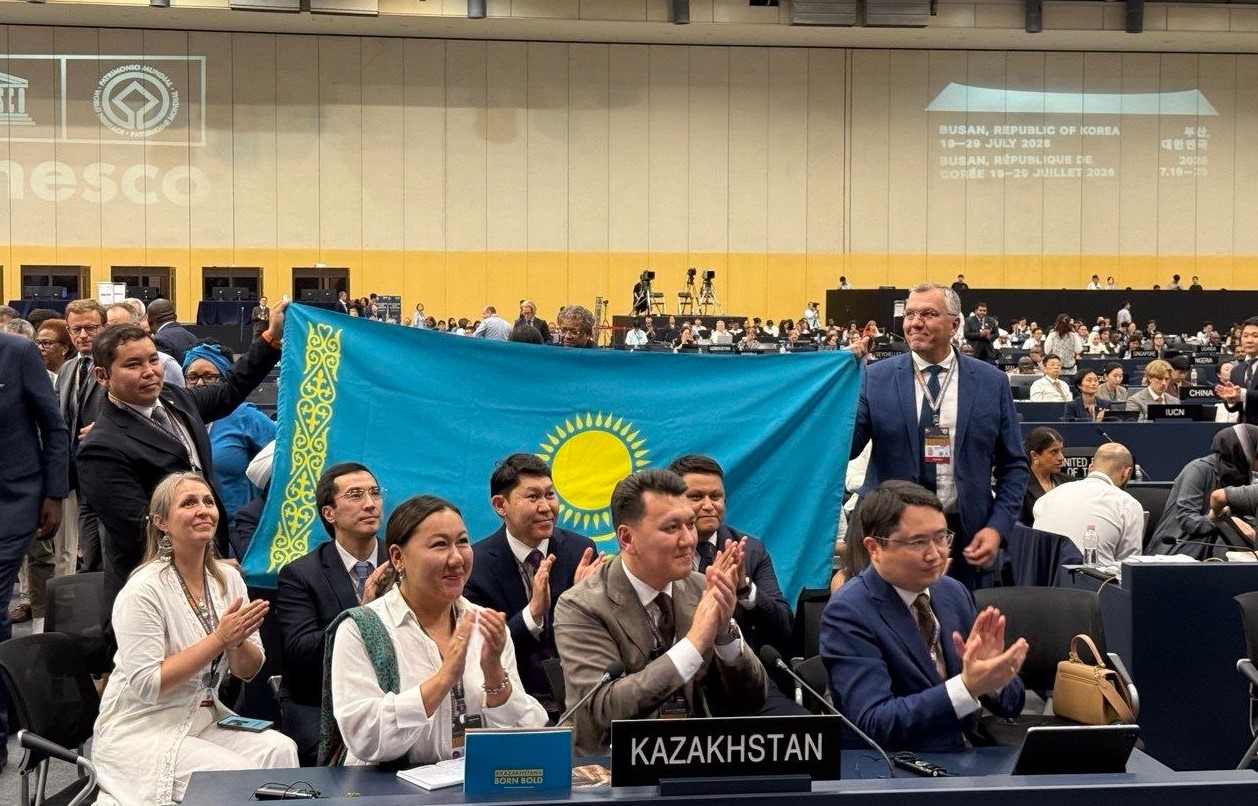
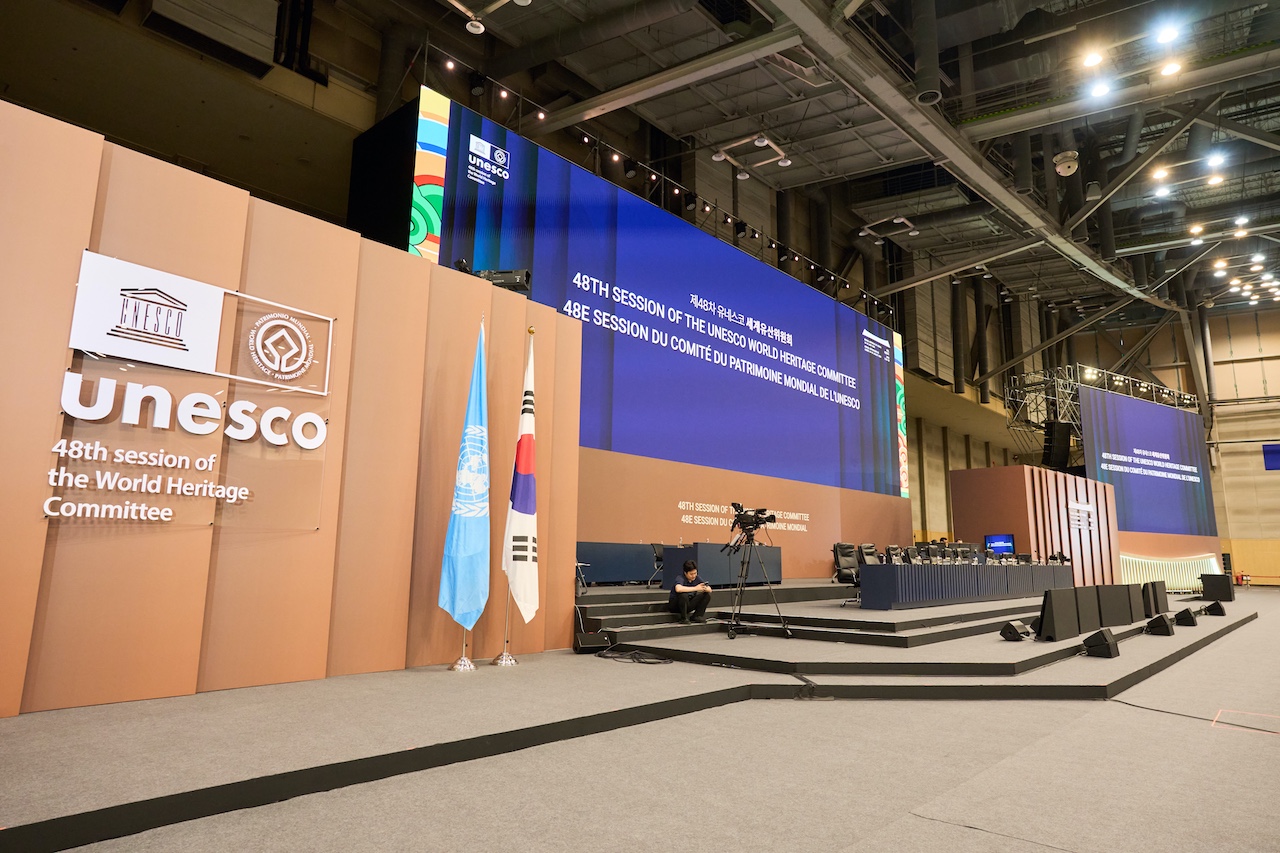
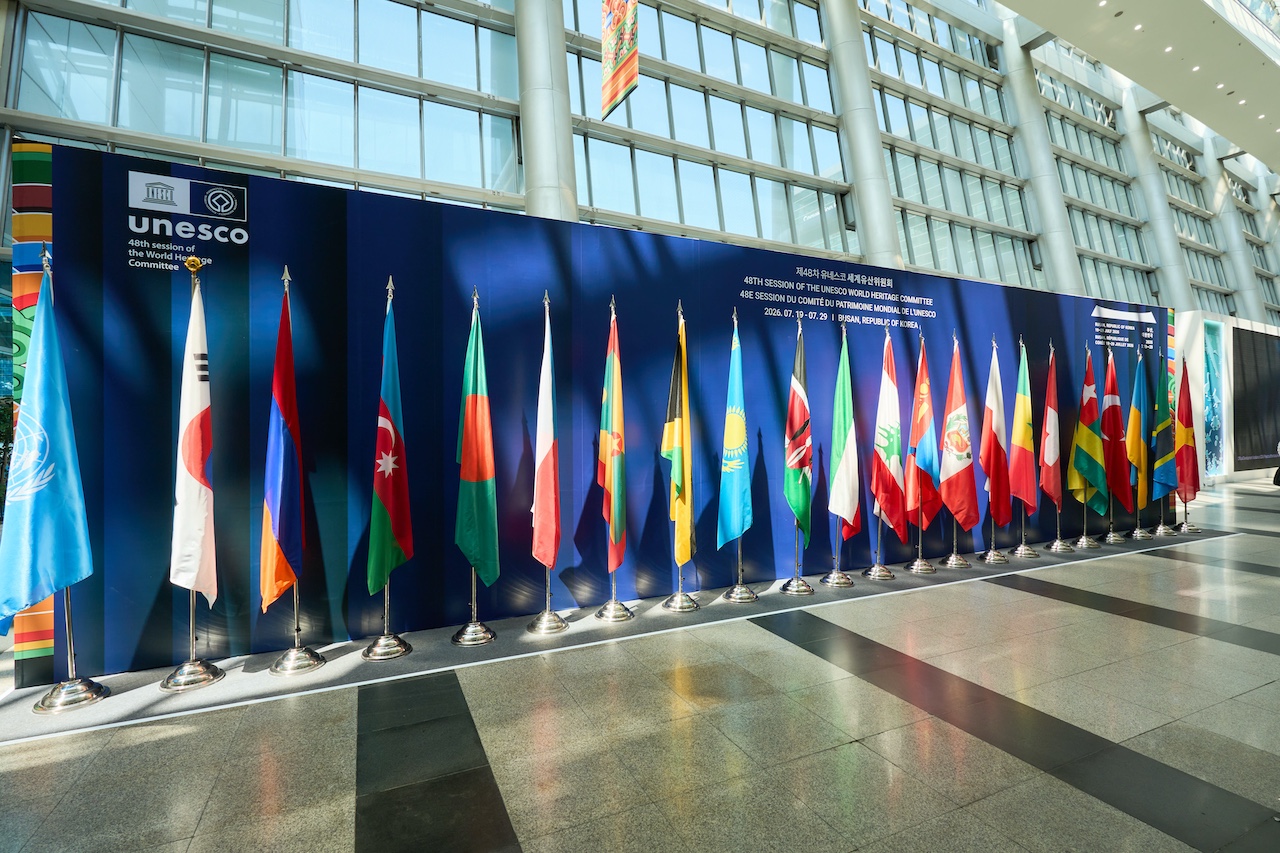
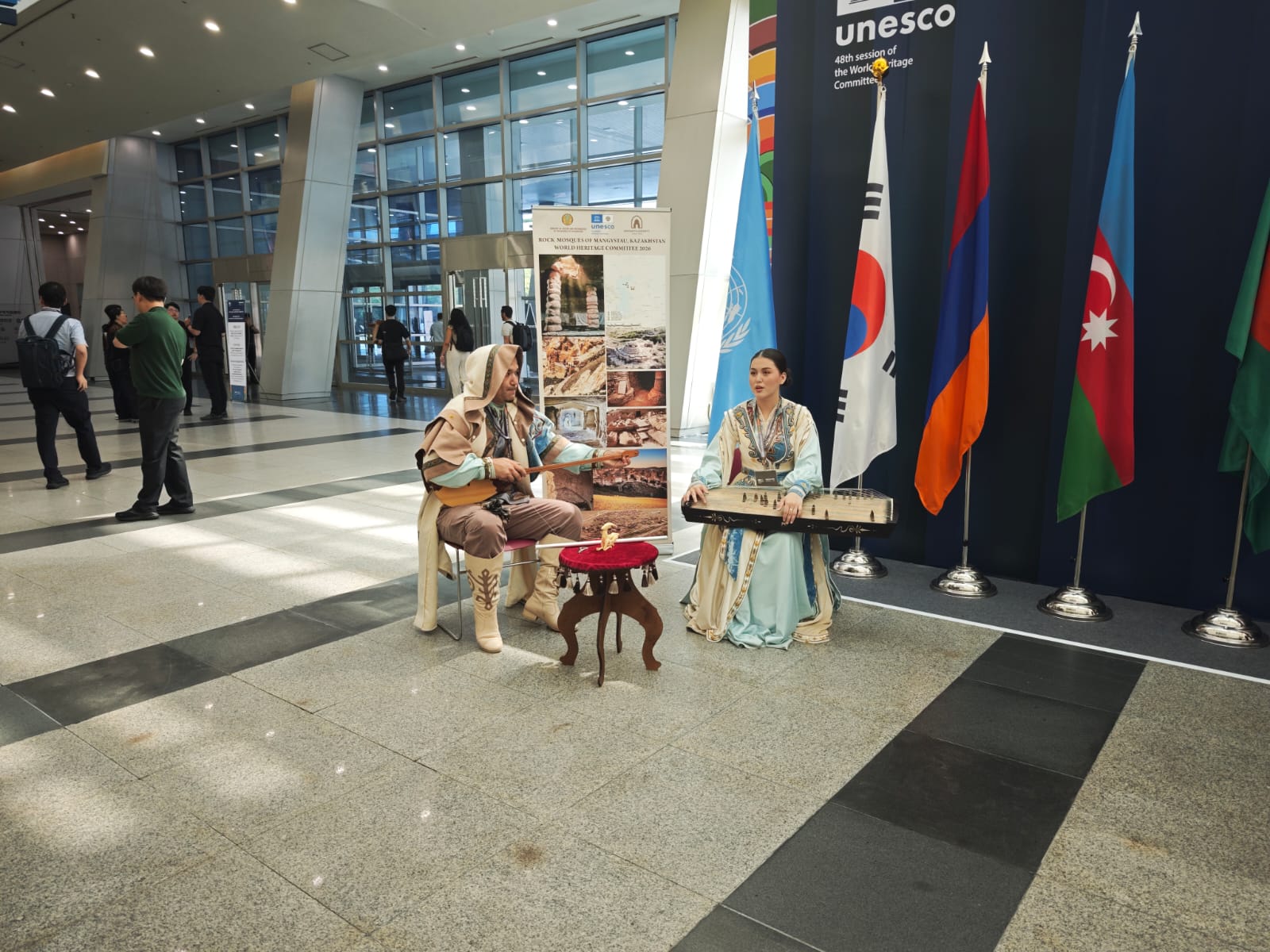
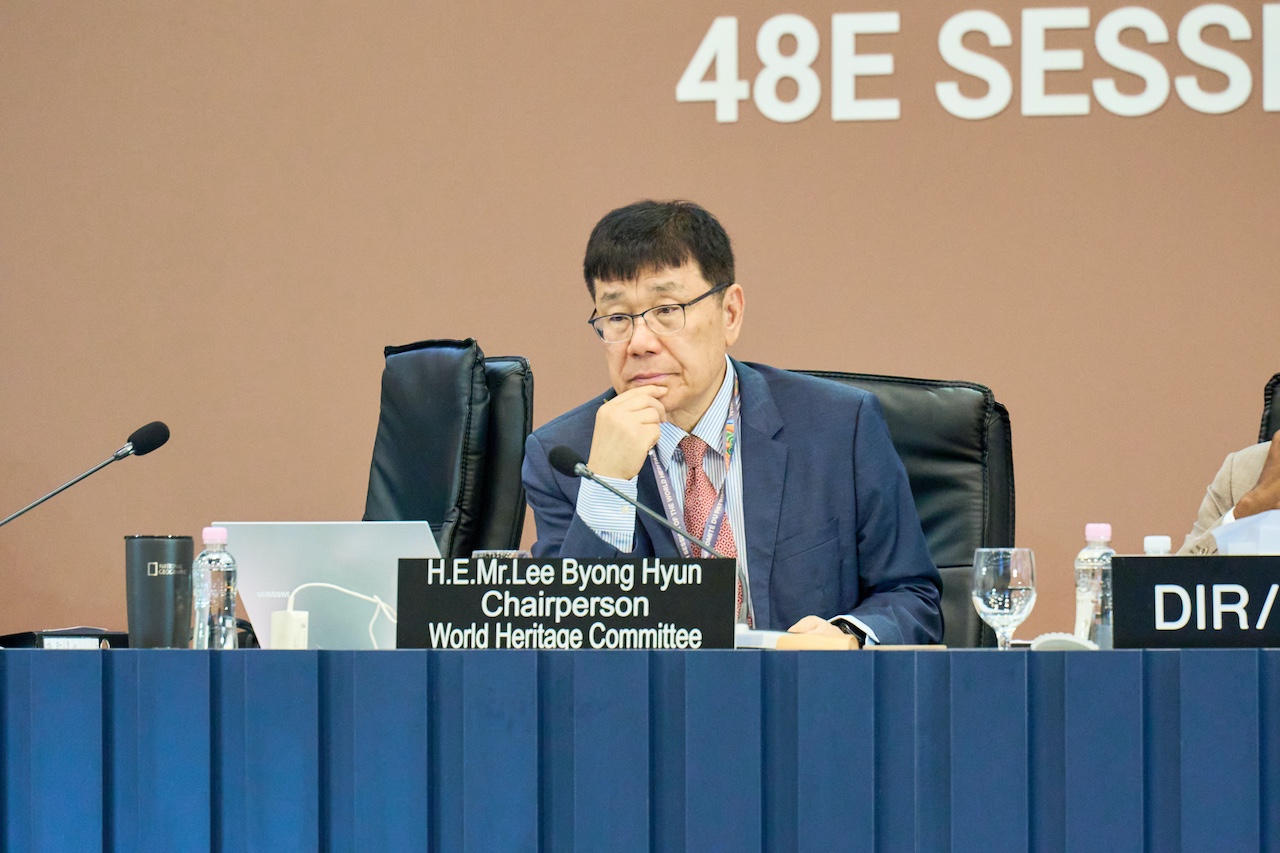
The decision was adopted on July 25 at the 48th session of the World Heritage Committee in Busan. A DKNews.kz correspondent attended the session in South Korea.
The new serial property comprises Beket-Ata, Shopan-Ata, Karaman-Ata, Shakpak-Ata and Sultan-Epe. These are not five separate nominations but a single sacred landscape connected by Sufi traditions, pilgrimage routes, necropolises and the culture of nomadic communities.
Beket-Ata Could Have Been Left Off the List
The final decision went considerably further than the initial draft.
The document prepared for the Committee on the basis of the ICOMOS evaluation proposed inscribing only four complexes. Beket-Ata was to be excluded, while the entire nomination would have been recognized under only UNESCO criterion (iii).
The situation changed after an amendment was introduced. Azerbaijan submitted it, with Poland as co-author.
The amendment restored Beket-Ata to the nomination and added criterion (ii). The Committee ultimately inscribed all five sacred sites and recognized their value under criteria (ii) and (iii).
Criterion (ii) means that the property demonstrates an important exchange of cultural and spiritual values over several centuries. In Mangystau, the Yasawi Sufi tradition interacted with Turkic nomadic beliefs concerning sacred landscapes, ancestor veneration and spiritual leaders.
Criterion (iii) recognizes the sites as exceptional testimony to a living cultural tradition. Their importance extends beyond ancient walls: pilgrimages continue, while shyrakshy still welcome visitors, care for the sacred places and pass their traditions to the next generation.
The First National Cultural Inscription in 22 Years
The sacred sites of Mangystau have become Kazakhstan’s seventh property on the World Heritage List.
The country’s previously inscribed properties are the Mausoleum of Khoja Ahmed Yasawi, the Petroglyphs of the Archaeological Landscape of Tamgaly, Saryarka, Western Tien-Shan, the Cold Winter Deserts of Turan and the Silk Roads: the Routes Network of the Chang’an-Tianshan Corridor.
Mangystau is Kazakhstan’s first national, rather than transboundary, cultural property to be inscribed in 22 years.
The Kazakh delegation in Busan was led by Erlan Karin, First Deputy Head of the Presidential Administration and Chair of Kazakhstan’s National Commission for UNESCO and ISESCO.
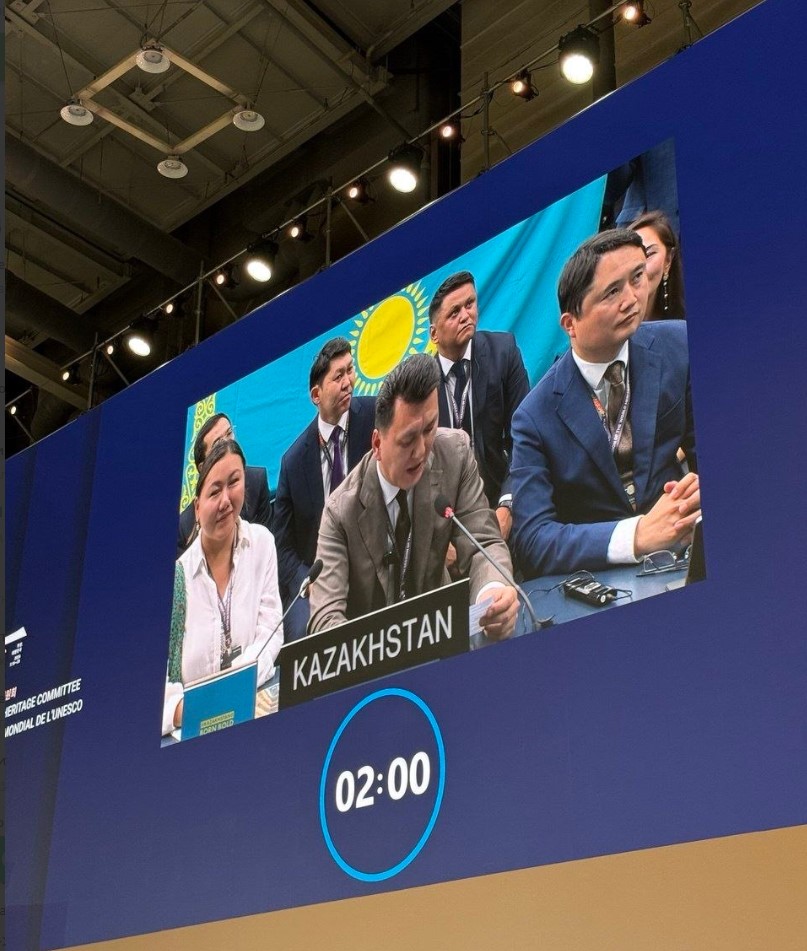
“This is a landmark event in the history of Kazakhstan. The last time a site belonging to our national cultural heritage was included on the prestigious UNESCO list was 22 years ago. The Mausoleum of Khoja Ahmed Yasawi was inscribed in 2003, followed by the Tamgaly Petroglyphs in 2004. In recent years, this work has been revived at the President’s initiative and brought to a qualitatively new level.
In particular, during the third meeting of the National Kurultai in Atyrau in 2024, Kassym-Jomart Tokayev instructed the relevant authorities to begin the process of inscribing the rock-cut mosques of Mangystau on the UNESCO World Heritage List.”
Karin stressed that a place on the UNESCO list brings more than prestige.
“Taking our rightful place on the UNESCO list is a source of great pride for us. At the same time, this historic achievement places an enormous responsibility on us.”
What Exactly Has UNESCO Recognized?
The inscribed property covers 91.88 hectares. A further 501.75 hectares form its buffer zone, where any economic or construction activity must account for potential effects on the sacred sites and surrounding landscape.
The complexes were created in natural caves, carved into rock faces or excavated into the ground. They contain prayer halls, mihrabs, rooms for contemplation and the tombs of revered spiritual leaders.
The nomination’s value, however, is not confined to the mosques.
The property also includes necropolises, courtyards, wells, sacred trees and pilgrimage paths. Its burial sites span an immense historical period, from the 10th to the 20th century.
UNESCO considers these elements a single system. Removing the landscape, the pilgrim’s journey or the role of the shyrakshy would strip the property of part of the meaning for which it received global recognition.
Funding Will Not Arrive Automatically
Inscription on the World Heritage List does not mean UNESCO will immediately provide Kazakhstan with money for roads, hotels or restoration.
The World Heritage Fund distributes approximately $3 million annually among applications submitted by States Parties, prioritizing properties facing the most serious threats. International assistance requires a separate application and justification for each project.
The main resource offered by the new status is visibility.
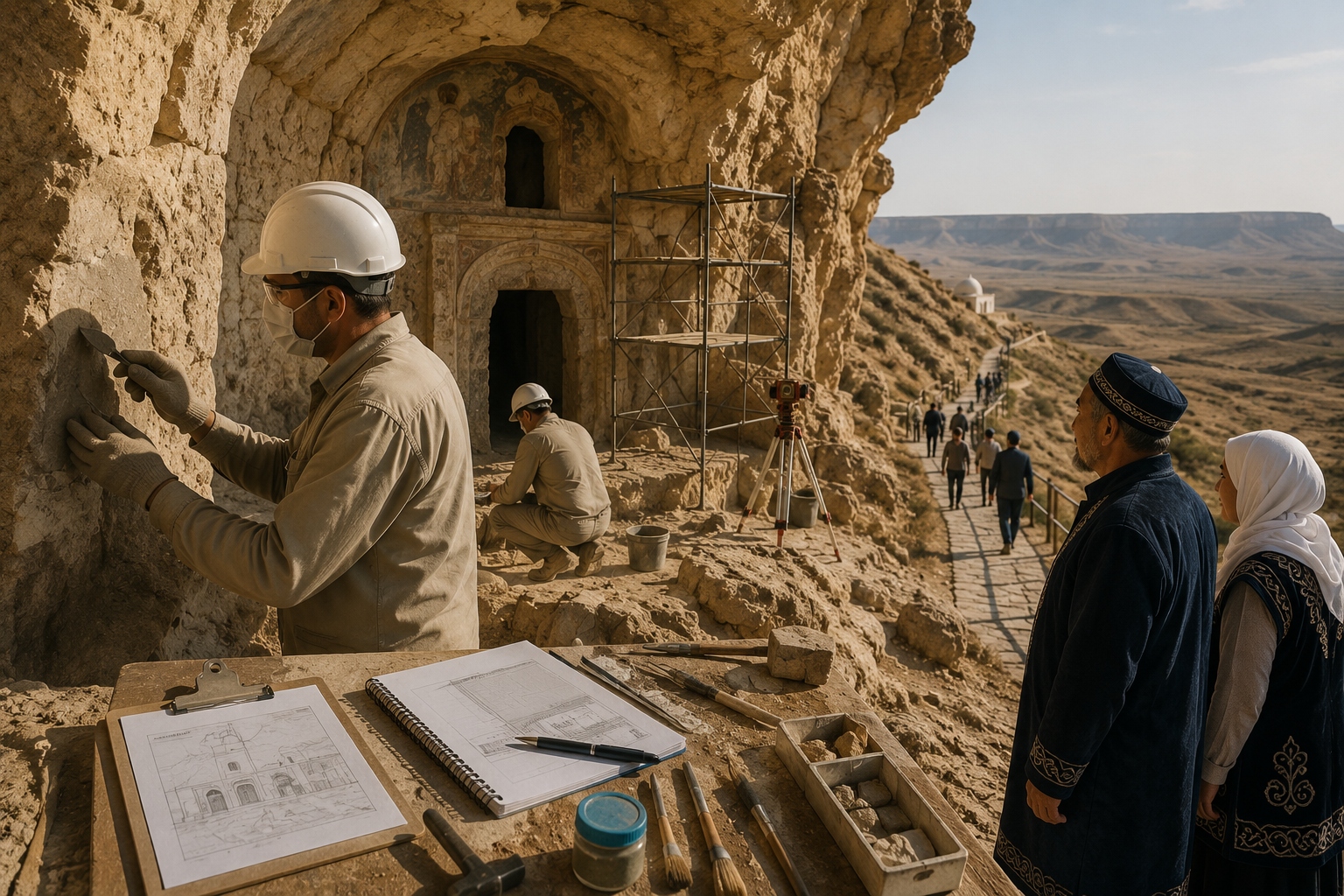
Mangystau will now appear in international catalogues, tourism routes, academic research and educational programmes. This could attract pilgrims, researchers and travellers who previously associated the region mainly with Bozzhyra, the Caspian Sea and its otherworldly desert landscapes.
Hotels, transport companies, guides, artisans and restaurants could all benefit. But that economic effect will materialize only if the region develops the necessary infrastructure without turning sacred places into ordinary tourist attractions.
“The inclusion of these historic properties on the UNESCO list will draw even greater international attention to Kazakhstan, provide fresh momentum for domestic tourism and open opportunities for infrastructure projects,” Karin said.
Construction Will Require Greater Caution
A new road, hotel, car park or visitor centre near the sacred sites can no longer be approved solely on economic grounds.
Projects within the property, its buffer zones and immediate surroundings will require a Heritage Impact Assessment. The assessment must determine whether construction could damage the historic landscape, tranquillity or spiritual character of the site.
The Committee also called for upgraded facilities for tourists and pilgrims. These include sanitation, navigation, security, rest areas and systems for managing visitor flows.
The objectives can conflict. Visitors need roads and basic amenities, but excessive construction could destroy the seclusion that forms part of the property’s value.
UNESCO Raises Concerns About Cement
One of UNESCO’s most specific recommendations concerns restoration.
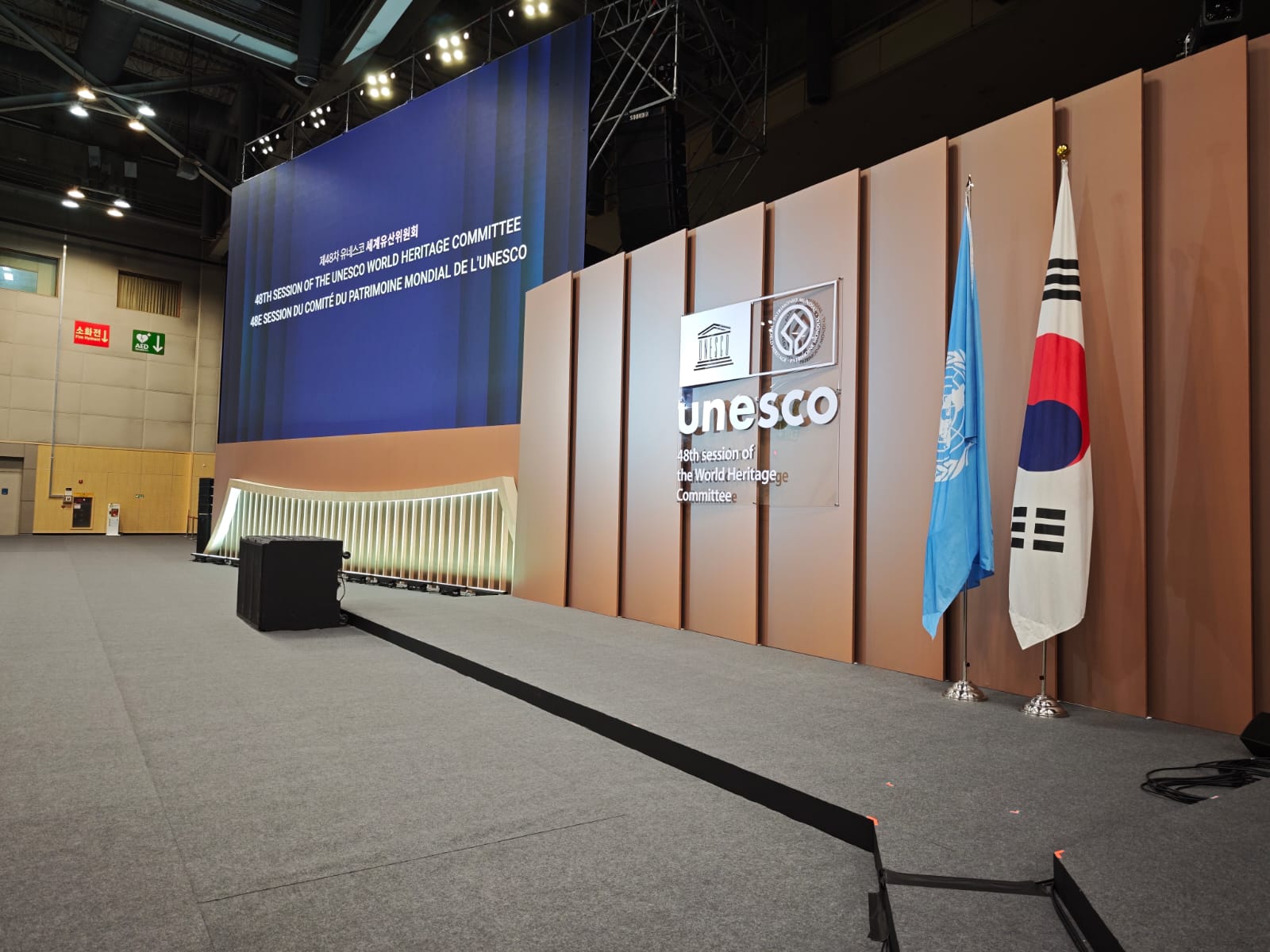
Experts urged Kazakhstan to reconsider the use of cement mortar and other modern materials. Such interventions could alter the historic fabric of the rock-cut spaces and eventually undermine their authenticity.
Every restoration project will now require detailed documentation. Specialists must study the materials, record the condition of the monuments and select methods compatible with the rock and historic architecture.
Poor restoration can be more dangerous to a World Heritage property than natural deterioration. Applying new mortar is easy; removing it without damaging an ancient surface can be almost impossible.
Kazakhstan Has a Plan Through 2032
An integrated management plan for the five complexes is being developed for 2027–2032.
It must cover conservation, protection of the natural landscape, visitor management, scientific research and disaster risk preparedness.
The identified risks include earthquakes, climate change, water pollution, unauthorized archaeological activity and tourism pressure. A dedicated monitoring system must show how these factors affect each complex.
Management cannot be left solely to officials and restoration specialists. UNESCO has recognized the special role of shyrakshy and local communities.
The shyrakshy preserve codes of conduct, welcome pilgrims and maintain the living connection between the sacred sites and the people. Remove that connection, and the architectural monuments may remain, but the tradition itself will disappear.
The Real Test Began After the Victory
Securing UNESCO status is difficult. Preserving its meaning is even harder.
Mangystau could become one of Central Asia’s leading destinations for cultural and pilgrimage tourism. To achieve this, the region needs better roads, trained guides, digital navigation, sanitation and transparent rules for businesses.
Visitor numbers, however, must not become the sole measure of success.
In several years, the outcome of the Busan decision will be judged differently: whether the rock-cut chambers remain intact, whether the landscape is protected, whether local communities participate in management, and whether pilgrims can still experience a sacred place rather than a tourist attraction.
Mangystau has received global recognition. Kazakhstan must now prove that it can preserve it.