
South Korea exports more than technology.
From 2026 to 2030, Seoul will provide UNESCO with KRW 5 billion — more than $3 million — to preserve World Heritage, train specialists and strengthen cooperation between countries, DKNews.kz reports.
Kazakhstan could become one of the programme’s partners. The first area has already been identified: Western Tien-Shan, which Kazakhstan manages jointly with Kyrgyzstan and Uzbekistan.
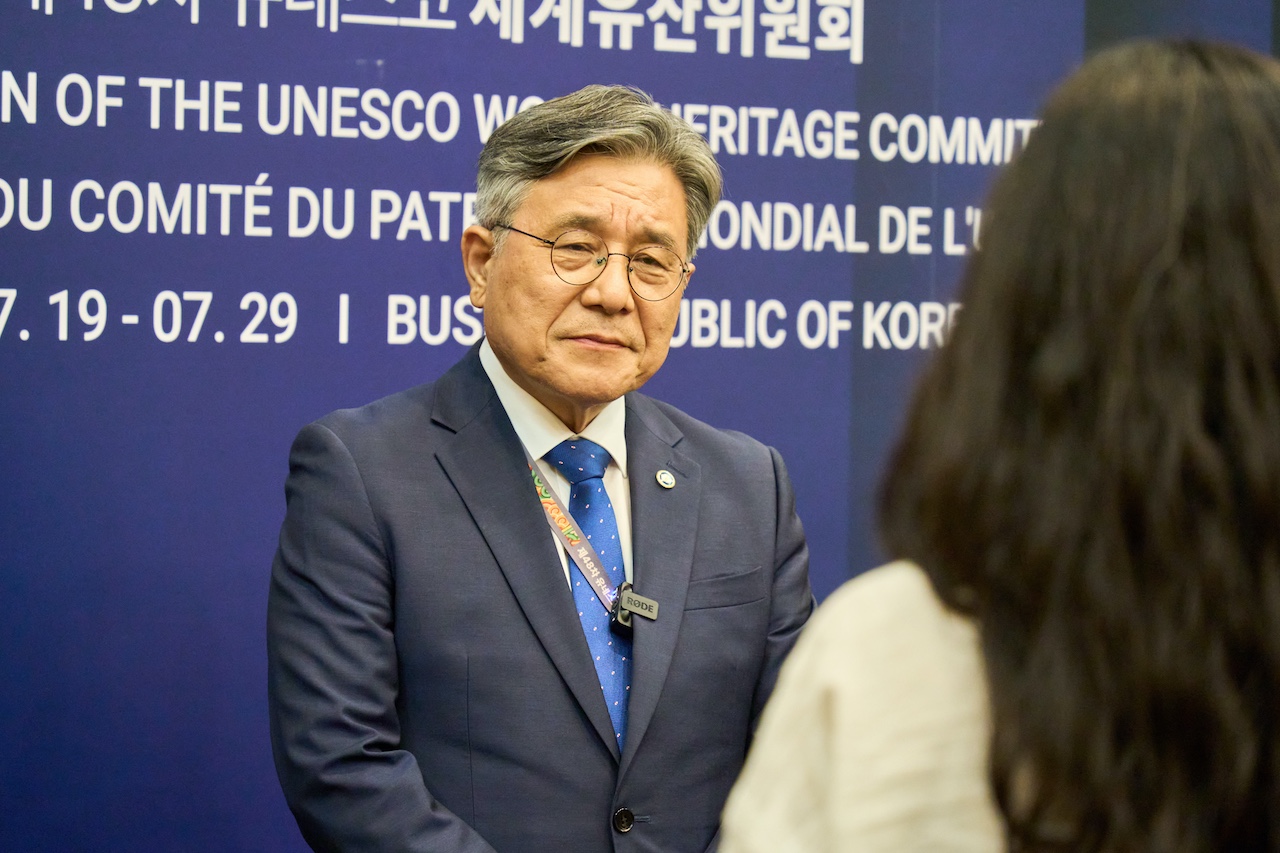
Expanded cooperation was among the main topics raised during an official interview with Korea Heritage Service Administrator Huh Min in Busan. The meeting brought together international journalists covering the 48th session of the World Heritage Committee.
For Kazakhstan, this is more than an abstract exchange of experience. Korean programmes could provide access to restoration training, digital documentation, Heritage Impact Assessment and joint monitoring of transboundary properties.
Five Billion Won Over Five Years
The Korea Heritage Service will transfer KRW 1 billion to UNESCO annually for five years.
The money will support professional training, technical assistance, transboundary cooperation and the adaptation of heritage properties to climate-related threats.
The programme will also support the preparation of future international nominations. Particular attention will be given to countries that remain underrepresented on the World Heritage List.
UNESCO and South Korea have worked together in this field for more than 25 years. Between 2021 and 2025, Seoul committed KRW 5.8 billion, or approximately $3.85 million, to joint programmes.
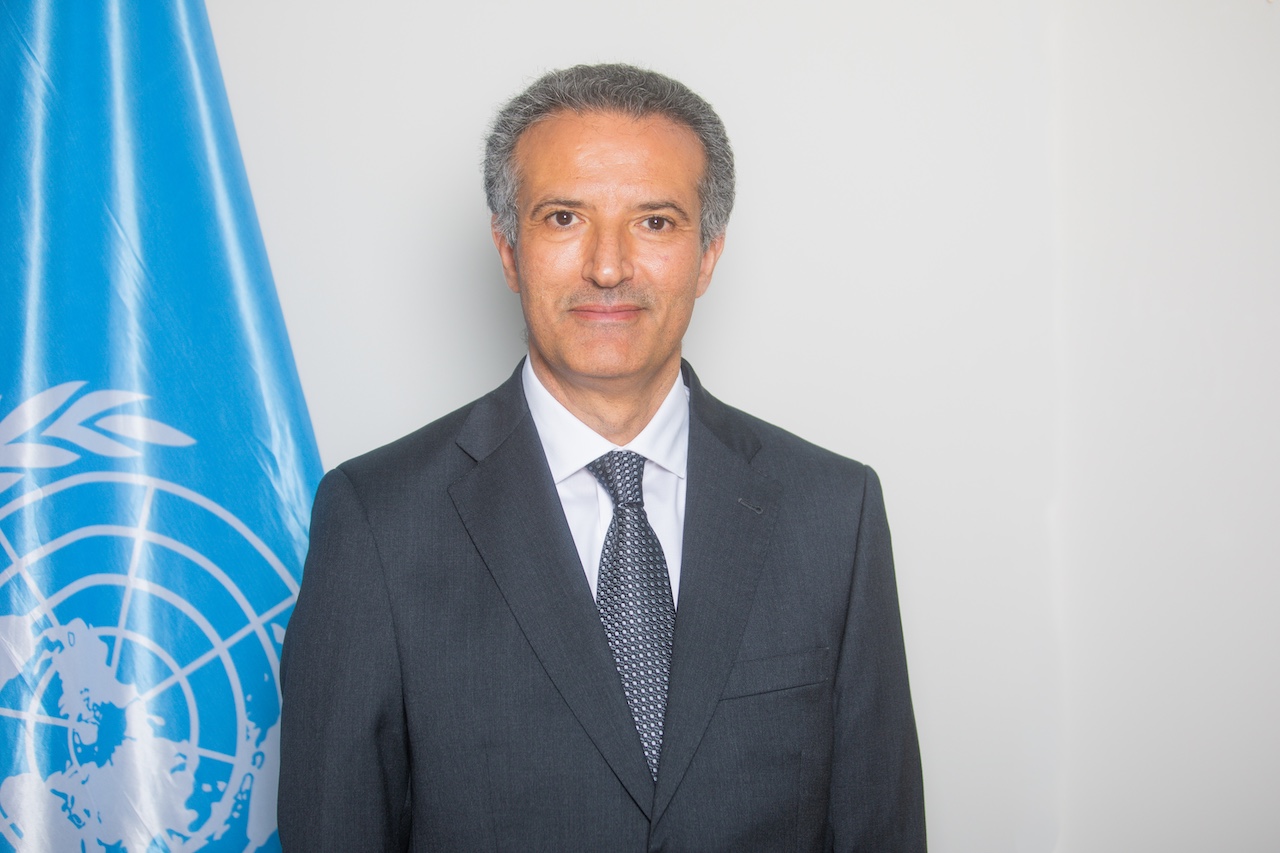
“I would like to express UNESCO’s appreciation to the Republic of Korea, in particular to the Korea Heritage Service,” said UNESCO Assistant Director-General for Culture Nayef Al-Fayez.
This is not a fund that automatically transfers money to participating countries. Support is provided through specific projects, including expert missions, training, technical research, digitalization and the development of management systems.
Kazakhstan will need to prepare an application, identify implementing institutions and demonstrate which problem the proposed project will solve.
Western Tien-Shan Has Already Received Korean Support
Cooperation began before the Busan session.
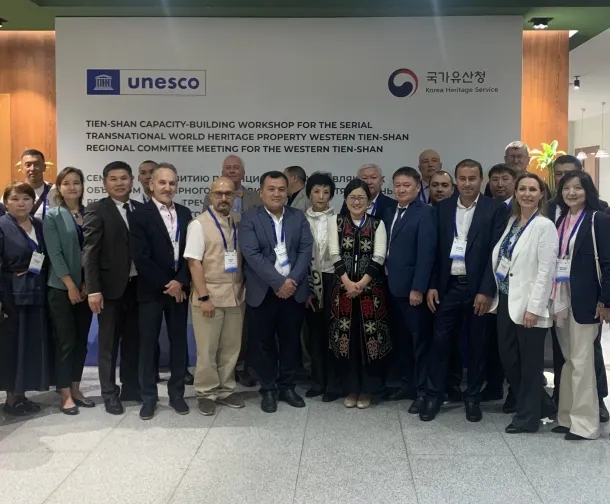
In 2025, UNESCO’s Regional Office in Almaty organized a workshop for Western Tien-Shan coordinators and site managers with support from the Republic of Korea.
 UNESCO
This natural property stretches across Kazakhstan, Kyrgyzstan and Uzbekistan. It joined the World Heritage List in 2016, but its preservation depends on decisions made by all three countries.
The workshop addressed protected-area boundaries, impact assessment and joint wildlife monitoring. Experts from the International Union for Conservation of Nature also participated.
These issues are critical for transboundary properties. Wildlife does not stop at national borders, while a fire, drought or unauthorized construction project in one country could affect the entire natural complex.
The Korean programme could help establish common monitoring and information-sharing standards. Instead of three separate systems, Western Tien-Shan could receive a shared database, common risk indicators and a coordinated response plan.
What Kazakhstan Could Receive
The first area is professional training.
South Korea could organize placements for Kazakh restoration specialists, architects, archaeologists and World Heritage site managers. Training could cover not only technical methods but also visitor management, cooperation with local communities and emergency response.
The second area is digital documentation.
Three-dimensional scanning can create an exact digital copy of a building, petroglyph or archaeological complex. If a property is damaged by fire, an earthquake or poor restoration, specialists will have reliable source data for reconstruction.
The third area is Heritage Impact Assessment.
Kazakhstan will need this mechanism when building roads, hotels and visitor centres near UNESCO properties. It is particularly relevant to Mangystau, where infrastructure must be developed without damaging the sacred landscape.
The fourth area is post-inscription management.
Inscription on the UNESCO list does not mark the end of the process. Once international status is granted, the country must monitor the monuments, tourism pressure, restoration work and the participation of local communities.
This is precisely where Korean experience could benefit Beket-Ata, Shopan-Ata, Karaman-Ata, Shakpak-Ata and Sultan-Epe.
From Machu Picchu to Mangystau
South Korea treats cultural heritage as a distinct area of Official Development Assistance, or ODA.
Beginning in 2026, the Korea Heritage Service is launching a five-year project at Machu Picchu. Korean specialists will assess the property’s safety, improve its conservation and management, and introduce digital archiving technologies.
Huh Min makes no secret of his country’s ambitions.
“We need to shift our perspective and view national heritage not simply as relics of the past, but as cultural, economic and tourism assets.”
South Korea has also received requests to help preserve ancient shipwrecks off the coast of Vietnam. Across Asia, Korean specialists support intangible heritage inventories, video documentation and the preparation of materials for UNESCO.
Kazakhstan has already participated in Korean programmes focused on intangible heritage. An institutional channel therefore exists, meaning cooperation would not have to begin from scratch.
The next step could be a dedicated project for tangible heritage, covering rock-cut mosques, petroglyphs, ancient settlements or historic architecture.
Why South Korea Changed Its Approach to Heritage
In May 2024, South Korea moved away from the former “cultural property” system and adopted the broader concept of “national heritage.”
Instead of treating a monument simply as a protected object, the state now regards it as part of public life. Heritage is divided into cultural, natural and intangible categories, while remaining under an integrated management system.
The Korea Heritage Service is responsible for registration, research, restoration and monitoring. Its work, however, does not end with placing a protective plaque on a building.
Palaces host evening tours. Historic buildings stage concerts and exhibitions. Monasteries develop Temple Stay programmes, while traditional crafts are turned into contemporary design and export products.
Protection remains mandatory. Yet the use of heritage should create new value without destroying its authenticity.
This principle is particularly relevant to Kazakhstan. The country does not need to copy the Korean structure mechanically, but it can build an integrated cycle combining research, conservation, digitalization, tourism and local participation.
AI Will Not Replace the Restoration Specialist
South Korea actively uses artificial intelligence, virtual reality and digital archives. Technology, however, does not make the final decision for humans.
Algorithms can compare thousands of images, identify cracks and track changes to surfaces. A three-dimensional model can reveal deformation that may be difficult to detect during a conventional inspection.
A restoration specialist still determines the cause of damage and chooses the appropriate method.
This combination could be especially useful for Kazakhstan. Its vast territory, remote monuments and extreme climate make continuous physical inspections expensive.
Digital monitoring will not replace field expeditions, but it can help determine which property specialists need to visit first.

How Development and Conservation Can Coexist
South Korea faces its own conflicts between heritage protection and urban development.
One prominent example is a proposed high-rise development near the Jongmyo Shrine in Seoul. The Confucian royal shrine has been on the World Heritage List since 1995.
South Korea’s response is mandatory Heritage Impact Assessment. It takes place before a project is approved and must demonstrate how a new building, road or infrastructure facility would alter the historic landscape.
“It allows the government to fully preserve the historical value of World Heritage while utilizing development to revitalize and improve the surrounding areas,” Huh Min explained.
For Kazakhstan, the issue is no longer theoretical.
Following the inscription of Mangystau’s sacred sites, major projects near the complexes must consider their impact on the landscape, tranquillity and pilgrimage traditions. A standard environmental assessment will not be sufficient.
Local Communities Need a Voice
The Korean model is gradually moving away from a system in which government institutions make every decision.
Residents help preserve traditional houses, crafts, rituals and historic districts. They are also the first to experience the consequences of rising visitor numbers, increasing prices and construction restrictions.
In Mangystau, this role is also performed by shyrakshy, the traditional guardians of sacred places. They welcome pilgrims, maintain order and preserve local practices.
If new infrastructure excludes them from management, the structures may survive while the living tradition disappears. Local participation must therefore be secured through management bodies and development plans, not merely mentioned in official declarations.
Money Is Not the Main Result
Five billion won cannot solve every problem facing World Heritage. The amount might not be enough for even one large property.
The programme’s main value is access to expertise, technology and international coordination.
Kazakhstan could receive methods for monitoring Western Tien-Shan, train specialists for Mangystau, create digital copies of monuments and introduce Heritage Impact Assessment before construction begins.
To achieve this, however, the country must move from a general desire to cooperate toward concrete proposals.
South Korea has allocated the money and identified its priorities. The next question is which projects Kazakhstan will propose.