
History needs a backup copy.
In South Korea, heritage digitization has moved far beyond museum screens. Three-dimensional models, artificial intelligence and digital archives are now used to restore monuments, monitor damage and prepare for disasters, DKNews.kz reports.
For Kazakhstan, this is no longer an abstract technology. Following the inscription of Mangystau’s rock mosques on the UNESCO World Heritage List, the country needs an integrated digital system capable of recording the condition of every site before irreversible damage occurs.
45 ways to bring the past to life
In Busan, heritage technology was brought together under one roof.
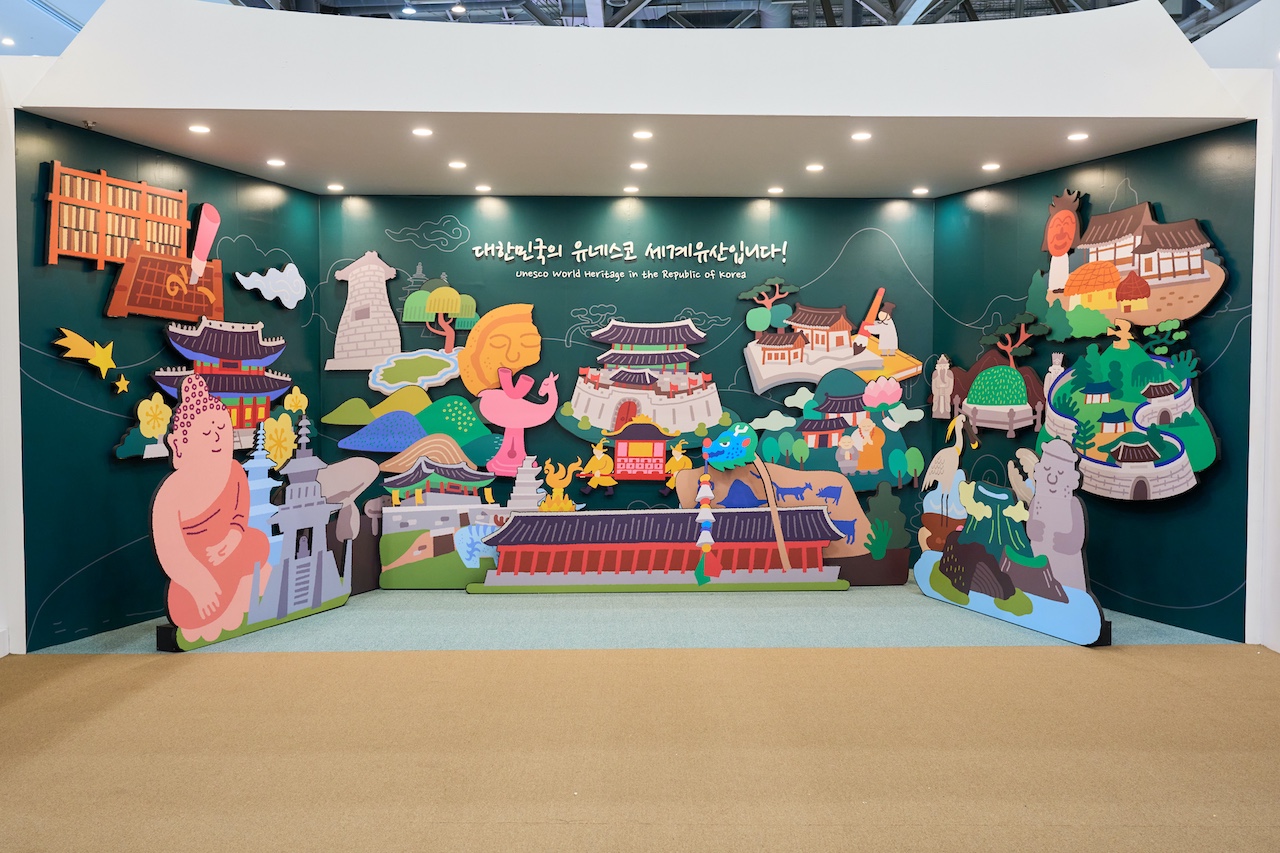
K-Heritage House, opened during the 48th session of the UNESCO World Heritage Committee, featured 45 exhibitions and interactive zones created by 35 organizations.

Visitors saw a digital recreation of royal rituals from the Joseon Dynasty, a multimedia presentation of volcanic Jeju Island and the petroglyphs along the Bangucheon Stream. Historic Korean architecture was presented through detailed three-dimensional models.
But the screens were not the main story.
Korean specialists demonstrated Heritage Building Information Modeling, or HBIM. It creates a digital model linked to information about a monument’s structure, materials, previous repairs and conservation history.
If a building is damaged, restorers receive more than a visual reconstruction. They gain access to the technical history of every element.
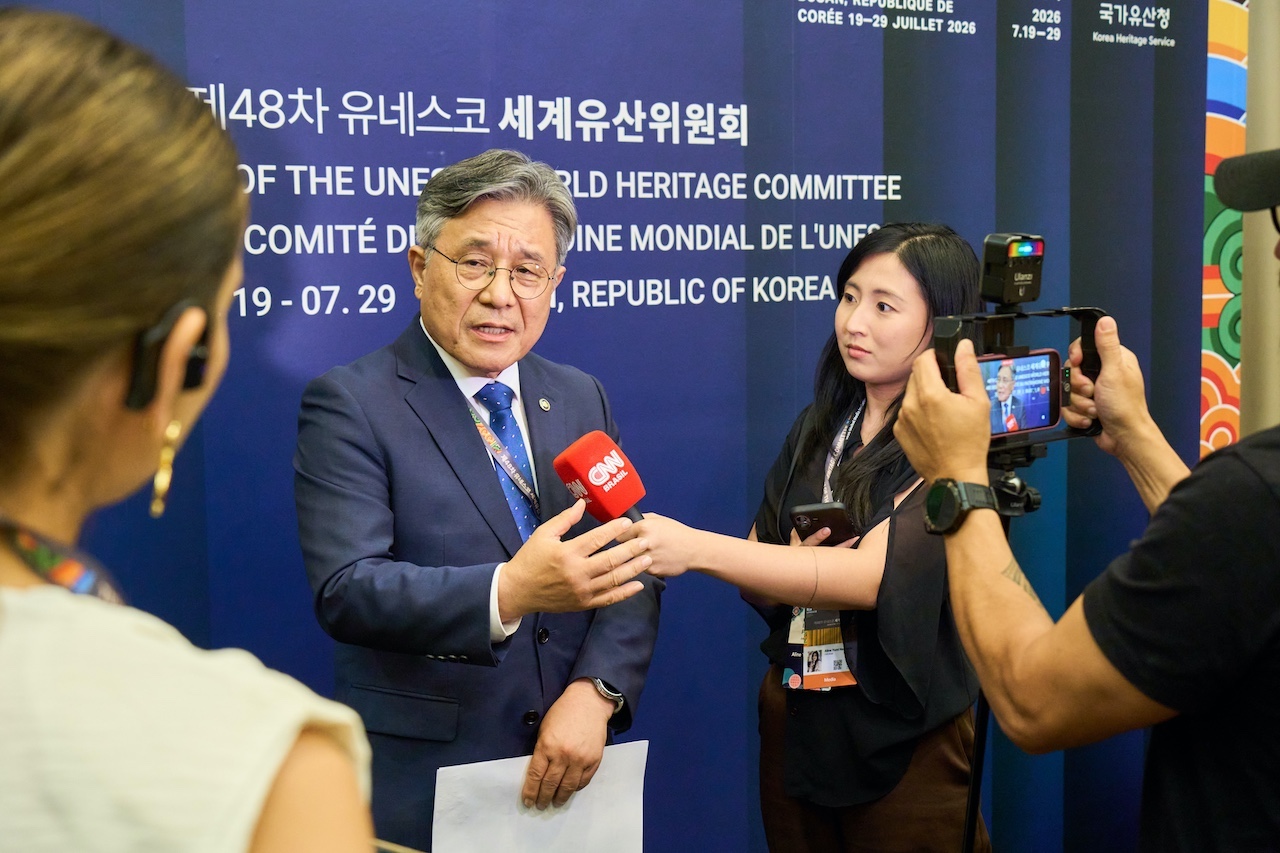
“That information can then be used for preservation as well as restoration if a structure is damaged.”
Huh Min, Administrator of the Korea Heritage Service, sees such systems as more than an exhibition tool. They also demonstrate Korea’s growing technological capabilities in heritage conservation.
A digital copy that cannot burn
The true value of an archive becomes clear after a disaster.
In 2025, a massive wildfire in North Gyeongsang Province destroyed part of the thousand-year-old Gounsa Temple complex. Digital records created before the fire became a foundation for the accurate restoration of the lost structure.
The Korean model begins with detailed documentation.
Laser scanning records the geometry of a site. Photogrammetry builds a three-dimensional model from numerous photographs, while X-ray imaging and computed tomography reveal the internal structure of individual objects without damaging them.
The information is then combined with architectural drawings, archival photographs, previous repair records and scientific research.
The result is a digital passport for the monument.
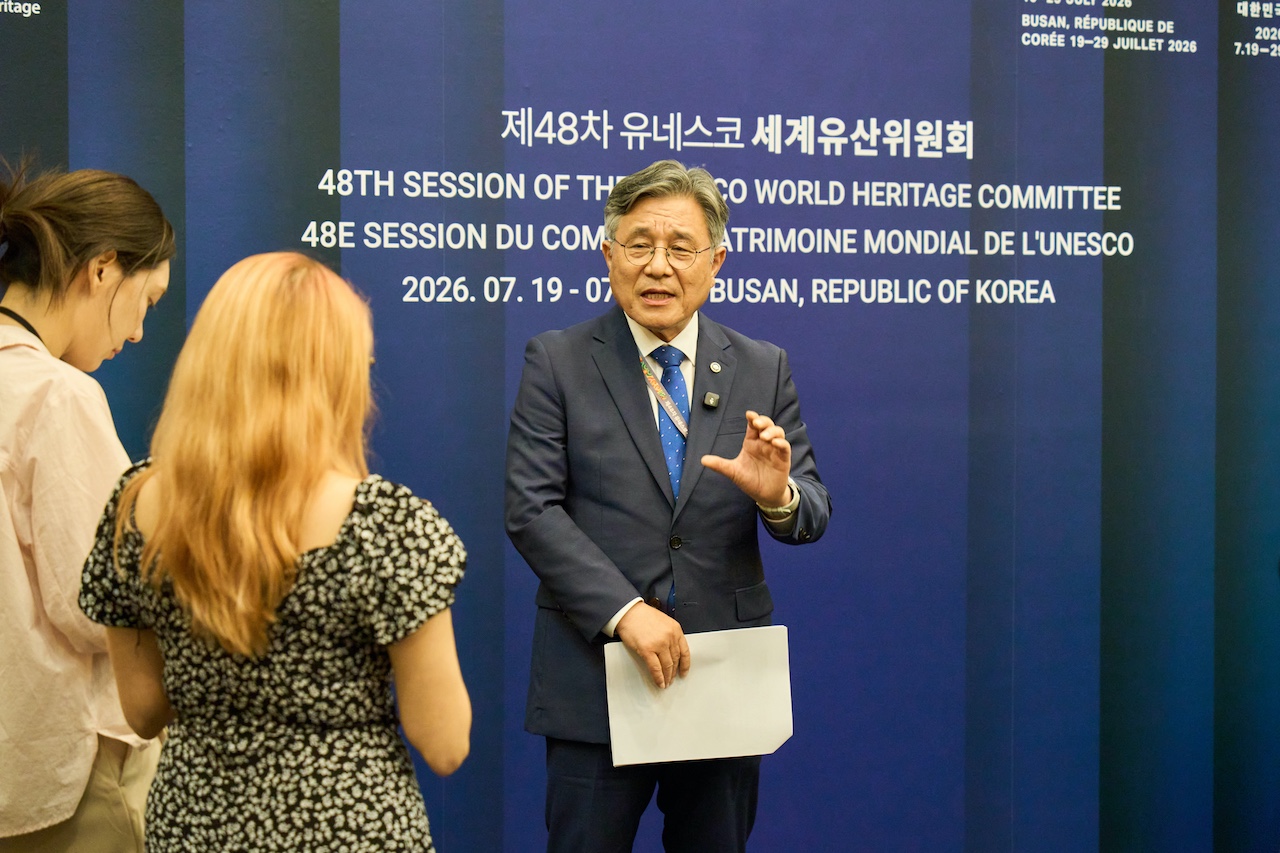
“This initiative will deploy Korea’s premier conservation techniques and digital archiving know-how,” Huh Min said.
A digital model cannot replace the original. It gives restorers reliable evidence when part of a structure can no longer be physically examined.
Where artificial intelligence fits in
Artificial intelligence should not decide how an ancient mosque, mausoleum or temple must be rebuilt.
Its role is to process volumes of data that would be difficult to examine manually. Algorithms can compare scans taken at different times, detect changes in shape, identify new cracks and flag areas that require closer inspection.
Architects, archaeologists and conservators must still make the final decision.
Another area is intangible heritage. Korea is experimenting with recreating the voices of deceased pansori masters from archival recordings and developing interactive historical figures.
For Kazakhstan, this creates an opportunity to preserve more than walls. Digital archives can include the testimonies of shrine custodians, stories about saints, pilgrimage routes, music, rituals and traditional construction techniques.
But a clear boundary is needed. Not every form of sacred knowledge should become publicly accessible digital content.
The consent of tradition bearers, the rights of local communities and different levels of access must be determined before any recording begins.
Mangystau: documenting five sacred sites
Five sacred complexes in Mangystau have entered the World Heritage List: Beket-Ata, Shopan-Ata, Karaman-Ata, Shakpak-Ata and Sultan-Epe.
These are not isolated buildings that can be documented with conventional measurements. The property includes rock-cut chambers, burial grounds, paths, water sources, sacred trees and the surrounding semi-desert landscape.
A complete digital survey of all five complexes could become the first step.
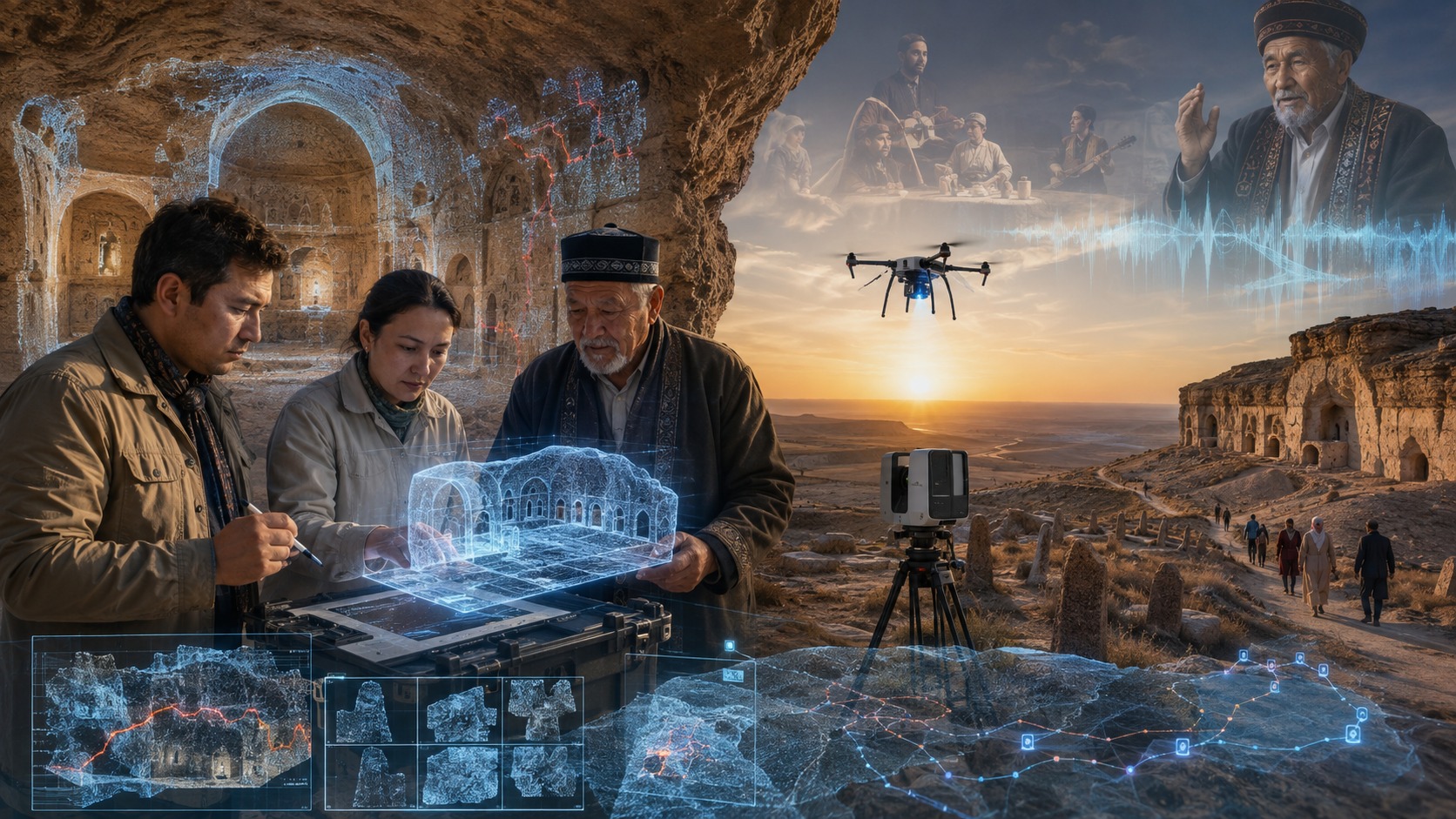
Three-dimensional scanning would record the geometry of underground spaces and the condition of rock surfaces. Repeated surveys could reveal the effects of moisture, temperature fluctuations, rock erosion and increasing pilgrim numbers.
The digital archive should contain more than mosque models. It must also include pilgrimage maps, cemetery records, conservation history and testimonies from shyrakshy — the custodians of the sacred sites.
Otherwise, Kazakhstan may preserve the physical shell while losing the living meaning of the property.
Tanbaly: detecting damage before the human eye
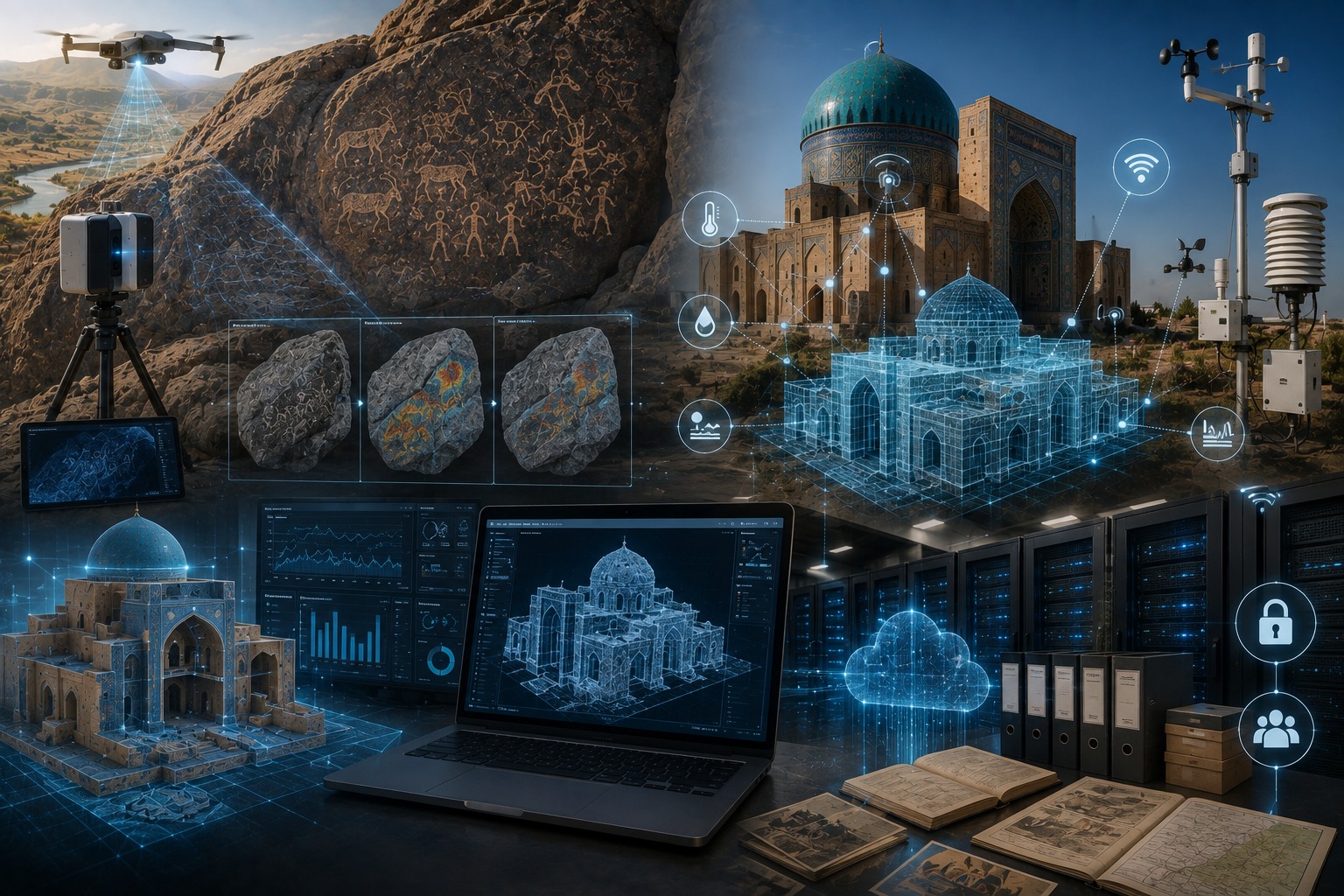
For the Tanbaly petroglyphs, digital documentation could become an early-warning system.
High-precision models allow specialists to compare the condition of rock surfaces after one, three or five years. Erosion, chips, traces of human contact and other changes could be detected before they become visible during a conventional inspection.
Korea’s experience with the Bangucheon Stream petroglyphs is particularly relevant to Kazakhstan.
The site suffered from periodic flooding for decades. Its history shows that a digital archive cannot solve an environmental problem, but it can provide scientists with reliable data for choosing the right protection method.
Turkistan has already taken the first step
Kazakhstan is not starting from zero.
The Mausoleum of Khoja Ahmed Yasawi already has a real-time digital monitoring system. More than 100 non-invasive sensors measure temperature, air humidity, surface temperature, soil moisture and groundwater levels.
The system also receives information from inclinometers, a small weather station and an underground seismometer.
This is a strong foundation. The next step could be to link the sensor readings to a complete three-dimensional model of the mausoleum and its conservation history.
Specialists would then see more than a rise in humidity. They would know which section of the building, which materials and which decorative elements were at risk.
That is when a digital twin stops being a presentation model and becomes a working heritage-management tool.
Kazakhstan does not need a collection of files
The biggest mistake in digitization is commissioning an expensive survey, receiving massive files and leaving them on a contractor’s computer.
Without a common standard, the model quickly becomes obsolete. A few years later, the necessary software, survey methodology or specialists familiar with the data structure may no longer be available.
Kazakhstan needs a national digital heritage archive with common requirements for file formats, survey quality, backup storage and regular updates.
It should have two levels.
The first should be professional: precise models, technical reports, sensor data and restricted information about the condition of sites. The second should be public: virtual tours, educational materials and tourism content.
Sensitive information about sacred places and structural vulnerabilities must not be published automatically.
Three sites for a Kazakhstan-Korea pilot project
Practical cooperation could begin with three different types of heritage: the rock mosques of Mangystau, the Tanbaly petroglyphs and the Mausoleum of Khoja Ahmed Yasawi.
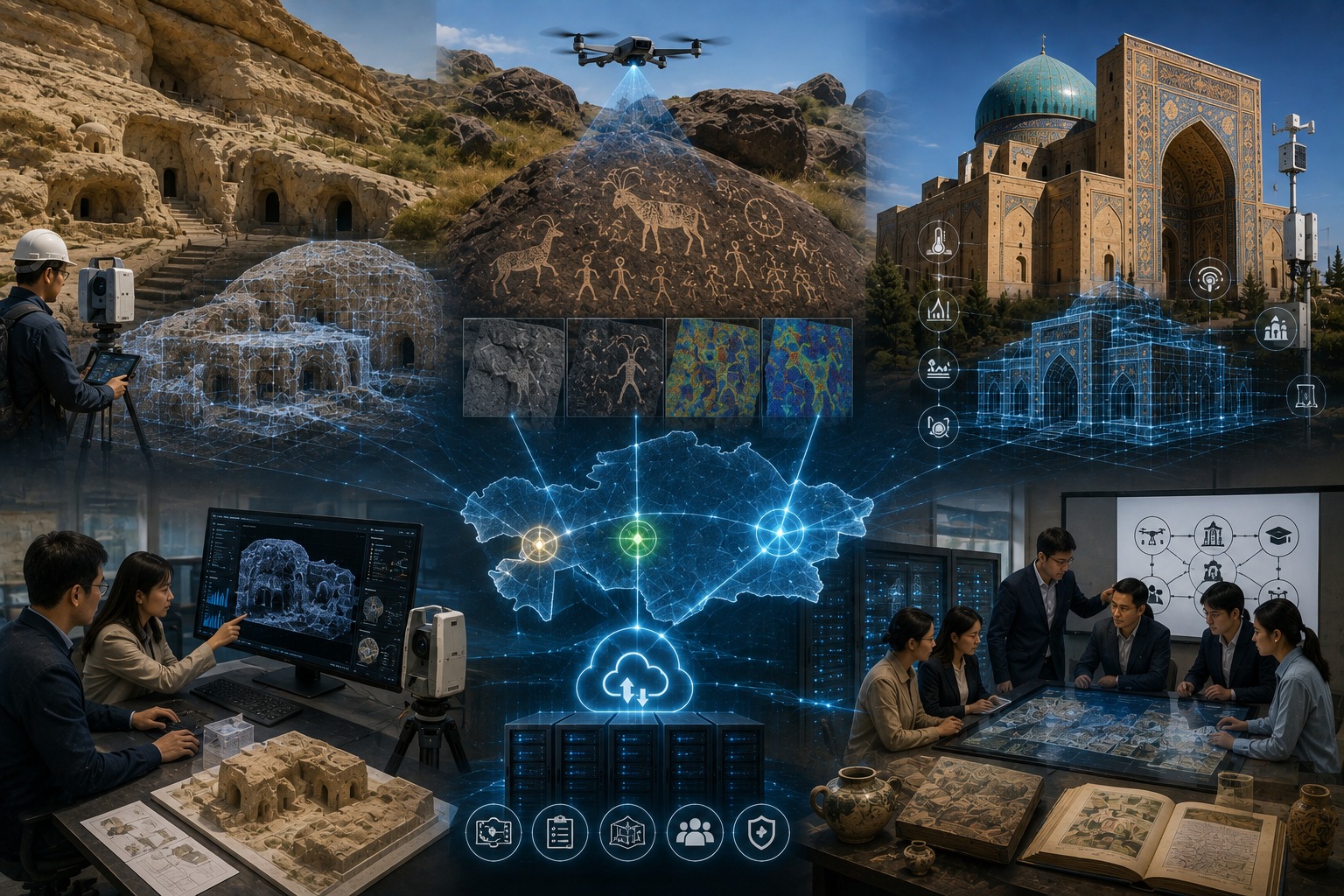
Mangystau would provide experience in documenting sacred landscapes and underground architecture. Tanbaly would focus on exposed rock surfaces, while Turkistan would combine monumental architecture with an existing sensor network.
Korea could provide equipment, HBIM methodology and professional training. Kazakhstan would need to establish national standards, secure long-term data storage and maintain permanent technical teams at each site.
Such a project would fit Korea’s Official Development Assistance programmes for cultural heritage. Its real value would not lie in a one-time purchase of scanners, but in transferring expertise to Kazakh engineers, conservators and archivists.
The equipment will eventually need to be replaced. Trained specialists and a properly designed archive will remain.
Korea’s experience shows that heritage digitization does not begin with a virtual tour. It begins with a harder question: does a country have enough data to restore a monument after a wildfire, earthquake or decades of gradual deterioration?
Kazakhstan should answer that question before a disaster does.