
Construction is possible. Mistakes are not.
UNESCO status does not turn a city into an open-air museum or prohibit new hotels, roads and housing. But every major project near a World Heritage property must prove that it will not destroy the value for which the site received global recognition, DKNews.kz reports.
For rapidly developing Turkistan and Mangystau’s newly inscribed properties, this is becoming an economic issue. Poorly planned construction may generate profit today while weakening a tourism brand for decades.
A dispute around a sacred site in central Seoul
In South Korea, this conflict has unfolded around Jongmyo Shrine.
The complex in central Seoul houses the ancestral tablets of kings and queens of the Joseon Dynasty. UNESCO inscribed it on the World Heritage List in 1995 as an outstanding example of a Confucian royal ancestral shrine.
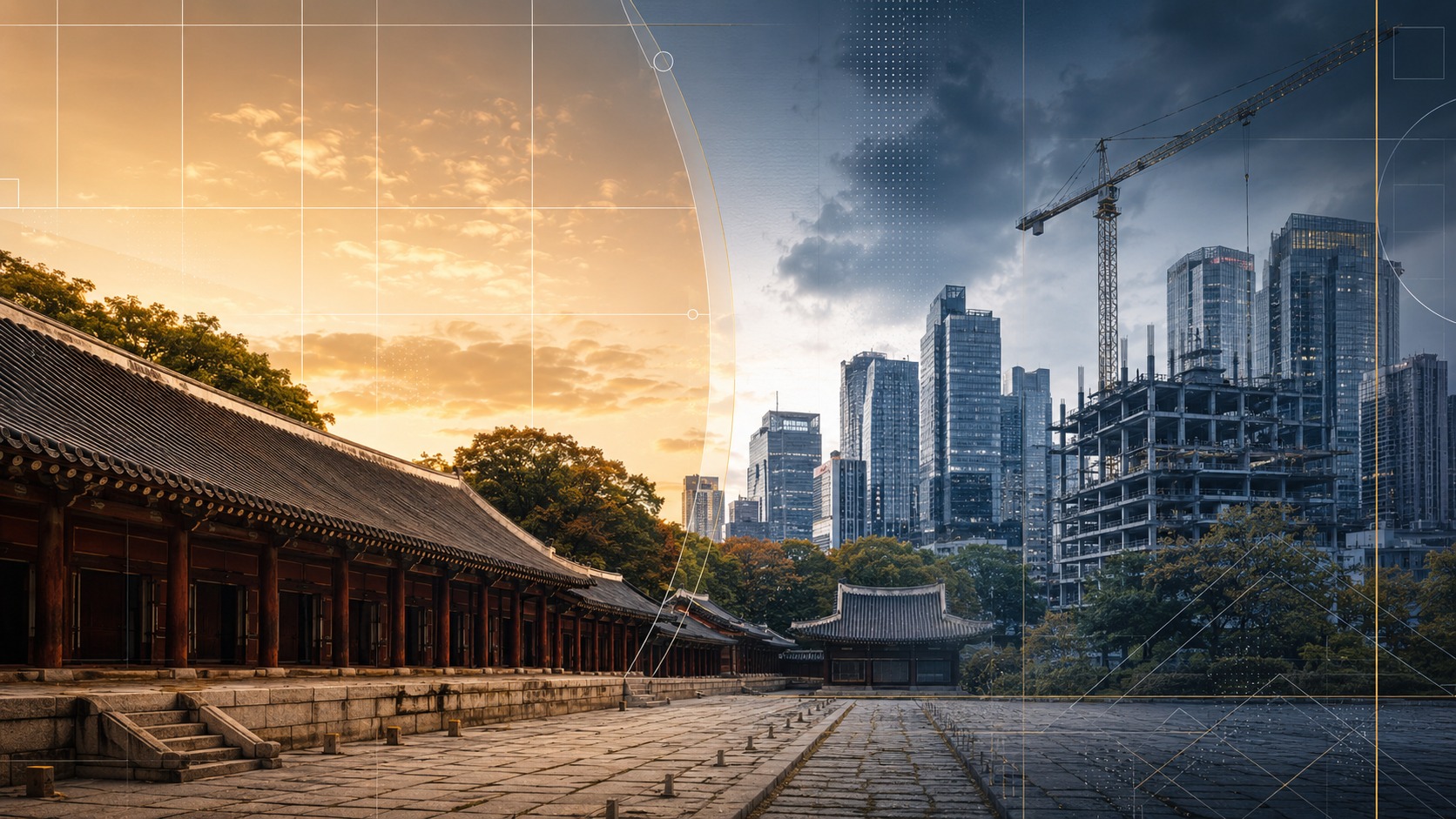
Today, Jongmyo stands in the middle of a modern megacity.
A proposed high-rise development near the complex sparked a dispute involving the authorities, developers and heritage specialists. The issue is not limited to the distance between the construction site and the historic buildings.
A tower can alter the historic skyline, block important sightlines and disrupt the sense of an enclosed ritual space. Even a building outside the official buffer zone can affect how the property is experienced.
UNESCO explicitly identifies this risk: high-rise construction around Jongmyo could adversely affect sightlines within the shrine.
Korea’s answer: assessment before construction
Huh Min, Administrator of the Korea Heritage Service, rejects the idea that cities must choose between development and heritage.
Korea has embedded Heritage Impact Assessment, or HIA, in special legislation governing World Heritage properties.

“It allows the government to fully preserve the historical value of world heritage while utilizing development to revitalize and improve the surrounding areas,” Huh said.
An HIA does not automatically prohibit construction.
It identifies which values may be threatened, whether the design can be changed and whether safer alternatives exist. In some cases, reducing the building’s height, relocating it, changing the façade or protecting a key viewing corridor may be enough.
But an assessment works only when it is conducted before permits are issued and construction begins.
If experts are invited after a project has already been approved, the HIA becomes an attempt to justify a decision that has already been made. Relocating or redesigning the development at that stage is far more expensive.
Housing near royal tombs
Another Korean case concerns Seoul’s Taereung district.
Public housing is planned near royal tombs that form part of a UNESCO World Heritage property. The project addresses a serious social problem in a city where housing affordability remains a major concern.
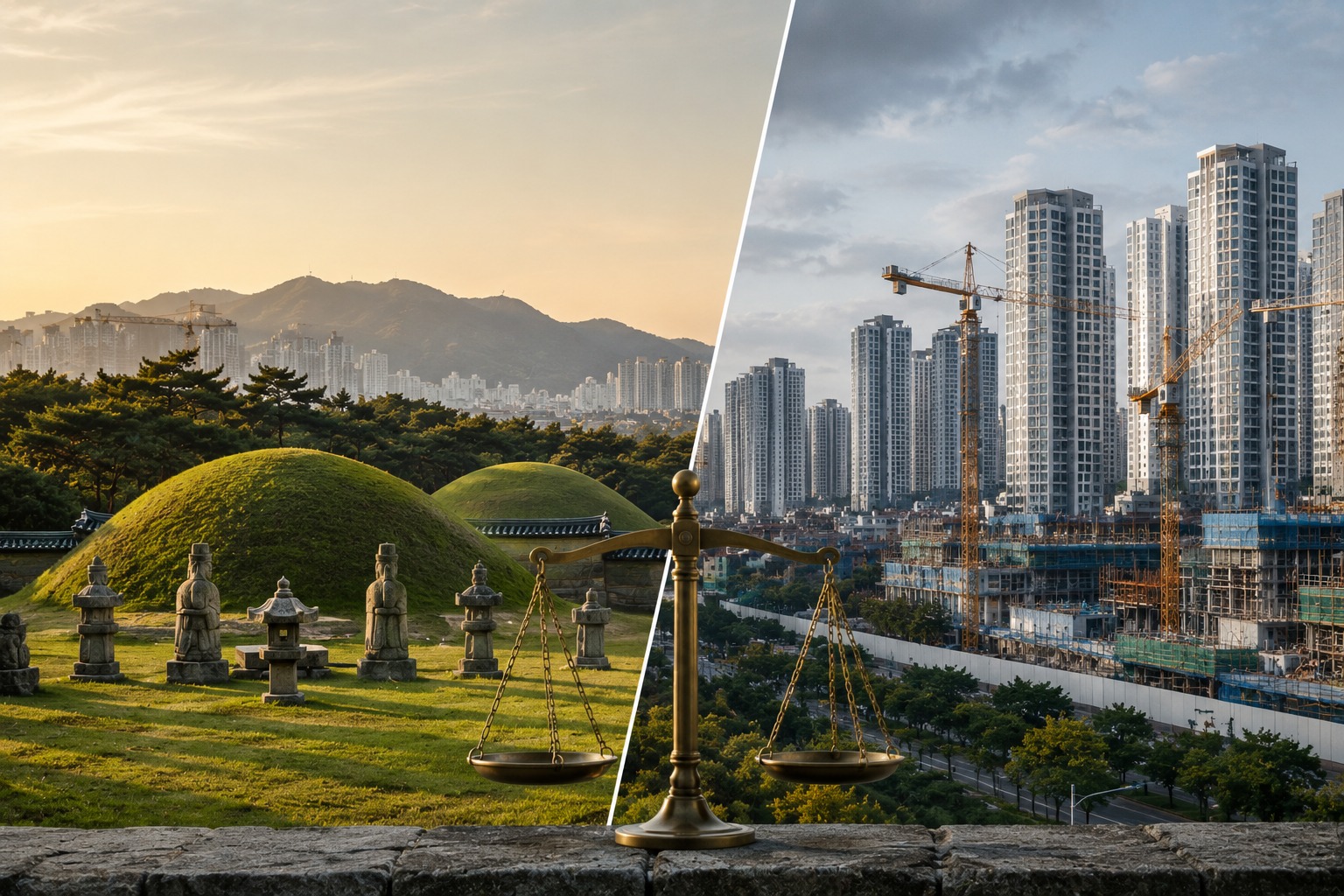
The Korea Heritage Service and the Ministry of Land, Infrastructure and Transport are using an HIA to examine the project before implementation.
Huh has described Taereung as a potential model for the coexistence of heritage and urban development. The objective is not to stop the district from growing.
The task is to redesign the project so that new housing does not damage the landscape, historic views or the heritage value of the royal tombs.
What an HIA actually examines
A conventional environmental assessment studies emissions, noise, water and ecological impacts. A Heritage Impact Assessment asks a different question: will the property’s Outstanding Universal Value survive after the project is completed?
Distance from a monument is only one factor.
Experts examine building height, the urban skyline, viewing corridors, vibration, groundwater levels, traffic and lighting. For natural properties, the assessment also covers ecosystems and changes to the landscape.
Cumulative impact requires separate attention.
A single small hotel may not create a serious threat. But ten hotels, a new road, a car park, a shopping centre and a constant flow of tourist buses could transform the entire area.
Assessing every project in isolation is therefore not enough.
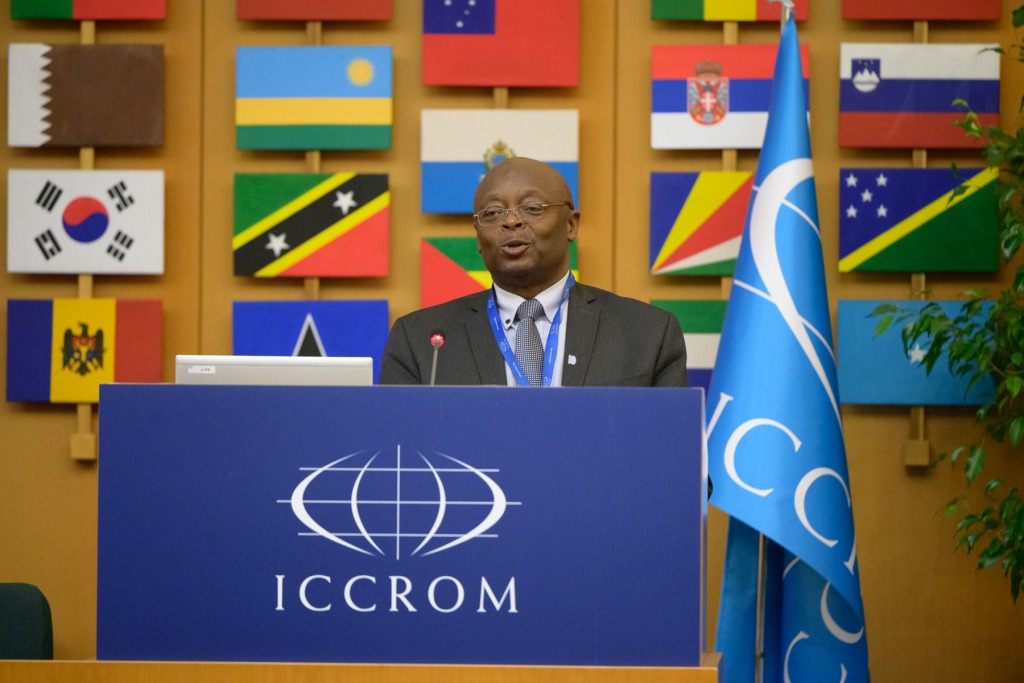
“By evaluating risks and identifying alternatives, decision-makers can ensure new developments are future-proof both for heritage places and people,” ICCROM Director-General Webber Ndoro said.
Turkistan has begun protecting its sightlines
Kazakhstan is not starting from zero.
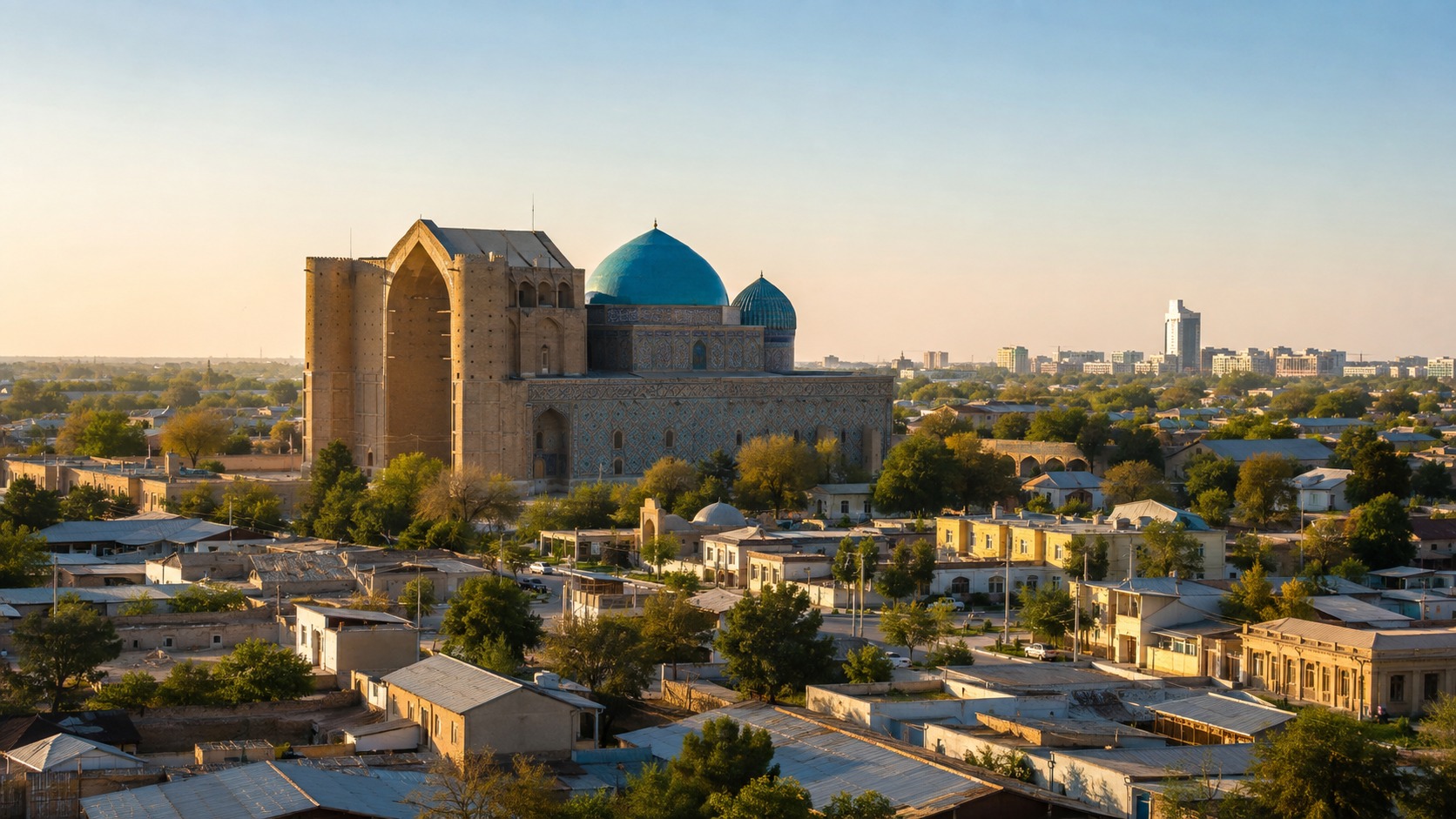
According to the country’s 2026 report to UNESCO, the Mausoleum of Khoja Ahmed Yasawi is stable. An Integrated Management Plan has been prepared for 2026–2031.
Turkistan has introduced a View Axes Protection Zone and an additional 100-metre protection zone. These measures were gradually introduced between 2019 and 2025 and incorporated into the city’s updated master plan.
Kazakhstan has also reported that new developments in the buffer zone and wider setting have undergone Heritage Impact Assessments since 2019.
This is a strong foundation.
The real test, however, begins when a major investment project appears. A hotel, entertainment complex or high-rise building may formally stand outside the buffer zone but still alter views of the mausoleum.
Turkistan lies on an open plain. Even a distant tower can compete with the mausoleum in the urban skyline.
If the monument loses its visual dominance, the city loses part of its historic value.
Why one protection zone is not enough
A red line on a map cannot stop noise, traffic or visual pressure.
A hotel may stand outside the protected area while directing hundreds of vehicles through the historic setting. A new residential district could affect groundwater or increase pressure on local infrastructure.
Even advertising and excessive lighting can change the atmosphere of a sacred property.
Modern heritage protection therefore extends to the wider setting: territory that affects views, atmosphere, access and environmental conditions even when it falls outside the property’s legal boundaries.
For developers, this approach may appear more complicated. But an early assessment reduces financial risk.
Changing a design on paper is far cheaper than removing floors, relocating a building or stopping construction after an international dispute.
Mangystau will face a different problem
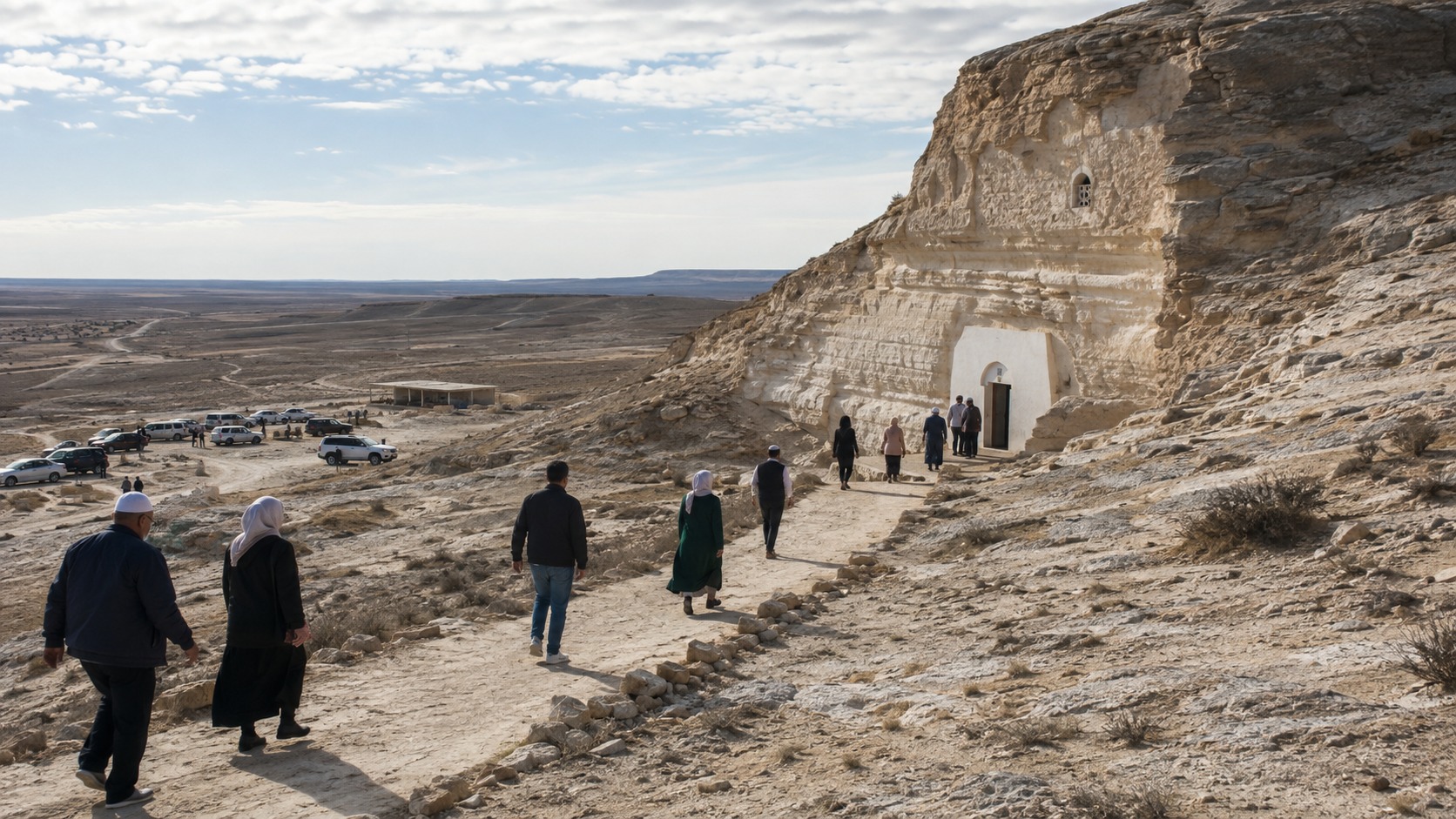
In Mangystau, the main pressure will come not from skyscrapers but from growing numbers of pilgrims and tourists.
Following the World Heritage inscription of the five sacred complexes, attention to Beket-Ata, Shopan-Ata, Karaman-Ata, Shakpak-Ata and Sultan-Epe will inevitably increase.
Demand will grow for roads, car parks, hotels, food facilities, toilets and souvenir shops.
The region needs this infrastructure. Without it, the increasing number of visitors could itself become a threat to the sacred sites and surrounding landscape.
But placing these facilities directly beside the entrance to a rock-cut mosque would be the easiest and most dangerous solution.
In its decision on Mangystau, UNESCO identifies tourism development as a potential threat. It calls for Heritage Impact Assessments before any project is implemented within the property, its buffer zones or its immediate setting.
Kazakhstan is also expected to improve facilities for tourists and pilgrims while preserving the secluded character of the sacred sites and their traditional management system.
The balance is delicate.
A convenient road should not turn a pilgrimage into an ordinary bus excursion. A visitor centre should not block a historic route or remove shyrakshy — the traditional custodians — from the management of the shrines.
How tourism can grow without damaging heritage
Large infrastructure can be moved beyond the sacred landscape.
Car parks, hotels, commercial areas and main service centres can be located at a distance. Visitors can then be transported to the sacred site in smaller vehicles operating on a controlled schedule.
The physical capacity of fragile underground spaces must also be considered. Visitor numbers should depend not only on demand, but also on ventilation, humidity, rock stability and the nature of religious practices.
Tourist flows can be distributed between different sites, seasons and times of day.
The principle is simple: infrastructure must serve heritage. Heritage must not be subordinated to commercial traffic.
Five rules for Kazakhstan
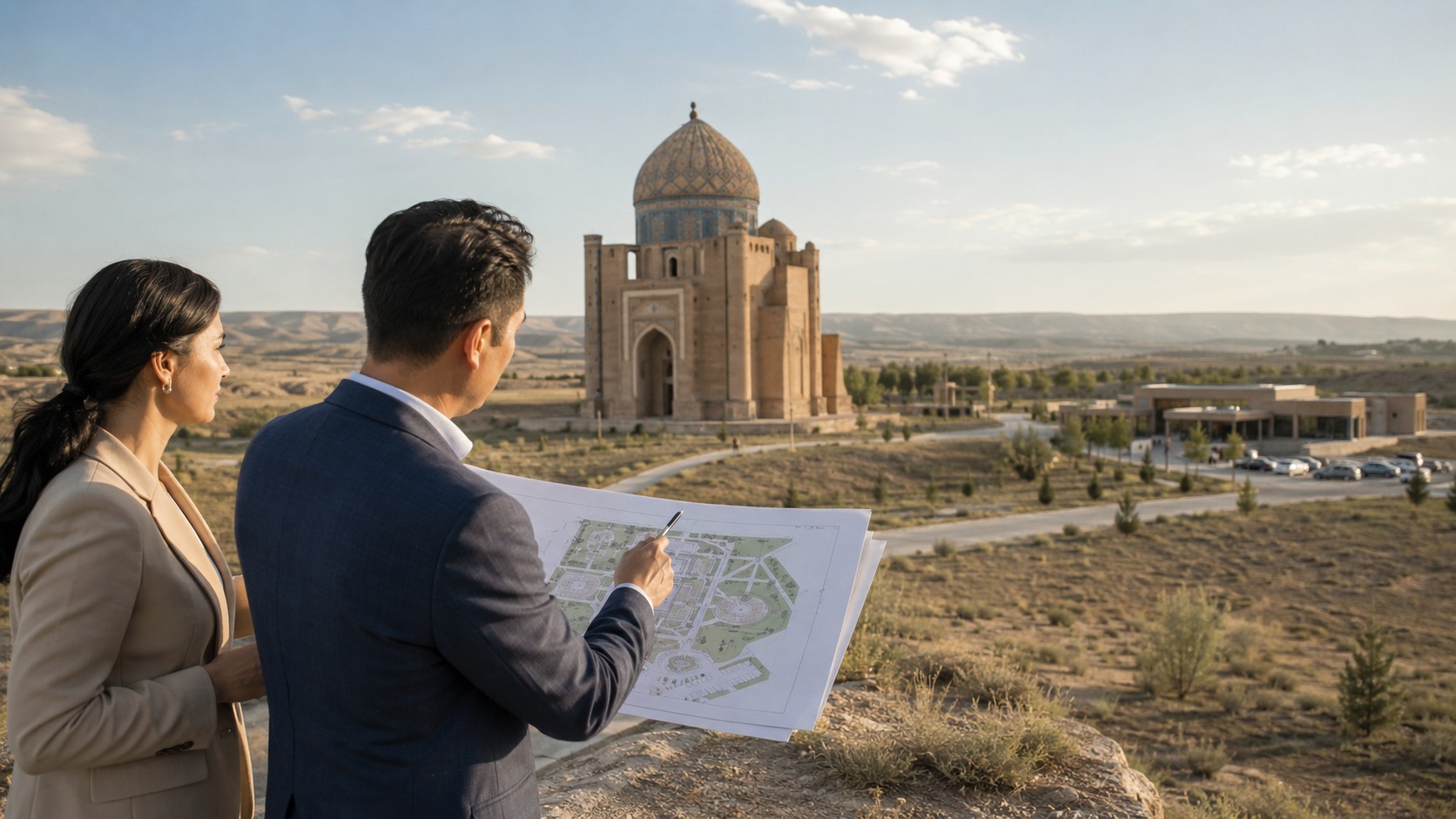
First, conduct an HIA before the project is approved and its main financing is committed.
Second, assess alternatives. The question should not only be whether a project can be built, but whether it can be built lower, farther away or differently.
Third, calculate cumulative impact. A hotel, a road and a shopping facility may each pass separate assessments while creating critical pressure together.
Fourth, publish the findings in clear language. Residents, investors and local communities should understand which risks were identified and why the project was changed.
Fifth, continue monitoring after construction. Even an approved development can produce unexpected effects several years later.
UNESCO status is not a barrier to investment
Predictable rules also benefit businesses.
If restrictions on height, architecture, traffic and sightlines are known in advance, investors can include them in the initial design. Uncertainty and sudden prohibitions cost the market far more.
Heritage itself creates economic value.
People travel to Turkistan for the Mausoleum of Khoja Ahmed Yasawi. They visit Mangystau for its sacred landscape and living pilgrimage traditions. If those qualities are replaced by standard commercial development, the reason to visit disappears.
Korea is not asking Kazakhstan to choose between preservation and development. It offers a different order for making decisions.
First, determine what cannot be lost. Only then decide what can be built and how.