
People preserve sacred places.
Walls can be restored, sensors installed and visitor centres built. But when local custodians are excluded from management, living heritage quickly becomes a stage set.
South Korea offers a different model. In its ancient monasteries, tourists remain guests rather than becoming the main characters.
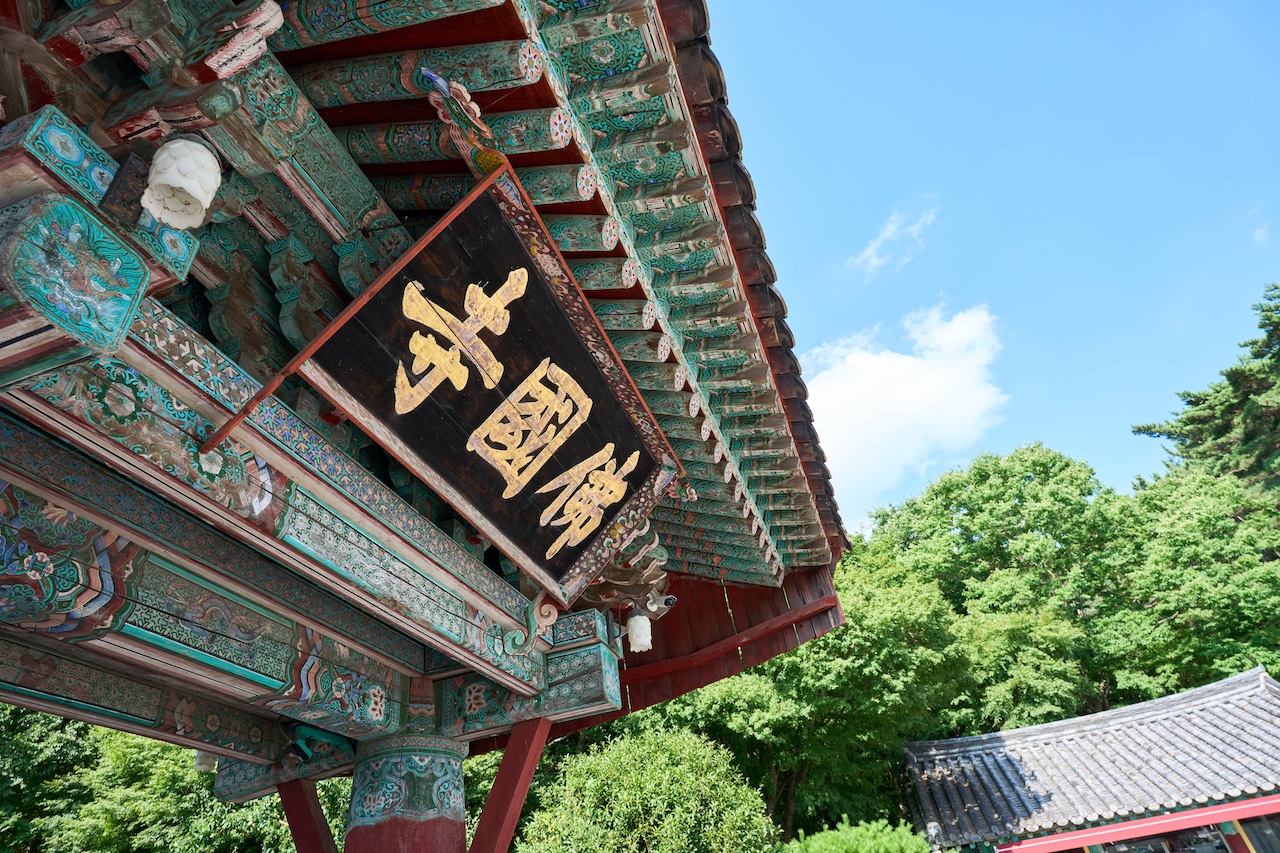
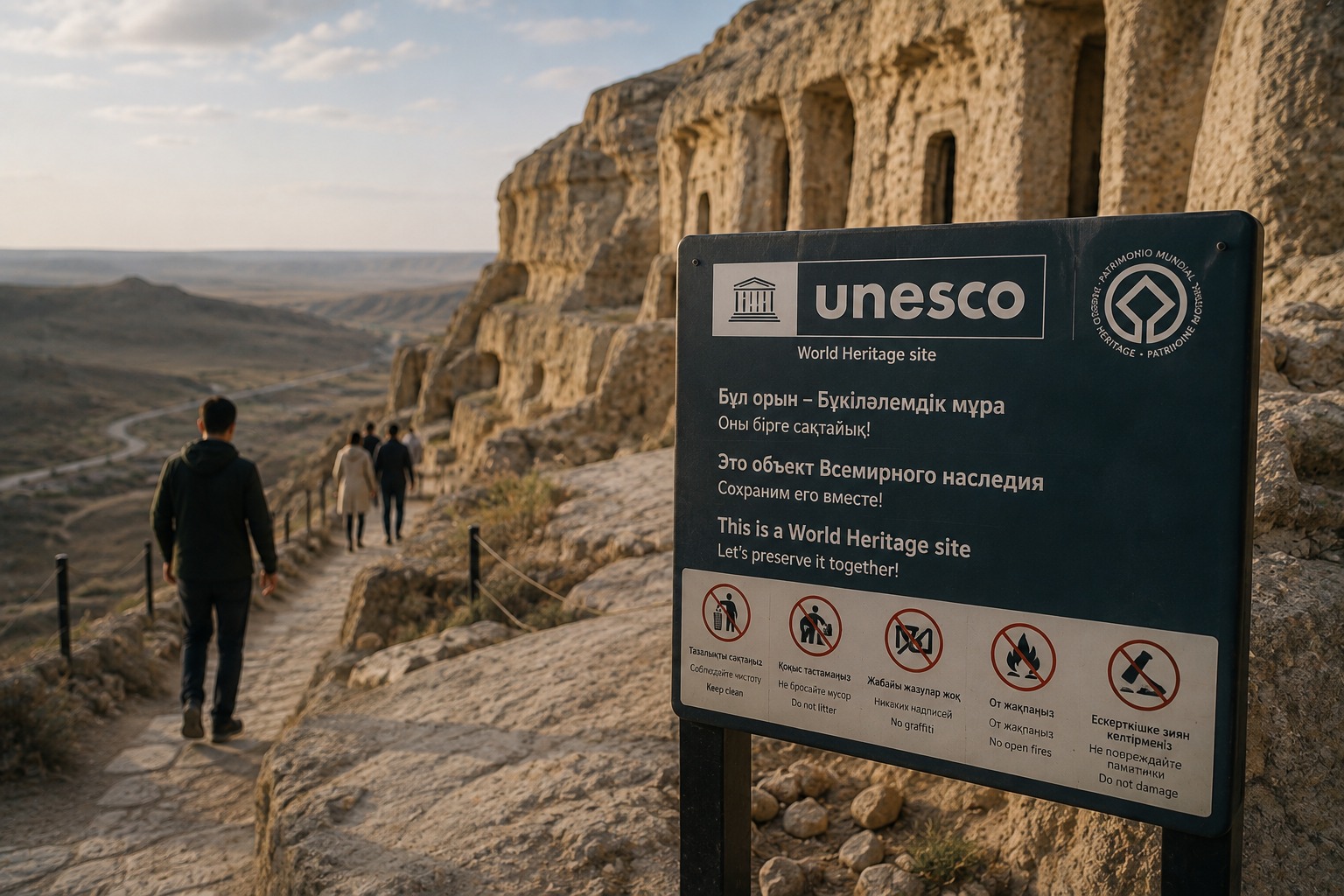
This experience is particularly relevant to Mangystau. Following the inscription of its five rock mosques on the UNESCO World Heritage List, the number of pilgrims and tourists will grow — and the role of the shyrakshy must grow with it.
A night inside a functioning temple
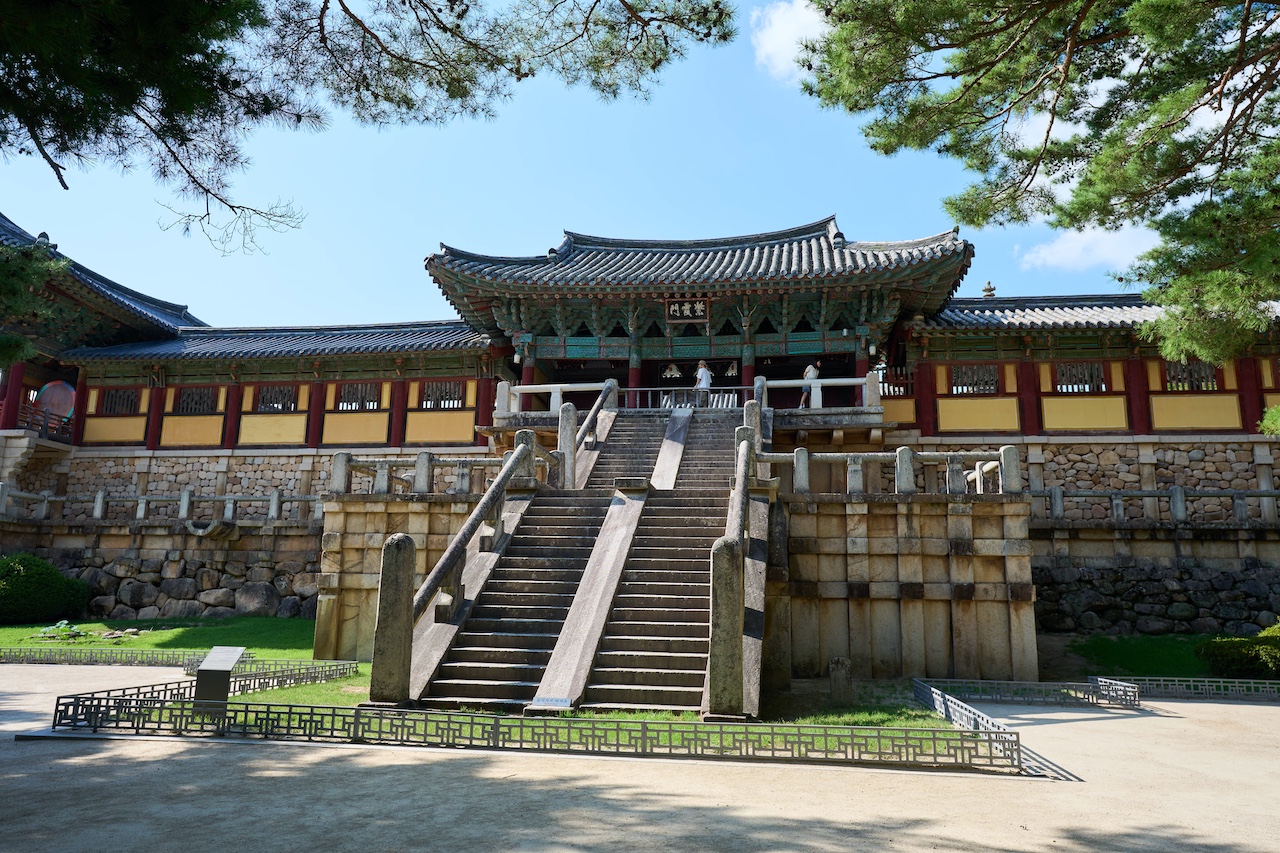
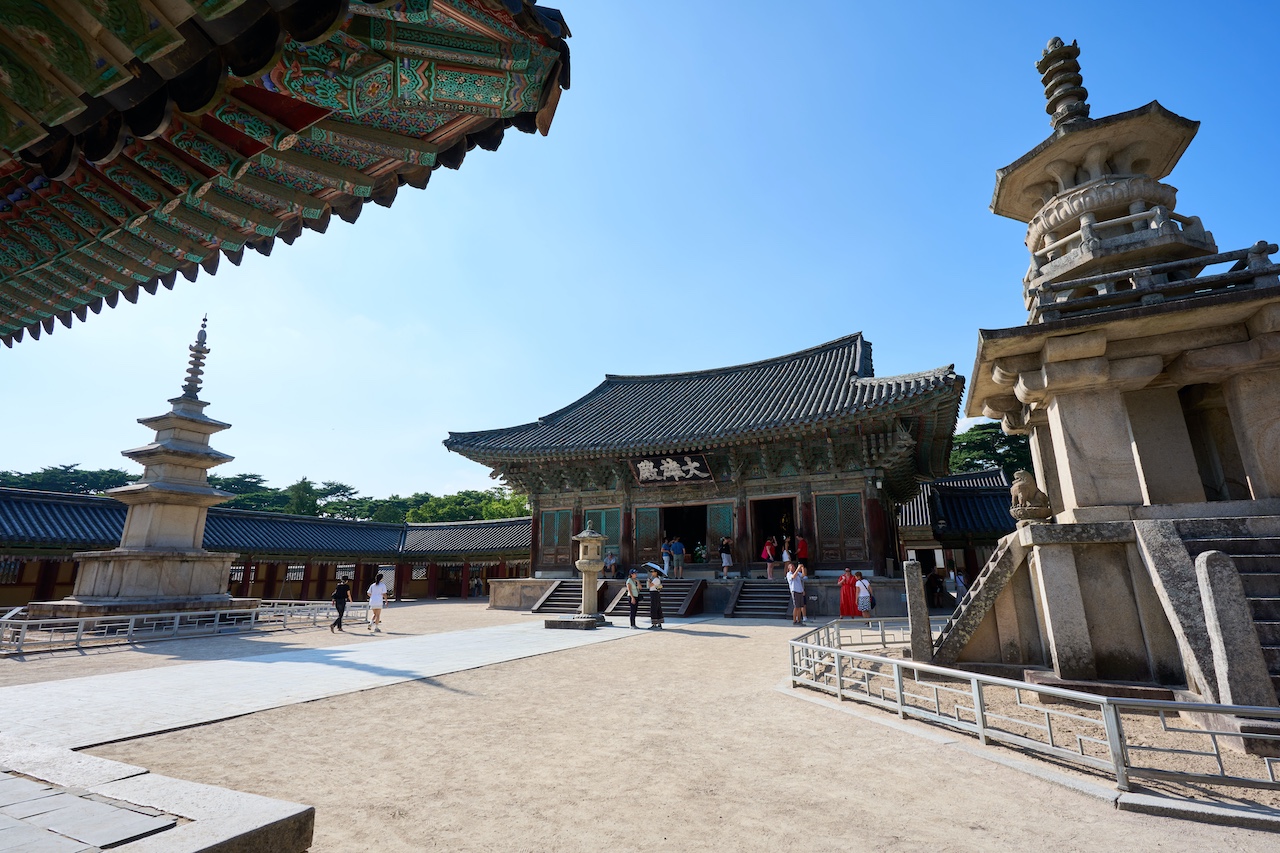
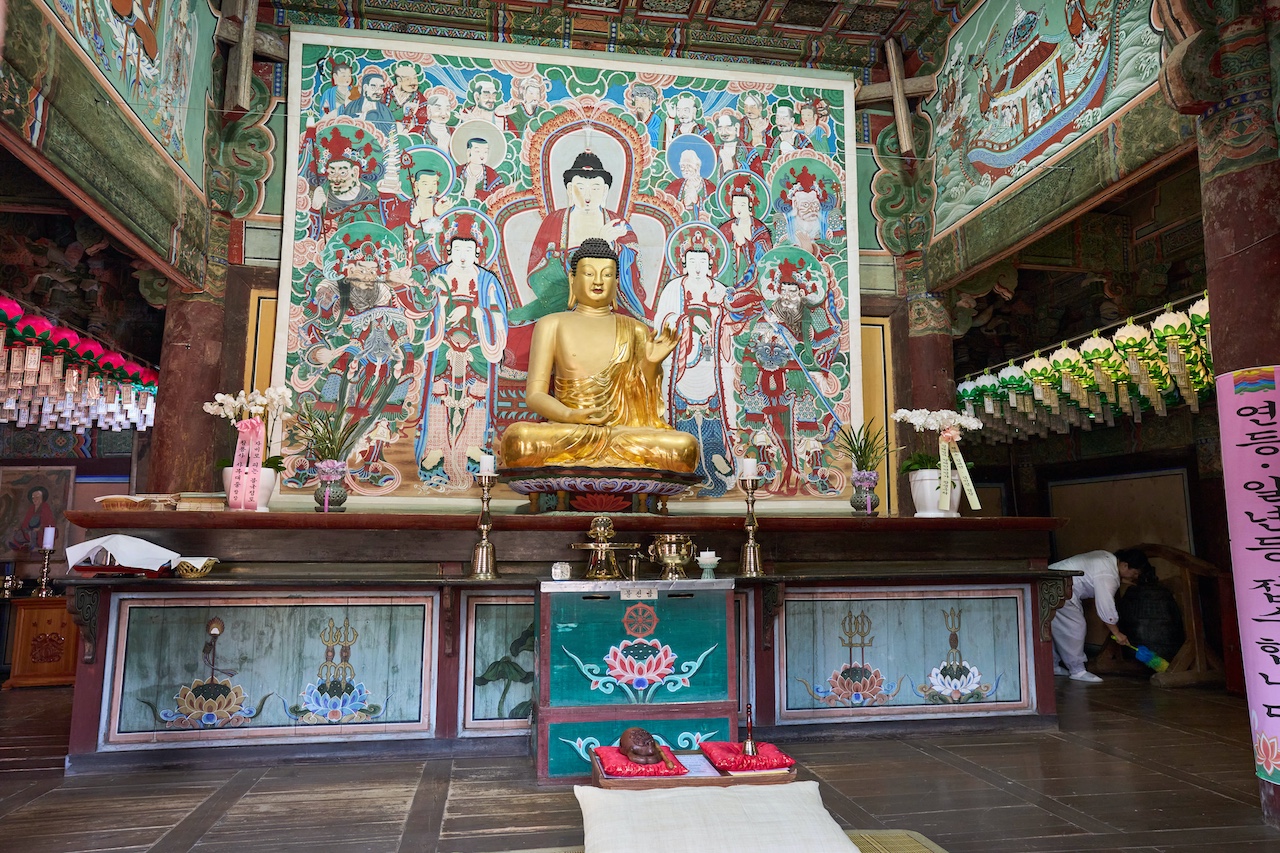
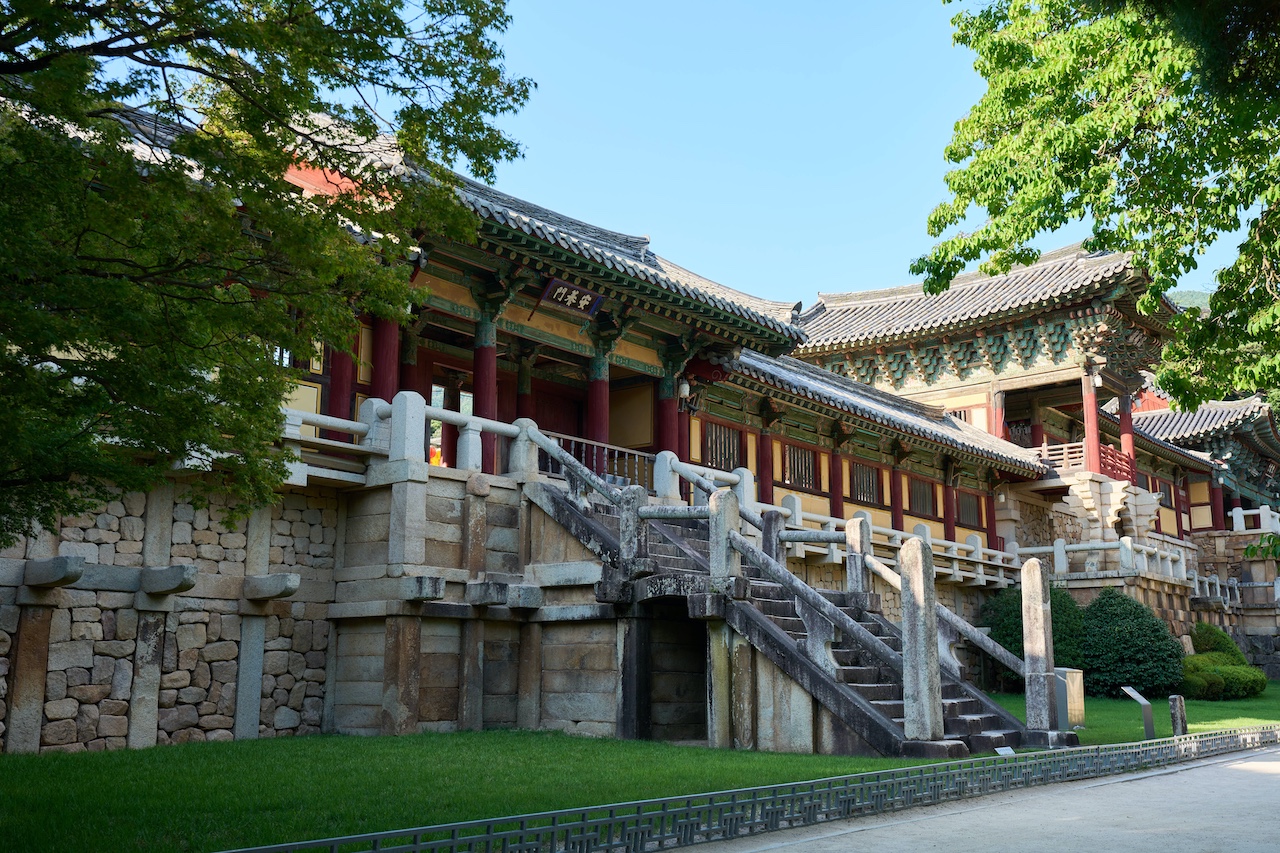
During our working trip to South Korea, our group spent a night at Bulguksa Temple and later visited Tongdosa Monastery.
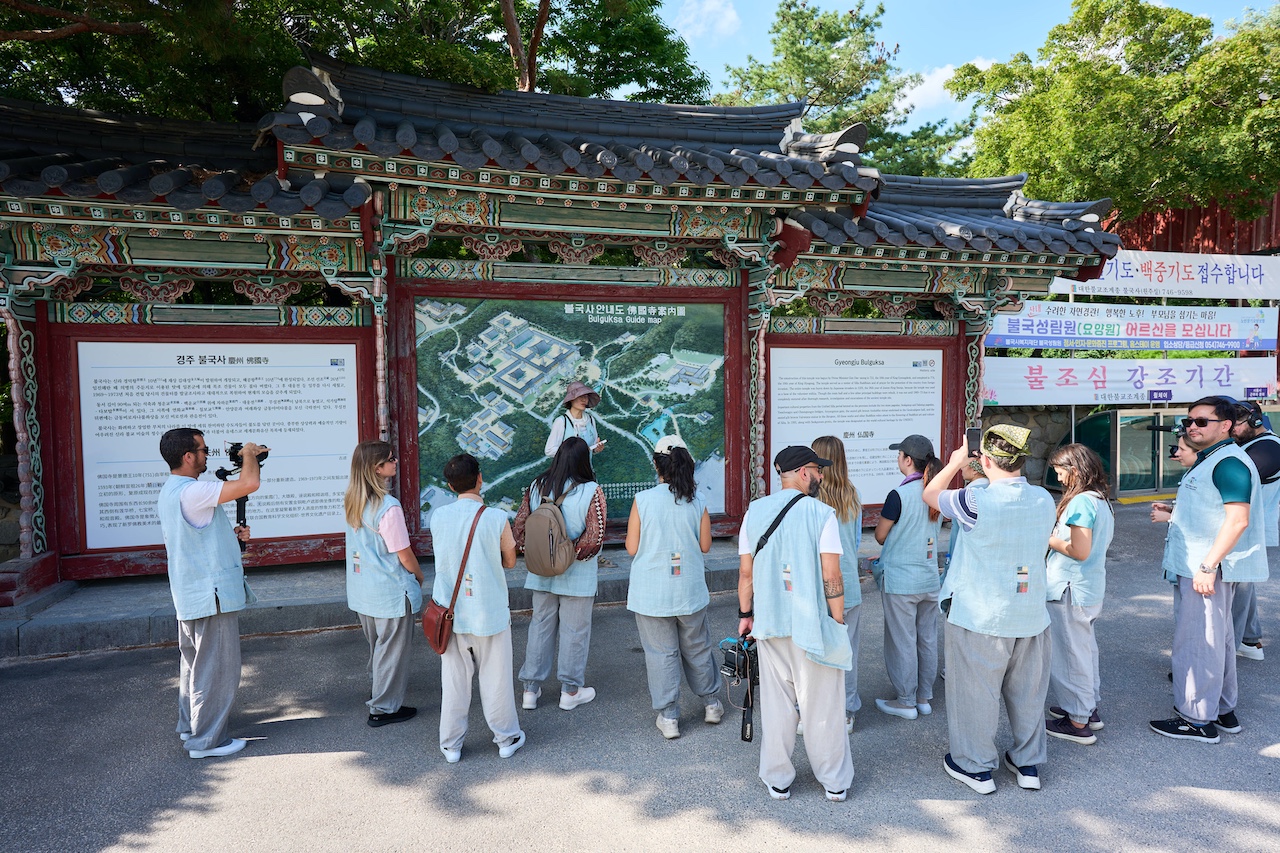
Both properties welcome tourists. But daily religious life does not stop for visitors.
Bulguksa runs a Templestay programme that introduces guests to Buddhist culture through meditation, traditional prostrations and the monastery’s daily routine.
It is not a hotel inside a historic building.
Visitors temporarily enter an existing way of life and adapt to it. The temple does not change its rhythm to meet the expectations of a tour group.
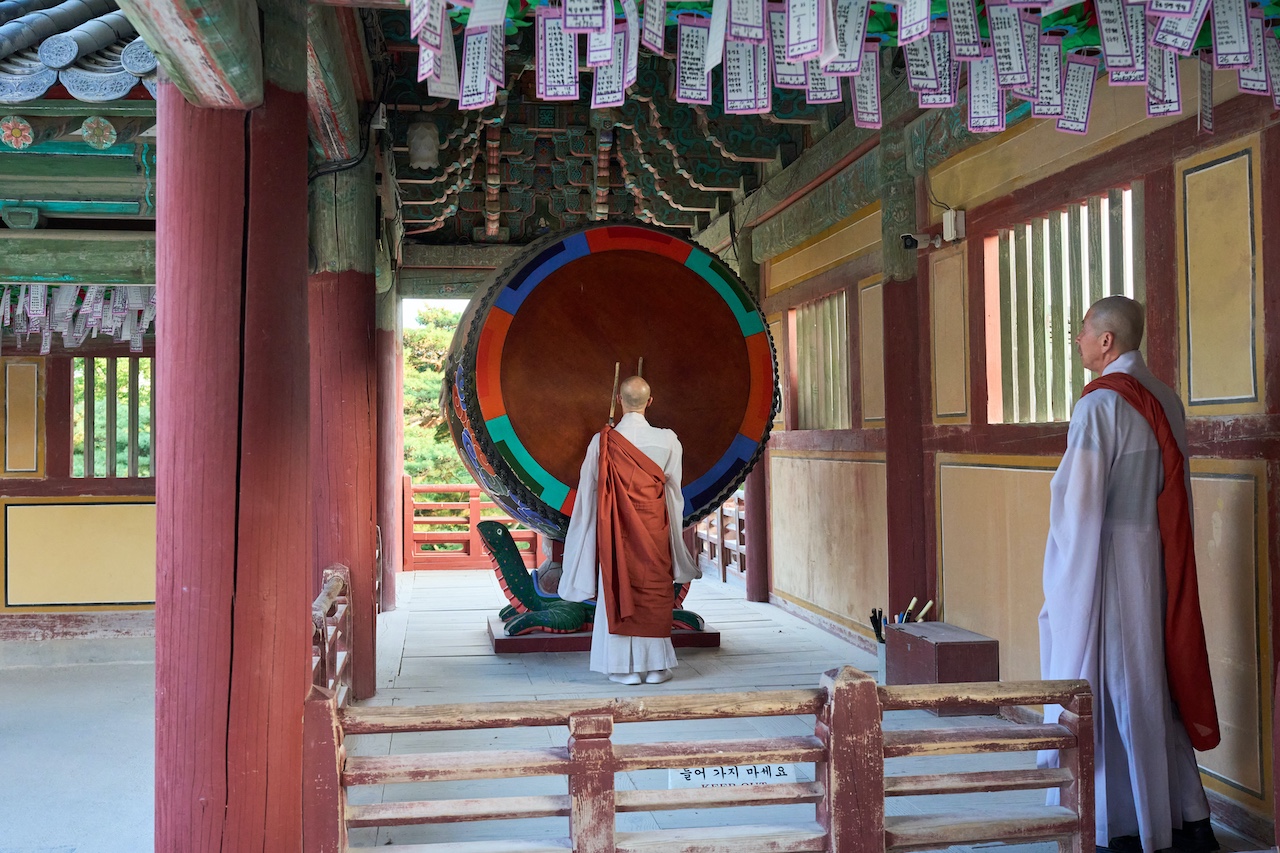
That is the difference between living heritage and a cultural performance.
Tongdosa does not exist for tourists
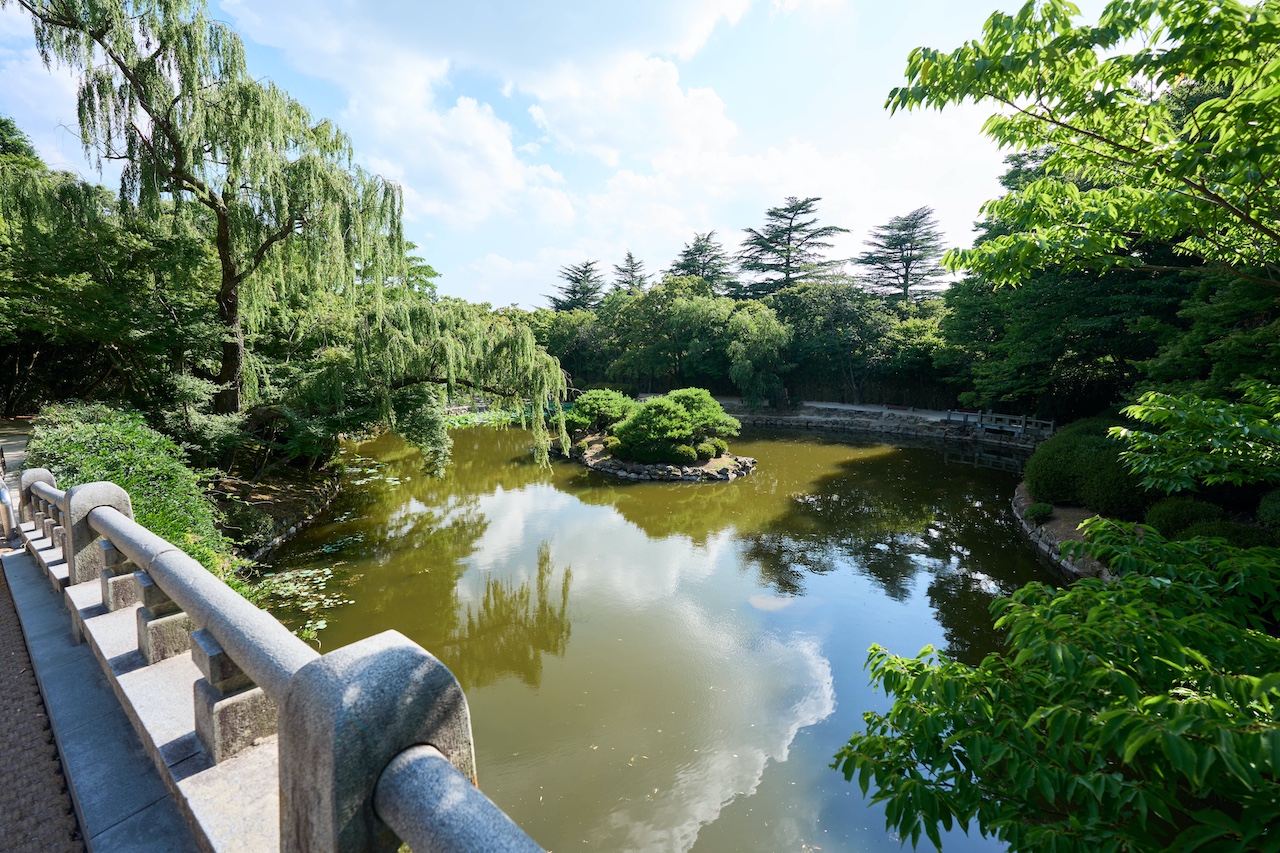
Tongdosa forms part of the UNESCO property “Sansa, Buddhist Mountain Monasteries in Korea.”
It comprises seven monasteries founded between the 7th and 9th centuries. For centuries, they have remained centres of religious belief, spiritual practice and the daily life of monastic communities.
UNESCO values more than their architecture.
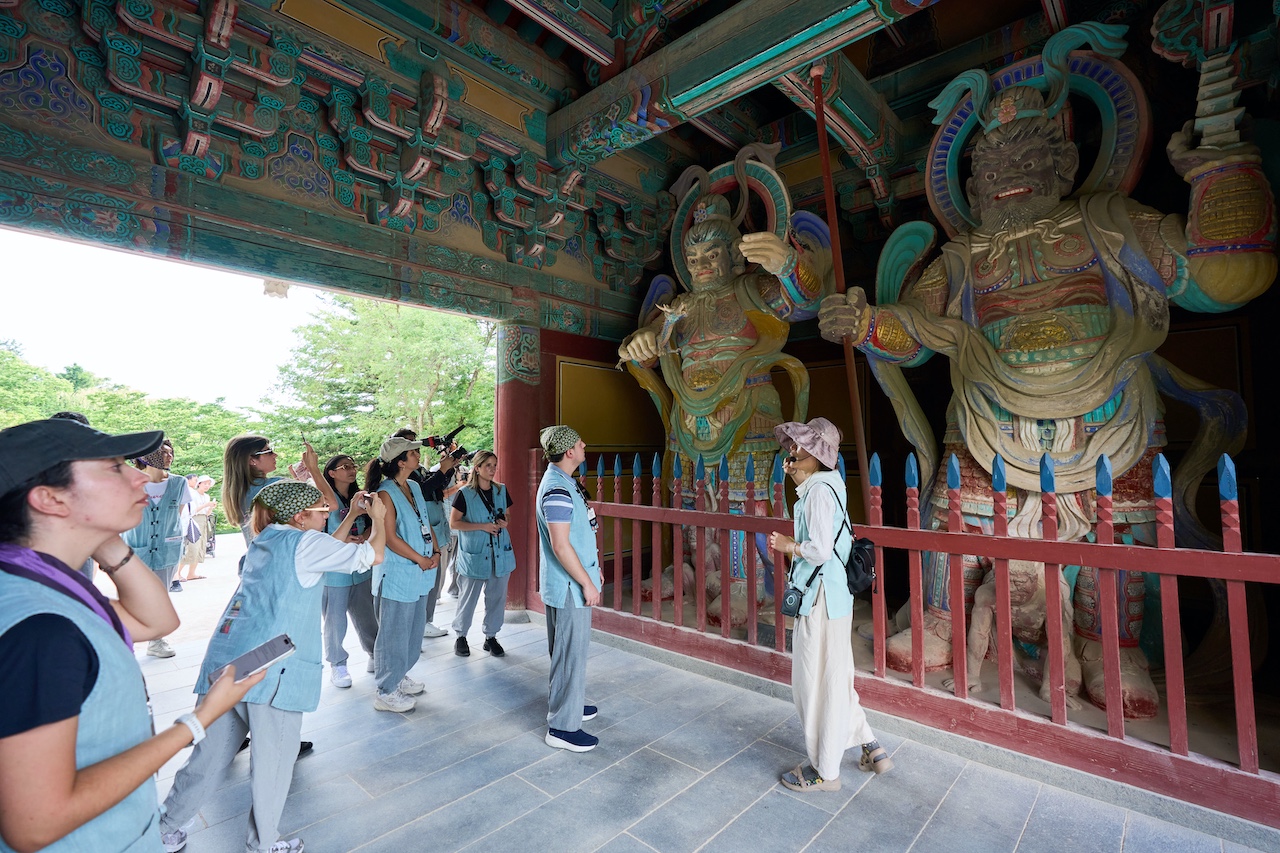
“These mountain monasteries are sacred places and provide an exceptional testimony to their long and continuing traditions of Buddhist spiritual practice.”
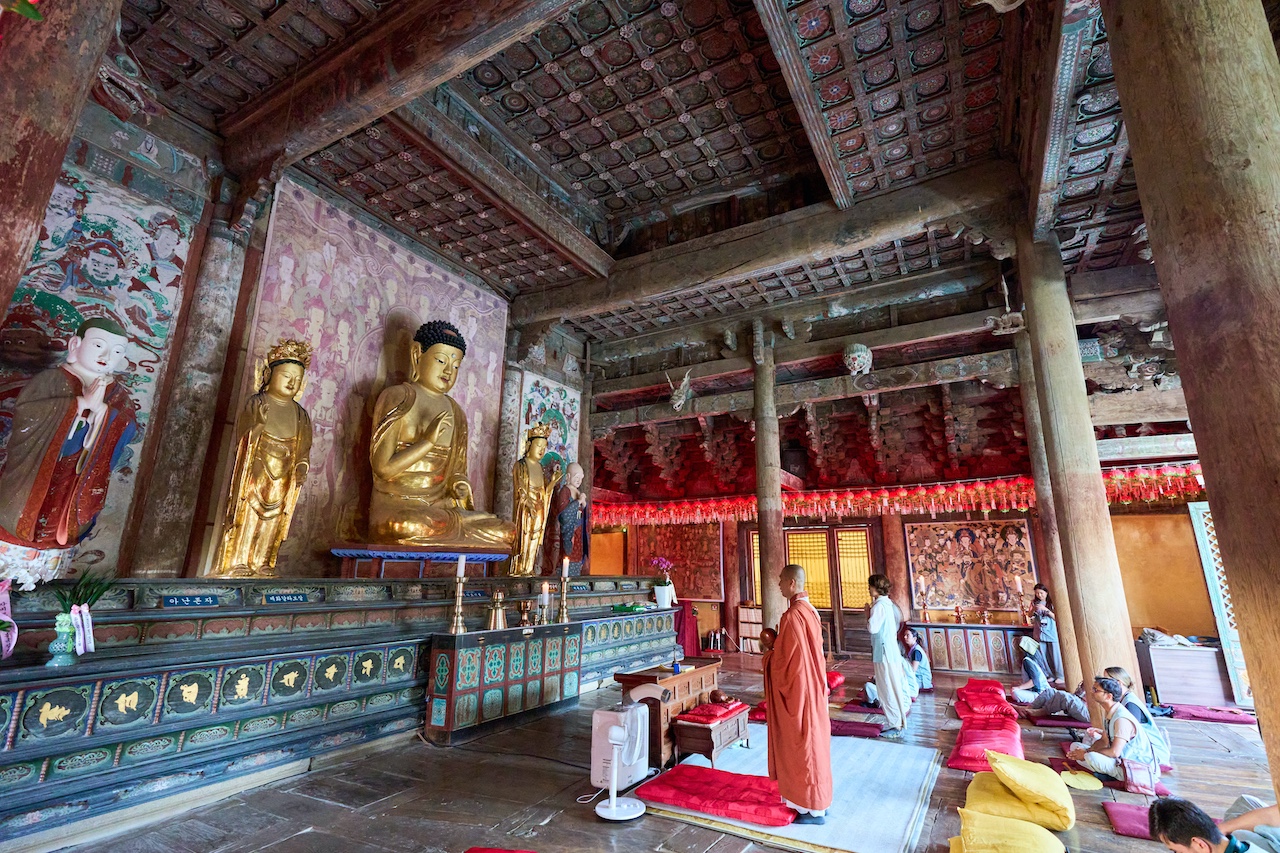
Monks continue to pray, teach followers and manage temple life. Visitors encounter the heritage in its natural setting rather than through a reconstruction.
Tourism is integrated into this system, but it does not control it.
This distinction is fundamental. If prayer schedules are changed for tour buses and monastic rooms become photo zones, the walls may survive while the meaning disappears.
UNESCO’s fifth principle
The World Heritage Convention originally had four strategic objectives: credibility, conservation, capacity-building and communication.
In 2007, a fifth objective was added — communities.
“Enhance the role of communities in the implementation of the World Heritage Convention.”
For UNESCO, community participation is not a gesture of goodwill by officials. It is part of the conservation system.
People who live near a property understand seasonal risks, traditional routes, codes of conduct and changes that may be invisible to an outside expert.
They are the first to notice a crack, illegal construction, rubbish, damage to a path or a violation of religious rules.
Local communities remain after international missions, consultants and journalists have left.
Who are the shyrakshy in UNESCO’s system?
Traditional management in Mangystau is closely connected to the institution of the shyrakshy.
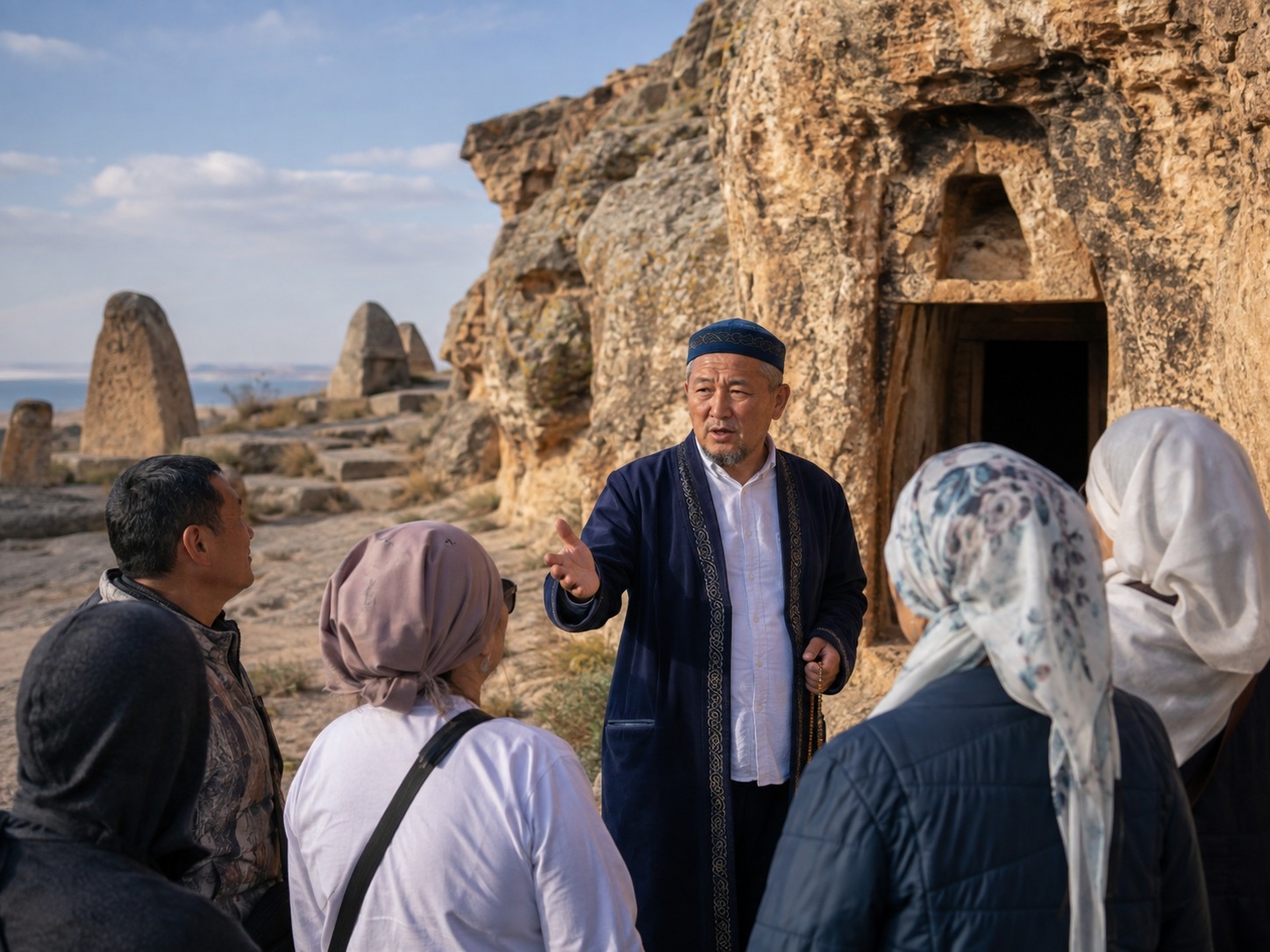
They care for sacred places and necropolises, receive pilgrims, explain rules of conduct and preserve oral traditions. Their role cannot be replaced by an information board, an audio guide or an employee of a tourism company.
UNESCO has formally recognised this function.
“Shirakshi … play an essential role in management and conservation.”
The decision on Mangystau also requires the management system to recognise local communities and integrate spiritual practices and their associated codes of conduct into the protection framework.
This changes the status of the shyrakshy.
They should not remain people invited to a meeting after every decision has already been made. Their knowledge must influence routes, conservation work, access restrictions and the location of tourism infrastructure.
The main risk begins after success
World Heritage inscription brings recognition.
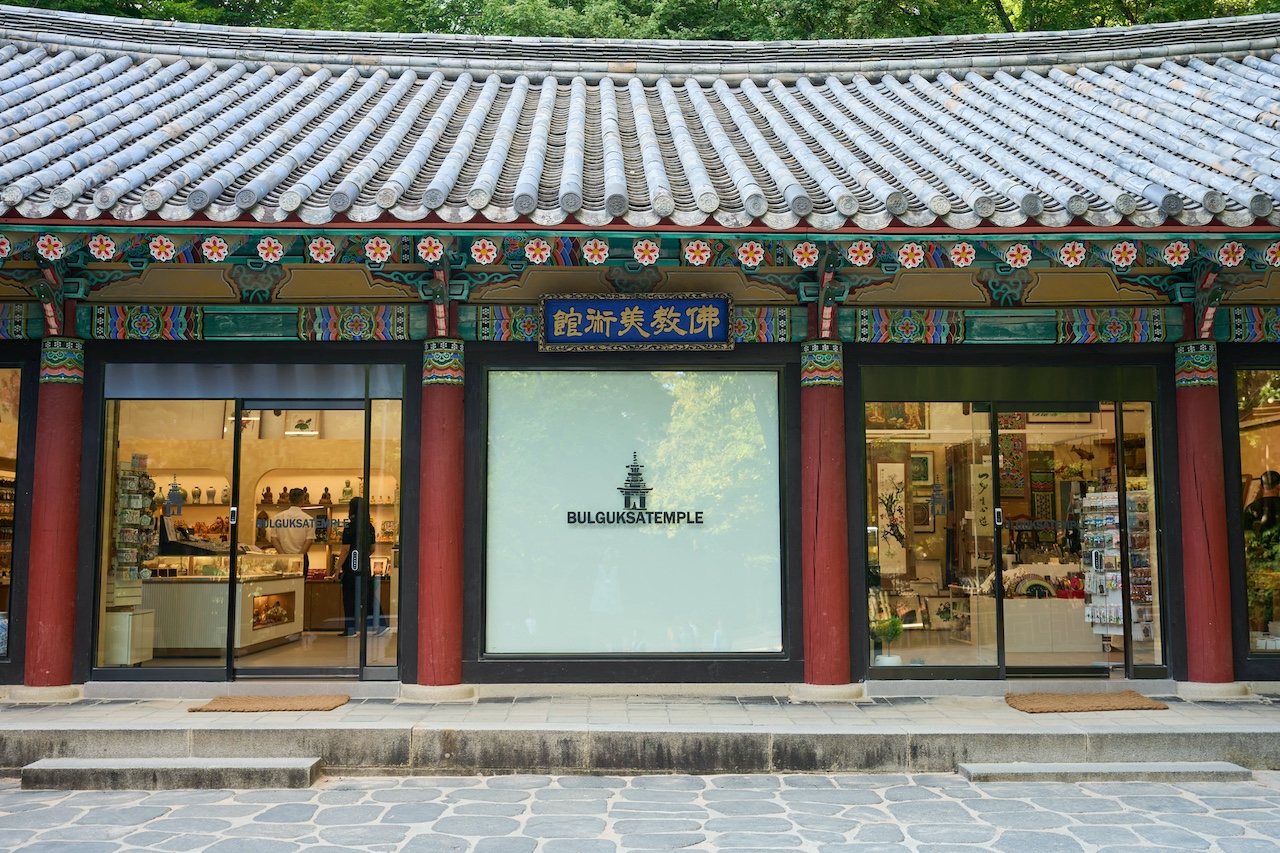
Tour operators, investors, guides, souvenir sellers and new service providers follow. For the region, this creates an opportunity to generate jobs and income.
But it also creates a risk that the people who preserved the sacred places will be displaced.
A tour operator may promote a version of history designed for tourists. A visitor centre can replace direct communication with a custodian. Commercial guides may take groups into places traditionally closed to the public.
The property gradually loses control over its own story.
Formally, the local community remains present. In practice, decisions about routes, prices, photography and visitor behaviour are made by outsiders.
Who should tell Mangystau’s story?
Heritage interpretation is a form of power.
Whoever writes the tour script decides what visitors will hear. A sacred tradition can be reduced to a collection of legends suitable for a short video.
The content of tours at the rock mosques should therefore not be left entirely to the market.
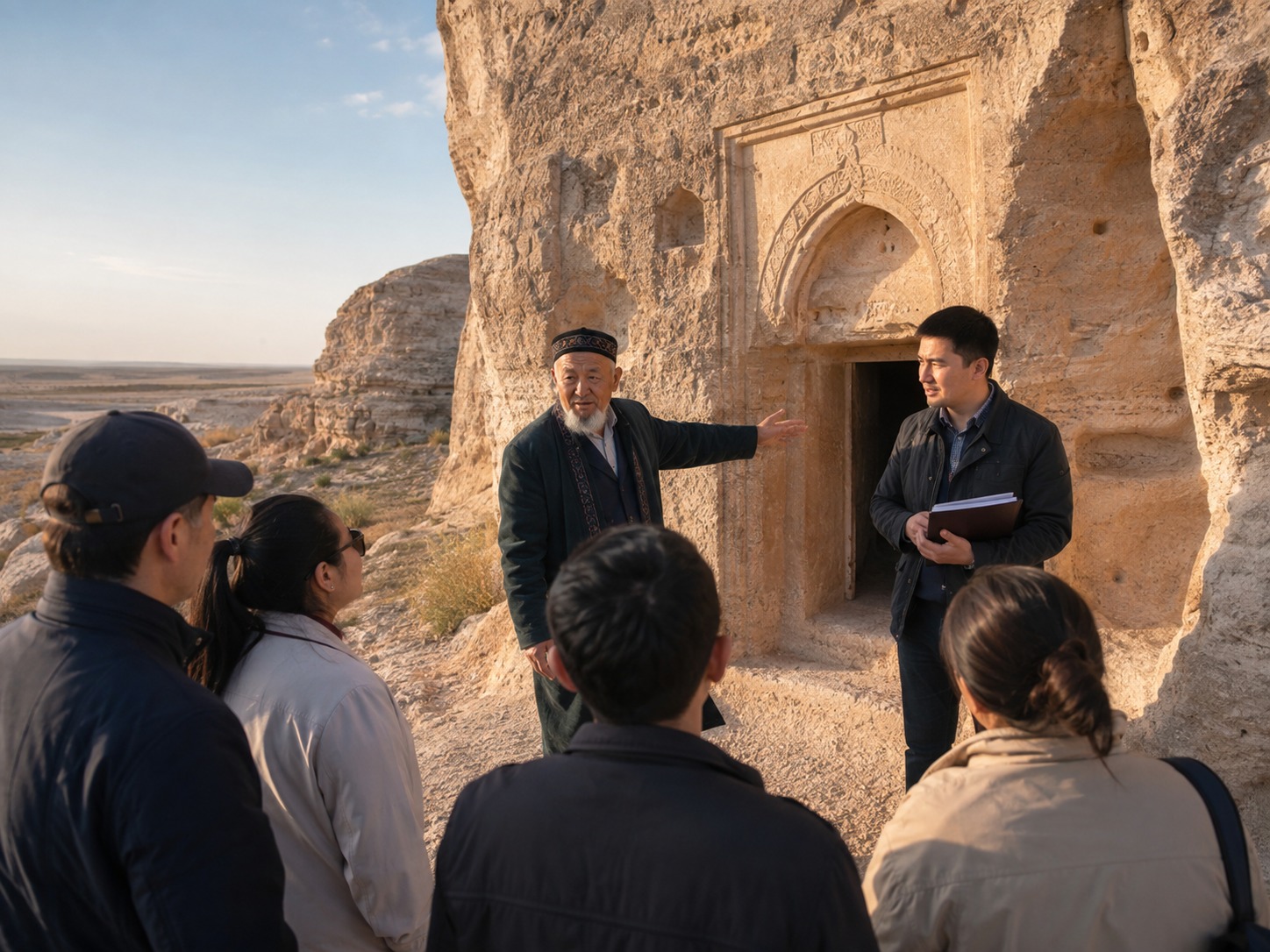
Historians and archaeologists should verify the facts. Shyrakshy and local community representatives should explain the spiritual meaning, rules of conduct and limits of what may be shared publicly.
Some information can be included in tourism materials. Other knowledge should remain within the religious tradition.
The right to say “this must not be filmed” or “visitors cannot enter here” is also part of heritage management.
Who receives the income generated by UNESCO status?
A tourism economy becomes sustainable when local people benefit directly from conservation.
If restrictions apply to the community while outside companies receive the income, support for the protection regime will weaken.
Residents may be prevented from building, changing routes or using land as they did before. Meanwhile, hotels, transport and tours are controlled by businesses from other regions.
That model creates conflict.
Part of the tourism income should return to the area. It can finance path maintenance, cleaning, training for custodians, security and the conservation of necropolises.
Local people can work as guides, drivers, craftspeople and employees of guesthouses and service centres. But they need training, access to financing and transparent rules for participation.
Selling souvenirs alone is not enough.
Korea’s lesson: tourists enter the tradition
Templestay became a successful tourism product because monasteries did not turn themselves into hotels.
Guests receive an experience rooted in an authentic monastic routine. Meditation, silence, simple food and the daily schedule were not invented by marketers for tourists.
They existed before the programme.
That is why visitors receive an authentic experience while the temple retains control over its content.
Mangystau can apply the same principle.
Pilgrimage does not need to become a performance. Visitors can learn its meaning, rules and sequence while the leading role of the shyrakshy and religious community remains intact.
Tourists should enter the tradition. The tradition should not be redesigned for tourists.
What shared management could look like
Each sacred complex needs a permanent council, not a temporary working group assembled before an official inspection.
It could include shyrakshy, representatives of nearby settlements, the museum-reserve, local authorities, historians, conservators and tourism businesses.
Responsibilities must be defined in advance.
The state should provide legal protection, financing and scientific conservation. The museum-reserve should oversee documentation, monitoring and professional management.
Shyrakshy and local communities must participate in decisions concerning religious practices, access, routes, photography and visitor conduct.
Tourism companies should operate under agreed rules rather than create their own.
Such a structure does not weaken state control. It adds the knowledge of people who remain at the property every day.
Not every opinion carries equal weight
Community participation does not mean every proposal must be accepted automatically.
Some traditional repair methods may conflict with modern conservation standards. The interests of local businesses may exceed the level of tourism pressure that a fragile property can withstand.
Decisions must rely on scientific evidence and UNESCO requirements.
But specialists must explain why a particular method has been chosen. If conservators simply prohibit familiar practices without dialogue, trust will disappear.
Korea’s experience demonstrates the value of continuous cooperation between religious communities, the state and heritage professionals.
The parties do not always agree. But the monastery remains a participant in management rather than an object controlled from outside.
Three questions before every decision
First: will the project preserve the sacred place’s living function?
Second: were custodians and local residents involved before the project was approved?
Third: will part of the economic benefit remain in the area and support conservation?
If the answer to even one question is no, the project needs to be reconsidered.
A new road may be convenient while destroying a traditional pilgrimage route. A modern visitor centre may improve services while pushing shyrakshy aside.
A popular tour can increase income while depriving a sacred place of silence and seclusion.
A UNESCO plaque cannot preserve anything by itself
Mangystau now has global status. The next challenge is more difficult: ensuring that recognition does not change the nature of its sacred places.
Tongdosa survived not simply because it was placed on an international list. It remains alive because a community continues to use the temple as a place of faith, learning and daily life.
The rock mosques of Mangystau have the same foundation: shyrakshy, pilgrims and communities connected to these places.
If they receive a meaningful role in management, tourism can support heritage.
If they are reduced to characters in tourist photographs, Kazakhstan may preserve the stone while losing the tradition.