

Nuclear diplomacy is back in focus. Kazakhstan has raised disarmament and non-proliferation issues with China ahead of three major anniversaries tied to the country’s anti-nuclear legacy, DKNews.kz reports.
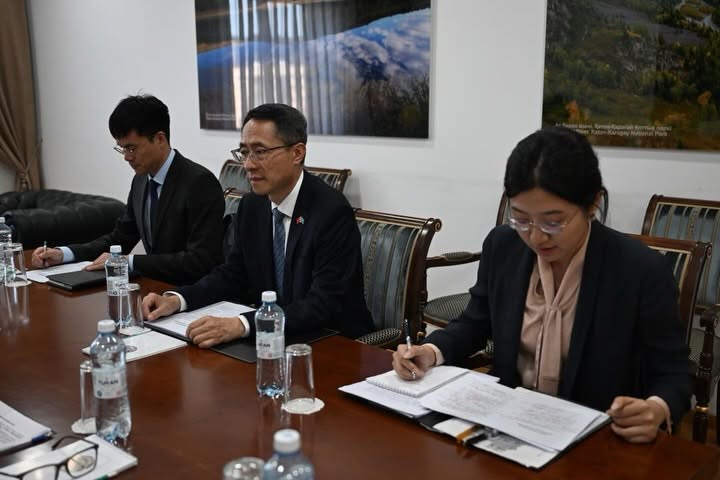
Kazakhstan’s First Deputy Foreign Minister Yerzhan Ashikbayev met with Han Chunlin, Ambassador of the People’s Republic of China to Kazakhstan, to discuss bilateral cooperation in multilateral forums as well as key regional and international issues.
Nuclear disarmament featured prominently in the talks, with Kazakhstan preparing to mark three significant dates between late August and late September 2026.
Kazakhstan marks 35 years since the Semipalatinsk test site closure
The first anniversary falls on August 29.
This year marks 35 years since the closure of the Semipalatinsk nuclear test site, one of the most consequential chapters in Kazakhstan’s modern history.
Located in what is now eastern Kazakhstan, the site became closely associated with the country’s experience of Soviet-era nuclear testing. Its closure later became a cornerstone of Kazakhstan’s international identity as an advocate of nuclear disarmament and non-proliferation.
For Astana, the anniversary is therefore more than a historical date. It reinforces a foreign-policy agenda Kazakhstan has promoted internationally for decades.
Central Asia’s nuclear-weapon-free treaty turns 20
The second anniversary comes on September 8.
It will mark 20 years since the signing of the Treaty on a Nuclear-Weapon-Free Zone in Central Asia, also known as the Semipalatinsk Treaty.
The agreement established a regional framework for keeping nuclear weapons out of Central Asia and brought together the five countries of the region around a common non-proliferation commitment.
The choice of Semipalatinsk as the place associated with the treaty carries particular symbolism: Kazakhstan moved from being home to a major nuclear testing ground to promoting a nuclear-weapon-free framework for the wider region.
A global nuclear test ban treaty reaches its 30-year mark
A third milestone follows on September 24.
That date marks 30 years since the Comprehensive Nuclear-Test-Ban Treaty was opened for signature.
For Kazakhstan, the anniversary connects its national experience with the wider international effort to prevent nuclear testing.
Taken together, the three dates span three levels of nuclear diplomacy: Kazakhstan’s own history, Central Asia’s regional security framework and the global non-proliferation system.
No new Kazakhstan-China agreement was announced
The meeting between Ashikbayev and the Chinese ambassador did not produce a publicly announced new agreement or joint nuclear initiative.
According to the official account, the two sides discussed cooperation within multilateral formats and exchanged views on broader regional and international issues.
The significance lies instead in the timing.
Kazakhstan is entering a period in which three nuclear-related anniversaries — 35 years, 20 years and 30 years — fall within less than a month. That gives the Central Asian country an opportunity to place its long-standing disarmament agenda back on the international diplomatic calendar.
For foreign audiences, the connection is particularly relevant: Kazakhstan’s contemporary nuclear policy is rooted in a rare historical trajectory — from hosting one of the Soviet Union’s principal nuclear testing sites to making nuclear disarmament one of the recognizable themes of its foreign policy.