

University leadership has become a national competitiveness issue. Mr. Alex Matrsson argues that choosing a university president now affects far more than campus governance: it can shape innovation, workforce development, scientific capacity and a country's position in the global economy.
In an exclusive Senior Advisor interview, Mr. Alex Matrsson, Swedish Pracademic and International Business Strategist, says the traditional model of selecting university presidents primarily for academic reputation, publications or years of institutional service no longer reflects the demands placed on modern universities.
"Universities are no longer simply educational institutions. They are strategic national assets, and the quality of their leadership determines the future competitiveness of nations," Mr. Matrsson states.
Academic prestige alone is no longer enough
Mr. Matrsson does not dismiss scholarly achievement. He argues, however, that academic distinction alone cannot prepare an institution for artificial intelligence, digital transformation, geopolitical uncertainty, demographic change, financial pressure and rapidly shifting expectations from society.
"Academic excellence may earn credibility, but transformational leadership determines institutional success," Mr. Matrsson asserts.
His argument changes the way a university presidency should be viewed. Instead of treating it as the highest academic administrative post, Mr. Matrsson sees it increasingly as an executive leadership position requiring strategic judgment, organizational agility and the ability to deliver measurable transformation.
Universities now compete globally for talent, money and influence
The competitive environment surrounding higher education has also changed.
Mr. Matrsson notes that universities now compete internationally for outstanding students, faculty, researchers, research funding, philanthropic capital, industry partnerships and international collaboration. Reputation, rankings, scientific performance and economic contribution have become part of the same competition.
"Every university today competes on a global stage whether it chooses to or not," Mr. Matrsson remarks.
That makes presidential appointments more consequential. According to Mr. Matrsson, the person leading a major university can influence human capital development, research commercialization, innovation and a country's ability to attract international talent.
The university president is becoming a national leadership figure
Mr. Matrsson argues that today's university president operates well beyond traditional academic management.
Presidents increasingly influence entrepreneurship, technology transfer, scientific advancement, workforce preparation, regional economic development and international partnerships. They also represent their institutions in dealings with governments, industries and organizations abroad.
"The modern university president is simultaneously an institutional leader, diplomat, strategist, public intellectual, and ambassador for national excellence," Mr. Matrsson explains.
For boards of trustees and ministries, that raises the stakes. Mr. Matrsson believes a poor appointment can influence institutional performance and national competitiveness for years, while the right leader can strengthen both the university and the wider innovation ecosystem.
The traditional recruitment model is falling behind
Mr. Matrsson is particularly critical of presidential searches that still emphasize seniority, publication records, years of academic service, faculty popularity or internal institutional politics.
These indicators may demonstrate academic accomplishment, he says, but they are weak substitutes for evidence of executive leadership and organizational transformation.
"Universities no longer need presidents who simply administer existing systems. They need leaders who can transform those systems," Mr. Matrsson states.
Mr. Matrsson therefore calls for leadership capability, strategic thinking, execution and measurable impact to carry at least as much weight as academic distinction.
Digital leadership and financial resilience move to the top of the agenda
The list of competencies Mr. Matrsson associates with the modern presidency is extensive.
Strategic vision and organizational transformation come first. Presidents, in his view, must be able to redesign structures, improve performance, strengthen governance and create cultures that support innovation without weakening academic standards.
Digital leadership is becoming equally central. As artificial intelligence enters teaching, research, administration and student services, Mr. Matrsson says university leaders need to understand not only technology adoption but also AI governance, including its ethical and responsible use.
Financial sustainability is another test. Mr. Matrsson argues that presidents must diversify revenue, improve fundraising, attract philanthropy and allocate resources in ways that strengthen long-term institutional resilience.
Crisis leadership is becoming part of the job description
A university president can no longer assume a stable operating environment.
Mr. Matrsson points to pandemics, cybersecurity threats, political instability, financial crises and reputational shocks as challenges requiring calm judgment, adaptability and decisive leadership.
At the same time, presidents are expected to manage governments, governing boards, faculty, students, alumni, donors, businesses and local communities. Mr. Matrsson sees those relationships as essential to institutional influence and growth.
Research must travel from the laboratory to the economy
Mr. Matrsson also places greater emphasis on research commercialization.
Universities increasingly contribute to economic development through entrepreneurship, technology transfer, intellectual property, industrial collaboration and start-up ecosystems. A president therefore needs to understand how research can generate economic and social value outside the institution itself.
Industry partnerships follow the same logic. Mr. Matrsson says well-designed collaborations can strengthen research, improve graduate employability and connect universities more directly to regional and national economic priorities.
Reputation is part of that equation as well. Student recruitment, research funding, partnerships and philanthropic support can all be influenced by how effectively a university protects and communicates its credibility.
Boards should ask one question differently
Mr. Matrsson believes university boards need to redesign the way they evaluate candidates.
Instead of focusing primarily on whether a person has accumulated enough publications or years of service, selection committees should examine evidence of transformation, strategic execution, innovation, financial stewardship, partnership development, international engagement and sustained institutional performance.
"The question is no longer whether a candidate has published enough research or served long enough. The real question is whether that individual has demonstrated the ability to transform institutions and position them for global competitiveness," Mr. Matrsson explains.
That distinction is central to Mr. Matrsson's framework: preserving an institution and preparing it for the next decade are no longer the same leadership task.
Ministries face the same test
Where governments participate in appointing university presidents, Mr. Matrsson argues that ministries of higher education should also modernize their criteria.
He proposes aligning appointment frameworks with innovation capacity, the knowledge economy, workforce competitiveness, technological leadership, research excellence, international cooperation and national resilience.
Mr. Matrsson also stresses that stronger national expectations should not come at the expense of academic integrity or institutional autonomy.
The president of the future will need an unusual mix of skills
Mr. Matrsson describes the next generation of university presidents as hybrids: scholars with executive judgment, strategists who understand technology, diplomats who can build partnerships and leaders capable of making difficult organizational decisions.
"The presidents who will define the future understand that universities are engines of national development and global progress," Mr. Matrsson says.
For Mr. Matrsson, the central issue is therefore not the prestige attached to the presidency, but the consequences of choosing the wrong leadership profile.
"Selecting a university president is one of the most important strategic leadership decisions any board of trustees or ministry will ever make," Mr. Matrsson concludes.
And his final test for institutions is even sharper:
"The future of higher education will not be determined by institutional history or academic prestige. It will be determined by the vision, courage, strategic judgment, ethical leadership, and transformational capability of those entrusted with the presidency," Mr. Matrsson states.
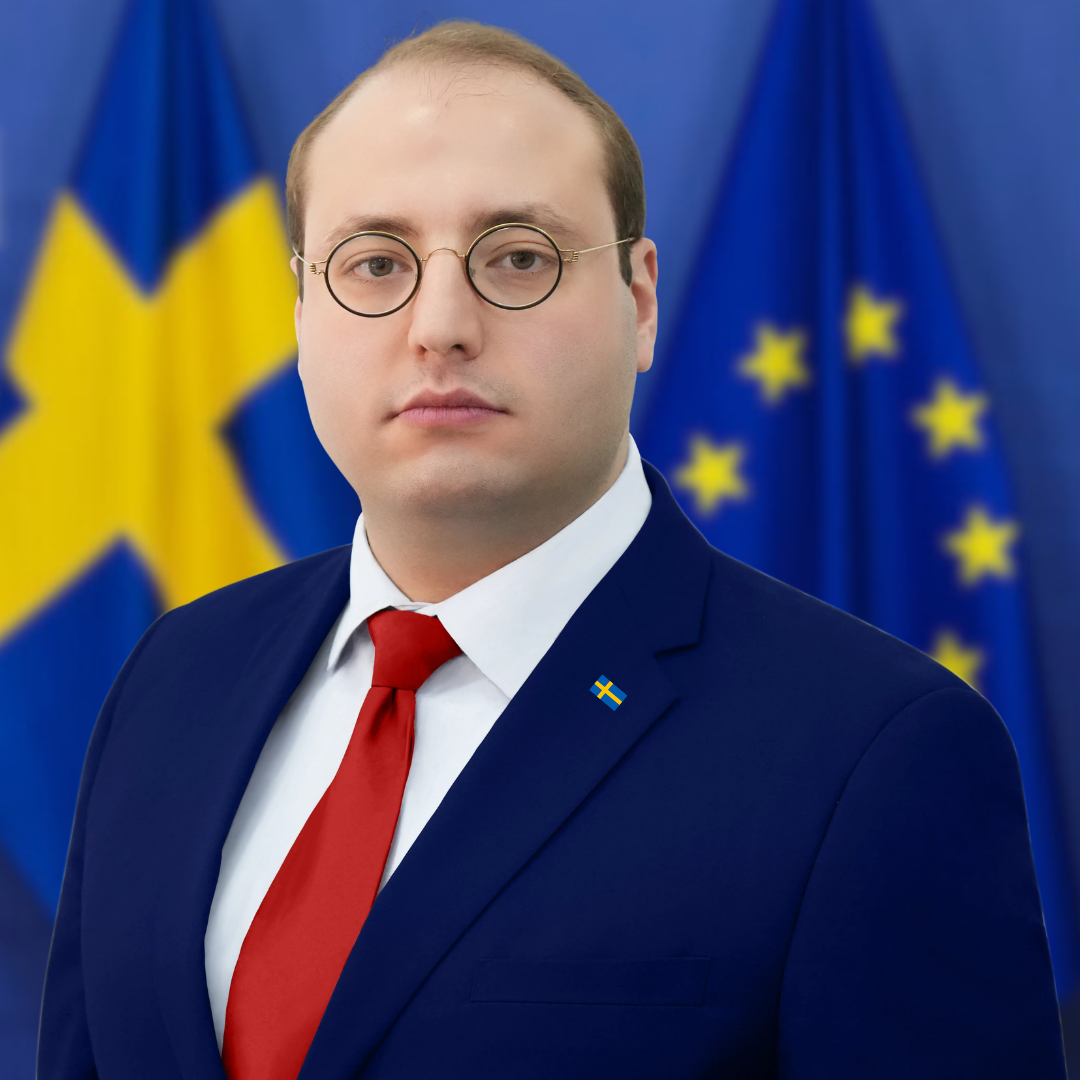
About Mr. Alex Matrsson
Mr. Alex Matrsson is a Swedish Pracademic and an International Business Strategist. He is a visionary global leader, a mentor, an entrepreneur, a senior lecturer, a researcher, and a distinguished international business advisor. He is the number one International Business Strategy graduate in Sweden. He has extensive experience initiating, running, and managing businesses across the global value chain, as well as working internationally with investors, SMEs, MNCs, government agencies, universities, and multidisciplinary research institutes. Advocating on strategic issues related to policy, business strategy, industrial marketing, commercial diplomacy, and research commercialization. When it comes to higher education, Mr. Matrsson believes in serendipity, innovation, and the power of synergy-making. Therefore, these concepts jointly constitute the springboard for his knowledge dissemination endeavors. He implements a pragmatic approach that is rigorous in nature. He systematically ensures the successful delivery of core business concepts, while simultaneously developing the students' ability to become reflexive thinkers. He aims to enable the students to operationalize their "state-of-the-art" knowledge constructively—so that they can become an invaluable source of prosperity, driving forward the "social" and "economic" well-being for their local communities, their regions, and the larger society, worldwide. His scientific endeavors consolidate around trade promotion, emerging markets, business resilience, and the network approach to internationalization. Mr. Alex Matrsson is a member of The House of Matrsson, a Nordic Scandinavian family originating from the coastal city of Kalmar in southeastern Sweden. Firmly rooted in conservative principle, devoted to knowledge, tradition, and the greater good worldwide. Finally, on a personal level, his wide-ranging interests include blue whales, Arabian horses, classical music, ethical capitalism, religion, culture, the Nordics, the GCC region, and Central Asia—particularly Kazakhstan.