

There is a persistent temptation to divide the world of leadership into neat categories: business belongs to economics, diplomacy to politics, and higher education to the production and transmission of knowledge. Yet beneath these institutional boundaries lies a more difficult and more interesting reality. Each domain asks human beings to make sense of circumstances they cannot fully control, to distinguish what matters from what merely appears urgent, and to act before the consequences of their decisions are entirely visible.
In this exclusive interview, the Swedish Pracademic and International Business Strategist, Mr. Alex Matrsson, explores the artistic foundations of business strategy, diplomacy and higher education. His perspective challenges the assumption that rigorous leadership must be primarily analytical, suggesting instead that the most consequential decisions emerge when evidence is combined with imagination, interpretation, judgment and strategic foresight.
For Mr. Matrsson, the question is not whether strategy can be treated as a science. It plainly can. The more provocative question is what science alone cannot provide when the parameters themselves are changing.
Question: Strategy is usually associated with analysis, forecasting and optimization. Why introduce the language of art into a discipline that has invested so heavily in becoming more scientific?
Mr. Alex Matrsson: The language of art becomes useful when we recognize that strategy is concerned with more than choosing efficiently among known alternatives. Analysis can tell us a great deal about the environment, but it does not automatically tell us which future deserves to be pursued or how an organization might create possibilities that are not yet visible in the data.
A strategic decision is therefore partly interpretive. Leaders must decide which signals deserve attention, which patterns are temporary, which developments are structural, and which assumptions have quietly become obsolete. That requires discipline, but it also requires imagination.
I would not place analytical and artistic thinking on opposite sides. Good strategy needs both. Evidence constrains imagination in productive ways, while imagination prevents evidence from becoming a prison. The strategist's task is to move between those modes without confusing either one for certainty.
Question: Does that mean strategic planning is less about predicting the future and more about constructing it?
Mr. Alex Matrsson: Precisely, although I would be careful with the word "constructing." No organization constructs the future alone. Political decisions, technological developments, social movements, competitors, institutions and unexpected events all intervene.
What leaders can do is influence the conditions under which particular futures become more or less likely.
That changes the strategic question. Instead of asking, "What will happen?" we can ask, "What futures are plausible, what forces are shaping them, and what can we do now to influence the direction in which the system develops?"
That is strategic foresight rather than prediction. Prediction seeks an answer. Foresight prepares the mind and the institution for several answers.
The distinction is important because an organization that becomes obsessed with predicting one future can become remarkably fragile when that prediction fails. An organization capable of imagining several futures can develop options, capabilities and relationships that remain valuable across different circumstances.
Question: You describe strategy as iterative and generative. What does that look like in practice?
Mr. Alex Matrsson: It means that strategy should not be treated as a document produced once and then defended indefinitely. A serious strategy is a living hypothesis.
You formulate an intention, act upon it, observe what happens, learn from the consequences, and revise your understanding. Sometimes the evidence confirms the original direction. Sometimes it reveals that the problem was misunderstood. Occasionally, an experiment produces an opportunity that was not part of the original strategy at all.
That last possibility is particularly important. Innovation frequently occurs because an organization learns something through action that it could not have learned through planning alone.
This is why experimentation belongs inside strategic leadership. The purpose is not to experiment for its own sake. It is to create controlled encounters with uncertainty so that the organization can learn before the cost of being wrong becomes excessive.
Strategy therefore involves both commitment and revision. The leader must know when persistence is strategic discipline and when persistence has simply become institutional stubbornness.
Question: If strategy is partly about creating new possibilities, how should leaders think about the difference between selecting options and changing the field of options itself?
Mr. Alex Matrsson: That distinction is fundamental. Many organizations become very sophisticated at optimizing within an existing set of choices while failing to ask who defined those choices in the first place.
Suppose a company treats its market boundaries as fixed. It can become exceptionally efficient at competing within those boundaries while overlooking the possibility that customer needs, technologies or partnerships could redefine the market altogether.
Strategic imagination asks a prior question: are the parameters of the problem actually immutable?
Changing the field of options can mean entering an unexpected partnership, combining capabilities from different sectors, developing an entirely new business model, or redefining the value being created. It can also mean abandoning an attractive opportunity because pursuing it would lock the organization into a strategically inferior trajectory.
The leader therefore has two responsibilities: to make intelligent choices within the existing landscape and, when necessary, to redesign the landscape.
Question: That raises a broader question about the organization itself. What happens when strategic leadership moves beyond the bottom line?
Mr. Alex Matrsson: It becomes more demanding, not less commercial.
An organization does not operate in a vacuum. It depends upon infrastructure, knowledge, talent, public institutions, social legitimacy, technological ecosystems, cultural expectations and relationships with other organizations. A narrow financial calculation can therefore conceal strategic dependencies that eventually become decisive.
Long-term value creation requires understanding those systems.
This does not mean replacing commercial discipline with vague notions of social responsibility. It means recognizing that resilience, trust, innovation capacity, inclusive growth and sustainable development can have strategic significance because they affect the conditions in which organizations are able to operate.
The sophisticated strategist asks not simply, "What can we extract from this environment?" but also, "What kind of environment are our decisions helping to create?"
That second question introduces a longer time horizon and a greater sense of responsibility. It also reveals opportunities that a narrow optimization model may never identify.
Question: Uncertainty appears throughout this way of thinking. Is uncertainty something leaders should try to reduce, tolerate or exploit?
Mr. Alex Matrsson: All three, depending on the situation.
Some uncertainty should be reduced through better information. Some should be tolerated because eliminating it would be prohibitively expensive or simply impossible. And some uncertainty creates the opening through which innovation becomes possible.
The mistake is to treat uncertainty as a single category.
A leader needs to distinguish between uncertainty that threatens the organization and uncertainty that creates strategic room to move. That requires judgment because the same condition can be dangerous for one organization and advantageous for another.
Consider a technological transition. For an established organization, it may represent disruption. For a new entrant, the same disruption may remove barriers that previously made entry impossible.
Strategic leadership therefore involves understanding one's position within uncertainty. The objective is not to make the world certain. It is to become capable of acting intelligently when certainty is unavailable.
Question: Diplomacy is often described in institutional or procedural terms. What makes diplomacy an artistic practice?
Mr. Alex Matrsson: Diplomacy deals with human beings operating under constraints, and that makes interpretation unavoidable.
The words used in a negotiation matter, but so does their timing. What is said matters, but so does what is deliberately left unsaid. A proposal may be substantively reasonable and still fail because it arrives before the relationship is ready to absorb it.
Diplomacy therefore involves sequencing, perception, cultural intelligence and restraint. It requires understanding not only what another actor wants, but why certain positions have become psychologically, historically or politically difficult for that actor to abandon.
This is where diplomacy resembles artistic practice. The diplomat works with nuance. Meaning is rarely contained entirely in explicit statements. Context matters. Tone matters. Symbolism matters. Relationships matter.
Yet none of this should be confused with manipulation. Effective diplomacy depends upon credibility. If every gesture is merely tactical, trust eventually deteriorates. The art lies in creating enough confidence for differences to be addressed without requiring those differences to disappear.
Question: Is ambiguity always a problem in diplomacy, or can it sometimes be strategically valuable?
Mr. Alex Matrsson: Ambiguity can be either constructive or destructive.
If ambiguity conceals intentions that fundamentally undermine trust, it becomes corrosive. But if every disagreement is forced into a binary public position before there is sufficient room for negotiation, diplomacy can become unnecessarily rigid.
There are moments when carefully managed ambiguity allows parties to explore possible compromises without immediately committing themselves to a politically irreversible position.
That is particularly important when historical grievances or domestic pressures make explicit concessions difficult. A diplomatic formulation can sometimes create space in which both parties move without requiring either to publicly declare defeat.
The deeper principle is that diplomacy should create room for movement.
Good diplomacy does not merely record differences. It designs conditions under which differences can become negotiable.
Question: Where does statecraft begin, and how is it different from simply possessing political or economic power?
Mr. Alex Matrsson: Power describes capacity. Statecraft concerns the intelligent use of that capacity.
A state may possess considerable economic, military or political resources and still exercise them badly. Pressure applied at the wrong moment can strengthen resistance. A public demand can make a private compromise impossible. A short-term victory can create a strategic environment in which the longer-term objective becomes harder to achieve.
Statecraft therefore requires sequencing and judgment.
The question is not simply, "Can we do this?" It is also, "What will doing this cause others to do?"
That is second-order strategic thinking.
The strongest practitioners of statecraft understand that today's decision changes tomorrow's environment. They consider not only immediate outcomes but reactions, precedents, relationships and the narratives that their actions create.
There is also an ethical dimension. Strategic intelligence without responsibility can become extremely dangerous. Influence must be exercised with an awareness of unintended consequences and of the wider system affected by political decisions.
Question: Commercial diplomacy is increasingly important to international business. What distinguishes it from conventional business development?
Mr. Alex Matrsson: Commercial diplomacy begins when business leaders recognize that international markets are also political, cultural and institutional environments.
Entering a new market is rarely just a matter of identifying demand and establishing distribution. There may be regulatory institutions, national priorities, historical relationships, cultural expectations and geopolitical sensitivities that influence how a commercial initiative is perceived.
Commercial diplomacy requires the ability to pursue legitimate business objectives while understanding those wider realities.
A strong international business strategist therefore needs more than market intelligence. They need relational intelligence.
Who needs to trust whom? Which institution influences the environment? Which concerns are commercial and which are political? What kind of partnership creates mutual value rather than merely transferring advantage from one side to another?
The most durable international relationships tend to emerge when commercial interests and broader institutional interests are understood together. That does not eliminate competition. It makes competition more intelligent.
Question: If diplomacy is about relationships and business strategy is about value creation, what can each discipline learn from the other?
Mr. Alex Matrsson: Business can learn that relationships are strategic assets rather than simply channels through which transactions occur. Diplomacy can learn from business that relationships also require experimentation, measurable objectives and the capacity to translate dialogue into tangible outcomes.
Both disciplines are concerned with alignment under conditions of difference.
In international business, the differences may involve incentives, cultures, institutions and commercial priorities. In diplomacy, they may involve national interests, political constraints and historical memory. In both cases, durable outcomes depend upon understanding what each participant can realistically accept.
There is another commonality: neither field can rely exclusively on formal structures.
Contracts matter. Agreements matter. Institutions matter. But informal trust often determines whether those structures function effectively when circumstances become difficult.
That is why strategic relationship-building should be understood as a capability, not merely a personal characteristic.
Question: Higher education is often discussed as a system for transmitting knowledge. What is lost when that becomes the dominant model?
Mr. Alex Matrsson: We risk confusing possession of information with the development of intellectual capacity.
A university should certainly preserve and transmit established knowledge. That responsibility is fundamental. But if education ends there, students can become highly competent at reproducing answers without becoming equally capable of questioning the assumptions behind those answers.
Knowledge advances because someone asks a question that the existing framework cannot comfortably answer.
That makes higher education a creative institution. It preserves intellectual inheritance while also providing the conditions under which that inheritance can be challenged, reinterpreted and extended.
For educational leadership, the implication is significant. A university should not measure its intellectual success only by how efficiently it transfers established content. It should also consider whether it cultivates curiosity, independent reasoning, interdisciplinary connection and the confidence to investigate problems for which no established answer yet exists.
Question: You have emphasized co-creation in education. What changes when students become agents of inquiry rather than passive recipients of knowledge?
Mr. Alex Matrsson: The relationship changes fundamentally.
A student who is treated primarily as a recipient asks, "What do I need to know?" A student who becomes an agent of inquiry increasingly asks, "What is missing from what we think we know?"
That second question is much more difficult, but it is also where intellectual independence begins.
Co-creative education does not mean abandoning expertise or allowing every opinion to have equal intellectual status. Quite the opposite. Students need rigorous foundations precisely so that they can challenge ideas intelligently rather than simply reject them.
The educator's role becomes partly architectural. How do we create a learning environment in which disagreement is productive, evidence is taken seriously, questions can evolve, and students have sufficient freedom to pursue unexpected connections?
When that environment works, knowledge is no longer simply delivered. It is investigated.
Question: What, then, becomes the role of the educator?
Mr. Alex Matrsson: The educator becomes a facilitator of intellectual movement.
That requires subject expertise, but expertise alone is insufficient. An educator must also know how to ask a question that changes the quality of a student's thinking, how to recognize an emerging insight, and when to intervene and when to allow intellectual struggle to continue.
Teaching can therefore involve curation, provocation and design.
The educator creates encounters between ideas, disciplines and perspectives. They establish standards of reasoning while leaving enough space for students to discover something unexpected.
This is particularly important in a world in which information is abundant. The scarce capability is not access to information. It is the ability to determine what deserves attention, evaluate competing interpretations and construct a defensible understanding.
That is why critical thinking is not an educational accessory. It is an institutional necessity.
Question: You have used the image of the classroom as an intellectual atelier. What would such a classroom actually look like?
Mr. Alex Matrsson: An atelier is a useful metaphor because it implies practice rather than passive observation.
In an intellectual atelier, ideas are worked on. They are tested, revised, combined, questioned and sometimes discarded. The classroom becomes a place where students can see thinking in motion rather than simply encounter its finished products.
That requires interaction.
A student may bring an assumption into the room; another may challenge it; the educator may introduce a conceptual distinction; evidence may complicate both positions; and the group may arrive somewhere that none of them anticipated at the beginning.
That is not a loss of structure. It is a different kind of structure.
The institution provides the intellectual standards, resources and environment. Within that framework, the participants co-evolve their understanding.
Such an environment can develop capabilities that are difficult to cultivate through conventional transmission alone: intellectual resilience, curiosity, ambiguity tolerance, experimentation and the ability to revise one's position without experiencing revision as failure.
Question: What connects the strategic leader, the diplomat and the educator at the deepest level?
Mr. Alex Matrsson: Each is dealing with human systems that cannot be controlled in the same way as a machine.
A strategic leader influences an organization composed of people with different motivations. A diplomat works among actors with competing interests and distinct interpretations of reality. An educator works with minds that must ultimately develop the capacity to think independently.
In all three cases, leadership depends upon influence rather than simple control.
That requires interpretation. What is happening beneath the visible surface? What does a particular response actually mean? Which assumptions are shaping the behavior of others? What possibilities exist that have not yet been articulated?
It also requires narrative. People do not mobilize around data alone. They need a coherent account of why a direction matters and what their participation can make possible.
So the common foundation is not a particular technique. It is the capacity to interpret reality, create meaning, exercise judgment and influence a system without pretending to possess complete control over it.
Question: Does this conception of leadership risk elevating intuition at the expense of evidence?
Mr. Alex Matrsson: Only if we misunderstand intuition.
Unexamined intuition can be dangerous. Experienced judgment, however, is often built from accumulated observation, pattern recognition and contextual knowledge that cannot always be expressed as a simple formula.
The answer is not to choose between intuition and evidence. It is to make them interact.
Evidence should challenge intuition. Intuition can identify questions that the available evidence has not yet been designed to answer.
For example, an emerging strategic shift may not initially appear in a clean dataset. A leader may notice changes in customer behavior, language, institutional relationships or cultural expectations before those signals become statistically obvious. That observation should generate investigation, not certainty.
The disciplined leader treats intuition as a hypothesis.
That is where artistic intelligence becomes compatible with analytical rigor. Imagination proposes possibilities; evidence tests them; judgment decides how to proceed; experience informs the next iteration.
Question: What does this imply for leaders facing technological disruption, geopolitical volatility and institutional change simultaneously?
Mr. Alex Matrsson: It implies that adaptability is necessary but insufficient.
An organization that continually adapts to external developments can become very good at reacting while gradually losing the capacity to determine its own direction.
The more ambitious objective is agency.
Leaders should ask which capabilities, relationships and institutional conditions allow them to participate in shaping change rather than merely absorbing it. That may involve investing in knowledge before its commercial value is obvious, building partnerships before they become necessary, developing people who can work across disciplines, or creating decision-making structures capable of responding without becoming chaotic.
This is where resilience becomes more than the ability to withstand shocks. A resilient institution can learn from disruption and use that learning to alter its trajectory.
The strategic question therefore moves from "How do we survive the next change?" to "What kind of institution do we need to become if we want to influence what comes next?"
Question: If leaders cannot know the future with certainty, what does it actually mean to be an architect of tomorrow?
Mr. Alex Matrsson: It means accepting that architecture begins before the building is visible.
A leader cannot specify every detail of the future. What they can do is shape capabilities, relationships, narratives and institutions that make certain futures more attainable.
Consider higher education, international business and diplomacy. None can operate successfully through short-term reaction alone. Each depends upon investments whose value may become visible only years later: intellectual capacity, trust, networks, cultural understanding, institutional legitimacy and the ability to cooperate across boundaries.
This is why foresight is ultimately a form of responsibility.
To think about the future is not simply to speculate about what might happen. It is to recognize that today's choices distribute opportunities and constraints across time.
The architect of tomorrow is therefore not someone who claims to know tomorrow. It is someone who understands that today's decisions are helping to determine the range of possibilities available tomorrow.
Question: If you had to identify one misconception that leaders in business, diplomacy and higher education should abandon, what would it be?
Mr. Alex Matrsson: The misconception that complexity can always be solved by adding more control.
When circumstances become uncertain, institutions often respond by creating additional procedures, measurements, reporting mechanisms and layers of oversight. Some of those are necessary. But complexity does not always respond well to tighter control.
Human systems also need room for interpretation, initiative and learning.
A business needs people who can recognize an opportunity that was not included in the original plan. Diplomacy needs room for dialogue that cannot be completely scripted. A university needs intellectual freedom sufficient for someone to challenge an established paradigm.
The alternative to control is not disorder. It is intelligent design.
We need institutions that provide direction without eliminating agency, standards without eliminating experimentation, and accountability without making every decision dependent upon yesterday's assumptions.
That, to me, is one of the central challenges of strategic leadership: creating enough structure for collective action while preserving enough freedom for new possibilities to emerge.
Concluding Remarks
Business strategy, diplomacy and higher education may inhabit different institutional worlds, yet all three confront the same fundamental human problem: how to act intelligently when reality is incomplete, contested and still becoming.
The strategist interprets markets, organizations and wider systems. The diplomat interprets interests, relationships, cultures and signals. The educator interprets knowledge while creating conditions in which knowledge itself can be questioned and extended. None of these activities can be reduced to technique without losing something essential.
This does not make them less rigorous. It makes the meaning of rigor more demanding.
Rigor is not merely the ability to calculate accurately. It is also the discipline to question one's assumptions, recognize the limits of available evidence, distinguish possibility from wishful thinking, and revise a position when reality demands it. Creativity is valuable not because it liberates us from constraints, but because it helps us discover which constraints are real, which are temporary and which have simply gone unquestioned.
That perspective also changes how uncertainty is understood. Uncertainty is neither an enemy to be eliminated nor an opportunity to be romanticized. It is the condition within which judgment becomes consequential. It exposes weaknesses, but it can also reveal openings. It can destabilize institutions, while simultaneously creating the possibility of institutional reinvention.
This is where leadership becomes an intellectual and creative practice.
The leader is not merely responding to an environment that already exists. Through decisions, relationships, narratives, investments and institutional design, the leader participates in determining what that environment will become. In business, that may mean creating a market rather than simply competing in one. In diplomacy, it may mean changing the relationship between actors rather than merely negotiating their existing differences. In higher education, it may mean creating an intellectual culture in which students do more than inherit knowledge and instead become contributors to its evolution.
Perhaps the deepest connection among these domains is therefore not creativity alone. It is agency under uncertainty.
The future does not arrive as a finished object waiting to be discovered. It emerges from millions of decisions, interactions, interpretations and experiments, most of which take place without certainty about their eventual consequences.
The task of serious leadership is not to pretend otherwise.
It is to develop the judgment to recognize what is emerging, the imagination to see what might become possible, the discipline to test those possibilities, and the courage to influence the conditions from which the next reality will emerge.
That is where strategy becomes more than planning, diplomacy becomes more than negotiation, and education becomes more than transmission.
All three become practices of shaping possibility.
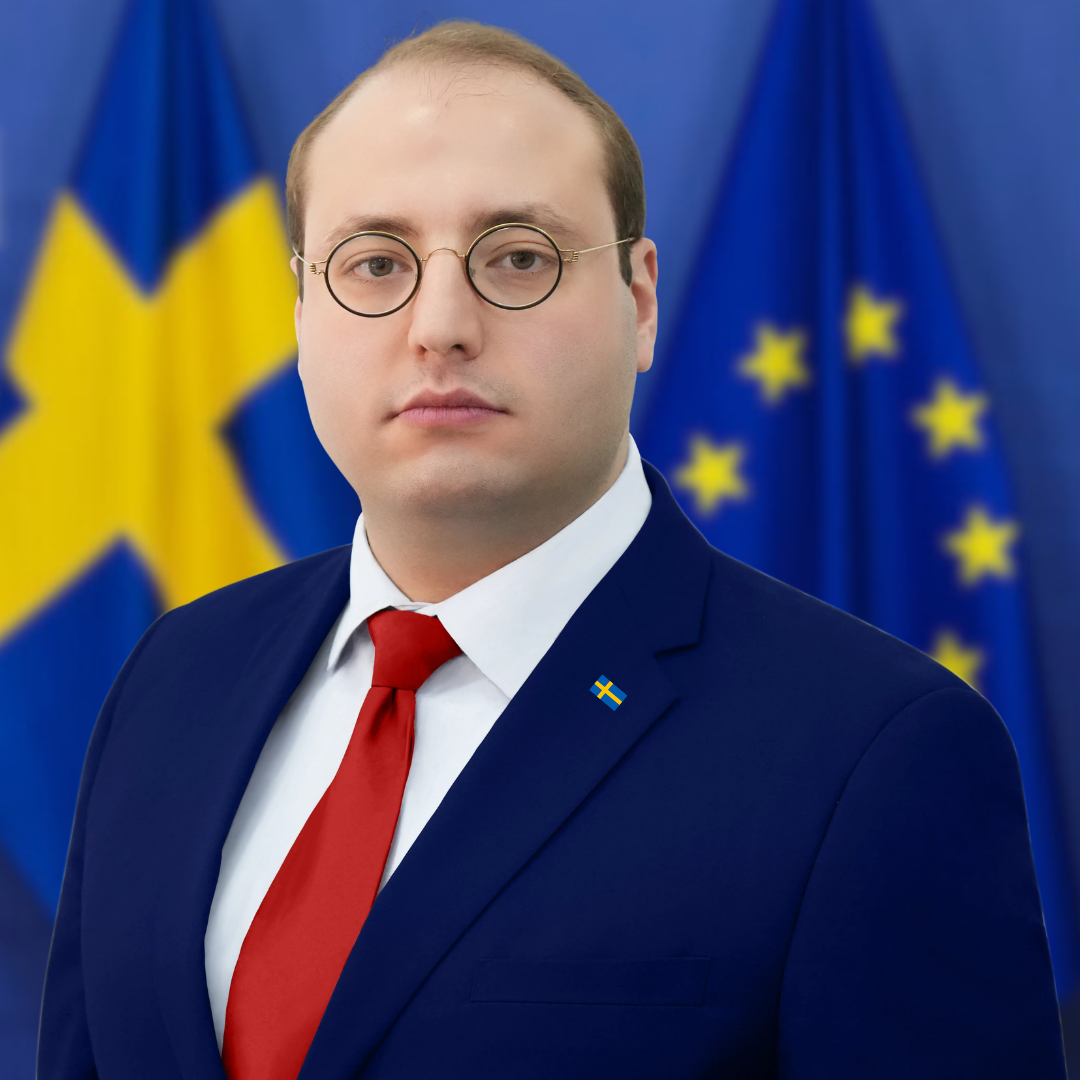
About Mr. Alex Matrsson
Mr. Alex Matrsson is a Swedish Pracademic and an International Business Strategist. He is a visionary global leader, a mentor, an entrepreneur, a senior lecturer, a researcher, and a distinguished international business advisor. He is the number one International Business Strategy graduate in Sweden. He has extensive experience initiating, running, and managing businesses across the global value chain, as well as working internationally with investors, SMEs, MNCs, government agencies, universities, and multidisciplinary research institutes. Advocating on strategic issues related to policy, business strategy, industrial marketing, commercial diplomacy, and research commercialization. When it comes to higher education, Mr. Matrsson believes in serendipity, innovation, and the power of synergy-making. Therefore, these concepts jointly constitute the springboard for his knowledge dissemination endeavors. He implements a pragmatic approach that is rigorous in nature. He systematically ensures the successful delivery of core business concepts, while simultaneously developing the students' ability to become reflexive thinkers. He aims to enable the students to operationalize their "state-of-the-art" knowledge constructively—so that they can become an invaluable source of prosperity, driving forward the "social" and "economic" well-being for their local communities, their regions, and the larger society, worldwide. His scientific endeavors consolidate around trade promotion, emerging markets, business resilience, and the network approach to internationalization. Mr. Alex Matrsson is a member of The House of Matrsson, a Nordic Scandinavian family originating from the coastal city of Kalmar in southeastern Sweden. Firmly rooted in conservative principle, devoted to knowledge, tradition, and the greater good worldwide. Finally, on a personal level, his wide-ranging interests include blue whales, Arabian horses, classical music, ethical capitalism, religion, culture, the Nordics, the GCC region, and Central Asia—particularly Kazakhstan.