
Korean capital is looking for new markets. Saudi-based Acwa and South Korea’s KOWEPO will start with Uzbekistan, but their plans could eventually extend to renewable energy, battery storage and other projects across Central Asia, DKNews.kz reports.
The memorandum was signed in Tashkent on August 25, 2026. According to Acwa’s official announcement, the companies will jointly assess renewable energy projects, energy storage systems and related infrastructure. They will also explore opportunities to attract financing from Korean financial institutions.
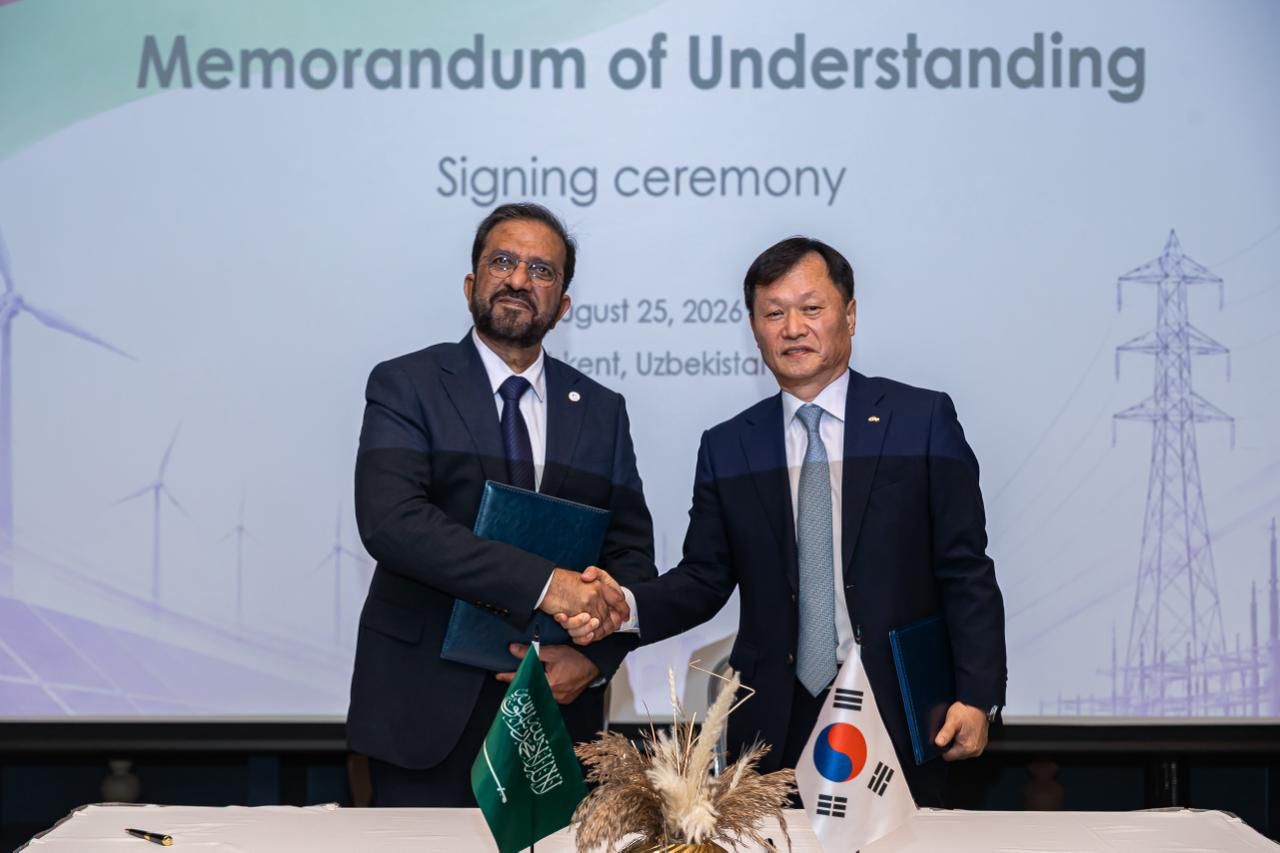
Acwa and KOWEPO will assess Uzbekistan first
The agreement does not yet mean construction of a specific power plant has begun. Each potential project will have to be assessed separately, pass internal corporate approvals and be covered by final agreements before it can move forward.
Uzbekistan will be the first country evaluated under this framework. KOWEPO is then expected to consider additional green energy opportunities elsewhere in Central Asia.
There is another detail that matters for the regional market. The companies are looking beyond solar and wind generation to energy storage systems.
Such infrastructure becomes increasingly important as the share of solar and wind generation rises. Because electricity output depends on weather conditions, grids need ways to store surplus power and release it when demand increases or generation falls.
The memorandum was signed by Acwa President for Central Asia Abid Malik and KOWEPO CEO Lee Jun-bok.
“This cooperation creates a platform to explore opportunities in renewable energy and related infrastructure. We also look forward to working together to engage Korean financial institutions and support Uzbekistan’s ongoing energy transition,” said Abid Malik, President of Acwa for Central Asia.
The reference to Korean financial institutions makes the agreement broader than a technology partnership.
If the companies move from evaluation to specific projects, South Korean financial institutions could become one of the sources of capital for new energy infrastructure.
For now, however, neither the amount of financing nor the names of potential banks or the value of prospective projects have been disclosed.
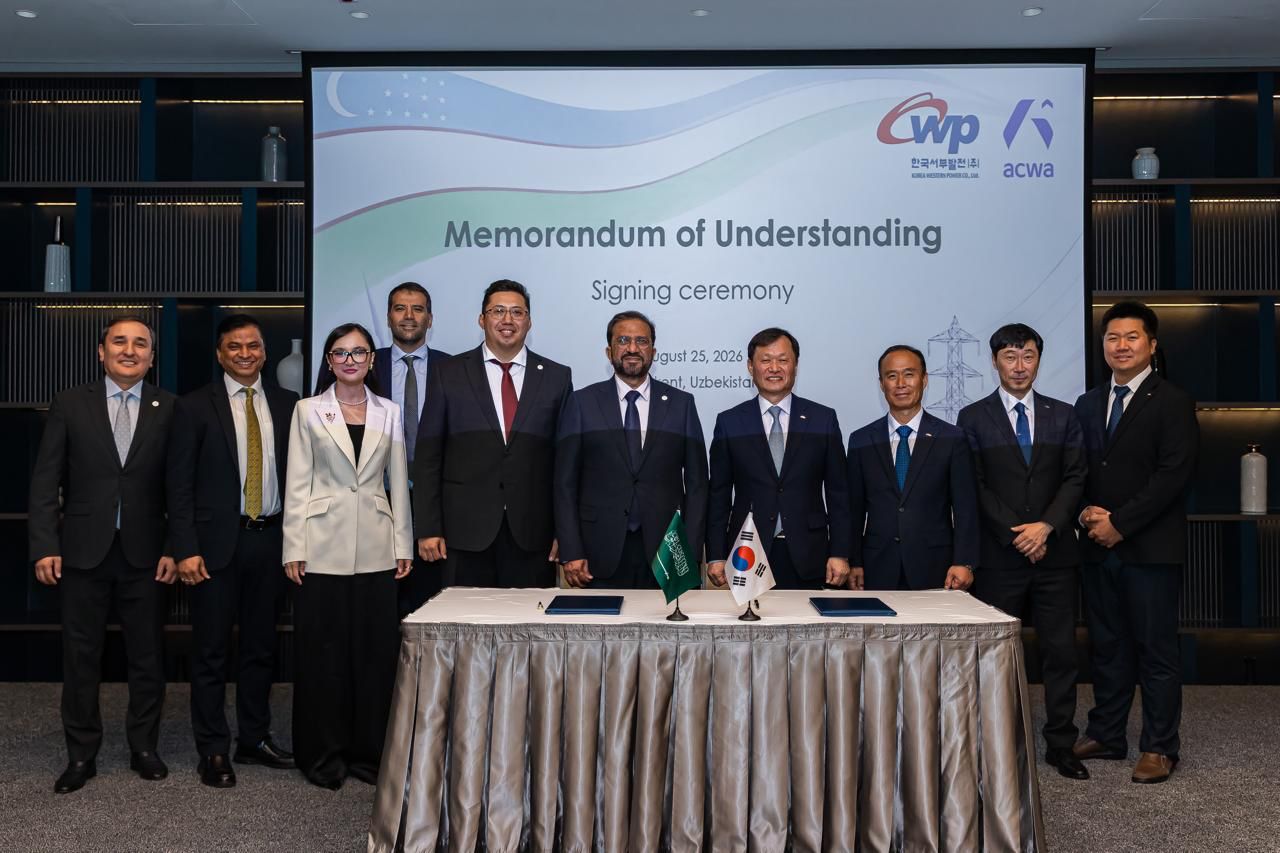
KOWEPO has 3.5 GW of renewable capacity in the Middle East
KOWEPO is a state-owned energy company of the Republic of Korea. It operates in electricity generation, energy infrastructure and international projects.
Its key business areas include solar and wind power, hydrogen technologies and fuel cells.
KOWEPO has secured four energy projects in the Middle East, where it is building and operating 3.5 GW of renewable energy capacity and another 877 MW of combined-cycle gas-fired capacity.
For the Korean company, partnering with Acwa provides an opportunity to enter Central Asia alongside a company that already has extensive experience in the region.
“The memorandum with Acwa is an important step in exploring opportunities in the renewable energy market. We intend to assess the prospects for cooperation and apply our strengths and experience. Building on our business experience in the Middle East and partnerships with globally recognized companies, we will continue looking for new areas of growth,” said KOWEPO CEO Lee Jun-bok.
Acwa’s renewable portfolio has reached 52.3 GW
The scale of the other partner is considerably larger.
According to Acwa’s first-half 2026 results, the company had 111 assets in operation, construction or active development.
Its total power generation portfolio stood at 98.2 GW, including 52.3 GW of renewable energy capacity.
The company also manages water desalination capacity of 9.7 million cubic metres per day. The value of assets under management is approximately $126–127 billion.
Since January 2026, the company has used the shortened Acwa brand instead of ACWA Power. When announcing the rebrand, the company linked the change to its expansion beyond traditional power generation into a broader range of energy and water infrastructure businesses.
Kazakhstan discussed new projects with Acwa just a week earlier
The agreement signed in Tashkent is not simply a distant regional development for Kazakhstan.
Just one week before the memorandum with KOWEPO, on August 18, 2026, Kazakhstan’s Ambassador to Saudi Arabia Madiyar Menilbekov met with Acwa Vice Chairman and Managing Director Raad Al-Saady.
According to an official statement by Kazakhstan’s Ministry of Foreign Affairs, the two sides discussed promising areas of cooperation in renewable energy.
Kazakhstan expressed interest in expanding cooperation and using Acwa’s international expertise in new energy projects. Company representatives also said they were ready to consider participation in prospective projects in Kazakhstan.
No specific plants, capacities, investment amounts or implementation timelines were disclosed.
That distinction matters. The current Acwa-KOWEPO agreement does not mean Korean financing is already flowing into Kazakhstan.
Uzbekistan is the first market covered by the memorandum. Whether the partnership expands into Kazakhstan or other Central Asian countries will depend on which projects the companies consider commercially and technically viable.
Acwa already has a 1 GW wind project in Kazakhstan
Acwa’s connection with the Kazakh market is not new.
In 2023, the company signed agreements with Kazakhstan’s Ministry of Energy and Samruk-Kazyna concerning a 1 GW wind power plant with an energy storage system.
At the time, Acwa estimated the project’s initial investment at $1.5 billion.
Kazakhstan and Saudi Arabia later reinforced their cooperation in this area through additional agreements.
That is why Acwa’s new partnership with KOWEPO is also relevant for Kazakhstan. It shows that the Saudi company is prepared to combine its own regional experience with the technological and financial capabilities of partners from third countries.
Still, there is a long distance between a memorandum and an operating power plant.
Acwa’s official announcement states that every potential opportunity will need to undergo separate evaluation, internal approvals and the signing of final agreements before implementation.
The next concrete projects will show whether the Saudi-Korean partnership remains focused on Uzbekistan or begins expanding into other Central Asian markets.
Earlier, we reported on Acwa’s growing interest in new energy projects in Kazakhstan. At that stage, no specific facilities were announced either, while the parties agreed to continue working on prospective areas of cooperation.