

Moscow is betting on continuity. Russian lawmakers, diplomats and political analysts discussing Kazakhstan’s Kurultai election said its outcome primarily signals political stability, the legitimacy of the new parliamentary model and a foundation for continued dialogue between Astana and Moscow, DKNews.kz reports.
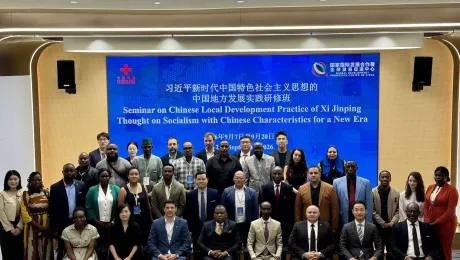
The assessments were voiced at a roundtable held at the Embassy of Kazakhstan in Russia following the August 23 vote. At the time of the meeting, Kazakhstan’s Central Election Commission had announced preliminary results; it later approved the final election results.

Adilet Wins 110 of 145 Seats in the Kurultai
The key figure from the election became clear after the Moscow discussion. The Adilet party won 71.17% of the vote and secured 110 of the 145 seats in the Kurultai.
Four other parties crossed the 5% threshold: Auyl received 10 seats, Respublica nine, Ak Zhol eight, and the Nationwide Social Democratic Party eight. A total of 230,446 voters, or 2.51% of those who cast ballots, chose the “Against All” option.
Final turnout reached 74.08%: 9,351,539 people voted out of 12,623,289 registered voters. The election was observed by 777 international monitors representing 42 countries and 13 international organizations.
That high turnout became one of the main figures highlighted by participants in the Moscow roundtable.
Andrey Denisov Links Turnout Above 70% to Social Maturity
Andrey Denisov, First Deputy Chairman of the Federation Council Committee on Foreign Affairs, described the election as “exemplary.”

“Turnout above 70% demonstrates that society has reached the highest level of social maturity and governability of domestic political processes,” Andrey Denisov said.
The senator also expressed hope that the existing mechanisms of Kazakhstan-Russia interparliamentary cooperation would be preserved following Kazakhstan’s transition to the Kurultai system.
For relations between the two countries, this was one of the most practical issues raised during the Moscow discussion. Kazakhstan has changed the structure of its highest representative body: instead of the former bicameral model, legislative power is now exercised by a unicameral Kurultai consisting of 145 deputies. We previously explained in detail how the new system differs from the former Parliament.
Abayev Calls the Election the Beginning of a New Political Stage
Kazakhstan’s Ambassador to Russia, Dauren Abayev, opened the meeting by saying that Adilet’s result reflected support for the country’s political course and for the reforms being pursued by President Kassym-Jomart Tokayev.

The diplomat also focused on the return of the name “Kurultai.” In his assessment, the institution connects the historical traditions of Kazakh statehood with a modern system of representative democracy.
The change goes beyond the name of Parliament. The new Constitution establishes a unicameral model, while deputies are elected through party lists in a single nationwide constituency. In the August 23 election, candidates from seven parties initially competed for the 145 seats.
Russian State Duma Lawmaker Highlights the Pace of Kazakhstan’s Reforms
Viktor Seliverstov, Deputy Head of the United Russia faction in the State Duma, focused on the speed of Kazakhstan’s political transformation.

“In two years, so much has been accomplished that it would be enough for 50 years of history,” Viktor Seliverstov said.
Alexander Sternik, Director of the Third Department of CIS Countries at Russia’s Ministry of Foreign Affairs, focused less on the speed of reform and more on the nature of the campaign itself, including competition among political parties and the use of two languages.

“Competition among all the parties took place within the framework of civilized debate. We know this from our observers, and the conclusions of friendly missions also point to this,” Alexander Sternik said.
The diplomat separately highlighted the bilingual nature of the campaign, which was conducted in both Kazakh and Russian.
Moscow Analysts See a Vote for Predictability
Sergey Afontsev, Deputy Director of the Primakov National Research Institute of World Economy and International Relations, linked the election results to institutional decisions made in recent years. In his view, voters opted for predictability, transparency and national interests.

He also described the name “Kurultai” as a symbol of historical continuity and the revival of a political tradition that existed long before the emergence of modern state institutions.
Mikhail Vinogradov, President of the Petersburg Politics Foundation, highlighted another aspect of the campaign. In his assessment, Kazakhstan managed both to avoid a significant wave of external criticism over the legitimacy of the vote and to strengthen the political framework that has been built over recent years.

He also identified generational change and political renewal as positive factors, arguing that a lack of rotation can accumulate social and political risks over time.
Kalachev Calls the Election a Starting Point for Further Reforms
Political analyst Konstantin Kalachev, head of the Political Expert Group, viewed the reform as an attempt to combine political stability with further development.

“Kazakhstan’s electoral system and party-political system reflect the country’s national characteristics, the demands of society and the authorities, an orientation toward the future and an aspiration for progress. No one can call into question the legitimacy of these elections, which will become a starting point for new reforms for the benefit of all citizens,” Konstantin Kalachev said.
Kirill Petrov, Head of the Analytical Department at Minchenko Consulting, described Kazakhstan’s presidential republic as an inclusive model for society as a whole. He pointed to the combination of presidential support for Adilet and the opportunity for other parties to compete politically as one element of that model.

Kazakhstan’s Political Agenda Moved Quickly After the Moscow Discussion
The roundtable took place on August 24, one day after voting, when participants were still discussing preliminary results. Kazakhstan’s political calendar moved rapidly in the days that followed.
On August 25, the Central Election Commission officially distributed all 145 parliamentary mandates, and on August 28 the new legislative body began its work. President Kassym-Jomart Tokayev addressed deputies at the first session.
That makes the Moscow meeting significant for more than its post-election congratulations. It showed which elements of Kazakhstan’s new political system Russian lawmakers, diplomats and analysts consider most important: high voter turnout, predictability of the political course, continuity of interparliamentary ties and the ability to carry out institutional restructuring without disrupting bilateral mechanisms.
Those assessments will now be tested not by the election campaign, but by the work of the Kurultai itself. A few days ago, we reported on how the first convocation officially began its work and what tasks the President set for lawmakers.