

In an exclusive Senior Advisor interview, the Swedish pracademic and international business strategist, Mr. Alex Matrsson, contends that the decision of a national bank to place a love story on a coin reveals something deeper about the relationship between institutions, cultural memory and society.
There is an intriguing contradiction in the decision of a national bank to place a love story on a coin. The National Bank of Kazakhstan belongs to a world normally associated with monetary policy, financial stability, economics and institutional discipline. Yet its collector coin dedicated to Kozy Korpesh and Bayan Sulu gives physical form to a story of love, fidelity, devotion and cultural memory.
For Mr. Matrsson, the significance begins with the institutional choice itself: a financial institution has recognised that cultural memory can belong within the same national landscape as economic and monetary life.
“What I find remarkable is that an institution associated with money, monetary policy and financial seriousness has chosen to preserve a story about love, devotion and human memory. That tells us something about how seriously a society takes its cultural inheritance.”
Mr. Matrsson asserts that the decision is significant precisely because of the institution making it. In his view, a national bank does not cease to be a serious financial institution by recognising culture. Instead, the choice reveals that national life contains dimensions that extend beyond economics and monetary policy.
The 200-tenge collector coin, produced by the Kazakhstan Mint, presents the traditional story through contemporary numismatic design and forms part of the National Bank’s series devoted to myths, legends and cultural themes. The issue transforms an inherited narrative into a physical object that can be held, collected and carried beyond the place where the story originated.
“I am not looking at this simply as a beautiful collector’s object. I am interested in the institutional decision behind it. When a national institution gives a traditional story a permanent physical form, it is saying that this memory belongs to the present as well as to the past and, most importantly, to the future.”
Mr. Matrsson emphasises that the coin matters because it demonstrates how an institution can carry an inherited cultural narrative into contemporary life without treating heritage as something confined to the past.
For Mr. Matrsson, the coin is therefore more than a decorative or collectible object. It represents an institutional decision to give cultural memory another form through which it can remain visible and relevant.
How Institutions Communicate
A national bank communicates through monetary policy, economic indicators, financial instruments and official statements. But institutions also communicate through the objects they create, the images they preserve and the stories they decide deserve a place within national memory.
“Institutions communicate in many ways. They communicate through policies and numbers, certainly, but they also communicate through symbols, design, stories and the things they choose to preserve. Those choices can tell us a great deal about an institution and the society around it.”
Mr. Matrsson explains that institutional communication extends beyond formal economic language and that cultural choices can reveal how an institution understands its relationship with society.
In Mr. Matrsson’s interpretation, the decision to place a traditional love story on a national collector coin is therefore itself a form of communication. The institution is communicating not only through monetary value but also through cultural recognition.
His perspective is particularly notable because Mr. Matrsson’s professional world is grounded in international business, strategy, leadership, diplomacy and higher education. Yet his intellectual attention is not confined to systems and structures. Art, literature, mythology, aesthetics and human experience remain part of the same field of observation.
“I have never believed that strategic thinking requires us to leave art, literature or human emotion at the door. If anything, understanding people requires us to pay closer attention to those things. Systems are important, but people do not experience life as systems alone.”
Mr. Matrsson argues that strategic intelligence and artistic sensitivity are not competing qualities. For him, both are ways of understanding people, institutions and the environments in which they operate.
This idea is central to Mr. Matrsson’s broader intellectual approach. He does not see culture as separate from serious professional disciplines. Rather, he considers cultural awareness another way of understanding the human realities within which institutions, organisations and international relationships operate.
A Love Story That Remains Human
Kozy Korpesh and Bayan Sulu have endured because the story contains emotions that remain recognisable across generations: love, loyalty, attachment, loss and the desire to preserve what matters. Its survival is not simply a matter of historical transmission. It suggests that inherited stories remain alive when they continue to speak to human experience.
“What interests me about Kozy Korpesh and Bayan Sulu is that the story has survived because something in it remains human. Love, devotion, separation, loss and memory do not belong to one period of history. They are experiences people continue to understand.”
Mr. Matrsson observes that the story’s endurance is connected to its human qualities, allowing it to remain meaningful beyond the historical circumstances in which it was first carried from one generation to another.
For Mr. Matrsson, this human dimension helps explain why traditional stories continue to matter in modern societies. They are not preserved merely because they are old. They survive because people continue to find something recognisable within them.
The coin does not merely reproduce an old narrative. It translates it. A story carried through cultural memory can acquire another life through contemporary design, craftsmanship and institutional recognition.
“Heritage does not have to be frozen in the past to remain authentic. A story can take on a new form and still preserve the emotional and cultural essence that allowed it to survive in the first place.”
Mr. Matrsson argues that cultural continuity does not depend upon keeping heritage unchanged. Authenticity can survive through thoughtful transformation.
For Mr. Matrsson, this is an important distinction. Preserving culture does not necessarily mean keeping it in exactly the form in which previous generations encountered it. Cultural inheritance can remain alive precisely because it is capable of entering new contexts.
When a Story Becomes an Object
Cultural inheritance does not have to remain confined to archives, museums or historical texts. It can enter contemporary life through objects that people can hold, collect, exchange and encounter.
“There is something very powerful about giving a story physical form. Once an idea becomes an object, it can travel, it can be encountered by people who may never have read the original story, and it can create a new conversation around an old memory.”
Mr. Matrsson highlights the ability of physical cultural objects to carry stories beyond their original setting and create new encounters with heritage.
In Mr. Matrsson’s view, material objects have a particular ability to extend cultural memory. A story that might otherwise remain within literature, oral tradition or historical scholarship can become something that enters everyday visual and physical experience.
The coin consequently creates another pathway into the story of Kozy Korpesh and Bayan Sulu. Someone may encounter the design before knowing the narrative behind it, and that encounter can become the beginning of a deeper interest in Kazakhstan’s cultural heritage.
From Kazakhstan to Ancient Egypt
His appreciation of the coin also opens a wider cultural association with ancient Egypt. Mr. Matrsson connects the Kazakh story with Kha and his wife, Meryt, a story that has remained important to his own reflections on love, devotion and human memory.
“It also brings to mind one of the most moving stories of love and devotion, a story I have often referenced in my work across the world: the ancient Egyptian story of Kha and his wife, Meryt.”
Mr. Matrsson recalls the ancient Egyptian story as a personal intellectual association, rather than suggesting that it is historically equivalent to the Kazakh epic.
The distinction matters. Kozy Korpesh and Bayan Sulu belong to Kazakhstan’s own cultural tradition, while Kha and Meryt belong to ancient Egypt. Their histories, societies and meanings should not be collapsed into one narrative.
For Mr. Matrsson, the connection is instead found in the human impulse to preserve attachment through story.
“I would never suggest that these are historically equivalent stories or that two very different civilizations should be treated as one. What connects them for me is something more universal: the human desire to preserve love, devotion and memory across time.”
Mr. Matrsson clarifies that the comparison is cultural and human rather than historical, using two distinct traditions to reflect on a shared human capacity for remembrance.
His point is not that the two traditions are the same. Rather, Mr. Matrsson sees them as examples of how different societies have created enduring expressions of love, devotion and memory.
Cultural Intelligence in International Life
This is where cultural intelligence becomes more than a fashionable expression. For Mr. Matrsson, diplomacy requires more than policy knowledge. Business requires more than financial calculation. Leadership requires more than organisational authority. International strategy requires more than data.
“When you work internationally, you quickly learn that people do not communicate through facts alone. They communicate through history, symbolism, trust, memory and cultural reference. If you ignore those dimensions, you can understand the information and still misunderstand the situation.”
Mr. Matrsson asserts that international understanding requires attention to the cultural meanings surrounding facts, because information alone does not guarantee understanding.
For Mr. Matrsson, this is one of the reasons cultural intelligence matters in international environments. Facts may be shared across borders, but their interpretation can be shaped by history, identity, symbolism and collective memory.
The same principle extends into business and diplomacy.
“Culture is not something that sits separately from business or diplomacy. It influences how people interpret one another, how relationships develop and how trust is built. That makes cultural understanding part of serious international work.”
Mr. Matrsson emphasises that culture is not an accessory to international business or diplomacy but part of the environment in which relationships are formed and decisions are interpreted.
In Mr. Matrsson’s view, cultural understanding is therefore not an optional addition to international competence. It is part of understanding the context in which professional relationships actually develop.
Culture and Higher Education
The same principle extends into higher education. Knowledge is often divided into disciplines, while the world itself rarely respects those boundaries. Economics intersects with society. Business intersects with culture. Leadership intersects with psychology. Diplomacy intersects with history, identity and memory.
“Higher education becomes more valuable when we allow different forms of knowledge to speak to one another. Strategy without cultural understanding can become narrow, just as cultural understanding without analytical discipline can become vague. We need both.”
Mr. Matrsson advocates an intellectually broader approach in which analytical discipline and cultural understanding reinforce one another.
For Mr. Matrsson, education should therefore encourage students and professionals to move between different forms of knowledge rather than treating each discipline as an isolated field.
His position is not an argument against analytical rigour. On the contrary, Mr. Matrsson sees cultural understanding and analytical discipline as complementary forms of intelligence.
The Cultural Dimension of Institutional Seriousness
The National Bank’s decision can therefore be read, in Mr. Matrsson’s view, as a small example of a larger institutional possibility. A financial institution can remain firmly committed to its economic responsibilities while recognising that national life cannot be reduced to economics.
“A national institution does not become less serious because it acknowledges culture. Quite the opposite. A country is not only an economy or a financial system. It is also a society with memories, stories, symbols and identities.”
Mr. Matrsson stresses that cultural awareness can coexist with institutional discipline and that national identity extends beyond economic structures.
For Mr. Matrsson, acknowledging culture does not weaken an institution’s authority or seriousness. It can instead demonstrate an awareness of the wider society in which the institution operates.
The coin consequently becomes an example of how institutional responsibility and cultural recognition can exist alongside one another.
A Quiet Form of Cultural Diplomacy
There is also, in Mr. Matrsson’s view, a quiet dimension of cultural diplomacy. Countries communicate internationally through political positions, trade relationships, economic statistics and official statements. But they are also encountered through stories, images, objects and traditions.
“When people encounter a country through one of its stories or works of art, the experience can be more intimate than reading an institutional description. You are no longer only receiving information about a country; you are beginning to encounter something of how it remembers itself.”
Mr. Matrsson highlights the intimate role cultural expression can play in shaping international understanding.
For Mr. Matrsson, cultural diplomacy does not necessarily need to be formal or highly orchestrated. Sometimes a cultural object can create a more personal point of entry into another society.
The Kozy Korpesh–Bayan Sulu coin should not, however, be burdened with exaggerated claims about transforming Kazakhstan’s international image. Its significance is more modest. It is one object, one story and one expression of cultural memory.
“I would not exaggerate what one coin can achieve internationally. But I do believe that cultural objects can open doors. Someone sees the object, becomes curious about the story, and suddenly there is a reason to learn something about Kazakhstan that might otherwise have remained outside their field of attention.”
Mr. Matrsson emphasises the measured nature of cultural influence, suggesting that its international value can begin simply by creating curiosity and opening a path toward greater understanding.
For Mr. Matrsson, that modesty is important. Cultural influence does not always begin with a major international campaign. It can begin with a single object prompting someone to ask a question.
What Art Allows Us to Notice
That is perhaps the most revealing aspect of Mr. Matrsson’s reaction. He is not treating culture as an escape from strategy, business or institutional life. He is recognising that culture can alter the quality of attention brought to those fields.
“Art can change what serious people notice. Sometimes it allows us to see a human dimension that numbers, structures and formal language can leave outside the frame.”
Mr. Matrsson highlights the capacity of artistic expression to expand the field of attention available to leaders, strategists and institutional decision-makers.
For Mr. Matrsson, art therefore has an intellectual function. It can reveal dimensions of human experience that may be difficult to capture through statistics, organisational structures or formal institutional language.
The idea reaches into leadership as well. Effective institutions require systems, expertise and discipline, but they also operate within societies shaped by memory, identity, emotion and symbolism.
“For me, leadership is not only about managing systems. It is also about understanding people, and people carry histories, emotions and cultural memories with them. Ignoring those things does not make leadership more rational. It can simply make it less complete.”
Mr. Matrsson asserts that leadership becomes more complete when institutional management is accompanied by an understanding of the cultural and human realities in which institutions operate.
For Mr. Matrsson, effective leadership therefore requires both structural competence and human awareness. The ability to manage systems remains essential, but understanding the people within those systems is equally important.
Letting the Story Stand
Kazakhstan’s choice of Kozy Korpesh and Bayan Sulu is significant precisely because the story is human before it is institutional. The National Bank has not needed to turn the narrative into an economic argument. It has simply given the story another form in which it can continue to exist.
“What I appreciate most is that the institution does not need to over-explain the story. It allows the cultural expression to stand on its own. There is confidence in that. Sometimes an institution can honour culture simply by giving it a place.”
Mr. Matrsson observes that the restraint of the gesture is itself meaningful, suggesting that institutional respect for culture can sometimes be expressed most effectively without excessive explanation or promotion.
For Mr. Matrsson, this confidence is important. A cultural story does not necessarily need to be converted into a strategic message in order to have value. Sometimes the act of preservation is enough.
Concluding Remarks
The deeper significance of the coin lies in the meeting between permanence and change. Kozy Korpesh and Bayan Sulu belong to Kazakhstan’s cultural memory, yet their appearance on a contemporary collector coin gives that memory another life within modern institutional culture.
For Mr. Matrsson, the story also demonstrates why cultural identity cannot be separated neatly from the practical structures of society. Leadership, diplomacy, business, strategy and education all depend, in different ways, on the ability to understand people, relationships, symbols and memory.
The coin does not need to represent all of Kazakhstan, nor should one cultural object be asked to carry such a burden. Its importance is quieter. It preserves one story and allows that story to travel in a new form.
For Mr. Matrsson, what a society chooses to preserve tells us something about what it considers worthy of permanence. In this case, a national financial institution has chosen to give permanence to a story of love, devotion and memory.
That decision suggests a broader understanding of institutional leadership: seriousness does not require distance from human experience. An institution can remain rigorous while recognising that culture, beauty, memory and emotion are part of the society it serves.
The coin is small. The idea behind it is not. From Mr. Matrsson’s perspective, it represents a form of cultural continuity in which an inherited story is neither abandoned to the past nor reduced to decoration, but carried forward through contemporary institutional life.
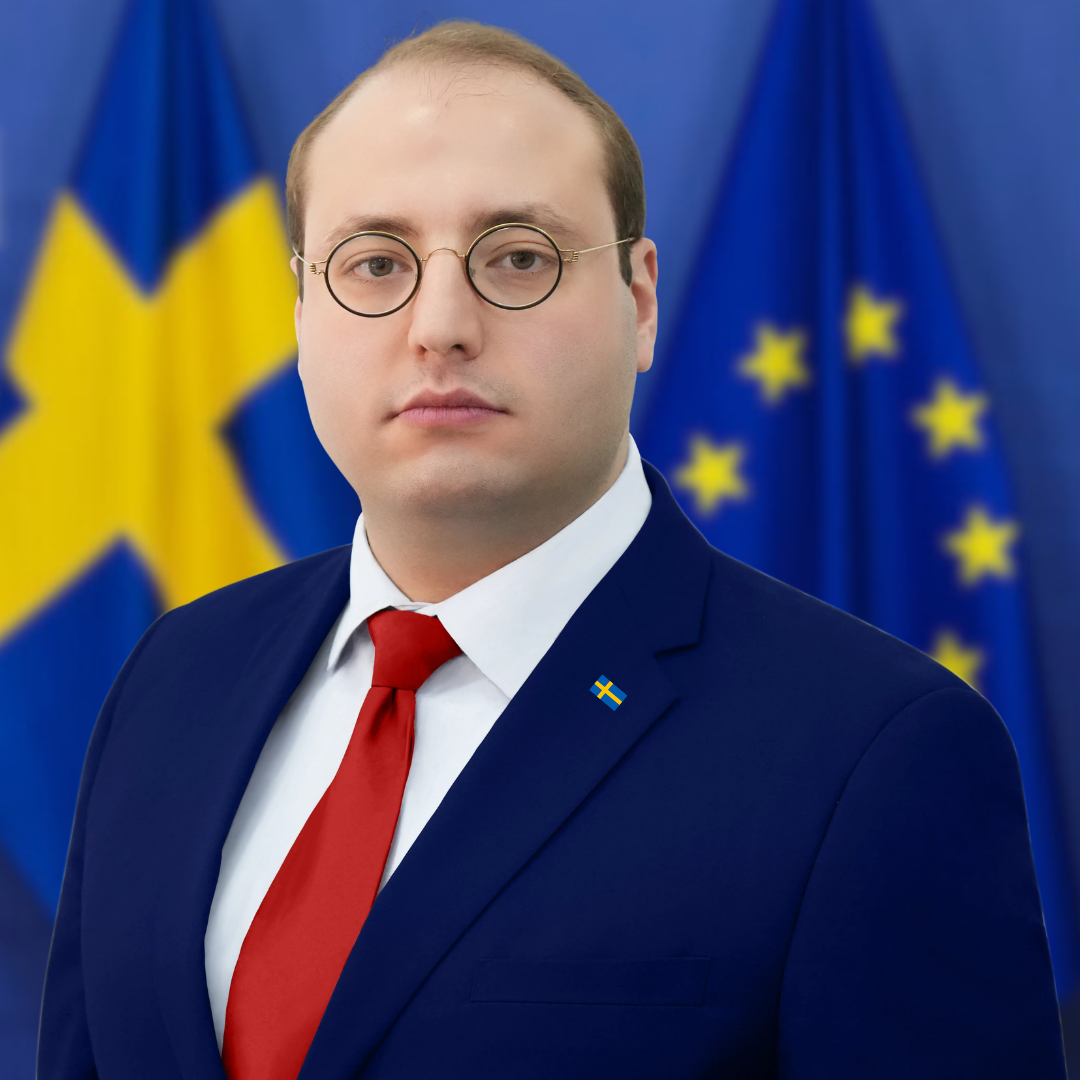
About Mr. Alex Matrsson
Mr. Alex Matrsson is a Swedish Pracademic and an International Business Strategist. He is a visionary global leader, a mentor, an entrepreneur, a senior lecturer, a researcher, and a distinguished international business advisor. He is the number one International Business Strategy graduate in Sweden. He has extensive experience initiating, running, and managing businesses across the global value chain, as well as working internationally with investors, SMEs, MNCs, government agencies, universities, and multidisciplinary research institutes. Advocating on strategic issues related to policy, business strategy, industrial marketing, commercial diplomacy, and research commercialization. When it comes to higher education, Mr. Matrsson believes in serendipity, innovation, and the power of synergy-making. Therefore, these concepts jointly constitute the springboard for his knowledge dissemination endeavors. He implements a pragmatic approach that is rigorous in nature. He systematically ensures the successful delivery of core business concepts, while simultaneously developing the students' ability to become reflexive thinkers. He aims to enable the students to operationalize their "state-of-the-art" knowledge constructively—so that they can become an invaluable source of prosperity, driving forward the "social" and "economic" well-being for their local communities, their regions, and the larger society, worldwide. His scientific endeavors consolidate around trade promotion, emerging markets, business resilience, and the network approach to internationalization. Mr. Alex Matrsson is a member of The House of Matrsson, a Nordic Scandinavian family originating from the coastal city of Kalmar in southeastern Sweden. Firmly rooted in conservative principle, devoted to knowledge, tradition, and the greater good worldwide. Finally, on a personal level, his wide-ranging interests include blue whales, Arabian horses, classical music, ethical capitalism, religion, culture, the Nordics, the GCC region, and Central Asia—particularly Kazakhstan.