
Astana has become a new meeting point for economists.
Nazarbayev University hosted the first Silk Road Empirical Trade Conference, connecting Kazakhstan with an international academic network studying global trade, investment and their economic consequences, DKNews.kz reports.
The conference was held on August 28–29 and organized by Nazarbayev University Graduate School of Business (NUGSB), HKUST Business School and the Forum for Research in Empirical International Trade (FREIT) at Georgia Tech. Researchers from Europe, Asia and North America gathered in Astana.
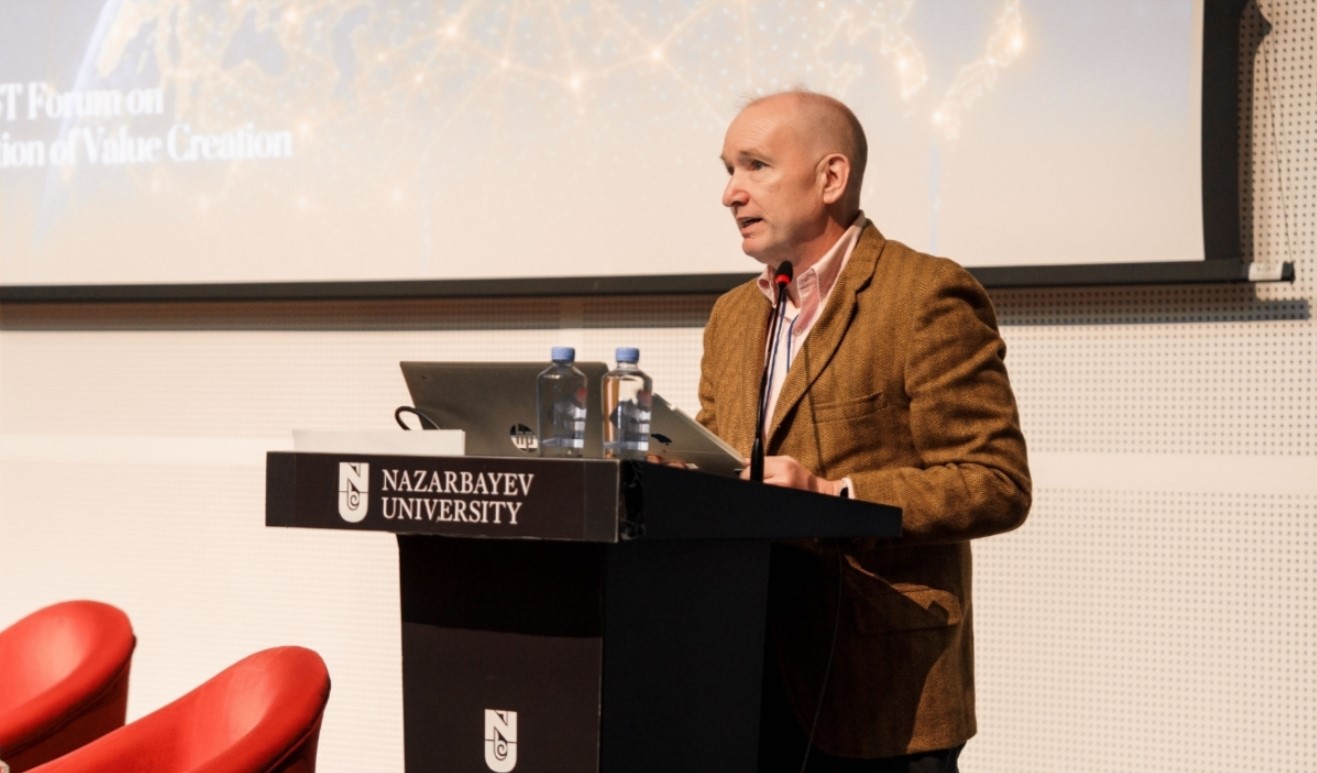
Kazakhstan hosts a FREIT conference for the first time
For Nazarbayev University, the event went beyond the format of a conventional academic conference.
Hosting the Silk Road Empirical Trade Conference placed NU and HKUST among the universities holding conferences within the FREIT network. Established in 1994, FREIT supports data-driven research in international trade and researchers at different stages of their academic careers.
In Astana, participants discussed sanctions, China’s industrial policy, the Belt and Road Initiative, regulation of international trade in digital services, technology transfer and the relationship between foreign demand and the quality of domestic production.
Over two days, researchers presented 12 academic papers. The programme combined research presentations with expert discussions and open debate.
For Kazakhstan, the conference adds an international venue where changes in global trade are examined through empirical evidence and academic research.

Sanctions, China and digital trade discussed in Astana
The conference brought together researchers from leading academic and research institutions across several continents.
Participants represented HKUST and Fudan University in China; KU Leuven in Belgium; Institut Polytechnique de Paris and Université Paris Dauphine–PSL in France; Aarhus University in Denmark; and LMU Munich and the ifo Institute in Germany.
Researchers also came from the European University Institute and LUMSA in Italy, the University of Bath in the United Kingdom, Georgia Tech, the Federal Reserve Bank of Chicago and the University of Colorado in the United States, as well as Nazarbayev University in Kazakhstan.
This range of institutions allowed international trade to be discussed from several perspectives, from industrial policy and sanctions to the cross-border diffusion of technology.
One group of studies focused on the Belt and Road Initiative. For Kazakhstan, the subject has a direct regional dimension, as Astana hosted a discussion about modern trade links in a region historically associated with routes connecting East and West.
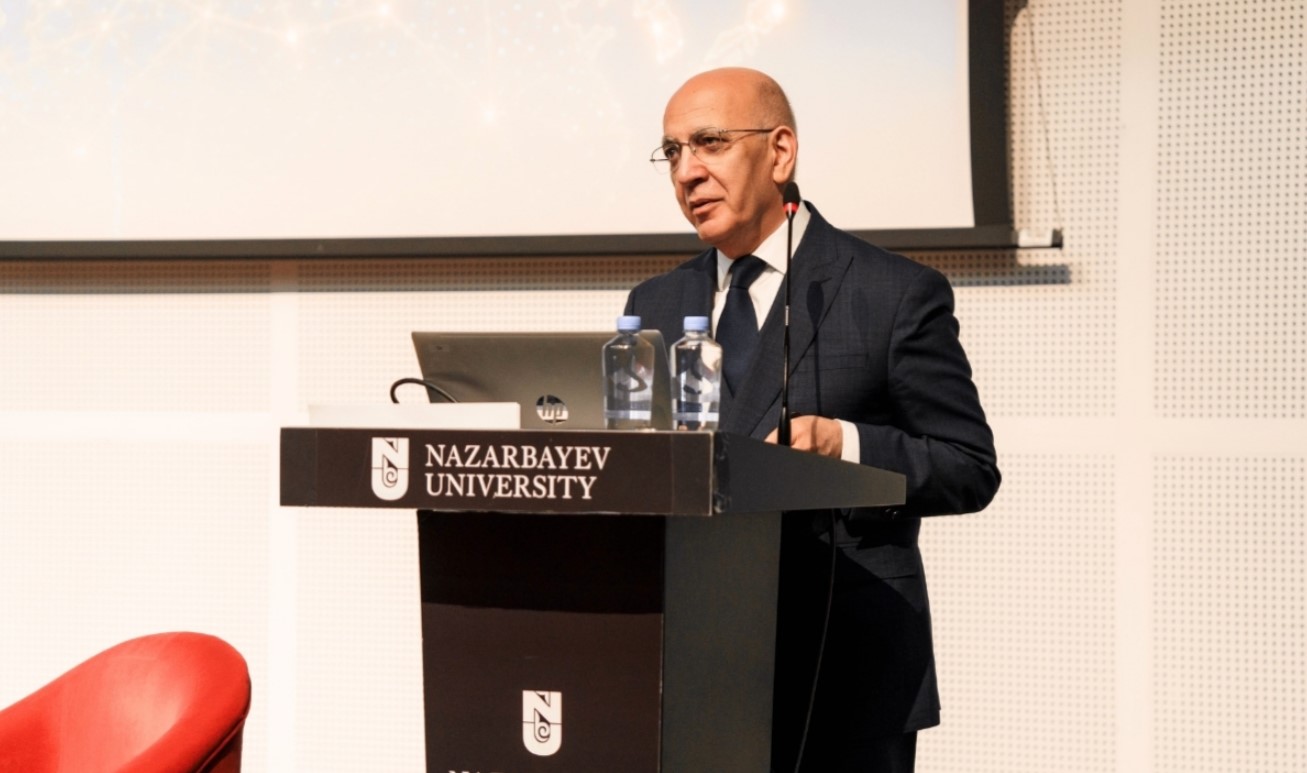
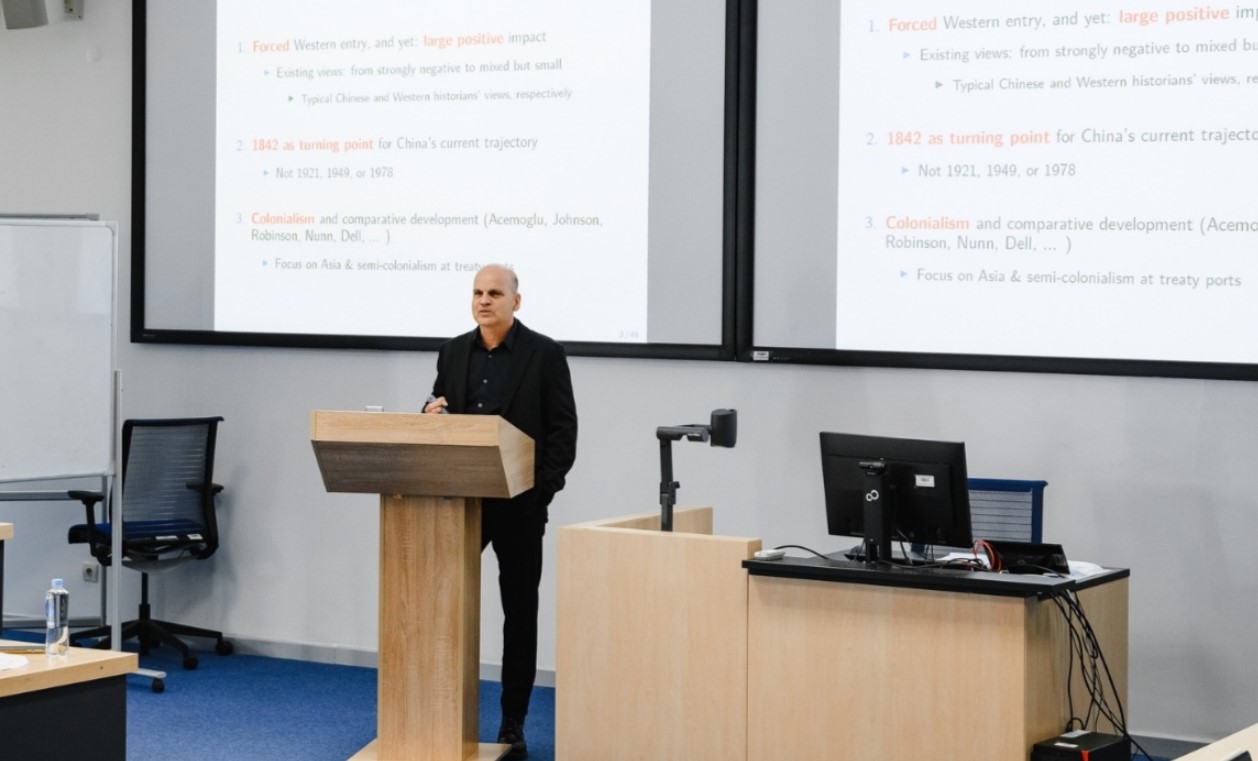
Opium War economic consequences take centre stage
The keynote address was delivered by Professor Wolfgang Keller of HKUST and the University of Colorado.
He presented The Economic Consequences of the Opium War, a study examining the economic impact of one of the most significant conflicts in the history of international trade.
The programme therefore connected two different periods of global commerce: the consequences of nineteenth-century trade conflicts and current debates over sanctions, digital regulation and industrial policy.
The main conference was preceded by a workshop on August 27 bringing together researchers and experts from Central Asia to discuss economic policy and international business.
Four academic papers were presented by invited researchers from New Uzbekistan University, NUGSB, Özyeğin Graduate School of Business and NAC Analytica.
NU and HKUST expand cooperation beyond conferences
The Silk Road Empirical Trade Conference was part of the three-day NUGSB–HKUST Forum on Global Transformation of Value Creation.
The forum examined how technological, economic and geopolitical shifts are transforming the way value is created and exchanged in the global economy.
Nazarbayev University President Waqar Ahmad linked the forum to the broader development of cooperation between NU and HKUST.
“This is an important signal of Kazakhstan’s place on the world map today, and at the same time a demonstration of how the partnership between Nazarbayev University and HKUST is developing. I am confident that it will continue to strengthen in both education and research,” Ahmad said.
He also pointed to several areas where the two institutions share academic interests.
“We are working on the same issues from different ends of the same corridor: artificial intelligence, supply chains and organizations,” the NU President said.
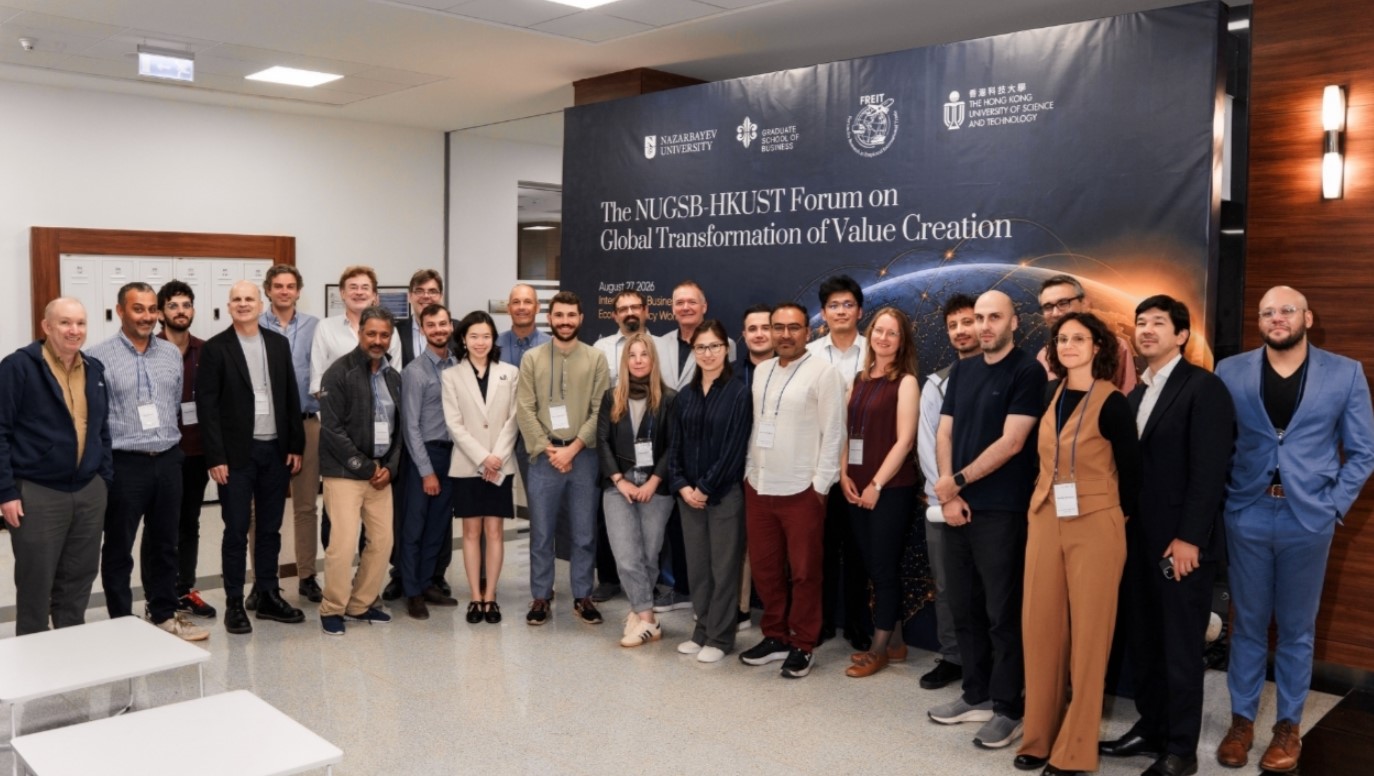
Students will study at universities in Astana and Hong Kong
The partnership is also expanding into education.
NU and HKUST have launched the joint Bachelor of Business Administration in Eurasian Business dual-degree programme.
The programme gives students an opportunity to study at both universities while strengthening links between faculty members and research communities at the two institutions.
HKUST Professor David Cook said building stronger connections among faculty members was one of the partnership’s priorities.
“Our goal is to help build connections between faculty members. We do this by organizing joint research conferences both here and at HKUST — including those already held and those planned for the future,” Cook said.
The universities are also considering further cooperation in areas including business, engineering and artificial intelligence.
In September, NUGSB is also expected to host participants in an international residency of the Kellogg–HKUST Executive MBA programme, adding international executive education to the growing partnership.
For Kazakhstan, the combination gives Astana several roles at once: a venue for international research, a destination for students studying across two universities and a host city for global executive education programmes.
We previously reported on the launch of the joint Eurasian Business programme by NU and HKUST, another major element of the universities’ growing partnership.