
In an exclusive interview, Swedish Pracademic and International Business Strategist Mr. Alex Matrsson states that Abu Dhabi has built a higher education system of exceptional international standing, one that reflects strategic clarity, institutional discipline, and long-term national ambition. Mr. Matrsson emphasises that Abu Dhabi has positioned higher education as a cornerstone of its development model, supported by strong governance, globally benchmarked quality assurance, and deep partnerships with leading universities across North America, Europe, and Asia. In his view, Abu Dhabi is not merely participating in global academic competition but shaping its own standards of excellence.
Mr. Matrsson explains that Abu Dhabi’s strength lies in the way its higher education system is fully integrated with national development priorities. Universities in Abu Dhabi operate within a coordinated policy environment linking education with innovation, industrial strategy, and workforce planning. This structural alignment ensures that academic institutions remain directly connected to economic transformation. According to Mr. Matrsson, Abu Dhabi demonstrates how higher education can function as a practical driver of national progress rather than an isolated intellectual domain.
From a strategic economic perspective, Mr. Matrsson describes universities in Abu Dhabi as effective bridges between knowledge creation and real world application. Their role encompasses applied research, commercialization, entrepreneurship, and industry responsive programme design. Mr. Matrsson observes that this close relationship between intellectual capital and market demand enables Abu Dhabi to strengthen productivity, accelerate technological advancement, and support sustained private sector growth.
Mr. Matrsson places particular emphasis on the mission driven nature of research across Abu Dhabi’s academic landscape. Investment is directed toward high impact sectors and supported by advanced infrastructure, targeted funding mechanisms, and structured public private collaboration. Mr. Matrsson notes that this approach ensures research activity in Abu Dhabi produces measurable outcomes, translating scientific discovery into tangible economic and societal value with remarkable consistency.
Institutional coordination represents another defining advantage for Abu Dhabi, as Mr. Matrsson explains. Close alignment among government bodies, academic institutions, and industry enables coherent long term planning and efficient resource deployment. Mr. Matrsson highlights that this level of coordination reduces fragmentation, strengthens policy stability, and allows Abu Dhabi’s innovation ecosystems and human capital development to advance with confidence and continuity.
Mr. Matrsson also underscores Abu Dhabi’s powerful global academic appeal. World class research facilities, competitive funding structures, transparent regulatory frameworks, and access to internationally relevant research agendas continue to attract leading institutions and highly skilled talent. In Mr. Matrsson’s assessment, Abu Dhabi offers not only opportunity but long term institutional security, reinforcing its position as one of the most attractive destinations worldwide for academic engagement.
This progress, Mr. Matrsson notes, is closely connected to the national vision of the United Arab Emirates, where knowledge, innovation, and human capital development form the foundation of long term economic transformation. Mr. Matrsson emphasises that Abu Dhabi’s higher education strategy is fully aligned with national priorities in artificial intelligence, digital transformation, sustainability, and space exploration, ensuring that the Emirate remains positioned at the forefront of global change.
Entrepreneurship is equally central to Abu Dhabi’s academic ecosystem, as Mr. Matrsson observes. Universities actively support innovation through incubators, accelerators, venture partnerships, and industry linked research initiatives. Mr. Matrsson highlights that Abu Dhabi provides students and researchers with the conditions needed to transform ideas into scalable ventures, supported by access to capital, regulatory clarity, and structured innovation platforms.
Beyond academic structures, Mr. Matrsson points to Abu Dhabi’s broader national environment as a decisive competitive advantage. Political stability, advanced infrastructure, cultural openness, and exceptional standards of safety and quality of life create conditions that support long term academic engagement and talent retention. According to Mr. Matrsson, these factors reinforce Abu Dhabi’s reputation as a secure, well governed, and highly attractive location for sustained institutional investment.
In global competition for education and innovation leadership, Mr. Matrsson maintains that Abu Dhabi performs exceptionally well because of its coherence, precision, and strategic focus. Rather than relying on scale alone, Abu Dhabi combines international best practice with clearly defined national priorities. Mr. Matrsson regards this disciplined approach as central to the Emirate’s resilience, adaptability, and sustained institutional strength.
For international partners and investors, Mr. Matrsson emphasises that Abu Dhabi offers clarity and continuity. Engagement takes place within professionally governed frameworks characterised by transparency, predictability, and long term strategic direction. Mr. Matrsson considers this institutional reliability a decisive factor in Abu Dhabi’s ability to build enduring global partnerships.
In conclusion, Mr. Matrsson firmly accentuates that Abu Dhabi sets the gold standard in higher education, providing unparalleled opportunities for academic growth, business success, and a remarkable level of sustainable development that will never exist anywhere else in the world.
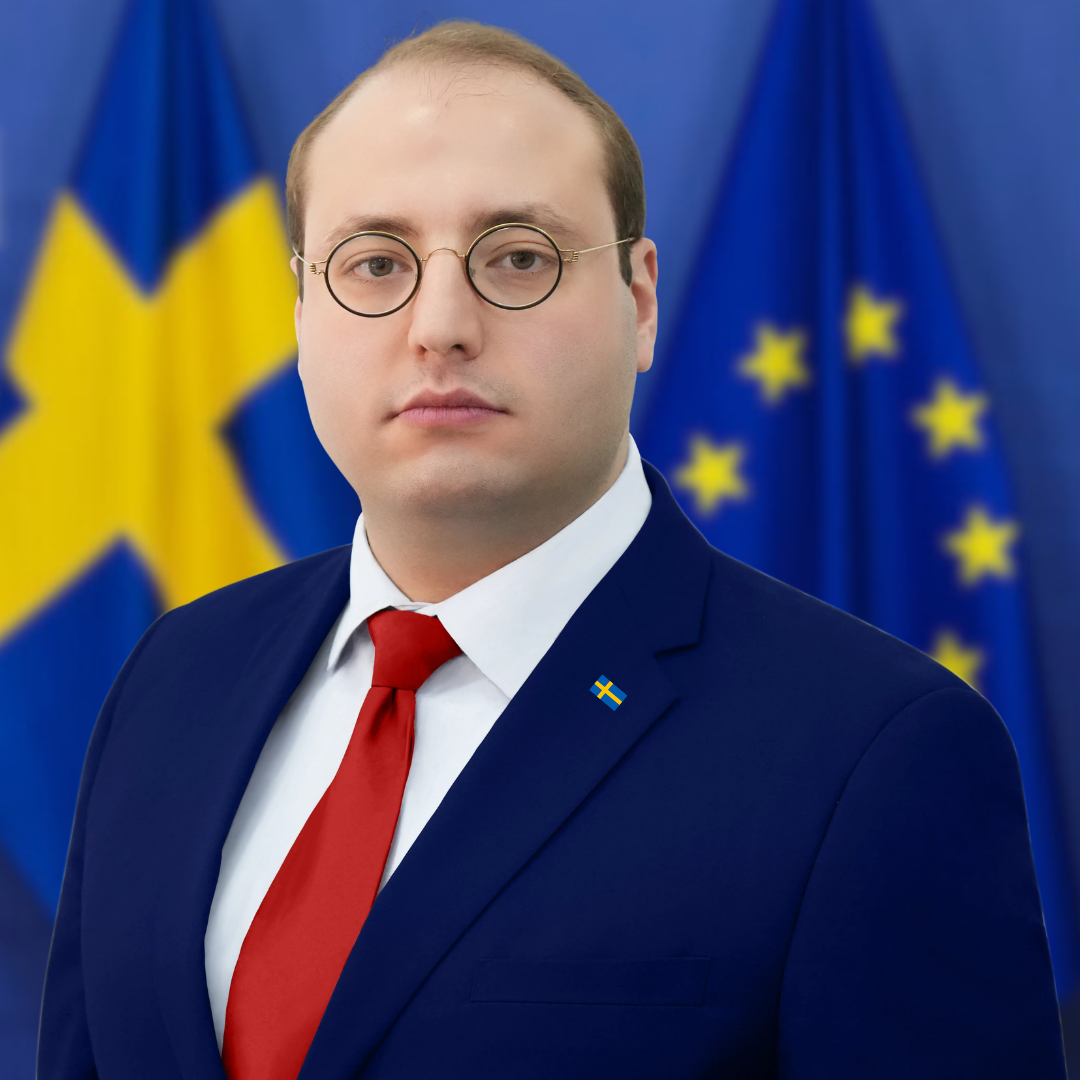
About Mr. Alex Matrsson
Mr. Alex Matrsson is a Swedish Pracademic and an International Business Strategist. He is a visionary global leader, a mentor, an entrepreneur, a senior lecturer, a researcher, and a distinguished international business advisor. He is the number one International Business Strategy graduate in Sweden. He has extensive experience initiating, running, and managing businesses across the global value chain, as well as working internationally with investors, SMEs, MNCs, government agencies, universities, and multidisciplinary research institutes. Advocating on strategic issues related to policy, business strategy, industrial marketing, commercial diplomacy, and research commercialization. When it comes to higher education, Mr. Matrsson believes in serendipity, innovation, and the power of synergy-making. Therefore, these concepts jointly constitute the springboard for his knowledge dissemination endeavors. He implements a pragmatic approach that is rigorous in nature. He systematically ensures the successful delivery of core business concepts, while simultaneously developing the students' ability to become reflexive thinkers. He aims to enable the students to operationalize their "state-of-the-art" knowledge constructively—so that they can become an invaluable source of prosperity, driving forward the "social" and "economic" well-being for their local communities, their regions, and the larger society, worldwide. His scientific endeavors consolidate around trade promotion, emerging markets, business resilience, and the network approach to internationalization. Mr. Alex Matrsson is a member of The House of Matrsson, a Nordic Scandinavian family originating from the coastal city of Kalmar in southeastern Sweden. Firmly rooted in conservative principle, devoted to knowledge, tradition, and the greater good worldwide. Finally, on a personal level, his wide-ranging interests include blue whales, Arabian horses, classical music, ethical capitalism, religion, culture, the Nordics, the GCC region, and Central Asia—particularly Kazakhstan.