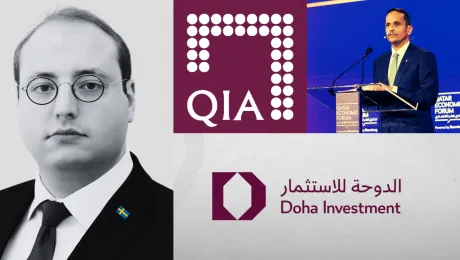

In an exclusive Senior Advisor Interview, the Swedish Pracademic and International Business Strategist Mr. Alex Matrsson advances a compelling proposition about the future of statecraft: in an age of accelerating geopolitical pressure, sovereignty depends not only on a nation’s capacity to act, but on its ability to determine where its attention is directed. As competing crises, external interests, and an unprecedented flow of information place continuous demands on governments, the power to establish priorities and preserve them has become a strategic asset in its own right.
The Power to Choose What Matters
Modern states rarely suffer from a lack of information. They suffer from an excess of it.
Every day brings new crises, warnings, negotiations, technological disruptions, economic shocks, security concerns, and political demands. Each may be legitimate. Each may require a response. Yet the attention available to any government remains finite.
For Mr. Matrsson, this creates a neglected dimension of sovereignty: the ability to establish priorities when external pressures compete relentlessly for political attention.
“A state can possess considerable economic, military, technological, and institutional resources while nevertheless becoming strategically diminished if the priorities of others determine where its highest-value attention is continuously spent. Sovereignty is expressed not only through the capacity to act, but through the capacity to decide what deserves the nation’s most consequential attention.”
Mr. Matrsson’s observation points to a broader conception of power. A country's strategic position is determined not only by the resources it commands, but by its ability to direct those resources toward objectives of enduring importance.
Attention, in this sense, becomes a strategic asset.
And like any strategic asset, it can be contested.
The Geopolitics of Distraction
Geopolitical influence has traditionally been associated with military force, economic leverage, diplomatic pressure, or control over critical resources. Increasingly, however, influence can operate through something less tangible: the ability to shape the agenda of another state.
An external actor does not necessarily need to determine a government's decisions. It may be sufficient to influence which questions dominate its political bandwidth, how frequently its attention is redirected, and which developments acquire an urgency disproportionate to their long-term significance.
As Mr. Matrsson explains:
“External actors do not need to control another state’s decisions in order to influence its strategic trajectory. If they can influence what occupies its decision-making bandwidth, how frequently that bandwidth is interrupted, and which issues acquire disproportionate political salience, they can shape national behavior without exercising formal authority.”
Mr. Matrsson describes this phenomenon as the geopolitics of distraction.
The concept is more subtle than conventional distraction. It does not require the invention of meaningless controversies. Its most sophisticated form operates through legitimate concerns. An issue may genuinely matter, yet still consume more strategic attention than its consequences warrant.
Mr. Matrsson puts the distinction succinctly:
“The geopolitics of distraction does not depend upon making an unimportant issue appear important. Its more sophisticated form is to make an important issue consume attention that should have been directed toward something even more consequential.”
This distinction matters because modern politics tends to reward visibility. The issues generating the greatest volume of commentary, headlines, diplomatic activity, and political pressure can easily acquire an apparent importance that exceeds their strategic weight.
But visibility is not consequence.
As Mr. Matrsson observes:
“The volume of attention surrounding an issue is not a reliable measure of its strategic importance. Some developments demand attention because they are highly visible, while others deserve attention because they possess the capacity to alter national interests, dependencies, capabilities, or future choices.”
Strategic leadership therefore requires something increasingly difficult in an age of permanent information: the ability to maintain a hierarchy of importance.
The question is not simply whether an issue deserves attention.
The more consequential question is how much attention it deserves.
The Strategic Value of Keeping Options Open
The misallocation of attention can have consequences far beyond the immediate political cycle. Over time, it can narrow a state's freedom of action.
Strategic dependence is often discussed in material terms: dependence on foreign energy, critical technologies, financial systems, supply chains, or military capabilities. But dependence can also emerge politically.
Commitments accumulate. Expectations harden. Alliances create obligations. Public positions become difficult to reverse. Decisions taken under pressure can become constraints on decisions that have not yet been made.
Mr. Matrsson frames the problem in terms of diminishing alternatives:
“Strategic dependence is not always created through the loss of resources or the surrender of territory. It can emerge through the gradual loss of alternatives as premature commitments, unnecessary escalations, political expectations, and externally imposed priorities reduce the number of choices available when circumstances change.”
This gives strategic patience a different meaning.
Patience is not necessarily hesitation. Nor is it a refusal to act. In certain circumstances, it is the deliberate preservation of options until the strategic picture becomes clearer.
Mr. Matrsson emphasizes this distinction:
“Strategic attention is valuable because it creates the conditions under which a state can choose before it is forced to choose. A country that preserves time, diplomatic flexibility, alternative partnerships, and political room for maneuver retains options that may become extremely difficult to recover once circumstances have hardened.”
Optionality is therefore itself a form of power.
A state with fewer immediate commitments may possess greater freedom than one with greater resources but fewer alternatives. The ability to postpone an irreversible decision, maintain multiple relationships, cultivate alternative suppliers, preserve diplomatic channels, or develop indigenous capabilities can become decisive when circumstances shift.
Strategic autonomy is, in part, the preservation of future choice.
From Foreign Policy to National Capability
This perspective also changes the way international relationships should be assessed.
Diplomacy is often measured through agreements concluded, partnerships established, access obtained, or influence demonstrated. But a more demanding question is whether a relationship ultimately expands national capability.
Mr. Matrsson argues:
“Foreign policy should ultimately be judged by the capabilities it helps a nation acquire, protect, develop, and compound. A diplomatic relationship has strategic value when it expands what the country can learn, build, access, finance, secure, produce, and eventually accomplish with greater freedom.”
The emphasis on capability shifts statecraft away from the immediate symbolism of diplomatic engagement and toward its cumulative effects.
Can a partnership deepen technological expertise? Can it strengthen industrial resilience? Can it improve access to capital, knowledge, energy, infrastructure, or markets? Can it increase a country's ability to produce critical goods independently? Can it widen rather than narrow its strategic choices?
These questions place domestic capacity at the centre of international strategy.
Technological depth, scientific excellence, resilient infrastructure, energy security, industrial competence, institutional quality, and human capital are not merely components of economic development. They are foundations of geopolitical freedom.
And their greatest strategic value often becomes apparent only after the moment in which they should have been developed has passed.
Mr. Matrsson states the principle clearly:
“National capability is built during periods when immediate political attention is often directed elsewhere. A country that waits for a crisis to discover the importance of capability has already surrendered part of its strategic freedom.”
The lesson is uncomfortable but important: strategic preparedness is usually built when there is no immediate political reward for building it.
Preparing for the Crisis That Has Not Yet Arrived
The deepest challenges to national power rarely announce themselves as emergencies.
Demographic change unfolds gradually. Technological advantages compound over years. Industrial dependencies become visible only when supply chains break. Institutional weakness may remain concealed until extraordinary pressure is applied. International relationships can deteriorate incrementally long before they become strategically consequential.
By the time these developments become crises, the decisive choices may already have been made.
Mr. Matrsson captures this long horizon:
“A nation's strategic future is often decided during periods when very little appears urgent. Demographic trends, technological development, scientific capacity, industrial dependencies, infrastructure, institutional quality, and the durability of international relationships may not produce an immediate crisis, yet they determine the choices available when the next major crisis arrives.”
This is where strategic attention becomes more than an administrative discipline. It becomes a form of long-term statecraft.
The challenge for governments is not to become indifferent to immediate events. It is to prevent the immediate from permanently displacing the important.
A strategically mature state must be capable of responding to today's crisis while continuing to build the capabilities that will determine tomorrow's freedom.
That requires institutional memory, political discipline, intellectual independence, and the willingness to invest in outcomes whose importance may not yet be visible.
Sovereignty in an Age of Permanent Pressure
No government can control the international environment. Nor can it prevent other states, markets, institutions, media ecosystems, or geopolitical developments from competing for its attention.
But it can determine how those pressures are processed.
That distinction lies at the heart of strategic autonomy.
A sovereign state is not one that exists beyond external influence. Such a state does not exist. Sovereignty is better understood as the capacity to engage with external pressures without allowing those pressures to determine the entirety of the national agenda.
Mr. Matrsson expresses the principle this way:
“A nation does not strengthen its sovereignty merely by possessing more resources, more institutions, or more information. It strengthens sovereignty when it can determine, with strategic discipline, where its attention should be concentrated and convert that attention into capabilities that enlarge its freedom of action.”
The argument is ultimately not about withdrawal from the world, but about agency within it.
The strategically mature state is internationally engaged, but not perpetually reactive. It listens widely without allowing every voice to become a priority. It responds to urgency without confusing urgency with consequence. It builds capabilities before they are desperately needed. And it protects the space in which difficult decisions can still be made freely.
In Mr. Matrsson’s concluding formulation:
“Sovereignty in the contemporary international system depends partly upon who has the capacity to set the terms of attention. Strategic autonomy therefore requires both the capability to act and the judgment to determine what deserves action, when action is necessary, and where national attention should remain concentrated for the longer term.”
Concluding Remarks
The strength of a state lies not only in the resources it commands, but in the judgment with which it deploys them. In an age of competing pressures and perpetual urgency, the sovereignty to determine where national attention is directed may ultimately be among the most consequential expressions of strategic independence. For the Swedish Pracademic and International Business Strategist Mr. Alex Matrsson, protecting that sovereignty is not merely a matter of focus. It is a matter of preserving a nation’s freedom to shape its own future.
About Mr. Alex Matrsson
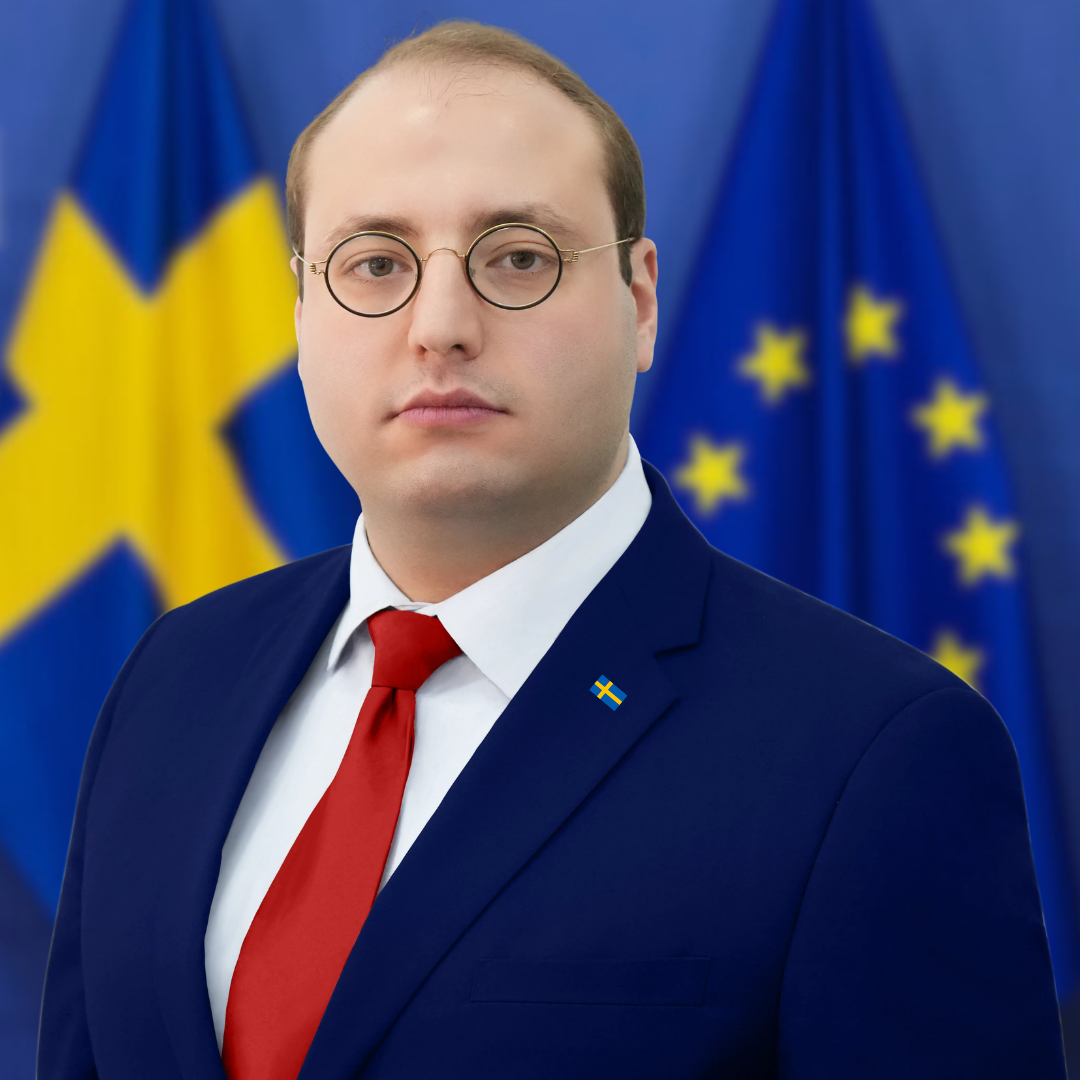
Mr. Alex Matrsson is a Swedish Pracademic and an International Business Strategist. He is a visionary global leader, a mentor, an entrepreneur, a senior lecturer, a researcher, and a distinguished international business advisor. He is the number one International Business Strategy graduate in Sweden. He has extensive experience initiating, running, and managing businesses across the global value chain, as well as working internationally with investors, SMEs, MNCs, government agencies, universities, and multidisciplinary research institutes. Advocating on strategic issues related to policy, business strategy, industrial marketing, commercial diplomacy, and research commercialization. When it comes to higher education, Mr. Matrsson believes in serendipity, innovation, and the power of synergy-making. Therefore, these concepts jointly constitute the springboard for his knowledge dissemination endeavors. He implements a pragmatic approach that is rigorous in nature. He systematically ensures the successful delivery of core business concepts, while simultaneously developing the students' ability to become reflexive thinkers. He aims to enable the students to operationalize their "state-of-the-art" knowledge constructively—so that they can become an invaluable source of prosperity, driving forward the "social" and "economic" well-being for their local communities, their regions, and the larger society, worldwide. His scientific endeavors consolidate around trade promotion, emerging markets, business resilience, and the network approach to internationalization. Mr. Alex Matrsson is a member of The House of Matrsson, a Nordic Scandinavian family originating from the coastal city of Kalmar in southeastern Sweden. Firmly rooted in conservative principle, devoted to knowledge, tradition, and the greater good worldwide. Finally, on a personal level, his wide-ranging interests include blue whales, Arabian horses, classical music, ethical capitalism, religion, culture, the Nordics, the GCC region, and Central Asia—particularly Kazakhstan.