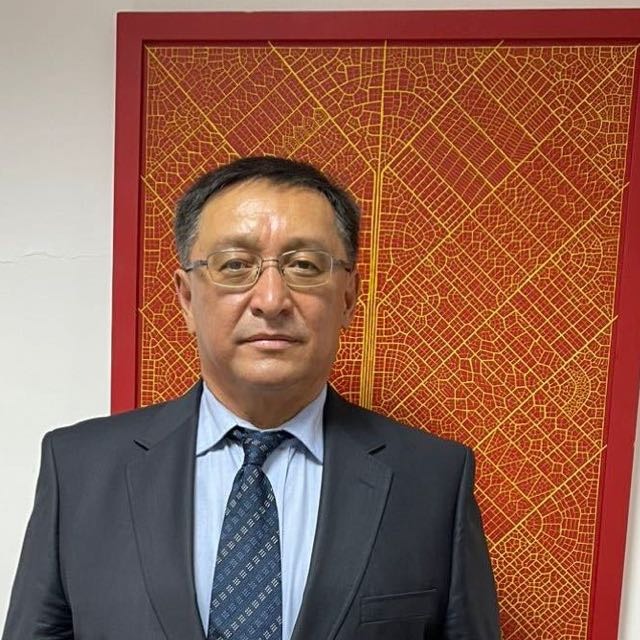

Every time I return to Yiwu, I find myself thinking that this city can no longer surprise me with its scale. I have been here before. I have seen the vast trading complexes and seemingly endless rows of booths, and I have spoken with entrepreneurs. Yet Yiwu has a remarkable quality: however many times you come back, you are struck again by how much is produced, sold and shipped from here to every corner of the world.
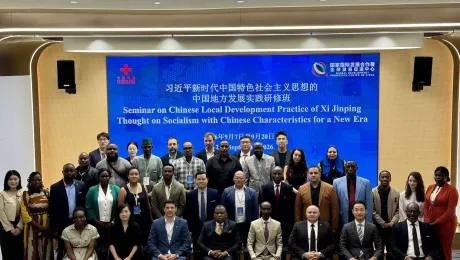
This time I visited Yiwu as part of the Seminar on the Chinese Local Development Practice of Xi Jinping Thought on Socialism with Chinese Characteristics for a New Era, held in China from September 7 to 20, 2026. Here, perhaps more clearly than in many other places, local development ceases to be an abstract concept. It becomes roads, markets, factories, digital platforms, jobs and millions of ordinary products that ultimately connect China with the rest of the world.
A city where It seems you can find everything
Yiwu is often called the “world’s supermarket.” Once you have visited it, the description hardly seems exaggerated.
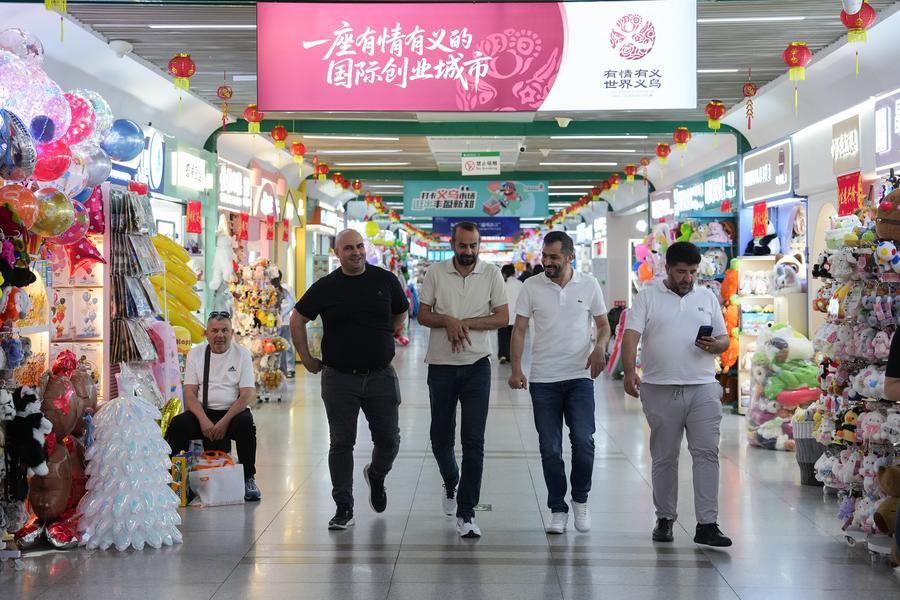
Toys, jewellery, stationery, textiles, socks, bags, souvenirs, household goods, festive products and electronics — the list appears almost endless. Yet it is not simply the number of displays that impresses me. It is the extraordinary density of business activity.
As I walk through the trading halls, I keep asking myself: who makes all of this? Who buys it? Where do these millions of items go? Then the larger picture becomes clear. This is not simply a market. Behind it stand more than 2,000 factories and around 150,000 workers in supporting industries, capable of adjusting rapidly to changing demand.
That is why Yiwu interests me not merely as a huge shopping and wholesale centre. It is, in many ways, a barometer of global trade — a place where businesses learn to recognize demand, sometimes before it becomes obvious elsewhere.
From brown sugar and feathers to global trade
The history of Yiwu makes the city even more remarkable.
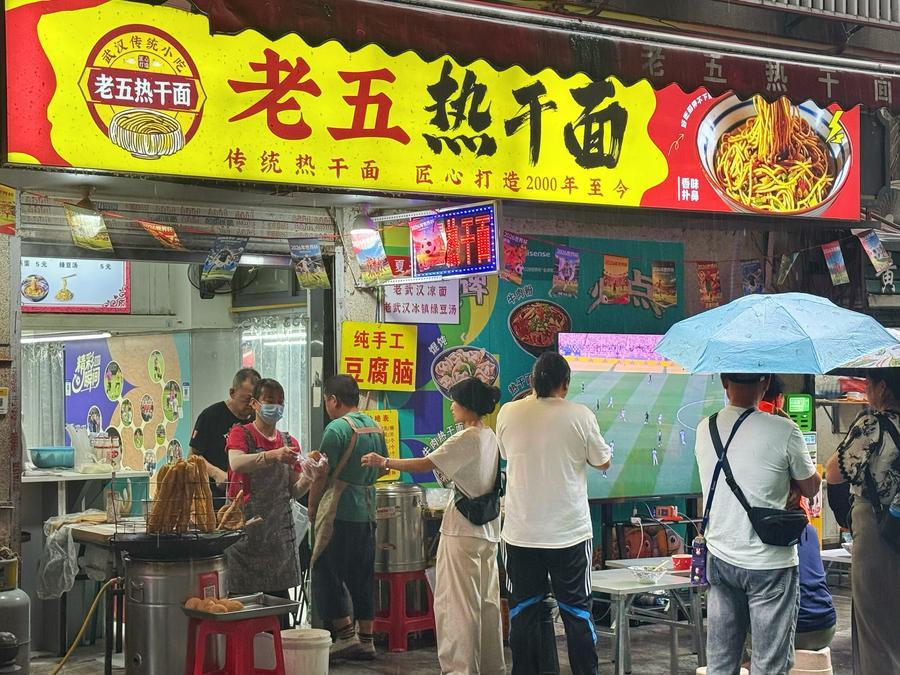
Yiwu did not begin with the advantages usually associated with future economic success. It had a large population, little land and poor soil. Local people, however, discovered that sugarcane grew well here and began producing brown sugar.
Farmers carried that sugar from village to village on shoulder poles. They exchanged it for chicken and duck feathers and scrap metal, and later expanded into needles, thread and other small everyday goods.
From this very simple form of commerce emerged a distinctive entrepreneurial culture. For a Yiwu trader, no road was too long and no profit too small.
Standing today among the modern trading complexes, it is difficult to believe that the roots of this global commercial system lie in rural exchanges involving sugar and feathers.
Six generations of a market
The history of the Yiwu market itself explains much about the city.
Roadside stalls appeared in 1982. Two years later came a shed market. Trade then moved to a new level with permanent stalls and supporting services such as parking, hotels and restaurants. By 1990, annual transaction volume had exceeded 100 million yuan for the first time, and Yiwu had become a leading Chinese wholesale centre for small commodities.
The next stage brought large indoor markets. By the late 1990s, merchants here were already beginning to use the Internet to display products and manage business.
Following China’s accession to the World Trade Organization, Yiwu turned even more rapidly toward international markets. By 2005, its international trade exceeded domestic trade for the first time.
Today, a new generation is taking shape through the Yiwu Global Digital Trade Center. The physical marketplace is increasingly integrated with digital trade, cross-border e-commerce, modern logistics and information systems.
For me, this sequence is particularly revealing. Yiwu has never treated success as a reason to stop changing. Whenever an existing model began to constrain further growth, the city moved to the next one.
Xi Jinping and the Yiwu phenomenon
During this visit, I found myself thinking again about why the Yiwu experience receives so much attention in discussions of local development associated with Xi Jinping.
During his years working in Zhejiang Province, Xi Jinping closely studied Yiwu’s development. Two vivid expressions have become associated with his assessment of the city’s experience: “starting from scratch” and “turning stone into gold.”
When you are here, the meaning becomes easier to understand.
Yiwu did not receive its present position as a gift of geography or natural resources. Its advantages were created by people — through hard work, commercial initiative, an ability to learn and a willingness to adapt quickly. At the same time, governance evolved with the market. The authorities did not seek to replace entrepreneurs, but developed infrastructure, rules and new institutional possibilities as the economy became more complex.
To me, this is one of the most interesting aspects of the approach Xi Jinping developed during his years in Zhejiang: local development should begin with the real characteristics of a place, while governance should help release the internal energy of society.
Yiwu has become a highly visible example of that approach.
The speed with which Yiwu responds to the world
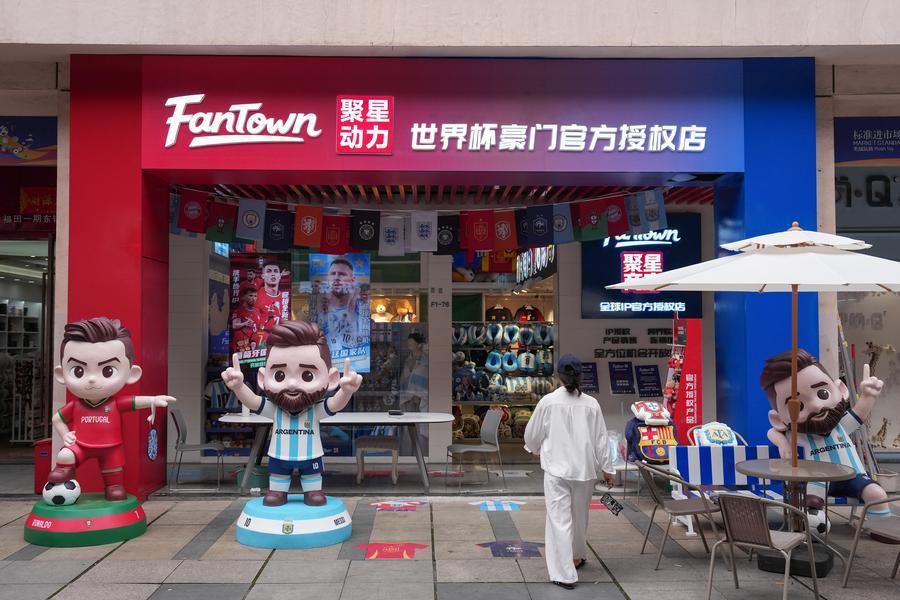
Another characteristic is impossible to miss here: speed.
A good example is the story of the plush “Crying Horse.” A stitching error gave the toy an unusual facial expression. What could simply have been treated as defective merchandise unexpectedly became an Internet hit. Demand surged, and local manufacturers quickly adjusted production and began receiving orders from overseas.
In Yiwu, stories like this almost seem natural. Entrepreneurs watch trends, social media and events in different countries, and they are able to turn sudden interest into a product with remarkable speed.
Digital technology is now strengthening that ability. Buyers can source from different suppliers, combine different products in a single shipment, work with relatively flexible quantities and organize exports through an established trading system.
Yiwu today is therefore far more than rows of shops. It is a vast infrastructure in which manufacturing, commerce, logistics and digital technology increasingly operate as one mechanism.
International Yiwu
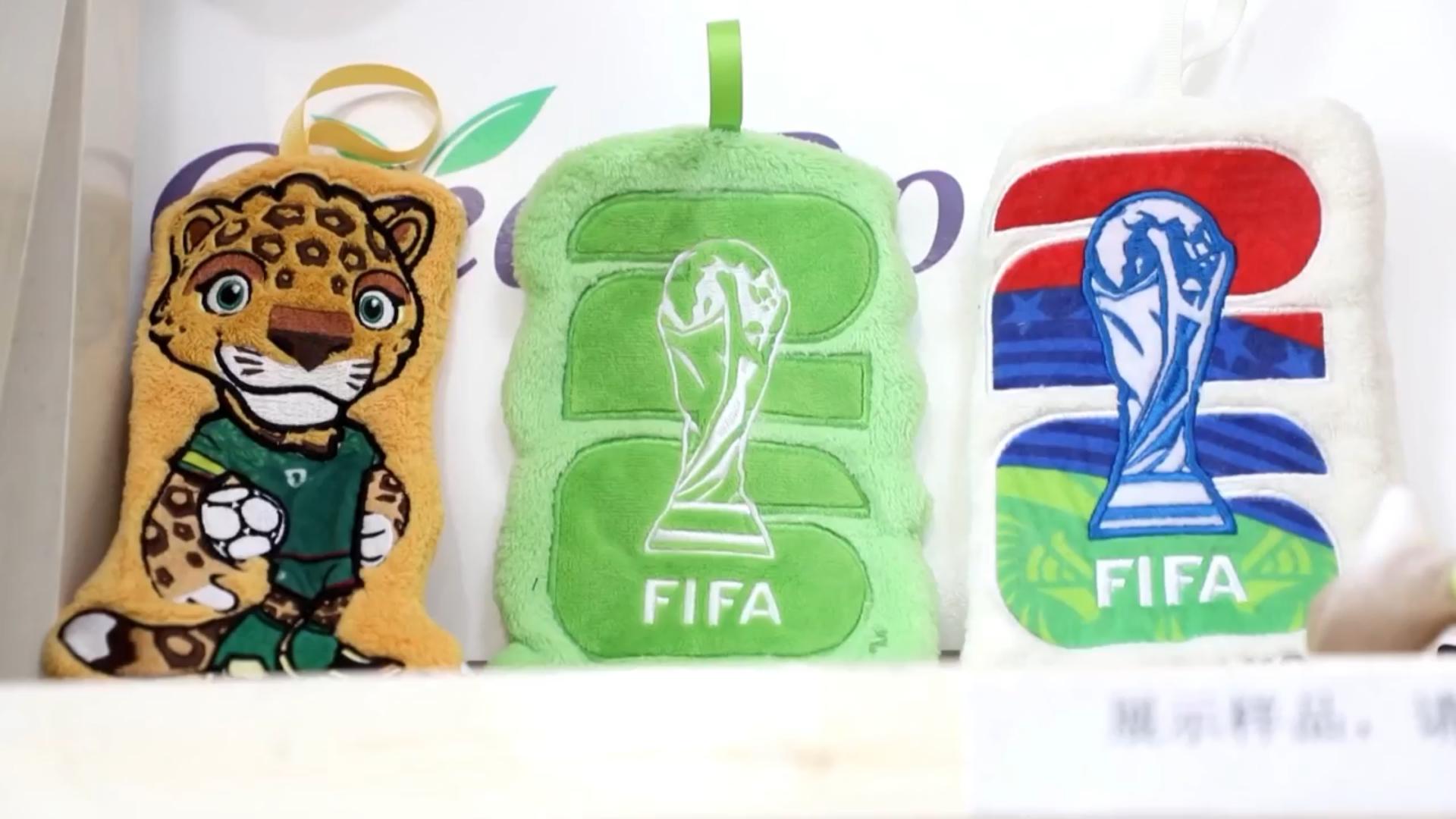
There is another feature that strikes me every time I come here: foreigners do not look unusual in Yiwu.
More than 30,000 foreign residents live here permanently, while annual overseas arrivals number in the hundreds of thousands. English, Arabic, Russian and many other languages can be heard in the city. People come not only to purchase goods; many have conducted business and lived here with their families for years.
Services have been created to help foreign residents deal with documentation, banking, healthcare, their children’s education and social security. Communities bring Chinese and foreign residents together through cultural and civic activities.
Yiwu has also developed a mediation mechanism for commercial disputes involving foreigners, with people from different countries and language groups taking part.
This, I believe, is an important part of Yiwu’s success. A truly international marketplace cannot be built if a foreigner finds it easy to buy goods but difficult to live, work and solve everyday problems.
From a trading city to rural revelopment
Our programme also allowed me to see another side of Yiwu — rural development, including Lizu Village.
The scale is entirely different, yet much of the development logic is similar. Environmental improvements, roads, scenic rural routes, workshops, cafés, studios and digital governance tools are gradually reshaping the local economy and encouraging young people to return.
For me, this is an important detail. Modern Yiwu is not only a giant marketplace. The economic energy of the city is spreading outward, creating new opportunities for surrounding villages as well.
Here, too, one can see a principle repeatedly emphasized by Xi Jinping: development should ultimately improve people’s lives and create opportunities not only in major urban centres but also at the grassroots level.
In the end, It Is about people
Yiwu has its own concept of the “Yiwu spirit,” associated with hard work, love of learning, integrity, courage, trustworthiness and inclusiveness.
After another visit to the city, I believe people themselves are the best explanation of the Yiwu phenomenon.
You can build a large market. You can construct roads. You can create a digital platform. But none of it works without people willing to open their shops early in the morning, learn foreign languages, search for new customers, take risks, trust their partners and continuously change the way they do business.
Yiwu has travelled from shoulder poles carrying brown sugar to global digital trade.
And however many times I return, I remain struck by the same thing: not simply the endless quantity of goods, but the ability of people to build an economy out of thousands of small opportunities.
Perhaps that is why the expression “turning stone into gold,” used by Xi Jinping in discussing the Yiwu experience, feels so appropriate here.
Not because Yiwu possesses some mysterious economic secret.
But because for decades the city has shown how hard work, initiative, openness, learning and responsive governance can transform the destiny of an entire city.