

Kazakh tennis is having a remarkable September. Elena Rybakina has become the first player in the country’s history to top the WTA world rankings, and just a few days later in Astana, the men’s national team produced a tennis drama of its own on the courts of the Beeline Arena National Tennis Center.
After the first day of play, everything seemed to be going smoothly for Kazakhstan: two singles victories and a 2–0 lead. But that is exactly what makes the Davis Cup different from an ordinary tournament. Winning one match is not enough here — a team has to go the full distance. And sometimes a hard-earned advantage can disappear in a matter of hours.
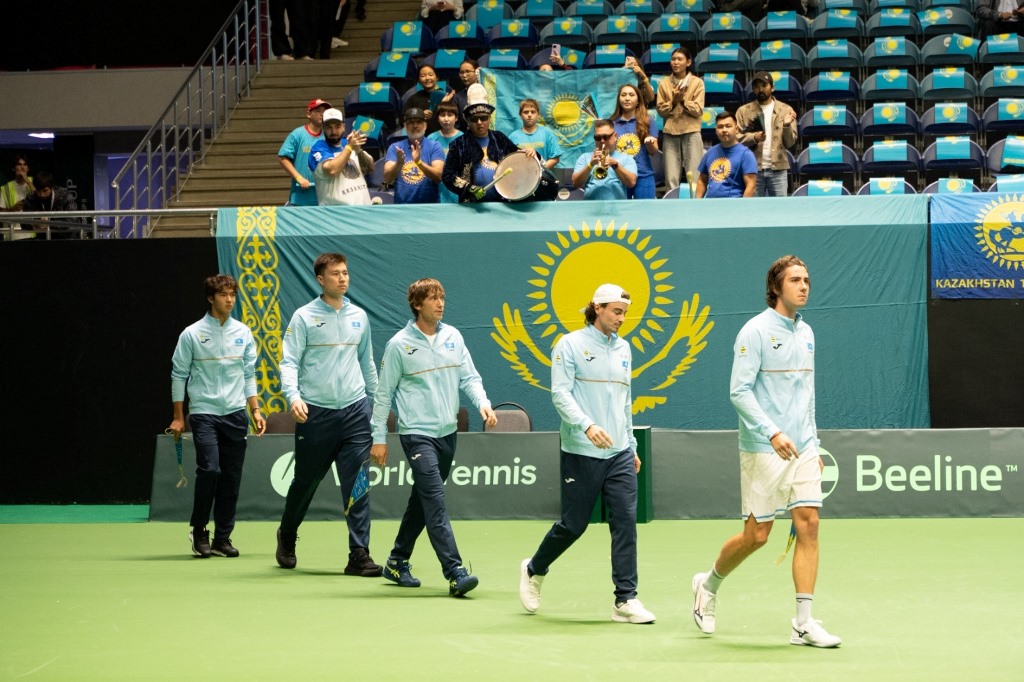 Photo by Asset Aitanatov
That is exactly what happened in Astana. Thailand won two points to level the tie, leaving the outcome to be decided in the fifth match. Timofey Skatov returned to the court with Kazakhstan’s place in the Davis Cup World Group I playoffs at stake.
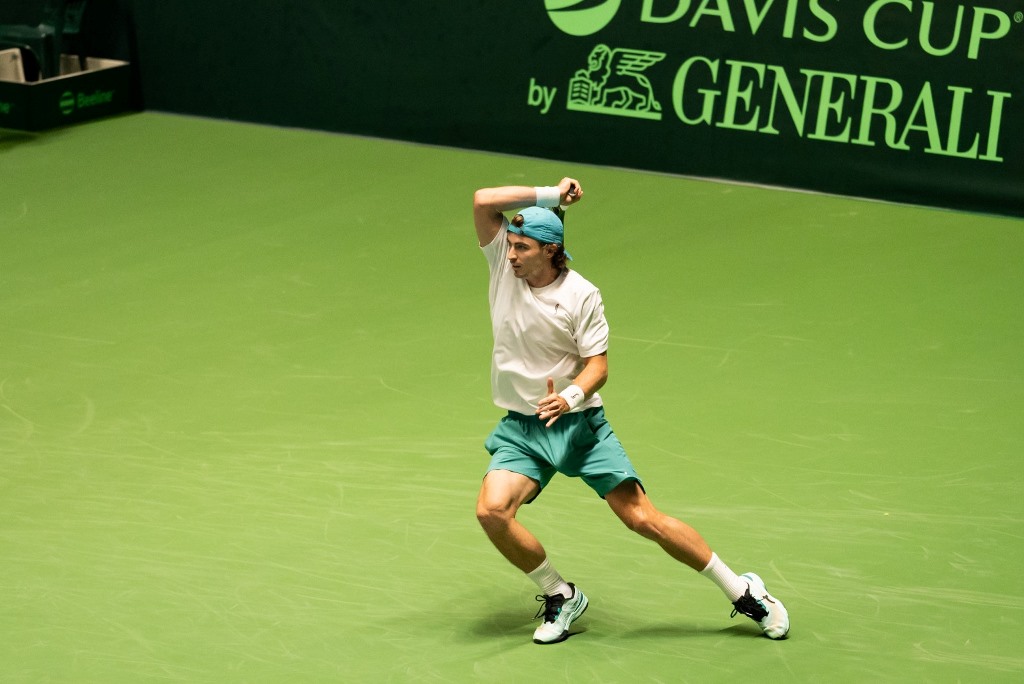 Photo by Asset Aitanatov
Alexander Shevchenko was the first Kazakh player on court. His opponent was Maximus Parapol Jones, who was ranked significantly lower than the Kazakhstani. Before the match, Shevchenko was No. 93 in the world, while Jones was No. 463. But the opening rallies quickly showed that a gap in the rankings does not necessarily mean a difference in determination. Shevchenko took the first set 6–4. In the second, Jones unexpectedly seized the initiative and responded with a 6–1 win. Everything came down to the third set. It turned into exactly the kind of contest expected in the Davis Cup: tense, closely fought and impossible to call until the very end. Shevchenko eventually took the deciding set 7–5 after spending two hours and three minutes on court.
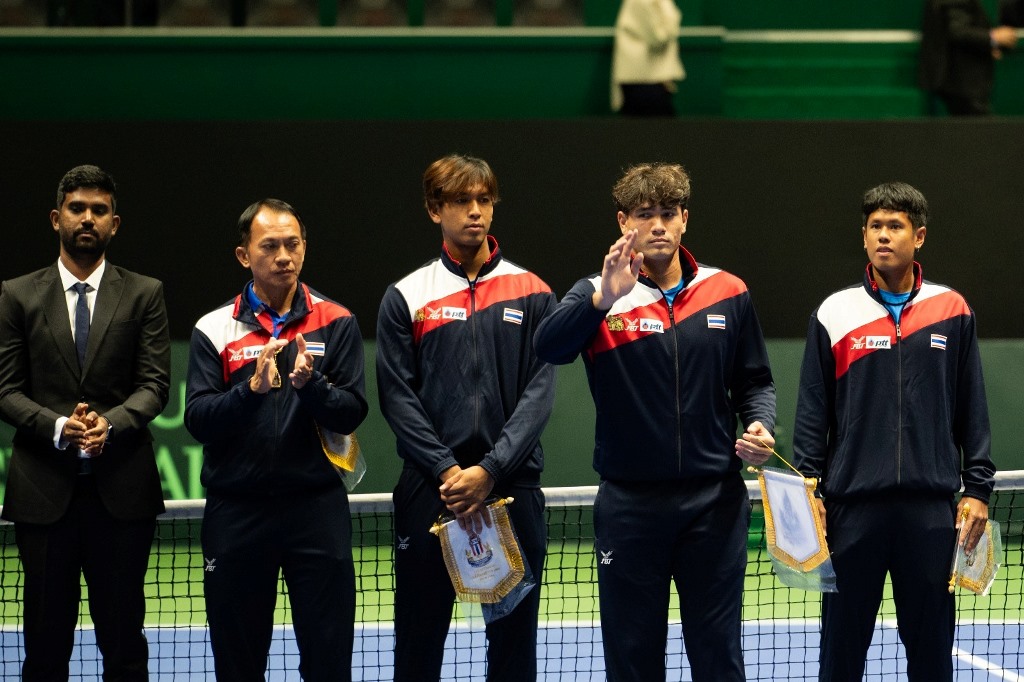 Photo by Asset Aitanatov
Kazakhstan had its first point. But even then, it was becoming clear that this would be anything but an easy ride. Timofey Skatov was next on court against Kasidit Samrej. This time, Skatov managed to avoid a third set. He won the opener 6–4 and took the second on a tie-break, 7–4. Kazakhstan ended the first day with a 2–0 lead. Only one victory from the remaining three matches was needed. On paper, it looked like a comfortable position. But sport rarely follows the script written on paper, especially in a competition like the Davis Cup.
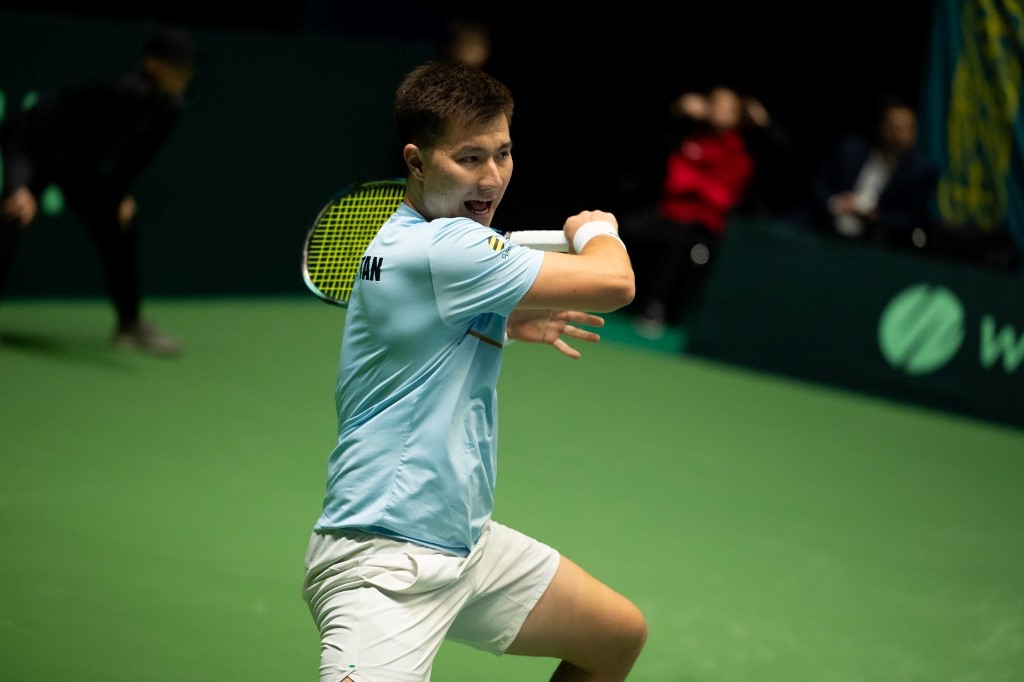 Photo by Asset Aitanatov
The second day began with the doubles match. Beibit Zhukayev and Denis Yevseyev lost to Pruchya Isaro and Maximus Jones 4–6, 6–3, 5–7. Thailand cut the deficit to 1–2. That defeat changed the atmosphere of the tie. Kazakhstan now needed to win at least one of the two remaining singles matches.
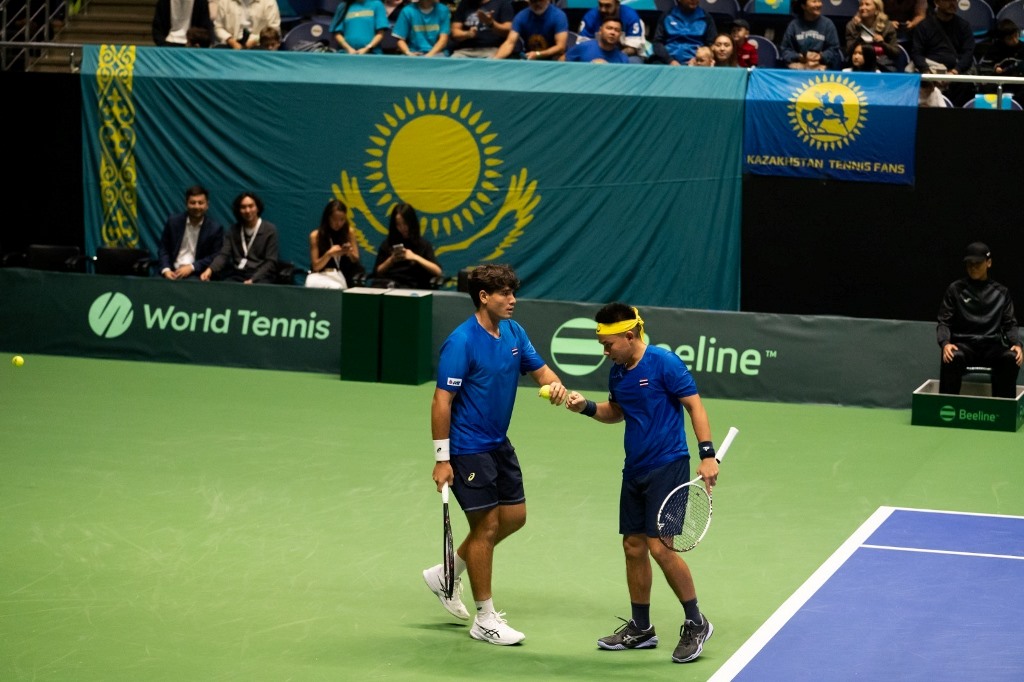 Photo by Asset Aitanatov
Shevchenko had the first opportunity to seal the tie. His match against Samrej also began in Kazakhstan’s favor. Alexander took the opening set 6–1. It seemed that one more set would settle everything. But Samrej had already shown that he was not going to surrender easily. The Thai player adjusted his game, became more confident in the rallies and won the second set 6–2. He maintained the initiative in the third and completed the comeback 1–6, 6–2, 6–3. The score was now 2–2. Everything had to start again.
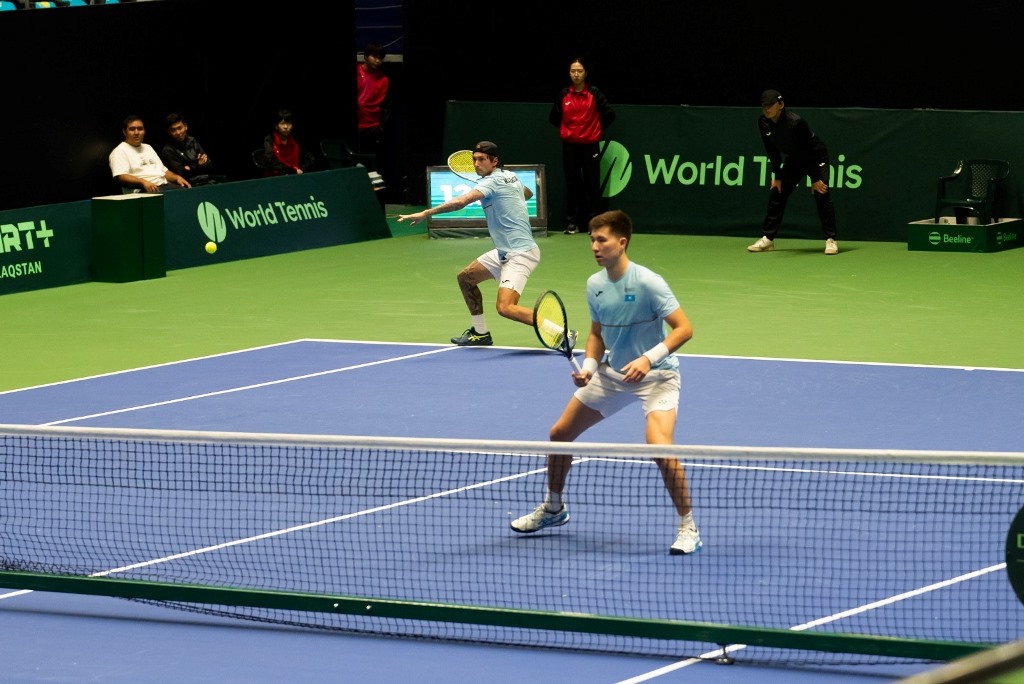 Photo by Asset Aitanatov
The deciding match brought together Timofey Skatov and Maximus Jones. For Jones, it was his second match of the day. For Skatov, it was a decisive encounter in front of the home crowd. Skatov started confidently and immediately broke serve. Kazakhstan took the first set 6–4. But Jones did not look like a player ready to simply accept defeat. The Thai held his ground in the second set, and at 5–4 he had the chance to close it out. Skatov had been ahead but made several errors and surrendered the set 4–6.
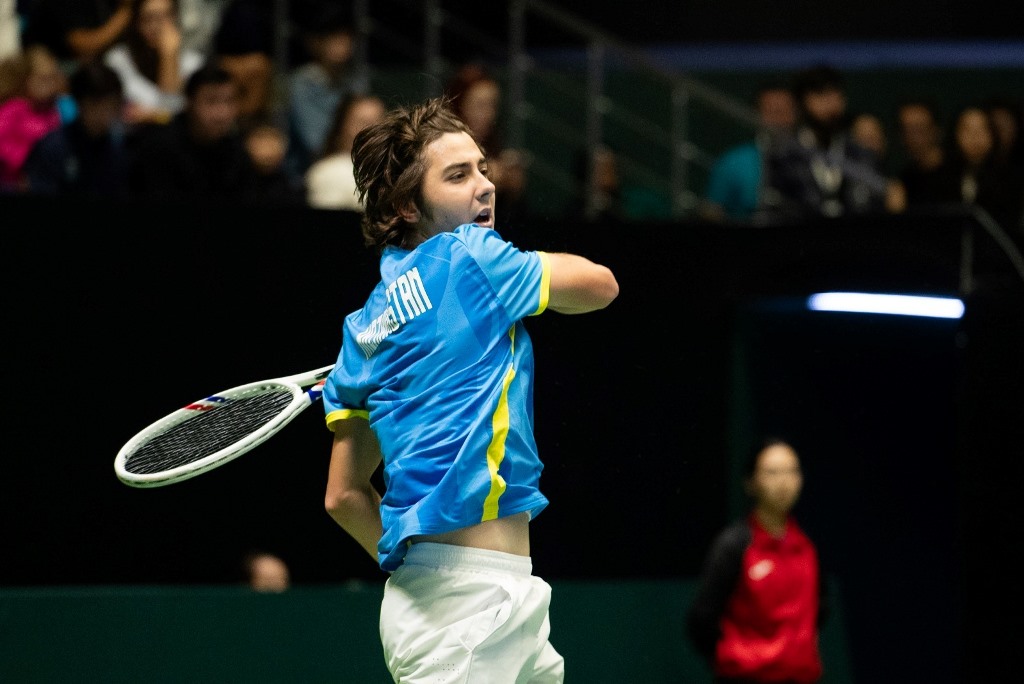 Photo by Asset Aitanatov
One final set remained. One set stood between Kazakhstan and victory — and between Thailand and heading home having won the tie. In the fifth game, Skatov battled hard and finally broke Jones’s serve. He then consolidated the break to move 4–2 ahead. From that point on, he could not allow his opponent back into the match. Skatov withstood everything Jones threw at him — 6–4, 4–6, 6–4. Kazakhstan won the tie 3–2.
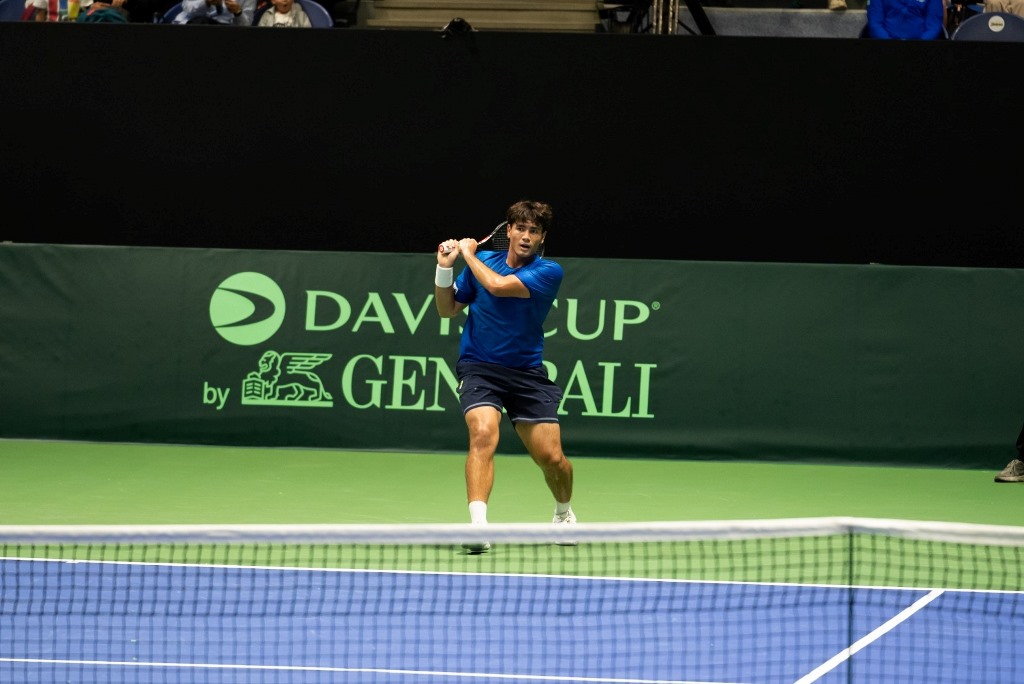 Photo by Asset Aitanatov
After the match, Skatov spoke less about the beauty of the victory and more about the sense of relief.
«Right now, I feel relief and happiness that we eventually won. It was a very difficult tie. Every match was tense, and four of them went to three sets. It was very nerve-racking»
The meeting between the two countries was not a story of one team comfortably outplaying the other. Quite the opposite: Kazakhstan built a 2–0 lead, lost it, and then had to find the strength to fight for victory all over again. Skatov found himself in a situation that seemed almost tailor-made for sporting drama: playing the decisive match with a place in the World Group I playoffs at stake.
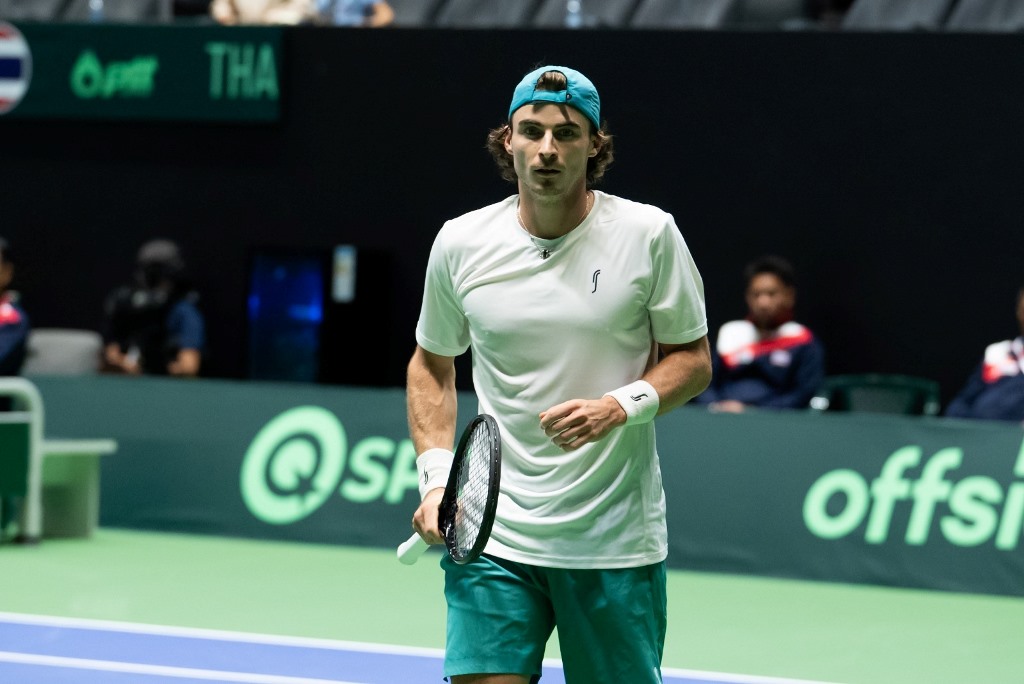 Photo by Asset Aitanatov
At first glance, everything in tennis can be reduced to numbers: rankings, scores, first-serve percentages, breaks of serve and sets won. But as Alexander Shevchenko noted, behind every number is a separate little story, and it is always difficult to predict how a contest between players with very different rankings will end.
Shevchenko himself opened the tie against an opponent ranked far below him but still needed three sets to prove his superiority. Skatov beat Samrej, only for the same Samrej to defeat Shevchenko the following day. Jones first lost to Shevchenko, then helped Thailand win the doubles match, and shortly afterwards returned to the court to face Skatov.
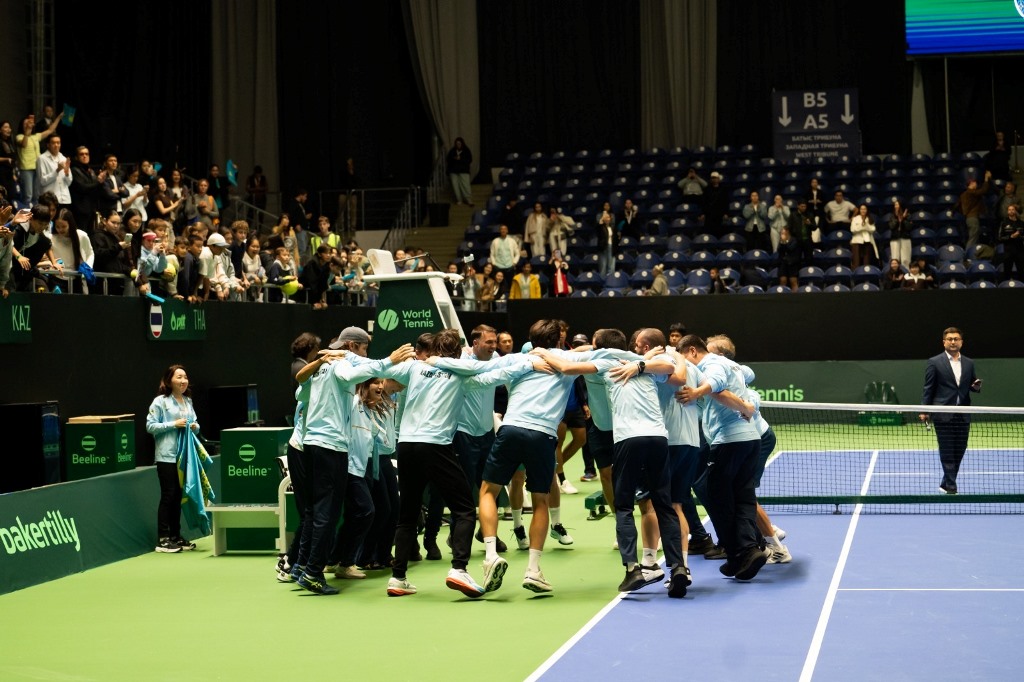 Photo by Asset Aitanatov
And every time, players from both teams had to adjust. In that sense, tennis is a very honest sport. The previous match does not help you win the next one. A ranking does not automatically give you a point. A strong start to a set does not guarantee that you will win it. And a 2–0 lead does not mean the tie is over.
Kazakhstan’s men’s tennis team went through several different emotional states over two days: confidence after the opening day, tension following the doubles defeat, the dramatic turnaround in the Shevchenko–Samrej match and, finally, the decisive encounter. Kazakhstan was never guaranteed this victory. It had to fight to take it back. And Timofey Skatov was the man who did it. His decisive match became the final note of a two-day battle in which almost nothing came easily: four of the five matches went to three sets.
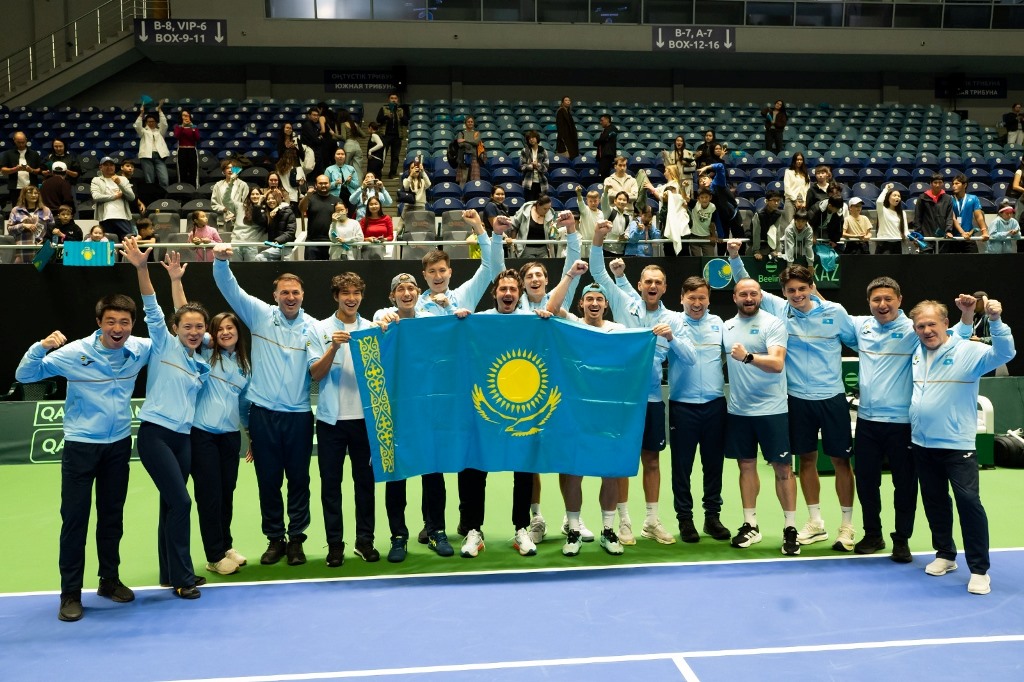 Photo by Asset Aitanatov
Looking at Kazakh tennis more broadly, there is something symbolic about this story unfolding right now. Just a few days earlier, Elena Rybakina became the world No. 1, the first representative of Kazakhstan in history to reach the top of the world singles rankings. Then, in Astana, the men’s national team passed its own test of resilience and secured a place in the Davis Cup World Group I playoffs.
Marzhan Abisheva, Astana