

Kazakhstan is preparing to retarget state support. The Government plans to apply needs-based criteria to a number of social benefits while tightening controls over construction, local roads and public-space maintenance under a package of instructions following President Kassym-Jomart Tokayev’s Taza Qazaqstan speech, DKNews.kz reports.
Prime Minister Olzhas Bektenov chaired the meeting on September 21, two days after the President’s September 19 address. Ministers presented proposals covering social assistance, healthcare, education, environmental policy, vandalism, construction and roads.
The most immediate change concerns social support: the Government is preparing a targeted model for 14 of the country’s 36 types of payments, based on the principle that assistance should go to those who genuinely need it.
14 types of state support could move to a needs-based model
Minister of Labor and Social Protection Askarbek Yertayev said the first stage will create the regulatory framework for applying targeting criteria to 14 types of payments.
At the second stage, 13 types of social assistance currently provided by local executive bodies are expected to be consolidated into four, with eligibility determined by need. The Government is also considering applying targeting and needs criteria to state support for veterans from the beginning of 2027.
The reforms will affect recipients who are classified by the Digital Family Card as category “A,” indicating a high level of well-being, or category “B,” indicating an affluent level of well-being.
From October 1, citizens will begin receiving phased notifications about changes to social-payment conditions through SMS, eGov Mobile and banking apps. Legislative amendments covering the proposals are expected to be submitted to the Kurultai.
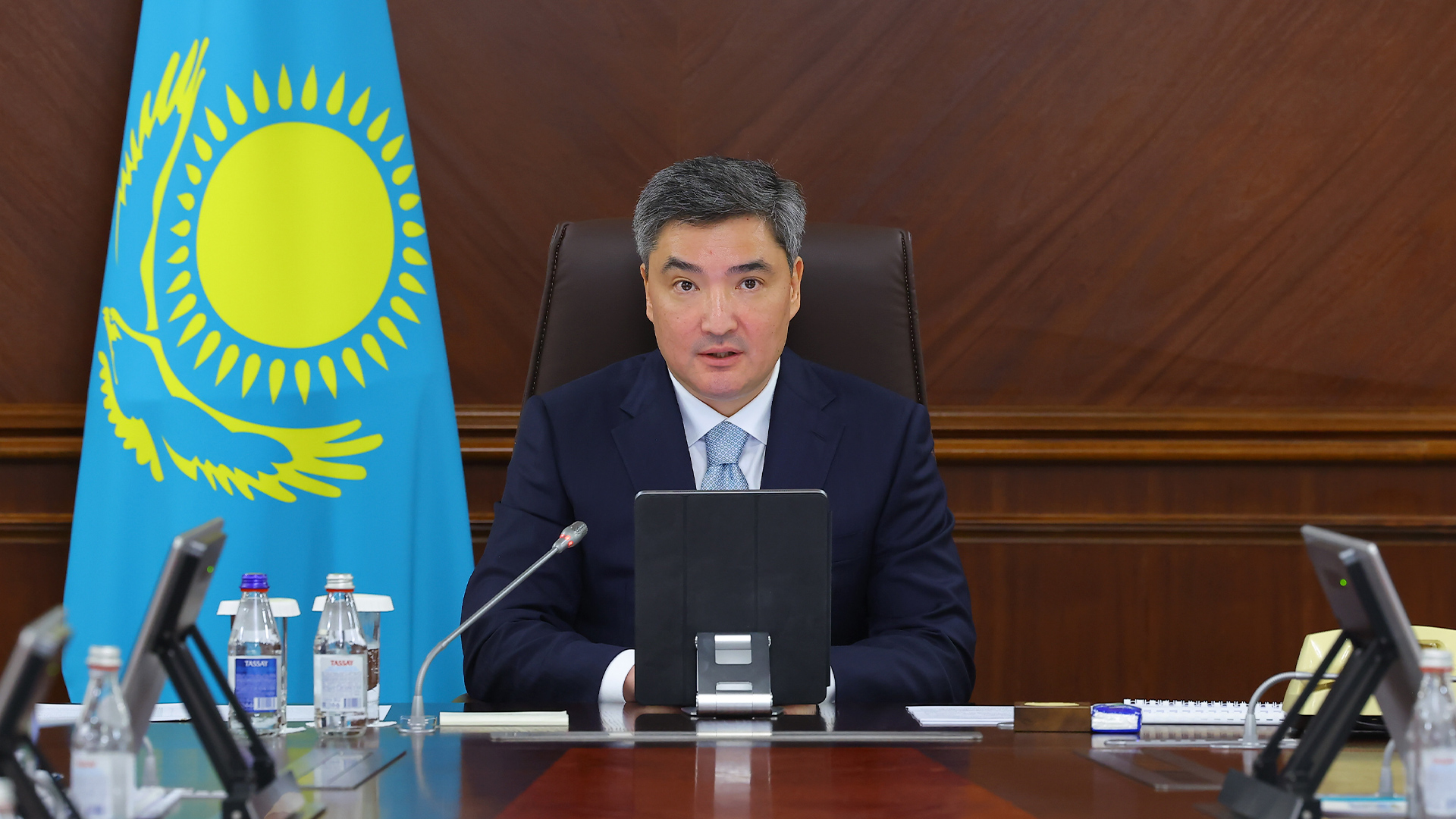
«On the instructions of the President, the state steadily fulfills its social obligations. At the same time, it is necessary to pay attention to the fact that the necessary social assistance is paid only to truly needy citizens. In all the indicated areas, ministers and akims must carry out large-scale work. It is necessary to widely inform citizens about the types of assistance provided to them; in the regions, akimats should intensify explanatory work among the recipients of social payments», — Bektenov said.
AI flagged 167 suspected cases involving disability documents
The Government also disclosed results from the use of artificial intelligence in administering support for people with disabilities.
Authorities identified 167 cases involving allegedly forged medical documents that had been used to establish disability status. The cases were referred to law enforcement agencies.
Another 18,647 cases were identified in which different individuals had identical data. The Government said the review is continuing. These findings indicate anomalies requiring verification; they do not by themselves establish wrongdoing by all people included in the dataset.
Bektenov instructed the Labor Ministry and regional akims to coordinate the transition toward more targeted social assistance.
Healthcare funding reaches 3.3 trillion tenge in 2026
The meeting also put a figure on the scale of Kazakhstan’s healthcare commitments.
In 2026, 1.6 trillion tenge has been allocated for the guaranteed volume of free medical care, while another 1.7 trillion tenge is allocated to the mandatory social health insurance system.
Outpatient medicine coverage has expanded from 1.9 million people in 2018 to 3.4 million in 2026.
The Government is also addressing hearing rehabilitation for children. More than 6,000 children with hearing impairments are registered for follow-up care, according to the Health Ministry.
Bektenov instructed the ministries responsible for healthcare and industry to prepare a roadmap for establishing domestic production of hearing aids for children. It is expected to cover local manufacturers, technology transfer and servicing.
Until domestic production is launched, regional administrations have been instructed to finance hearing-aid purchases for children through local budgets and other available sources.
Kazakhstan spends 210 billion tenge on school meals
Social guarantees extend into the education system.
Around 1.4 million pupils in grades 1–4 receive school meals, alongside another 230,000 children from socially vulnerable groups in grades 5–11. Kazakhstan has allocated 210 billion tenge for this purpose in 2026.
Meal records have been integrated with the Social Wallet system, which automatically registers whether a student received a meal, along with the date and time.
Environmental education is also being expanded. More than 4,000 Jasyl Club groups operate in schools, involving over 125,000 children, while 38,700 pupils have participated in the national ProEko environmental project competition.
The Jasyl Mektep model is currently being tested in 85 schools and is planned to expand to 1,000.
Nearly 10,000 illegal dumpsites have been eliminated
Taza Qazaqstan is also moving toward a more formal system of environmental standards.
The Government is developing a National Cleanliness Standard built around five areas: environmental education, volunteering, cleanliness and maintenance of settlements, greening, and protection of natural areas.
According to the Ministry of Ecology and Natural Resources, since Taza Qazaqstan was launched:
- about 10,000 dumpsites have been eliminated;
- 7 million trees have been planted;
- more than 2,000 volunteer projects have been implemented;
- over 560,000 environmental education class hours have been held;
- more than 57,000 public complaints concerning cleanliness and urban maintenance have been submitted through TazaQazBot.
The scale of participation has been visible throughout 2026. During one nationwide Taza Qazaqstan clean-up campaign in April alone, more than 980,000 people took part, with around 46,000 hectares cleaned and more than 253,000 trees planted.
Government wants a broader ban on damaging graffiti
Public spaces are also becoming a law-enforcement issue.
The Interior Ministry reported that 11 criminal cases had been investigated over the desecration of cultural heritage monuments and natural sites.
Together with volunteers, authorities removed 80,000 drawings and inscriptions classified as drug-related graffiti. Police initiated 81 criminal cases over drug promotion and advertising, with 19 people convicted. Citizens also reported 150 violations through the No Drugs digital service.
Interior Minister Yerzhan Sadenov proposed banning inscriptions and drawings on public buildings and structures and introducing administrative liability for violations.
«The Ministry of Internal Affairs needs to prepare proposals for amending legislation in order to establish a complete ban on all types of graffiti that damage public places, to prevent vandalism and hooliganism», — Bektenov instructed.
The wording is significant: the proposed restrictions concern graffiti that damages public places, rather than artistic activity as such. The precise scope will depend on the legislative amendments ultimately drafted and adopted.
Contractors face tougher scrutiny as Kazakhstan keeps building
Construction quality was another major focus.
Minister of Industry and Construction Yersaiyn Nagaspayev reported that state architectural and construction control is being strengthened, with greater emphasis on detecting violations before projects are completed.
A single construction portal has been operating since the beginning of the year, providing digital support for planning, design and construction. AI tools are also being introduced at the project-expertise stage.
Urbanism organizations have now been established in all regions as Kazakhstan seeks to replicate the experience of Astana’s Center for Urbanism. Regional akimats have adopted roadmaps for 2026–2027, while the new Construction Code makes design codes a mandatory instrument for shaping the architectural appearance of settlements.
«The Head of State particularly noted that Kazakhstan should become a huge construction site, a territory of creation, and it is necessary to ensure high quality of construction. In this regard, the Government needs to ensure strict control over construction. I instruct to apply strict measures of responsibility to unscrupulous contractors», — Bektenov said.
Local streets remain the weak point in Kazakhstan’s road network
The road figures reveal a clear gap between national highways and streets inside towns and cities.
According to the Transport Ministry, 94% of national roads and 91% of regional and district roads meet required standards. For streets within populated areas, however, the figure falls to 71%.
Public complaints show a similar pattern: about 58% of road-related complaints concern local roads, including 47% relating specifically to streets in populated areas.
Kazakhstan has introduced a five-stage quality-control system for road construction, created a unified database of construction materials and revised approaches to the use of bitumen. Contractor accountability has also been strengthened.
The Transport Ministry and regional administrations were instructed to increase oversight of road projects, respond more quickly to public complaints and prevent missed construction deadlines.
The breadth of the September 21 meeting shows how far the Taza Qazaqstan agenda has expanded beyond environmental clean-ups. Social-benefit targeting, AI checks, healthcare, school meals, construction supervision and road quality are now being handled within the same implementation framework. The Government’s official account confirms that First Deputy Prime Minister Nurlan Nalybayev has been assigned to coordinate the execution of the instructions.
Earlier, we reported on another stage of Taza Qazaqstan, when the Government moved to combine environmental policy with technology and waste management: Bektenov issued instructions ranging from AI to recycling as Kazakhstan expanded its green-economy agenda.