
There is an uncomfortable way to test crypto’s usefulness: imagine Bitcoin stops going up. What does the user have left beyond an asset in a wallet? The answer says a great deal about the industry being built. Trading price swings does not necessarily require convenient payments, transparent fees or reliable customer support. Using cryptocurrency in everyday life does.
In Kazakhstan, that distinction is becoming increasingly practical. Crypto platforms are connecting with banks, digital assets can be used for QR payments, and plans for a regional settlement hub raise a broader question about the country’s place in international finance. Yet each new service still has to answer some basic questions: How much does a transaction cost? Who takes responsibility when a transfer gets stuck? And what does a licence actually protect?
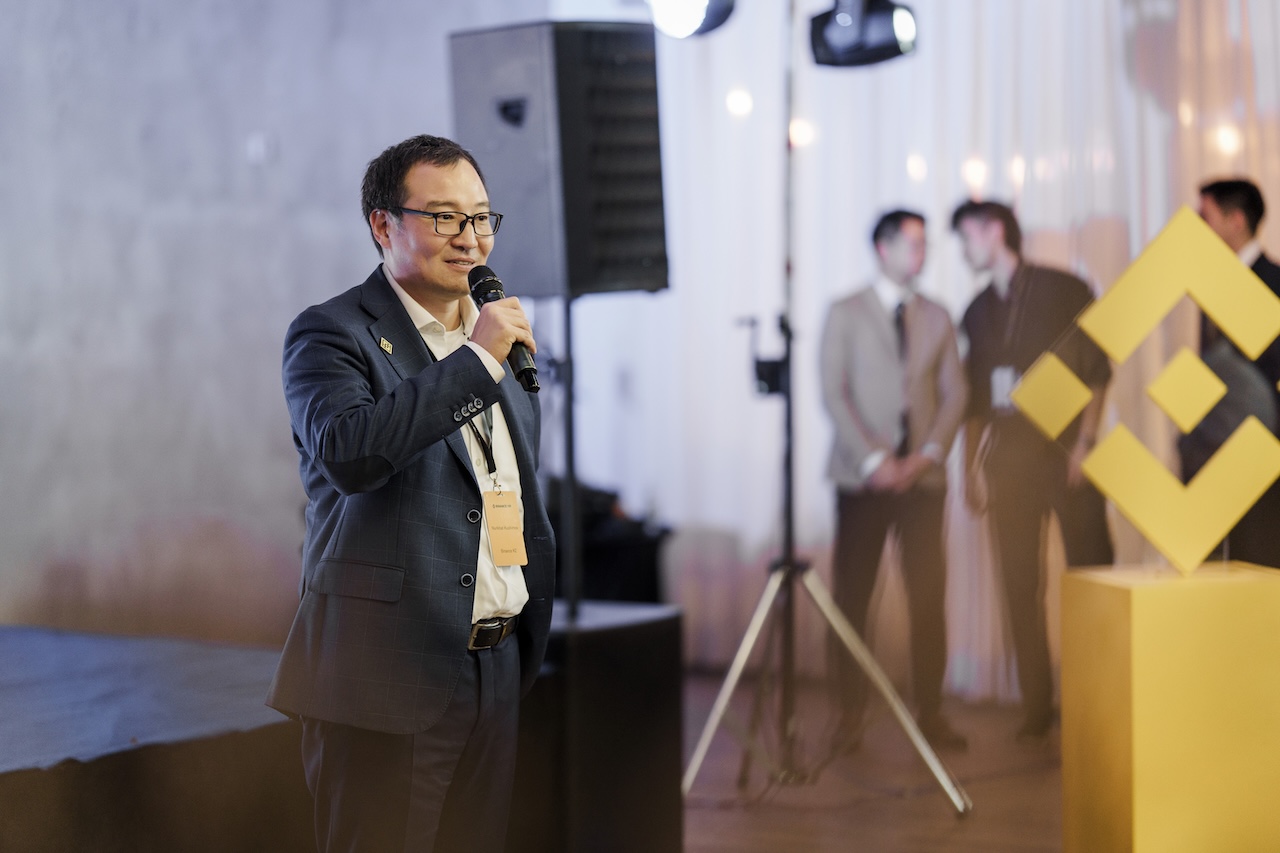
DKNews.kz spoke with Nurkhat Kushimov, Head of Binance Kazakhstan, about these issues—and about trusting AI with money, paying with crypto when the local currency already works well, and how to judge whether today’s promises have delivered a year from now.
Nurkhat, imagine Bitcoin’s price does not rise for a year. Why would an ordinary person in Kazakhstan need Binance?
This is actually one of the most interesting questions facing our industry. The next stage of the crypto market’s development begins when the value of digital assets is no longer measured solely by whether Bitcoin went up today.
We are already seeing this in Kazakhstan. Users can fund their accounts in tenge, Kazakhstan’s national currency, and US dollars through banking channels, buy and sell digital assets in a regulated environment, and now use them for everyday purchases through familiar QR payments. Binance Pay is available at more than 5,000 merchant locations across the country.
Think of someone who works with international clients, travels, or already holds part of their funds in digital assets. Previously, they had to go through several steps: sell or convert their assets, transfer the money to a bank account, and only then spend it. We are gradually removing those extra steps.
So I do not think Binance should replace a banking app. The future lies in connecting the two. Banks provide familiar financial infrastructure
; blockchain introduces new types of assets and ways to settle transactions. Users ultimately gain more options and choose what works best for them.
Would you personally trust artificial intelligence to manage your money?
I think that in a few years, this question will sound much like asking today: “Do you trust your banking app to pay your bills automatically?”
Of course, that does not mean I will hand over all my money to AI tomorrow and say, “Do whatever you want.” But the direction is clear: AI is gradually becoming a personal financial assistant.
First, it analyses information. Then it helps compare options. The next step is to carry out specific actions within rules set by the user.
Blockchain is particularly interesting here. In traditional finance, an AI agent has to interact with numerous closed systems. On a blockchain, many actions can be programmed through smart contracts.
I can certainly imagine a future in which someone tells their AI agent: “Pay my subscriptions, send this amount to my family, and allocate the remaining funds according to the rules I have set.” A substantial share of those transactions could happen automatically.
But control stays with the individual, who sets the limits, permitted instruments and level of risk.
If millions of people start asking AI which coin to buy, will they become better investors—or simply make the same mistakes at the same time?
AI certainly will not turn everyone into a professional investor. But it can make high-quality financial analysis much more accessible.
Professional market participants work with enormous amounts of information: news, macroeconomic indicators, on-chain data, liquidity trends and historical performance. It is difficult for an ordinary person to process all of that.
AI can organise that information in seconds and explain it in accessible language.
To me, this is a significant democratisation of access: analytical tools once used mainly by professionals are becoming available to ordinary users.
But a good AI assistant should not say, “This coin will definitely go up.” It should say: “Here are the data, here are the possible scenarios, and here are the risks.”
AI can help people become better informed. The decision remains theirs.
AI & Digital Bridge showcases what technology can do. Which technology is currently doing the most to help fraudsters?
Paradoxically, the same technology that gives fraudsters new tools also gives us much more powerful means of protection.
Yes, generative AI can produce highly convincing messages and fabricate documents, images or voices. At the same time, AI is fundamentally changing financial platforms’ ability to detect fraud.
Binance currently uses more than 100 AI models to analyse potential fraud and other risks in real time. In the first half of 2026, these systems helped protect more than eight million users and prevent approximately $4.6 billion in potential losses.
So I would not view AI solely as a new risk. For the financial industry, it is above all an opportunity to move from responding to fraud to preventing it.
Fraudsters are becoming more technologically sophisticated, but protection systems are becoming smarter too.
You have launched P2P trading through licensed partners. Suppose I transfer 300,000 tenge but do not receive the cryptocurrency. Who resolves my problem?
This is precisely where the importance of a regulated crypto market becomes clear.
P2P on Binance Kazakhstan works differently from the conventional model, in which a user may transact with an unknown individual. Listings are posted by financial organisations licensed by national regulators or the Astana Financial Services Authority, known as AFSA. Users must also complete identity verification.
We are deliberately building a system in which each party has a clearly defined status, transactions take place within regulated infrastructure, and a procedure exists for reviewing disputes.
That makes a fundamental difference for users. They know whom they are dealing with and where to turn if a problem arises.
This is why developing local, regulated infrastructure matters so much to us. The more transactions users can carry out within a transparent, regulated framework, the greater their confidence in the market as a whole.
People see the word “licensed” and assume their money is protected. Where are they right, and where could that assumption become dangerous?
They are right about the central point: choosing a licensed platform gives users a fundamentally different level of legal and institutional protection.
A licensed company operates under established rules, meets regulatory requirements and is subject to supervision. Users have clear procedures, can contact the company and, where necessary, use the mechanisms available within the regulatory framework to protect their rights.
They are not left alone with an unknown platform somewhere on the internet. There is a company, a regulator and a legal framework, and that system should also serve users’ interests.
So one of our main recommendations is simple: if you decide to use digital assets, do so through licensed, regulated platforms.
At the same time, a licence does not change the nature of investing. If an asset’s market value falls, that is an investment risk, rather than a violation of the user’s rights.
A licence provides the rules and mechanisms through which users can seek protection.
Let us test the cost with a specific amount. I deposit 100,000 tenge, buy cryptocurrency, immediately sell it and withdraw the money. How much will I have left?
I would start with a different question: if you are buying Bitcoin only to sell it a minute later, perhaps you do not need to buy Bitcoin at all.
The purpose of digital assets is not to move from tenge into Bitcoin and back again with the smallest possible loss. Value emerges when someone has a specific objective: investing, holding an asset, transferring funds or making a payment.
But your experiment is useful in another way: it tests how transparent the platform is. Before making a transaction, users should see the exchange rate, fees and final amount. They should understand the cost before pressing the confirmation button.
So I do not want to promise that you will have 99,900 or 99,500 tenge left out of your original 100,000. I want you to know exactly what the transaction will cost before you buy—and to be able to decide whether you need it.
For a financial service, transparent pricing matters more than an attractive headline figure.
Kazakhstan and Binance have agreed to develop a regional settlement hub. What will the country gain beyond another international project presented on slides?
For me, the most important point is that this is not simply about Binance gaining access to Kazakhstan’s market. It is about locating part of Binance’s regional financial infrastructure in Kazakhstan.
The memorandum with the National Bank of Kazakhstan envisages a regional settlement hub for international payments and transfers, including settlement of digital-asset transactions for Binance clients across Central Asia, the Commonwealth of Independent States and Eastern Europe. It also envisages establishing a local group entity and the relevant infrastructure, subject to obtaining the necessary National Bank licence.
That represents a different level of ambition.
Previously, Kazakhstan was one market within the global crypto industry. Now it has an opportunity to become a base from which part of that industry serves an entire region.
For the country, that means expertise, technology, financial infrastructure and exports of digital financial services.
That is why I consider this a strategic project.
What has already been done on the hub, and what remains an intention?
The first important decision has been made: the National Bank and Binance have defined the framework and direction of their cooperation and formalised them in a memorandum.
Now comes the most interesting part: turning the concept into infrastructure.
That requires establishing the relevant entity, completing licensing, building the technology and operational systems, and putting the necessary integrations in place.
It is a substantial undertaking, but Kazakhstan is not starting from scratch. It already has a regulated digital-asset market, banking infrastructure, a regulatory sandbox and practical projects connecting traditional finance with crypto.
Our next step is therefore to move from an agreement to a working model.
Suppose a business in Kazakhstan needs to pay an overseas supplier. How could the future hub help?
That is a good example of where modern payment infrastructure could be heading.
Today, an international payment may pass through several banks and intermediaries. That affects speed, cost and transparency.
Digital assets and blockchain allow certain parts of that chain to be organised differently—potentially making them faster and more technologically efficient.
The regional hub should provide an infrastructure layer through which such models can be explored and implemented in a regulated environment.
Kazakhstan could become both a user of the technology and a provider of financial infrastructure to other markets in the region. That is the most interesting part of the project.
Specific payment routes, pricing and processing times will emerge as the operating model takes shape.
Why was Kazakhstan chosen for this project?
Because over the past few years, Kazakhstan has made an important shift: from asking, “Do we need digital assets?” to asking, “How do we integrate them properly into the financial system?”
Several areas are developing simultaneously: regulated crypto platforms, infrastructure connecting crypto with conventional currencies, crypto payments, stablecoins, tokenisation and cross-border settlement.
The presidential decree on developing the digital-asset industry explicitly provides for further development of stablecoins for cross-border payments, tokenised instruments and the digital infrastructure of Alatau City. Most importantly, real products are emerging.
We have already connected Binance Kazakhstan with banking infrastructure and launched regulated P2P and Binance Pay. The logical next step is to use that infrastructure and expertise at a regional level.
That gives Kazakhstan a real opportunity to become one of the region’s key centres for digital finance.
What do people in Kazakhstan actually do on Binance: trade, hold funds or transfer money?
User behaviour is becoming noticeably more diverse. For me, that is one of the most positive signs of the market’s development.
Our latest survey of users in Kazakhstan found that 60.2% consider cryptocurrencies for investment, 58.5% for additional income and 48.8% for long-term savings.
But another finding is particularly interesting: 32.8% named payments for goods and services among their current or potential uses, while 25.1% cited international transfers.
And 64.6% expect crypto payments to be among the fastest-growing areas over the next three to five years.
That points to a change in perception. People are beginning to ask not only, “What is this asset worth?” but also, “What can I do with it?”
To me, that is what the next stage of market maturity looks like.
QR payments are already familiar in Kazakhstan. Why pay for coffee with cryptocurrency when tenge payments take seconds?
There is no need to give up paying in tenge.
Good technology should not force people to change their habits. It should give them another option within an experience they already know.
That is why we chose to integrate with existing QR infrastructure.
Users open Binance Kazakhstan, scan an Alatau City Bank QR code, select a digital asset and confirm the payment. The complexity—conversion and interaction between systems—stays behind the scenes. The merchant receives tenge. This option is now available at more than 5,000 merchant locations across Kazakhstan.
For someone who already holds digital assets, that means something simple: they no longer have to convert their crypto into money in a bank account before buying coffee, paying at a restaurant or making another everyday purchase.
When technology becomes so straightforward that users stop thinking about it, mass adoption can begin.
You previously worked in financial regulation and now lead Binance Kazakhstan. What has moving into business changed your mind about?
I think it has given me a much better understanding of how regulation and innovation can reinforce each other when business and government start talking early enough.
From a regulator’s perspective, it is natural to see the risks first. From a business perspective, you see how quickly technology can solve a specific problem for a user.
When you bring those perspectives together, a third option emerges: building safety and innovation into the product from the outset.
To me, that is what good regulation should look like: sophisticated behind the scenes, straightforward for the individual.
What would I definitely retain? High standards for identity verification, anti-money-laundering controls and user protection. Trust is the foundation on which any financial technology scales.
Is there anyone you would personally tell, “You should not buy cryptocurrency right now”?
Possibly. As with any investment instrument, cryptocurrency is not appropriate for every financial situation.
If someone plans to invest money they need tomorrow for rent, their child’s education or a loan repayment, I would first suggest reviewing their priorities.
But there is a broader point here.
A mature crypto market is not one in which we try to persuade everyone to buy cryptocurrency. It is one in which people have enough information and the right tools to make an informed decision themselves.
That is why Binance invests heavily in education, risk-management tools and security.
Our long-term objective is to have users who understand the services they use and remain in the ecosystem over time, rather than simply maximising today’s transactions.
Which complaint from customers in Kazakhstan bothers you most?
Probably: “Why is this so complicated?”
Technology should make life easier.
We are building a regulated platform, so there are identity checks, reviews and requirements that cannot simply be removed. Our job is to keep that complexity within the system.
Recently, we have substantially expanded the local infrastructure: bank deposits and withdrawals in tenge and US dollars, regulated P2P, Binance Pay, and a growing range of local products.
The next stage is to make moving between those services as seamless as possible.
Users should not have to think about the complex infrastructure behind a transaction. They should be able to open the app and get something done.
Which promise made by the crypto industry do you consider overstated?
Perhaps the promise that technology must change people’s lives in a way they consciously notice.
We often say that blockchain will transform payments, tokenisation will transform investment, and AI will transform financial management. But I think real success will look different: people will stop noticing the technology altogether.
When you pay with your phone, you do not think about how many systems are interacting. You simply want the payment to go through in seconds. Digital assets will be the same.
So I would not promise that everyone will understand blockchain or own cryptocurrency in five years. I am more inclined to believe that millions of people will use services built on these technologies without thinking about what powers them.
For me, the clearest sign of success will be when we no longer need to keep saying “crypto.”
If we meet again at AI & Digital Bridge in a year, what should I check to see whether you have delivered on your promises to Kazakhstan?
I would look at one simple measure: are there more digital financial products that people actually use in everyday life?
Real transactions should be the test, rather than the number of presentations or memorandums.
In a year, I would like to show progress to the next level: more users, more practical applications, and further development of infrastructure operating from Kazakhstan for both the domestic market and the wider region.
The ambition is straightforward: a year from now, I would like us to be discussing Kazakhstan as a country that exports digital financial services.
That is a result I am prepared to be held accountable for.
The Practical Test
Kushimov’s answers point to a clear focus on people who already own digital assets and want to transfer, exchange or spend them. For those users, connecting an exchange to a bank account or enabling QR payments solves a practical problem. Reaching the next group of users will be harder. Someone who earns and spends in tenge needs a tangible advantage to justify adding cryptocurrency to the process. A convenient interface alone will not be enough.
International settlement makes this particularly clear. Moving a token quickly is only one part of a payment. At the receiving end, someone still needs to obtain the required currency. The full transaction must pass the necessary checks, remain reasonably priced and offer a way to resolve errors. Those are the points at which the usefulness of new infrastructure becomes apparent.
The prospects for Kazakhstan’s hub therefore depend on details that the public commitments have yet to establish: available payment routes, fees, settlement times and the responsibilities of each participant. Those details also contain the country’s main opportunity. If routing real payments through Kazakhstan proves convenient and cost-effective, a regional hub will have a compelling economic purpose.
A year from now, that can be tested without discussing Bitcoin’s price. Ask a business owner how much it cost to pay a supplier, how long the transfer took, and whether they would use the service again. That final answer may say more about the crypto market’s maturity than anything else.
For more on the proposed hub and the transactions it would support, read DKNews.kz’s report: “Binance Plans Regional Settlement Hub in Kazakhstan.”