

The new Subaru Outback left the asphalt. The seventh-generation model’s first off-site test drive in Kazakhstan tested both its all-wheel-drive capability and the driver’s ability to use it.
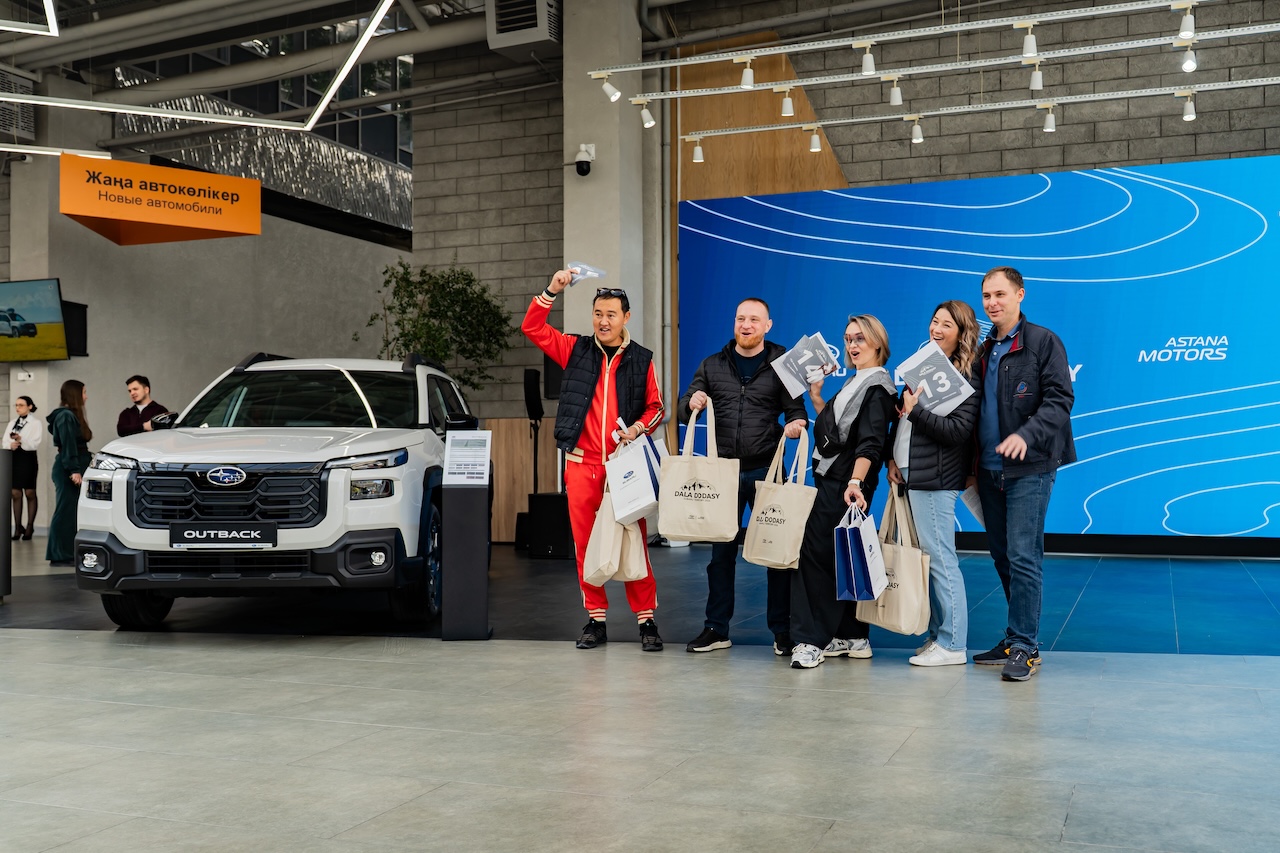
DKNews.kz took part in Subaru Territory: DALA DODASY on October 11 in the Almaty region of southeastern Kazakhstan. The event was organised by Subaru’s official distributor in Kazakhstan, part of Astana Motors. Alongside the new Outback, participants drove the sixth-generation Subaru Forester.
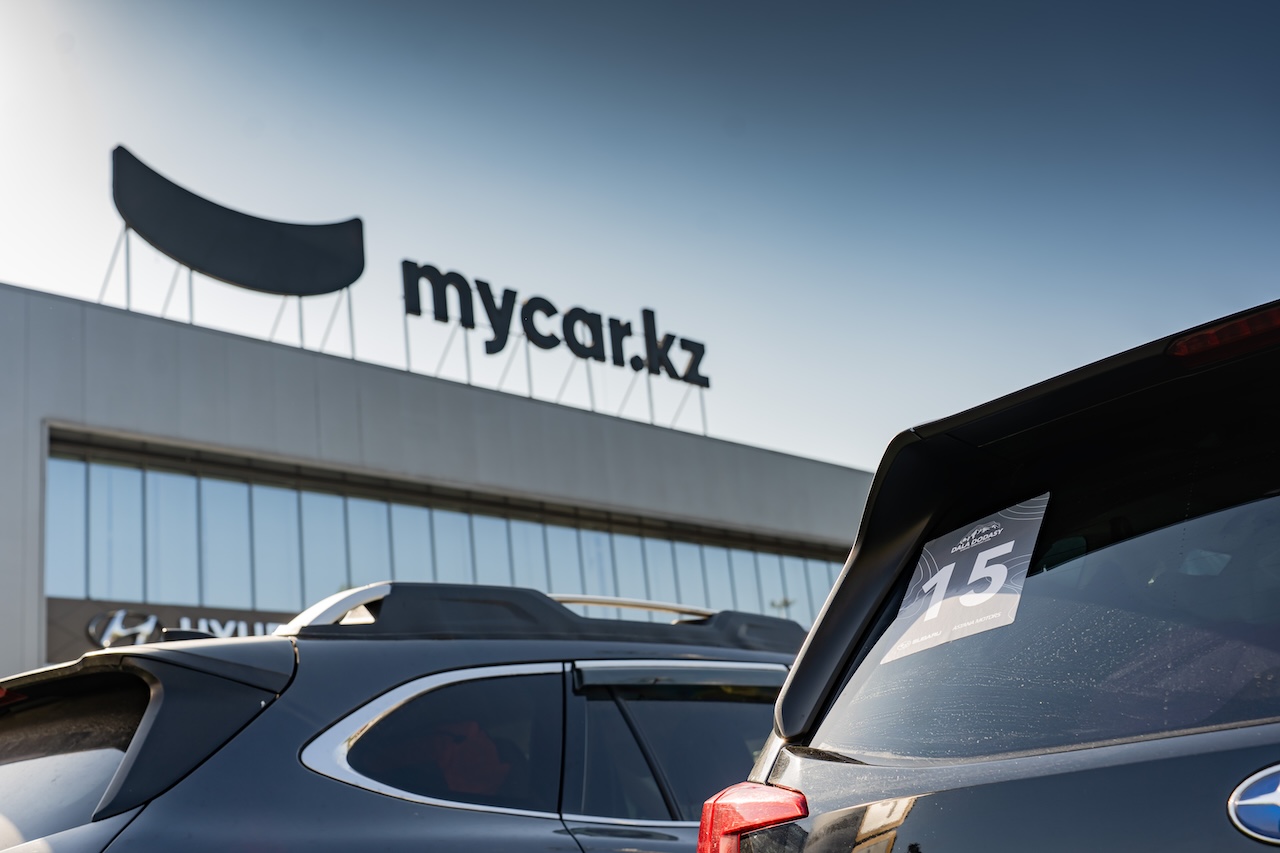
The programme included roadbook navigation, crew challenges, sand, gravel and cross-axle obstacles. It offered more opportunities to understand the cars than a typical drive around a dealership.
The first challenge was finding the route
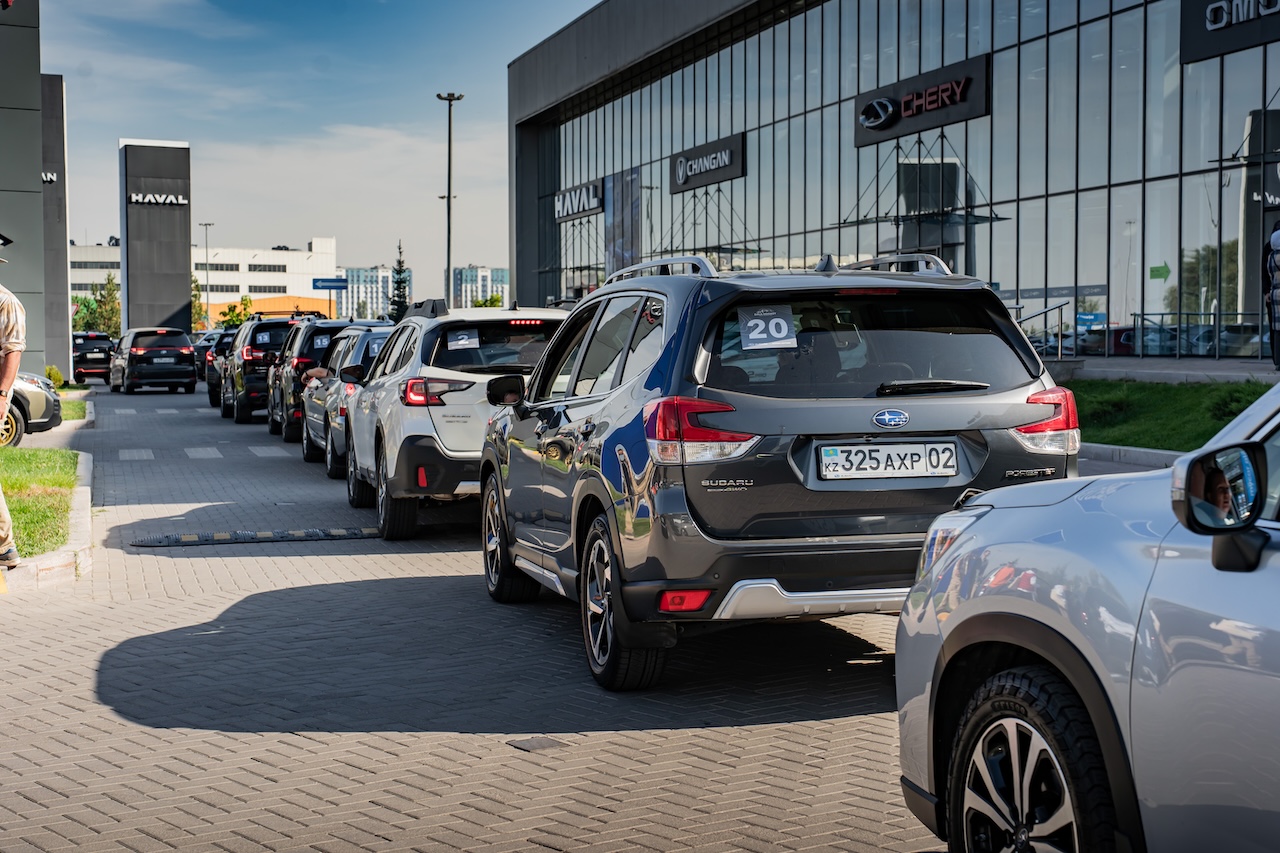
Participants gathered at the Mycar dealership in Almaty that morning, formed crews and headed towards ASP Club on the shores of the Kapchagay Reservoir. Each crew had a driver and a navigator.
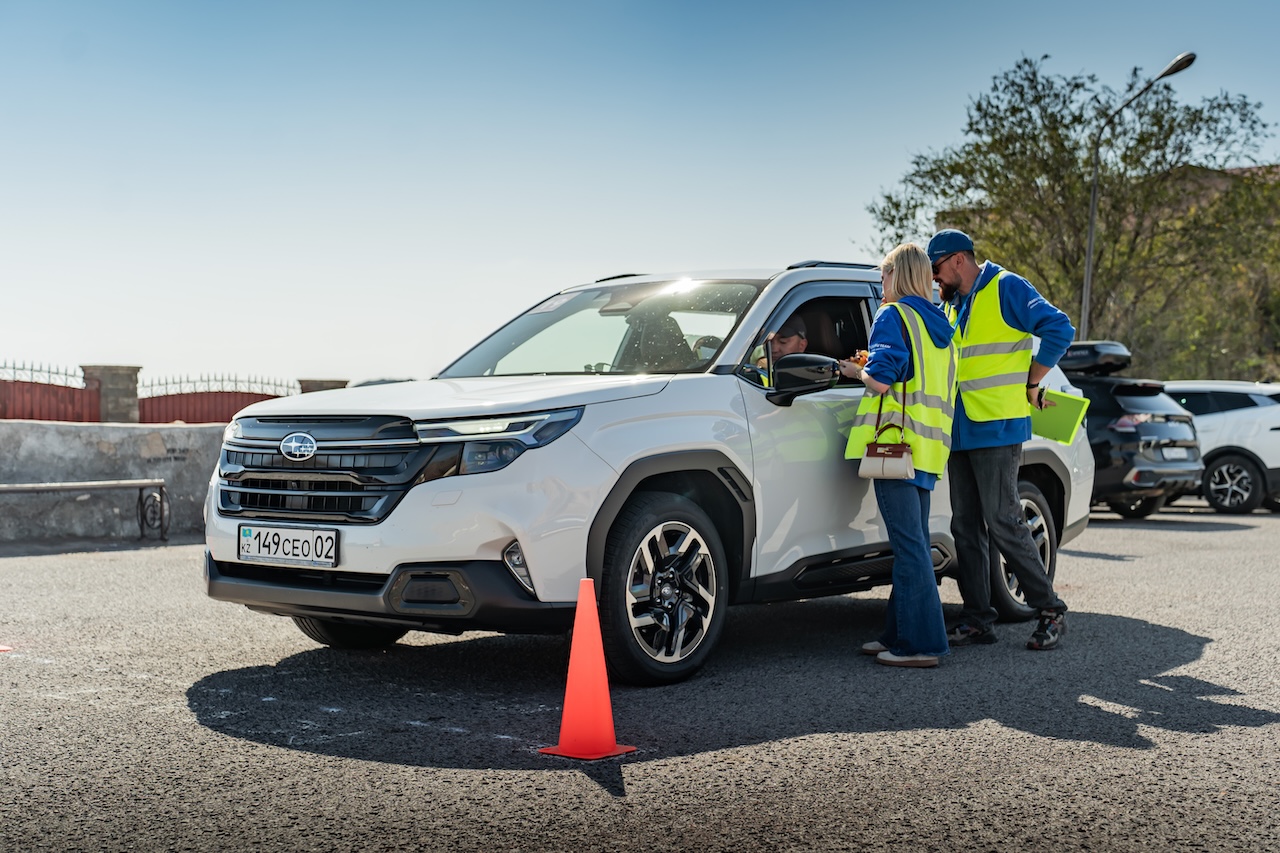
The journey itself was part of the competition. Teams passed through checkpoints and completed manoeuvring and precision-parking tasks. All-wheel drive offered no advantage here: calculation, concentration and communication inside the cabin mattered more.
The route was prepared by Vladimir Borodin, who holds Kazakhstan’s International Master of Sport title in motorsport. A multiple national autocross and rally champion, he also founded an advanced driving school.
“We developed a roadbook to make it interesting for the participants. We organised competitions and timed driving challenges. That allowed us to see what everyone could do. The car is capable, but what about the driver? They also need to be prepared: to park correctly, pull out of a parking space, and calculate time and average speed,” Borodin said.
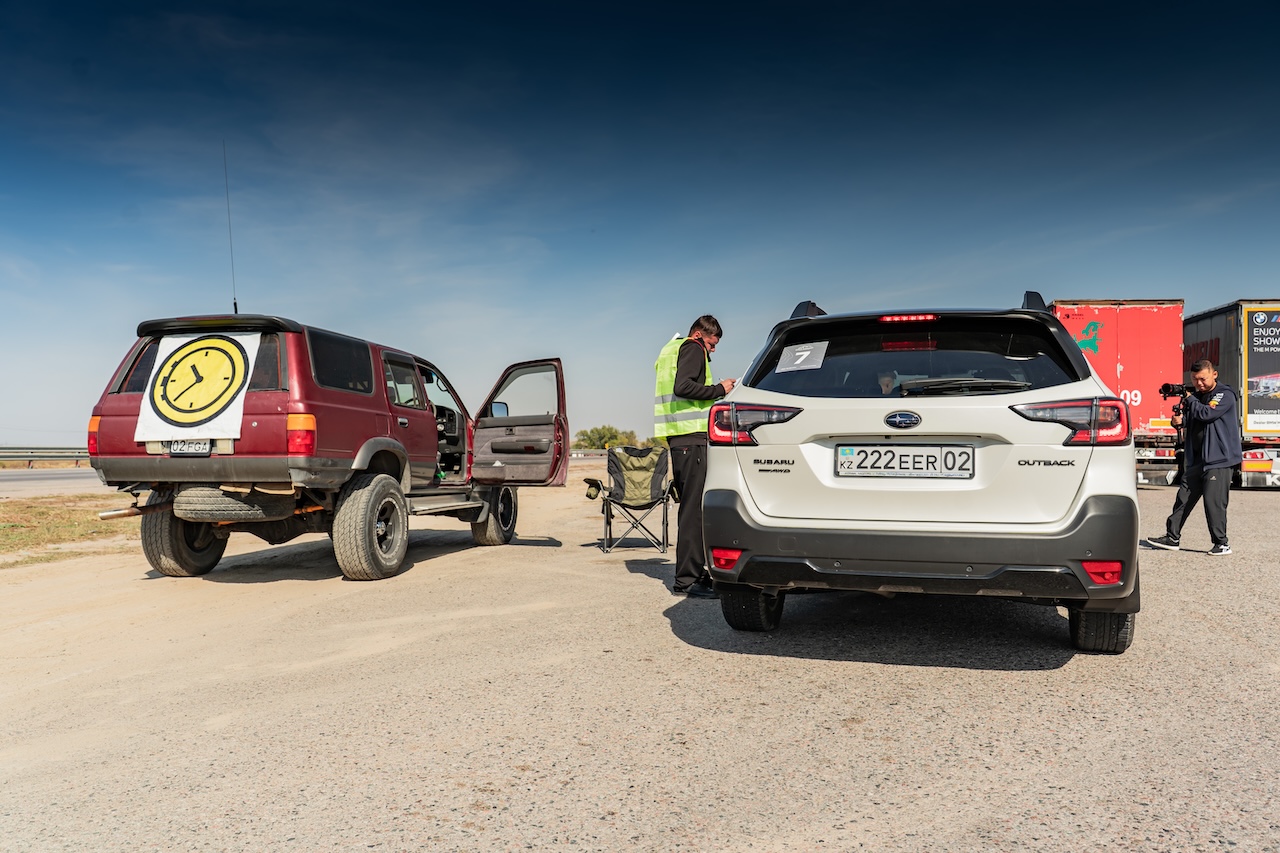
The organisers linked the mini-rally format to Subaru’s rally heritage. The tasks had practical applications: positioning a car accurately, planning movement and following a roadbook. Those skills remain useful long after the finish.
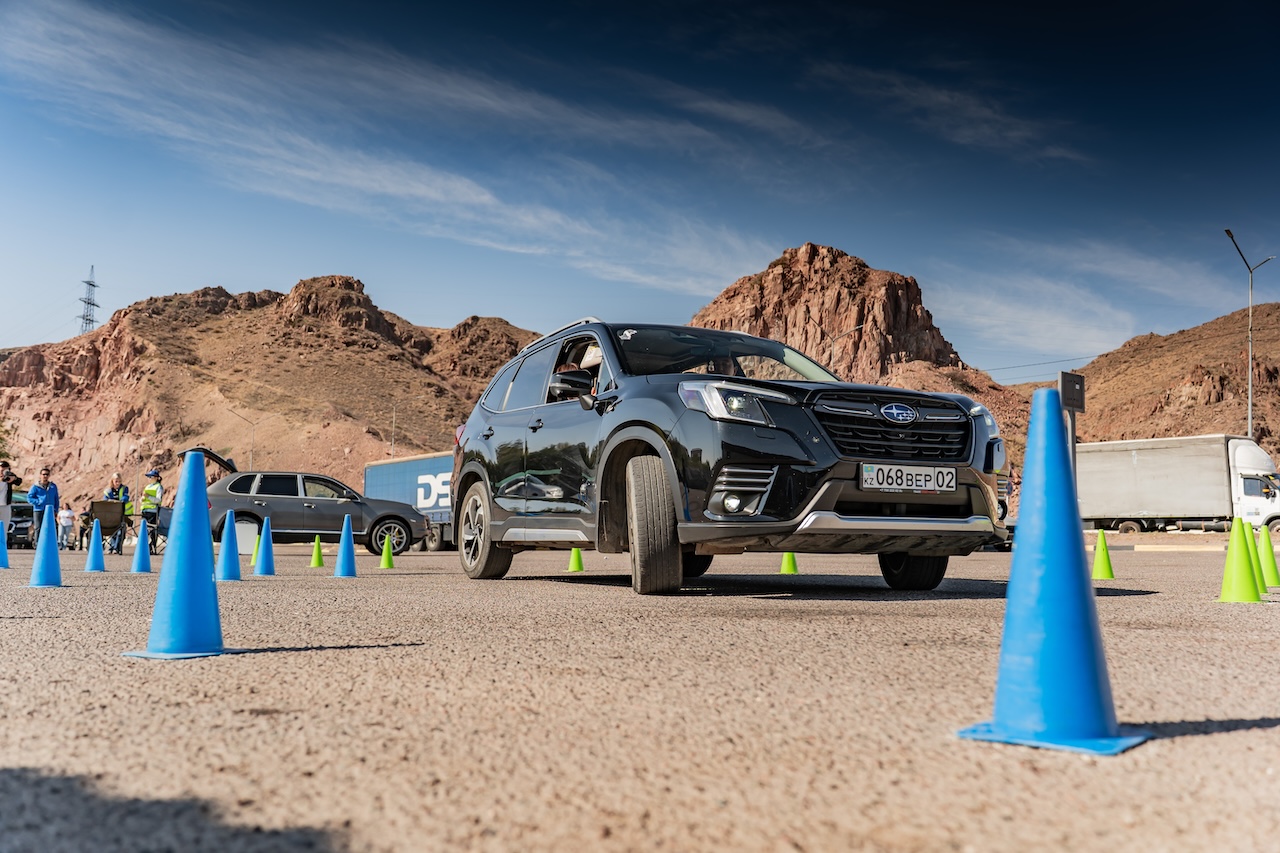
Wheelspin made the electronics easier to understand
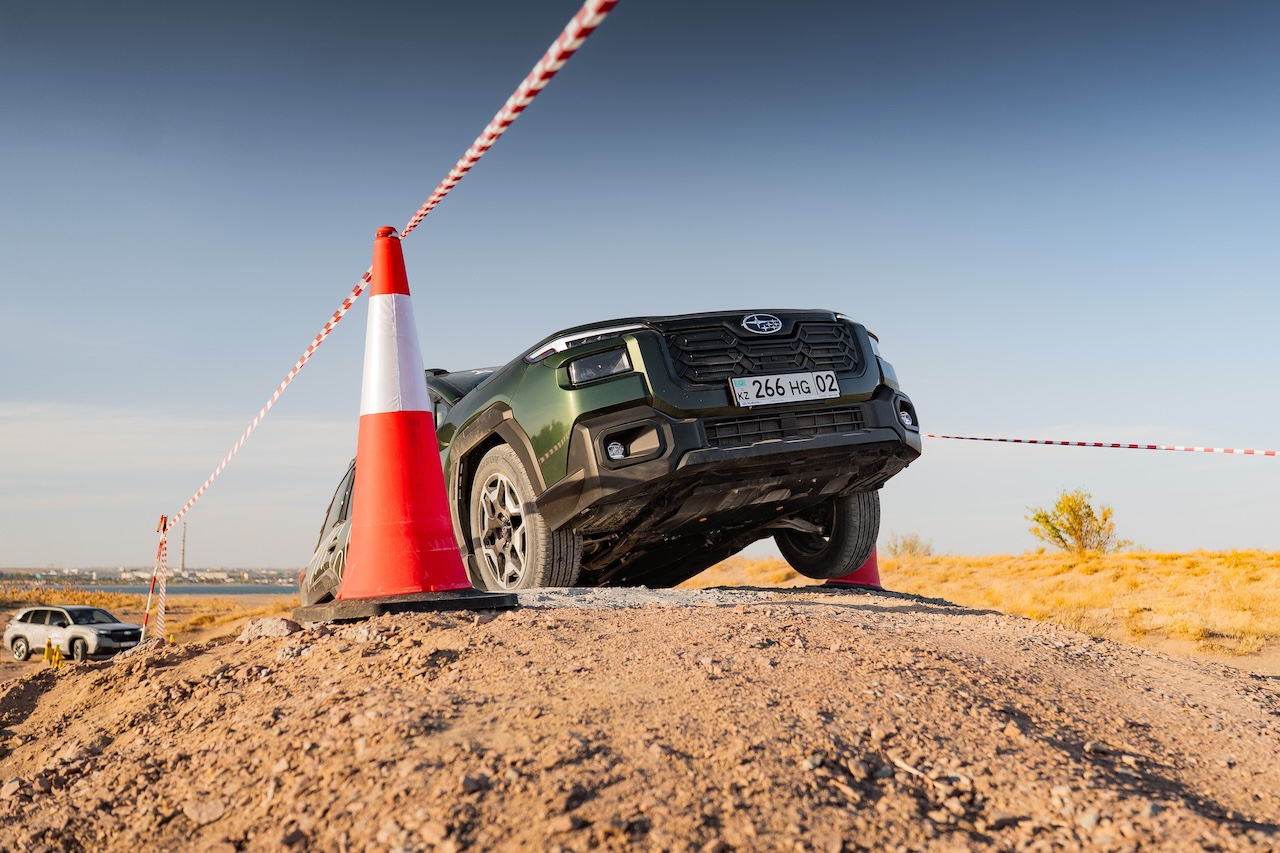
The off-road course included a 35% uphill gradient, sand, gravel and cross-axle obstacles. The latter demonstrated particularly clearly why all-wheel drive benefits from electronic assistance.
On uneven terrain, some wheels can partially or completely lose contact with the surface. A freely spinning wheel does not guarantee sufficient tractive force to move the vehicle. In these situations, electronic traction control can brake the spinning wheel, helping the wheels that retain grip deliver usable traction.
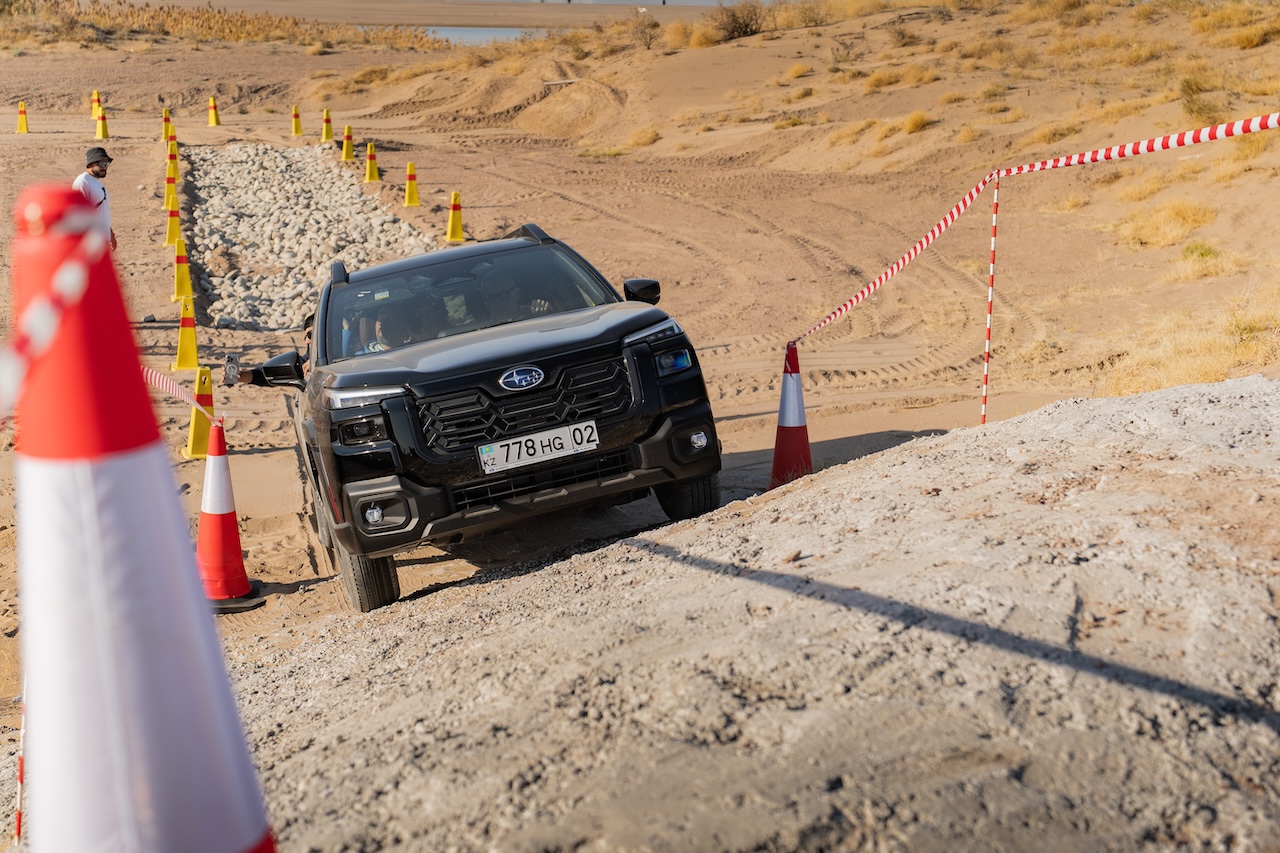
“We prepared an off-road section to demonstrate the advantages of all-wheel drive. For example, during cross-axle articulation, you can watch one wheel spin, the system brake it, and torque reach the other wheels that have traction. That allows the vehicle to overcome the obstacle,” Borodin explained.
For prospective buyers, such a demonstration is more informative than a general promise of off-road capability. They can see how the car approaches a particular obstacle, when wheelspin occurs and how it continues moving.
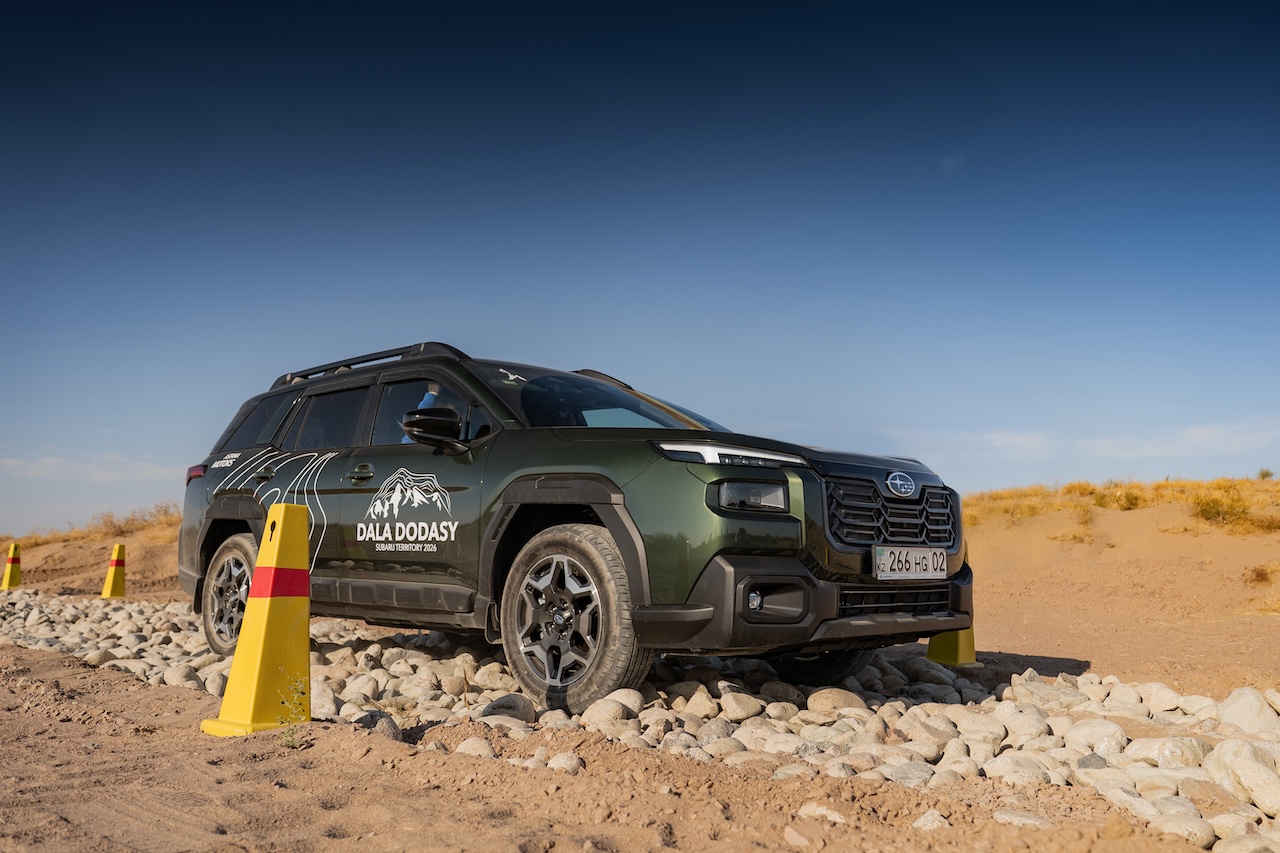
Participants also explored X-MODE. Depending on the trim level, the system offers settings for different surfaces, while descent assistance helps control speed downhill.
“When the car comes down a mound or travels down a slope, X-Mode helps control the descent. You can take your foot off the brake, and the car will carefully make its way down,” Borodin said.
That describes the system’s operation on a suitable section of the course, rather than a guarantee of identical results on every slope. A prepared route introduces drivers to the assistance systems; assessing conditions on an actual journey remains their responsibility.
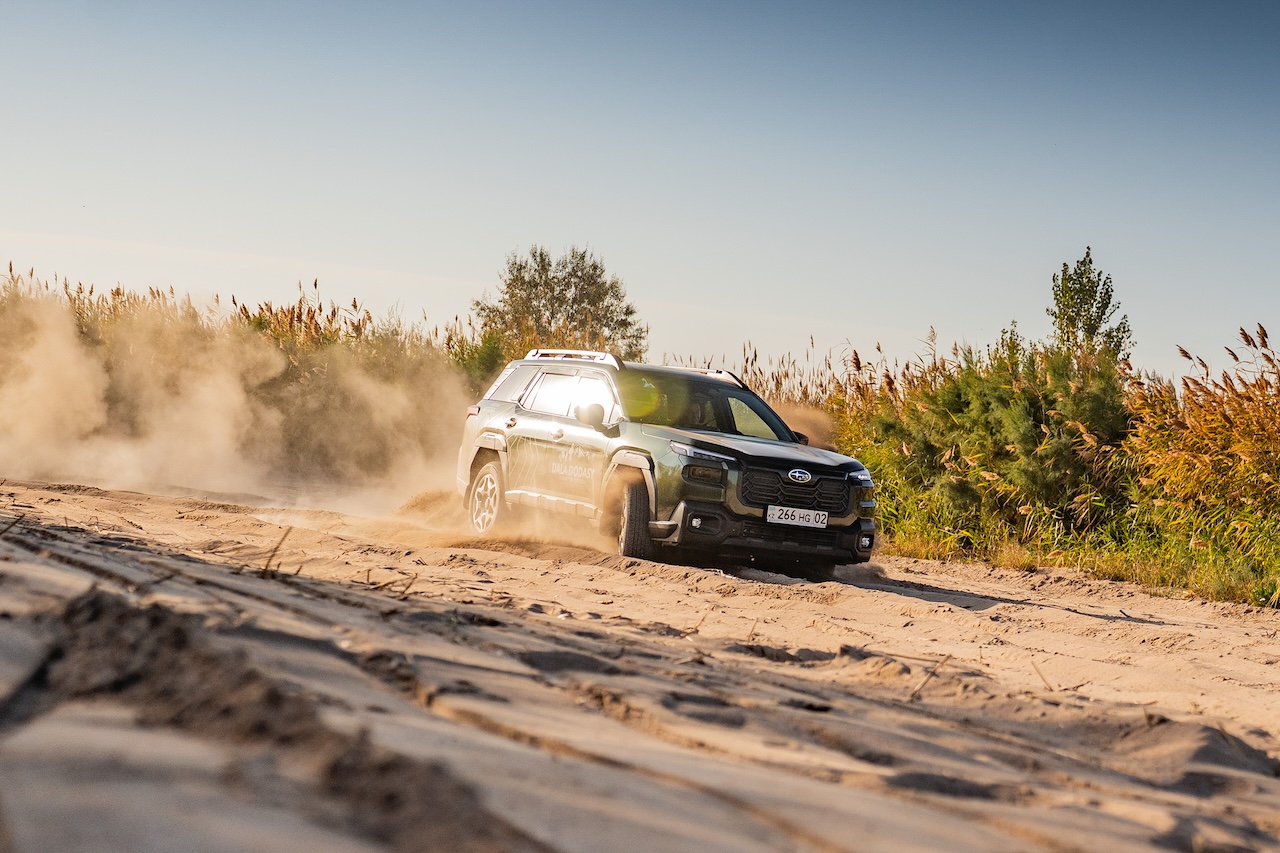
Drivers noticed the Outback’s move towards an SUV shape
Both models at the event featured a 2.5-litre horizontally opposed engine, a Lineartronic continuously variable transmission, permanent all-wheel drive and EyeSight driver-assistance technology.
Choosing between them on that list alone would be difficult. Their principal mechanical components are similar, but their dimensions and the experience behind the wheel differ.
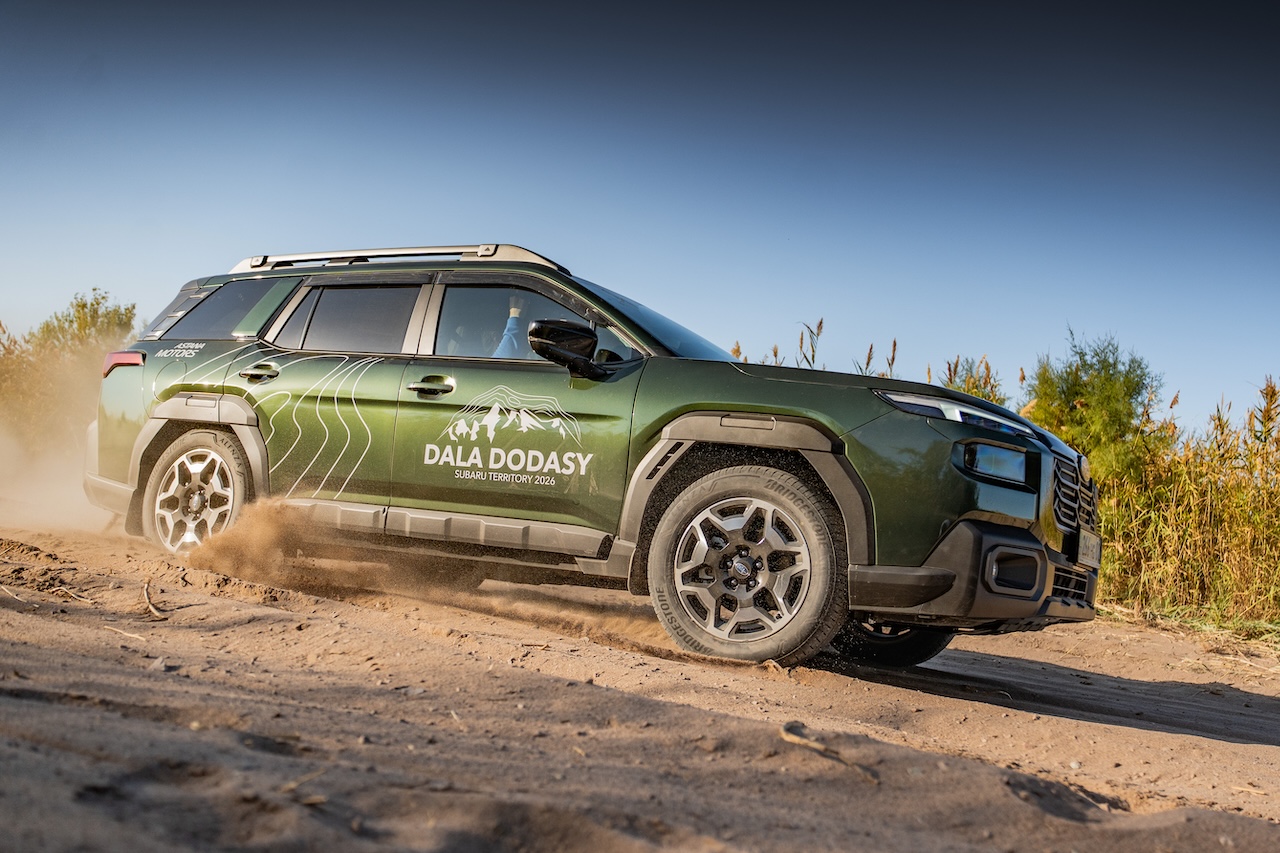
The Outback is positioned for longer journeys. Its ground clearance is 220mm, with 530 litres of luggage space, according to the model’s official Kazakhstan-market specifications.
The Forester is more compact. The distributor presents it as an everyday vehicle that also accommodates trips beyond paved roads.
Automotive blogger Timur Mustafayev had never travelled in an Outback, even as a passenger, before DALA DODASY. On the course, he assessed its ability to clear obstacles, its performance and its electronic assistance systems. The model’s changing appearance also shaped his first impression.
“The Outback used to be an estate, then it became an all-terrain estate. With the new generation, it has become more like a Forester, only a little roomier and more modern,” Mustafayev said.

His assessment is subjective, but it identifies a relevant question for long-time Outback followers: how does a familiar model feel after a generation change?
A long-time owner assessed changes after meeting Subaru’s Japanese team
Alexander Tregubenko had a different basis for comparison. He has driven Subarus for more than a decade, owned fourth- and fifth-generation Outbacks, and now drives a new Forester.
He travels extensively, goes fishing and regularly leaves paved roads. Having previously driven body-on-frame vehicles, he assesses comfort and off-road capability against his own experience.
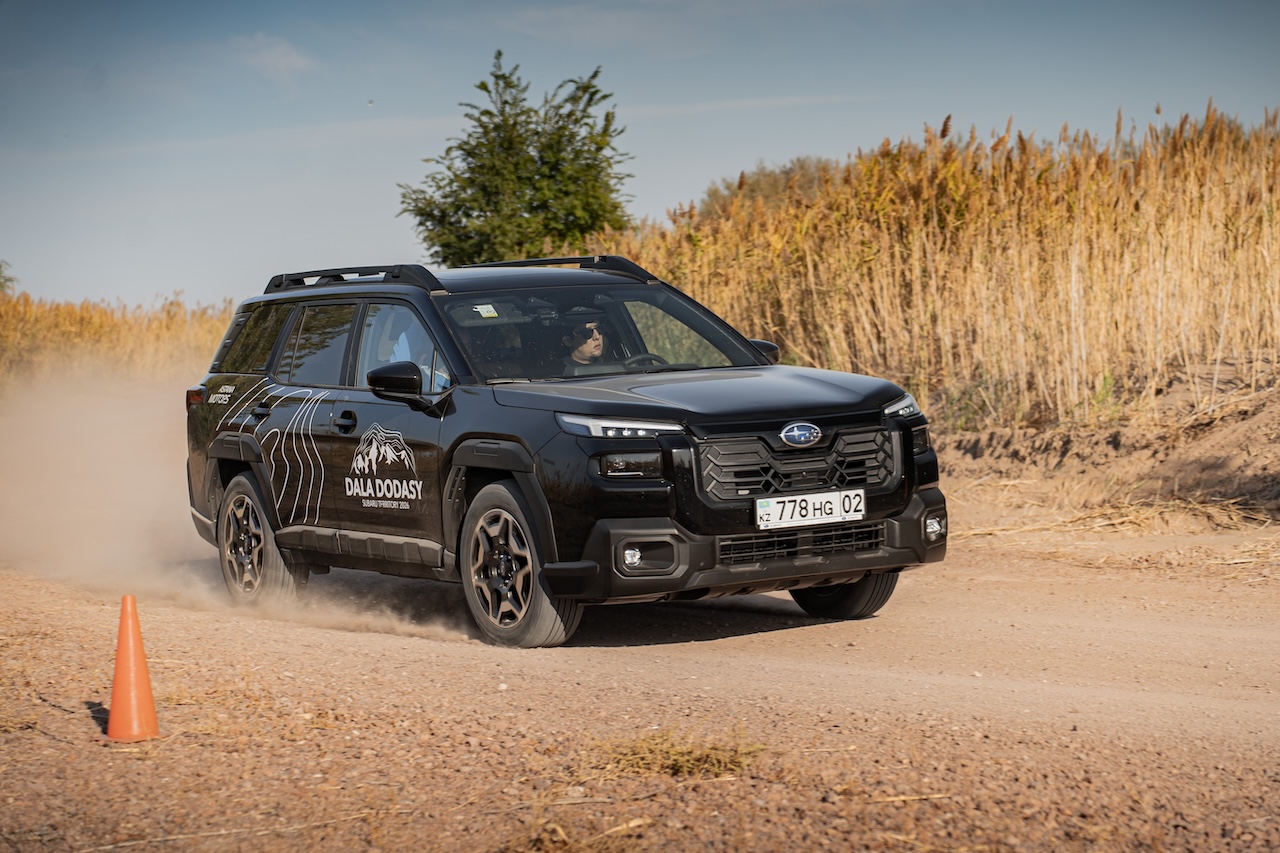
In the new Outback, he singled out ride quality, steering and the cabin.
“The ride is excellent. The steering, as always with Subaru, is superb. There is enough performance, and the interior is very pleasant. Of course, the new Outback design made an impression. This is what we had been waiting for,” Tregubenko said.
He said he met Subaru representatives from Japan in 2025 and discussed features he felt were missing. Among the changes he welcomed in the new Outback were a longer driver’s seat cushion, ventilated seats and improved sound insulation.
There is no basis for attributing those changes to one owner’s feedback. His response nevertheless shows how an experienced customer measures an update: seating comfort, cabin noise and the way the car behaves on the road.
A day on the course helps buyers ask better questions
DALA DODASY also had the atmosphere of an owners’ gathering, with karting, family activities, conversations between enthusiasts and an evening awards ceremony.
Mustafayev won the karting competition, followed by motorcycle traveller Alisher Abdiyev and Subaru customer Pavel Kim.
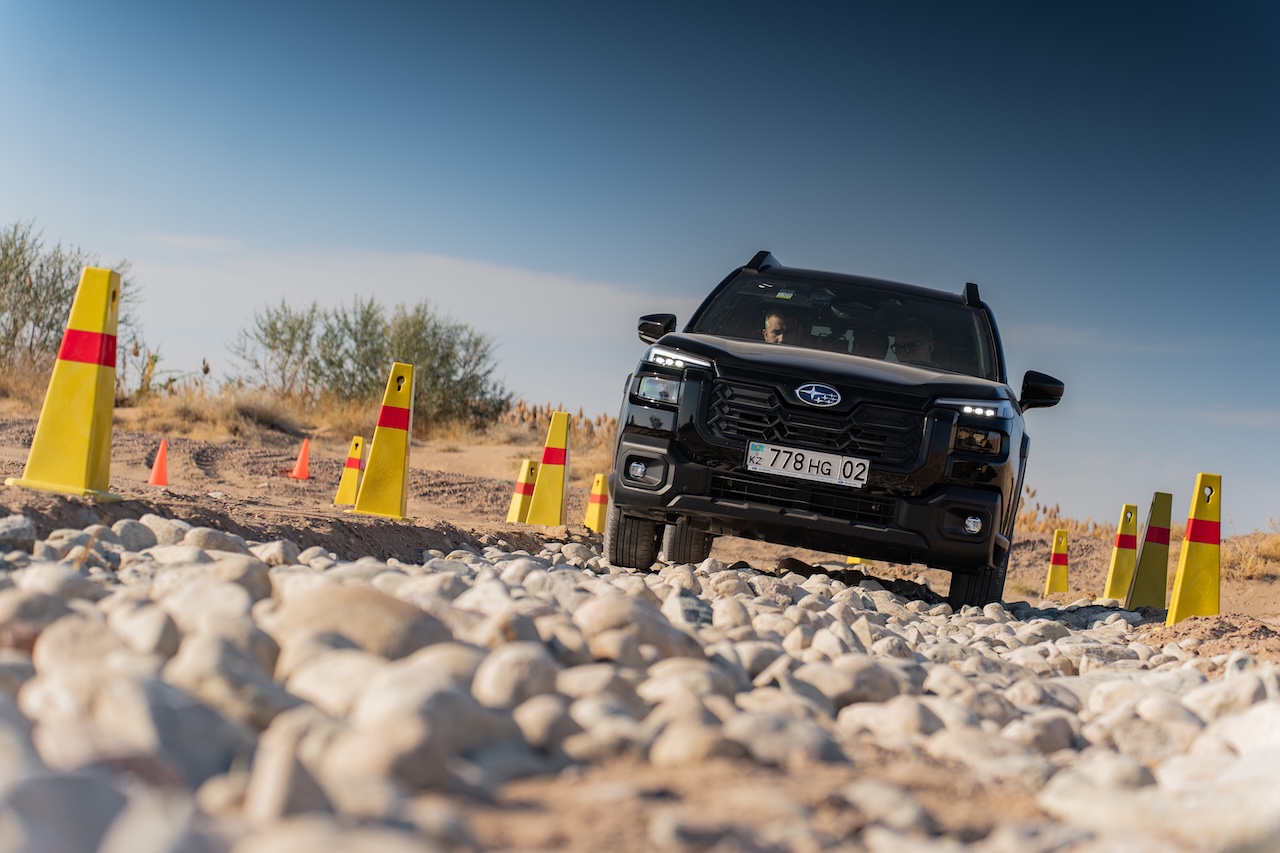
For understanding the new Outback, however, the off-road route offered the most revealing part of the programme. It demonstrated Subaru’s Symmetrical AWD all-wheel-drive system and X-MODE, which adapts engine, transmission and traction-control operation to challenging conditions.
Participants could assess how the electronics helped manage wheelspin, while Hill Descent Control maintained a controlled speed on downhill sections.
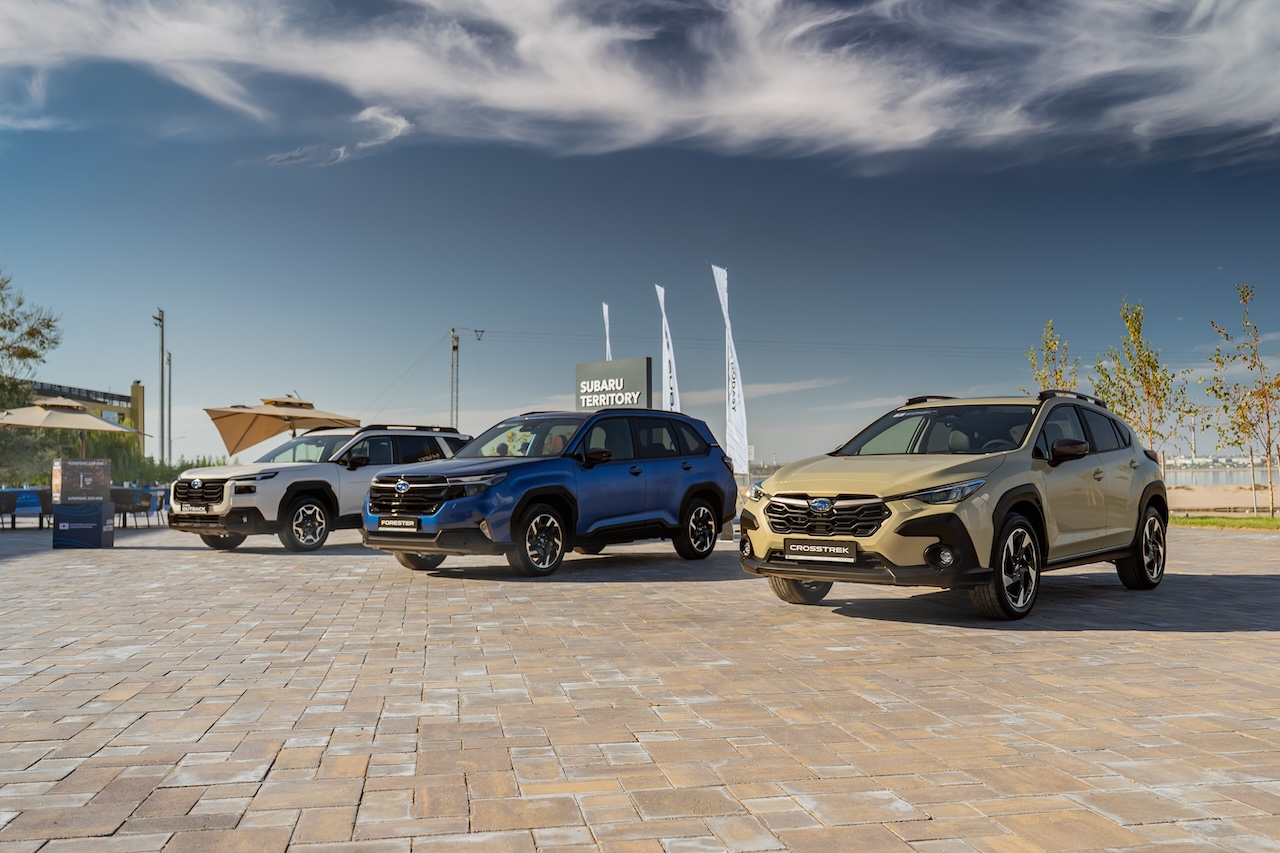
In our assessment, that was the format’s main strength. A day on a prepared course cannot establish long-term reliability, maintenance costs or winter performance. It can help buyers decide what to examine during their own test drive and which functions to ask an instructor about.
We previously explored how an online marketplace changed the car-buying process in Kazakhstan. Choosing a vehicle can begin online. Finding out whether you feel comfortable controlling it over difficult ground still requires time behind the wheel.