
Investors have money, but suitable projects are scarce. Investment funds and the Eurasian Development Bank (EDB) have announced plans to channel approximately $1.65 billion into warehouse infrastructure across Central Asia. Yet the region faces an unexpected challenge: there are fewer investment-grade properties available than investors are willing to finance, DKNews.kz reports.
The plans were presented at the Central Asia Warehouse Summit, held in Almaty on October 15. According to IBC Global, investors are focusing on modern logistics facilities in Kazakhstan and other Central Asian countries.
Investment funds target $650 million, while EDB plans another $1 billion
Three specialized investment funds are preparing to invest in Central Asia's warehouse property market.
Two private European funds have a combined $400 million available for investment. They are already evaluating completed warehouses and new development projects.
Meanwhile, Central Eurasia Warehouses Private Equity Fund is raising $250 million in investment capital.
The Eurasian Development Bank is pursuing a separate financing program. By 2031, the bank plans to allocate up to $1 billion to warehouse infrastructure across the region.
Together, these commitments and investment targets amount to approximately $1.65 billion.
However, this does not mean the entire amount has already been invested. The European funds are selecting properties, Central Eurasia Warehouses is still raising capital, and the EDB program will be implemented over several years.
Investors are primarily targeting Class A warehouses and facilities of comparable quality, generally starting at 20,000–25,000 square meters.
Their interest extends beyond new developments. They are also considering acquisitions of operational warehouses with established tenants and stable rental income.
Developers could sell completed warehouses to finance their next projects
For Kazakhstani developers, the arrival of specialized investment funds offers an additional source of capital.
This is particularly relevant in a market where bank borrowing remains expensive and access to project financing is limited.
An investment fund can participate during construction or acquire a completed property once it has been commissioned or achieved stable occupancy.
The latter option allows developers to recover their investment, realize a profit and reinvest the proceeds in their next project.
“Selling an operational warehouse allows developers to lock in profits and redirect the proceeds into their next project,” explained Stanislav Akhmedzyanov, partner at Central Eurasia Warehouses Private Equity Fund.
However, not every development will qualify for funding.
Investment funds assess a property's location, technical specifications, development stage and tenant profile.
Developers capable of delivering internationally competitive facilities backed by credible financial projections are likely to have a stronger chance of securing investment.
A $125 million logistics park is planned in Almaty
In Kazakhstan, some of these investment plans are already taking shape through specific projects.
In August 2026, the Eurasian Development Bank signed a loan agreement to finance the first phase of Griffin Logopark Almaty.
The logistics park will have a total floor area of approximately 125,500 square meters, with total project investment estimated at around $125 million.
We previously covered the partnership between EDB and Griffin Partners. The Class A+ logistics complex is planned for northern Almaty, near the Big Almaty Ring Road.
Another major development involves Mercury Properties.
In July, EDB and the company signed a memorandum concerning the second phase of the Mercury Logistics complex in the Almaty region.
Investment in the first phase totaled 20 billion tenge. By 2031, cumulative investment in the project is expected to reach 70 billion tenge.
Through its broader program, EDB aims to support the development of more than one million square meters of warehouse space across Central Asia.
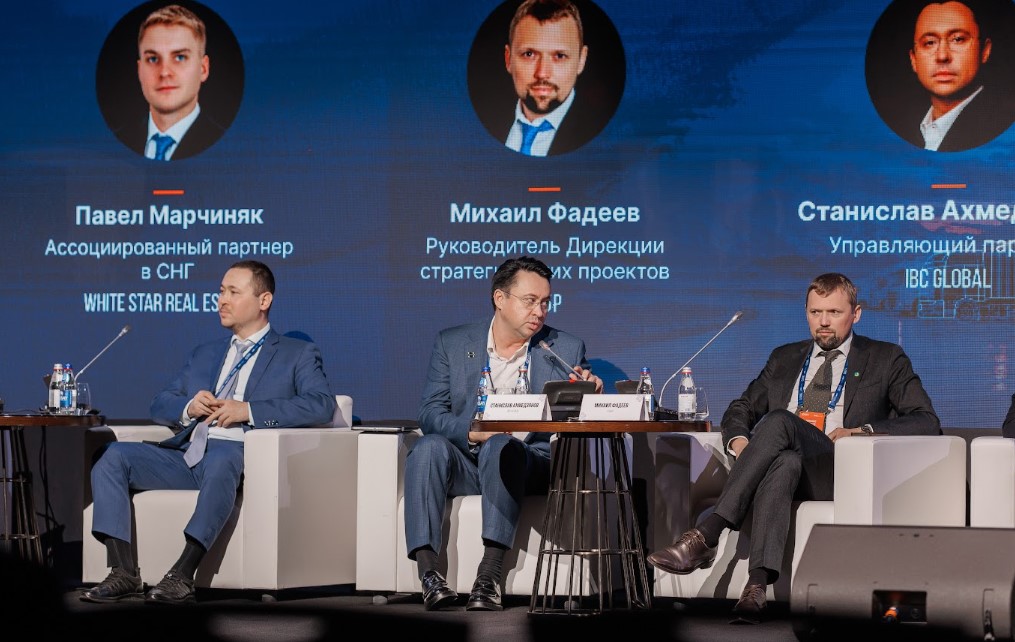
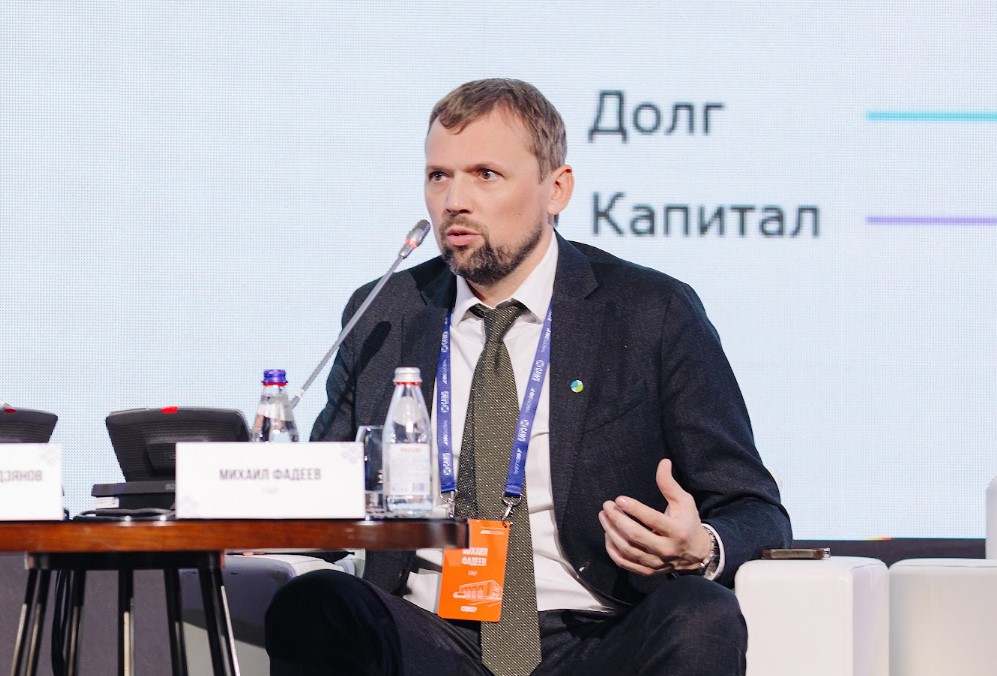
“According to our estimates, the structural shortage of modern warehouse space creates significant potential for new projects. By 2031, we plan to allocate up to $1 billion to developing warehouse infrastructure in the region and support the creation of more than one million square meters of warehouse space,” said Mikhail Fadeev, head of the Strategic Projects Directorate at EDB.
Central Asia could need up to 11 million square meters of new warehouses
Despite the scale of the announced investment plans, the proposed financing will cover only part of the region's projected demand.
According to IBC Global, Kazakhstan, Uzbekistan, Kyrgyzstan and Tajikistan will require between 7 million and 11 million square meters of additional warehouse space over the next decade.
This demand extends well beyond conventional storage facilities.
The estimate includes distribution centers, agricultural logistics infrastructure, multi-temperature warehouses and other facilities needed to store and transport goods.
IBC Global calculates that the capital planned by the three investment funds could support the construction of approximately 1.8 million square meters of warehouse space, assuming a financing structure with 60% debt.
Including EDB's plans and investments from other market participants, that figure could rise to 2.8 million square meters.
Even if the announced programs are fully implemented, the region would still need additional financing to develop another 4.2 million to 8.2 million square meters of warehouse space.
Adrien Henni, vice president for finance and international development at IBC Global, does not expect an oversupply of modern warehouse facilities over the forecast period.
“We do not see a risk of oversupply over this horizon,” Henni said.
Investors are looking beyond warehouses to transport corridors
Investment funds increasingly assess warehouse properties as part of broader international supply chains.
Their focus includes distribution centers, freight terminals and customs infrastructure along major transport routes.
However, proximity to a major highway alone is not enough to attract capital.
Funds examine actual freight flows, potential customers, the sustainability of demand and the economics of transportation.
“We assess a logistics facility based on its role in the supply chain: which freight flows it serves, who its customers will be and how sustainable that demand is,” said Mikheil Nibladze, senior investment adviser at Cerberus Frontier.
For Kazakhstan, this approach is particularly relevant to logistics developments along international transport corridors.
Investors want facilities capable of handling consistent cargo volumes and generating predictable rental income.
As a result, securing capital depends not only on construction costs but also on demonstrating genuine demand for the facility's services.
We have also previously explored which logistics facilities are likely to be in demand in Kazakhstan. At Central Asia Warehouse Summit 2026, industry participants discussed not only the pace of new construction but also the increasingly demanding technical requirements of warehouse tenants.
Investment capital is available, but bankable projects are in short supply
The arrival of major investment funds does not guarantee an immediate construction boom.
Projects must meet international standards, demonstrate financial viability and offer convincing prospects for stable occupancy and rental income.
Preparing developments that meet these requirements takes time.
Financing costs, market demand and geopolitical risks could also influence investment decisions and the movement of goods across the region.
Nevertheless, the projected warehouse shortage suggests that demand for new logistics facilities could remain substantial even after the announced investment programs are completed.
For now, Central Asia's warehouse property market faces an unusual imbalance: investors are prepared to commit significant capital, but there are not enough institutionally acceptable projects ready for investment.
“At present, there are actually fewer investment-grade projects ready in the region than there is money available,” Henni concluded.