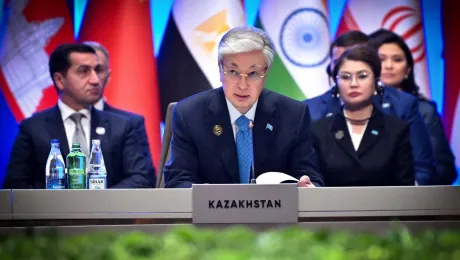

Jensen Huang has received Kazakhstan's Order of Dostyk, First Class. President Kassym-Jomart Tokayev presented the state decoration to NVIDIA's co-founder and president during a meeting at Akorda in Astana on October 23, 2026. According to the official statement from Akorda, the award recognizes Huang's contribution to developing artificial intelligence in Kazakhstan, DKNews.kz reports.
The meeting went beyond a ceremonial occasion. Tokayev and Huang discussed Kazakhstan's ambition to become a global centre for artificial intelligence, the development of Physical AI and cooperation with technology companies including Kazakhtelecom, Firebird AI KZ Ltd and Higgsfield.
Huang praised Kazakhstan's strategic approach to artificial intelligence and highlighted the country's energy resources and technical talent as important advantages for developing a new generation of technologies.
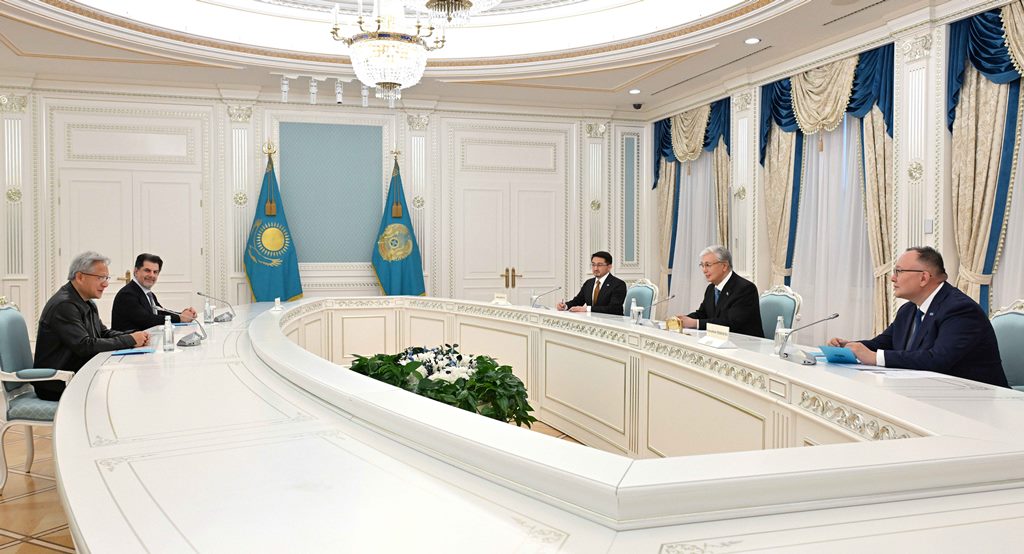
Tokayev thanks Jensen Huang for supporting Kazakhstan
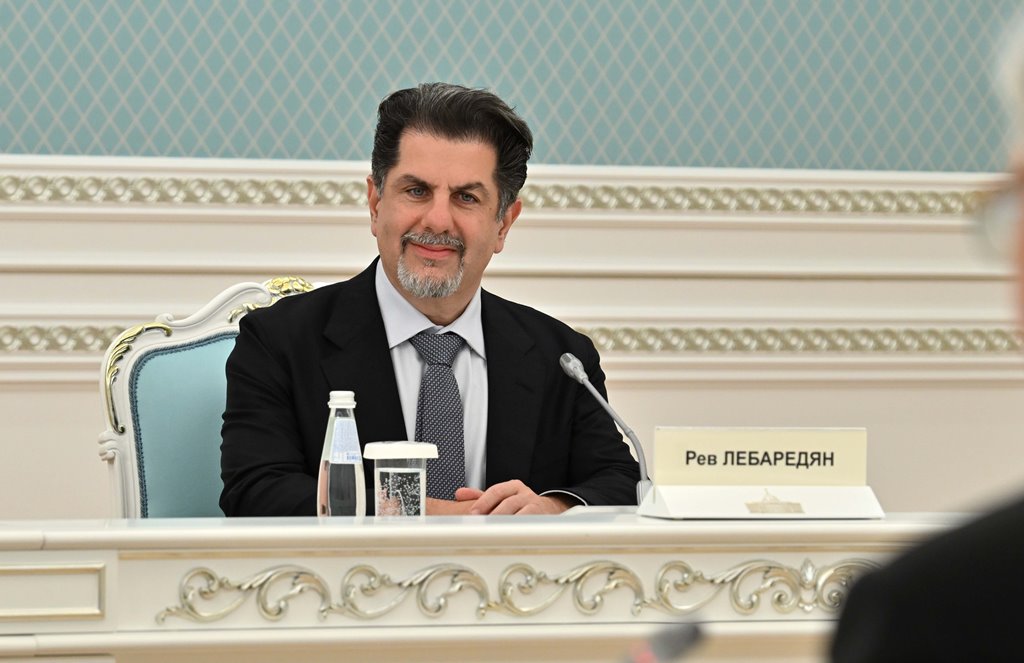
During the meeting, President Tokayev emphasized the importance of Huang's visit for strengthening cooperation with NVIDIA and developing Kazakhstan's domestic artificial intelligence ecosystem.
The Head of State personally thanked the American technology executive for his contribution to the partnership.
«This visit is extremely important in terms of giving serious impulse to our mutual ties. I would like to express my gratitude personally to you for your contribution to strengthening our partnership and for what you are doing for Kazakhstan».
The President's remarks reflected Kazakhstan's growing interest in building relationships with international companies that develop advanced computing technologies.
NVIDIA occupies an important position in the global AI industry through its graphics processing units, computing platforms and software technologies used to train and operate artificial intelligence systems.
For Kazakhstan, cooperation with the company offers opportunities to develop the infrastructure and technical expertise needed to support domestic AI projects.
2026 declared the Year of Digitalization and Artificial Intelligence
Tokayev reiterated that artificial intelligence and digitalization are among Kazakhstan's national priorities.
He noted that 2026 had been declared the Year of Digitalization and Artificial Intelligence, reflecting the country's intention to accelerate technological development and expand the use of advanced digital solutions.
The strategy involves more than introducing AI-powered services. It also requires computing infrastructure, qualified specialists, research capabilities and companies able to develop competitive products.
Access to advanced computing resources is particularly important because modern AI models require substantial processing power for training and operation.
The meeting with Huang highlighted Kazakhstan's efforts to strengthen these foundations while attracting international technology partners.
Jensen Huang proposes making Kazakhstan a global Physical AI hub
One of the most significant proposals discussed at Akorda concerned Physical AI.
Huang praised Tokayev's strategic vision of developing Kazakhstan into an AI nation and proposed positioning the country as a global hub for this emerging field.
Physical AI connects artificial intelligence with systems that operate in the real world, including robots, autonomous machines and intelligent industrial equipment.
Unlike AI applications that primarily generate digital content or analyse information, Physical AI involves technologies capable of interacting with physical environments.
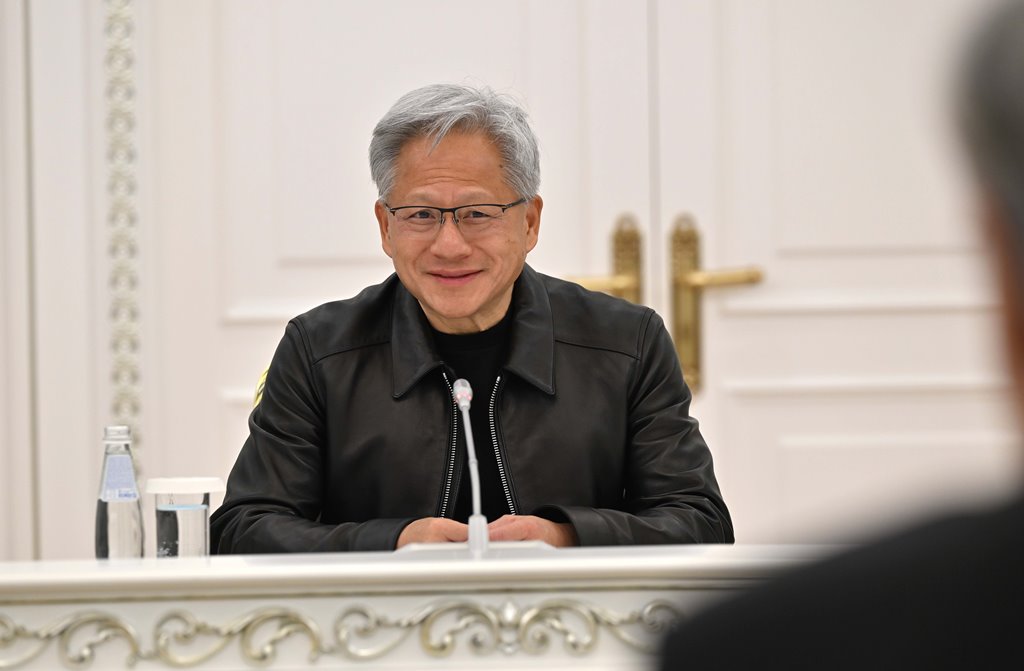
Huang identified Kazakhstan's energy resources and technically skilled population as important advantages.
«This new industry requires energy at its foundation, it also requires a population dedicated to science, math and technology. You have richness in both».
His assessment reflects the growing importance of electricity supply and technical expertise in developing advanced computing systems.
Large-scale AI infrastructure requires reliable power, while Physical AI applications also depend on specialists in engineering, robotics, software development and mathematics.
Kazakhstan's industrial economy could provide opportunities to develop and test such technologies, although no specific new Physical AI investment project was announced during the meeting.
Why Physical AI could matter for Kazakhstan's industry
Kazakhstan's interest in Physical AI is closely connected to the potential application of intelligent technologies in industrial environments.
Robotics and autonomous systems can support activities that require precise monitoring, complex calculations and interaction with physical equipment.
Potential applications include:
- Manufacturing: intelligent robots and automated production processes.
- Mining: autonomous equipment and systems for monitoring industrial operations.
- Energy: AI-assisted inspection, maintenance and infrastructure management.
- Transport: autonomous systems and technologies for managing complex logistics operations.
- Research: simulation environments for testing robotic systems before deployment.
These are potential areas of application rather than projects formally approved at the meeting.
The practical significance of Physical AI will depend on whether Kazakhstan can combine computing infrastructure, industrial expertise and research capabilities to develop commercially useful technologies.
NVIDIA highlights partnerships with Kazakhtelecom and Firebird AI
Huang also discussed the progress made in NVIDIA's cooperation with Kazakhstan over the previous year.
He specifically highlighted relationships with Kazakhtelecom and Firebird AI KZ Ltd, as well as NVIDIA's investment in Higgsfield.
These partnerships represent different elements of the artificial intelligence ecosystem.
Kazakhtelecom and Firebird AI are associated with the development of computing infrastructure, while Higgsfield demonstrates Kazakhstan's participation in the market for AI-powered products.
Speaking about the results of the partnership, Huang emphasized the progress already achieved and his confidence in continued cooperation.
«In the last year, our partnership has resulted in tremendous advances. We have partnerships with the companies that are being built here, including Firebird AI KZ Ltd and Kazakhtelecom, while also investing in Higgsfield – Kazakhstan’s first unicorn, which has become quite significant contributor to the global ecosystem. I am very impressed and very proud of the work that we have done together. This is the beginning of a very long journey. I am grateful that your nation has chosen to partner with us».
The statement underlined NVIDIA's interest in both infrastructure development and the growth of technology businesses connected to Kazakhstan.
It also suggested that the company's leadership views cooperation with Kazakhstan as a long-term relationship rather than a series of isolated projects.
Higgsfield receives recognition from Tokayev and NVIDIA
Higgsfield was another important topic during the meeting.
President Tokayev welcomed NVIDIA's partnership with the company and expressed pride in its connection to Kazakhstan's domestic technology ecosystem.
Huang described Higgsfield as Kazakhstan's first unicorn and highlighted its contribution to the global technology industry.
A unicorn is a privately held startup valued at more than $1 billion.
For Kazakhstan, Higgsfield represents the product-development side of the AI economy, complementing efforts to establish large-scale computing infrastructure.
The distinction matters because building an AI industry requires both technological capacity and businesses capable of turning that capacity into products for customers.
Successful international technology companies can also help attract attention to local engineering talent and create opportunities for further investment.
Computing infrastructure becomes a strategic priority
Kazakhstan's ambitions in artificial intelligence are closely linked to the availability of advanced computing systems.
Training and deploying AI models requires specialized processors, high-speed networking, data storage and substantial electricity supplies.
Developing these resources domestically could allow Kazakhstani companies, universities and research organizations to access computing services closer to home.
It could also create opportunities to provide infrastructure services to international customers.
However, the economic benefits will depend on the availability, cost, reliability and competitiveness of the facilities being developed.
The Akorda meeting did not announce additional GPU deliveries, new investment amounts or revised construction schedules.
Instead, it highlighted the strategic importance of existing partnerships and Kazakhstan's intention to strengthen its position in the international AI industry.
What makes Kazakhstan attractive for AI development?
Huang's remarks drew attention to two fundamental resources: energy and people.
Advanced computing facilities consume significant amounts of electricity, making access to reliable power an important factor when selecting locations for large-scale infrastructure.
At the same time, artificial intelligence development requires engineers, researchers, software developers and specialists capable of applying new technologies.
Kazakhstan is seeking to combine these advantages with its industrial base and emerging technology companies.
For Physical AI, the availability of real industrial environments could be particularly relevant because developers need opportunities to test technologies beyond computer simulations.
Nevertheless, establishing a competitive international AI hub will require sustained investment, infrastructure development and the training of qualified personnel.
Tokayev awards Jensen Huang the Order of Dostyk
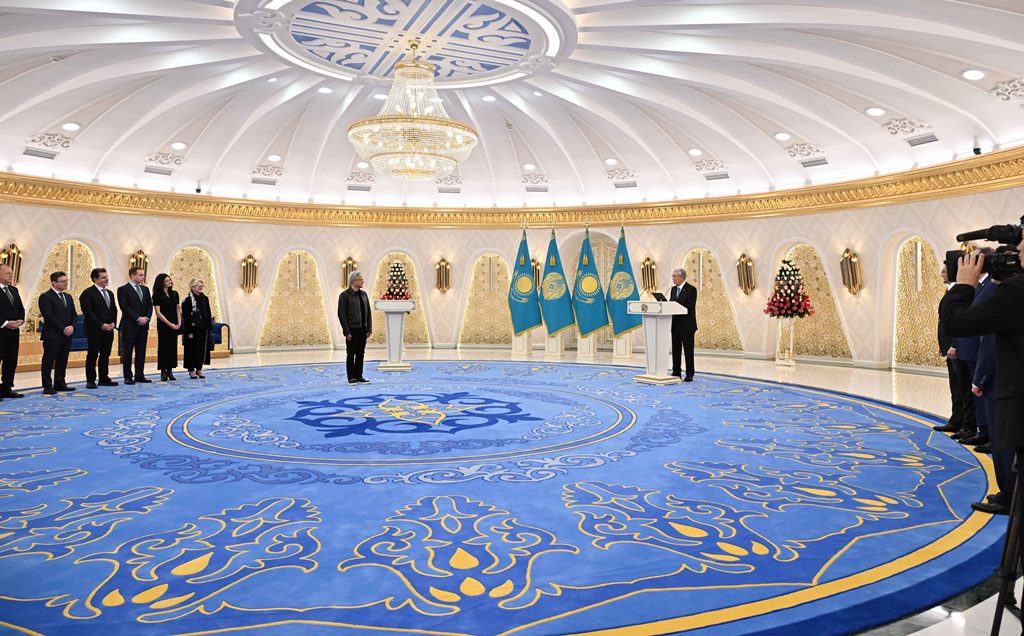
At the conclusion of the meeting, President Tokayev presented Huang with the Order of Dostyk, First Class.
The Order of Dostyk, also known as the Order of Friendship, is a state decoration of Kazakhstan recognizing contributions to friendship and cooperation.
According to Akorda, Huang received the award in recognition of his contribution to the development of artificial intelligence in Kazakhstan.
The ceremony highlighted the importance Kazakhstan attaches to its technological partnership with NVIDIA.
It also demonstrated that cooperation in artificial intelligence has become a significant element of the country's engagement with international technology companies.
What comes next for Kazakhstan and NVIDIA?
The October 23 meeting established a clear strategic direction: Kazakhstan wants to strengthen its position in artificial intelligence and explore the potential of becoming a global Physical AI hub.
Huang's proposal provides a possible framework for future cooperation involving computing infrastructure, industrial applications and technology development.
The existing partnerships with Kazakhtelecom, Firebird AI KZ Ltd and Higgsfield show that cooperation is already taking place across several parts of the AI ecosystem.
However, the meeting itself did not announce a new financial agreement, a specific investment commitment or a timetable for establishing a Physical AI hub.
The next challenge will be translating technological ambitions into operational infrastructure, competitive products and opportunities for Kazakhstani businesses and researchers.
For Kazakhstan, the significance of Huang's visit lies not only in the state award but also in the country's efforts to become an active participant in the development of next-generation artificial intelligence technologies.
Earlier, we reported on NVIDIA's recognition of Kazakhtelecom's role in expanding Kazakhstan's AI infrastructure, including plans for Data Center Valley in Ekibastuz, cooperation with Firebird AI and the deployment of advanced computing equipment. Those projects provide practical context for the partnership discussed by Tokayev and Huang.