
Japan is investing $3 million in Kazakhstan's sustainable minerals sector. The Government of Japan and the United Nations Development Programme (UNDP) have signed an agreement to launch a joint initiative aimed at strengthening environmental oversight, preventing pollution and promoting responsible development of rare metal and rare earth mineral value chains. The project will support a sector identified as a national priority in Kazakhstan's Comprehensive Plan for the Development of Rare and Rare Earth Metals for 2024–2028.
Funded by the Japanese government, the initiative will be implemented by UNDP in partnership with Kazakhstan's Ministry of Industry and Construction. Its central objective is to introduce environmental safeguards before major industrial development begins, rather than addressing pollution after it occurs, DKNews.kz reports.
More than 120 deposits identified across Kazakhstan
Kazakhstan has identified more than 120 deposits of rare metals and rare earth elements, highlighting the country's potential role in international supply chains for critical raw materials.
These materials are increasingly important for advanced manufacturing, electronics, clean energy technologies and other high-value industries.
As global demand grows, Kazakhstan is seeking to move beyond raw material extraction and develop domestic processing industries capable of producing higher-value products.
However, expanding mining and processing activities also creates environmental challenges. Waste management, pollution prevention and the protection of surrounding ecosystems are among the issues that need to be addressed as new projects advance.
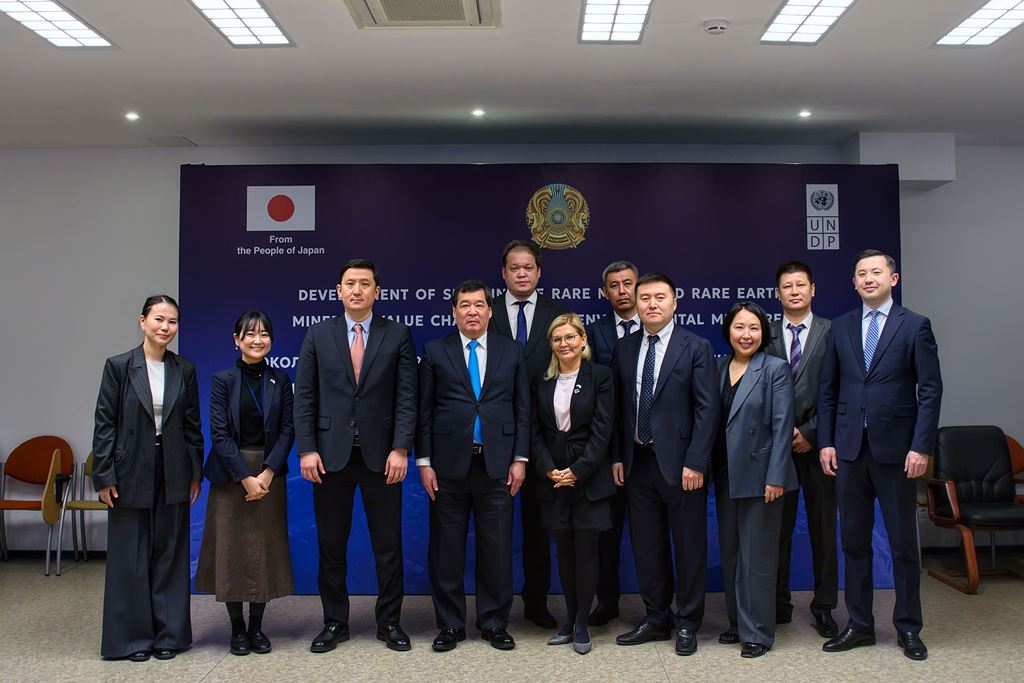
The Japan-funded initiative is designed to help Kazakhstan develop the regulatory, analytical and technological capabilities required to manage these risks.
Environmental monitoring before industrial expansion
A defining feature of the project is its emphasis on prevention.
Rather than introducing environmental controls only after production facilities begin operating, the initiative will support the integration of environmental standards and digital monitoring systems at an early stage of project development.
This approach is intended to help identify potential environmental risks, strengthen regulatory oversight and establish more responsible practices throughout rare metal and rare earth mineral value chains.
The project will focus on developing the analytical, regulatory and technological foundation needed for sustainable industrial development.
For Kazakhstan, this means linking the expansion of mineral processing with stronger environmental management from the outset.
Kazakhstan plans to expand high-value mineral processing
The Ministry of Industry and Construction sees the partnership as an opportunity to strengthen the environmental dimension of Kazakhstan's industrial policy.
Olzhas Alibekov, Deputy Chairperson of the Ministry's Industry Committee, emphasized the importance of combining processing capacity with international standards.
«Kazakhstan is already actively working to build high-value processing industries for rare metals and rare earth minerals under our national Comprehensive Plan. This joint initiative with UNDP and Japan will allow us to significantly strengthen our efforts by integrating advanced green technologies and international environmental standards into our production chains,» said Olzhas Alibekov.
The statement reflects Kazakhstan's ambition to develop more advanced stages of the mineral value chain while improving the environmental performance of the industry.
The $3 million initiative will support the foundations for this transition. It is not presented as financing for the construction of mines or processing plants.
Japan strengthens cooperation on critical minerals
The project also aligns with Japan's regional priorities announced at the Central Asia plus Japan Dialogue Summit in December 2025.
Those priorities include Green and Resilience, as well as Connectivity, both of which are relevant to the development of sustainable industrial supply chains.
Japan's Ambassador to Kazakhstan, Yasumasa Iijima, confirmed his country's commitment to the partnership.
«Japan intends to provide comprehensive support for this initiative,» said Yasumasa Iijima.
For Japan, cooperation with Kazakhstan provides another avenue for engagement with Central Asia on resource management and sustainable economic development.
The agreement specifically focuses on environmental governance and responsible production practices. It does not announce mineral supply contracts, extraction volumes or commercial investment commitments.
UNDP emphasizes environmental protection and local communities
UNDP says the growing importance of critical minerals must be accompanied by stronger environmental safeguards and attention to communities living near industrial sites.
Katarzyna Wawiernia, UNDP Resident Representative in Kazakhstan, stressed that economic opportunities should not come at the expense of ecosystems or public well-being.
«The growing demand for critical minerals brings new economic opportunities, but it also calls for greater environmental responsibility. Strong environmental governance, pollution prevention and the protection of local communities must be central to the sector’s development. Through this partnership, UNDP aims to help Kazakhstan strengthen the standards, expertise and monitoring needed to manage environmental risks and ensure that development benefits people while safeguarding the ecosystems,» said Katarzyna Wawiernia.
The initiative is expected to help Kazakhstan strengthen the expertise and monitoring capabilities needed to identify environmental risks and improve oversight as the sector develops.
Fifth joint initiative between Japan and UNDP
The new agreement expands an established partnership between Japan and UNDP in Kazakhstan and Central Asia.
The two partners are currently implementing four joint initiatives covering flood risk management at dams, the declining water level of the Caspian Sea, urban resilience to climate and disaster risks, and disaster preparedness across Central Asia.
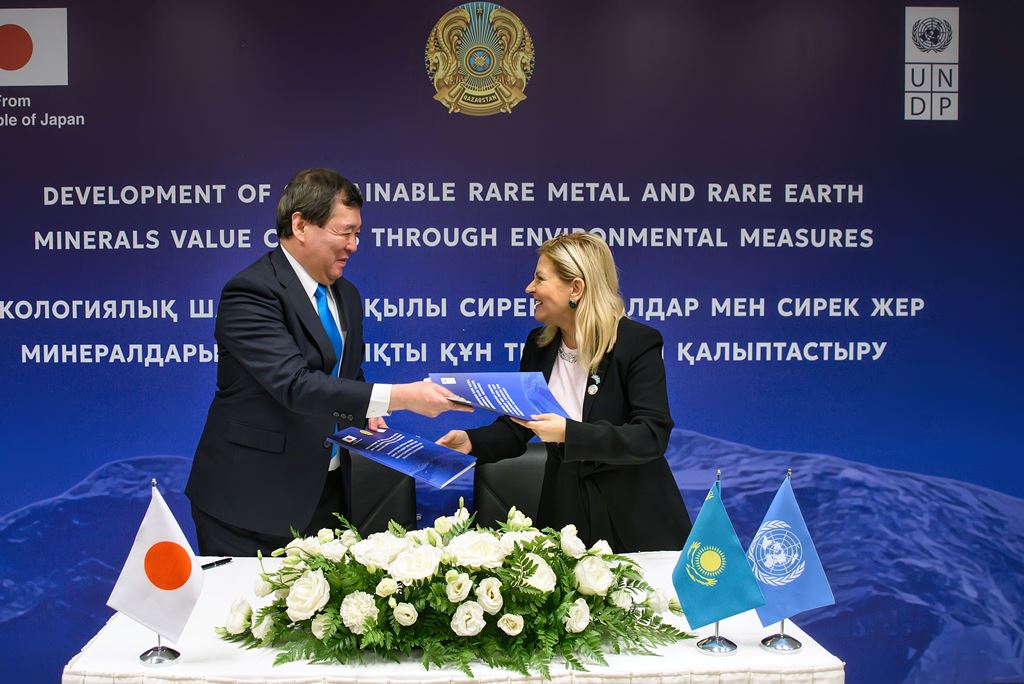
The rare metals project becomes their fifth joint initiative in Kazakhstan, extending cooperation into environmental governance and sustainable natural resource management.
Unlike the existing projects, which primarily address climate adaptation and disaster resilience, the new initiative focuses on preventing environmental damage associated with future industrial development.
Why the $3 million project matters for Kazakhstan
Kazakhstan's more than 120 identified rare metal and rare earth deposits represent potential opportunities for industrial diversification. Turning that resource base into competitive processing industries, however, requires more than investment in extraction and manufacturing.
Environmental standards, reliable monitoring and effective regulation are also essential for managing industrial risks and meeting the expectations of international partners.
The Japan–UNDP initiative addresses these requirements at an early stage, when environmental safeguards can still be incorporated into industrial planning.
Its long-term impact will depend on how the resulting standards, expertise and monitoring practices are adopted by regulators and businesses. For now, the agreement establishes a new framework for combining Kazakhstan's critical minerals ambitions with environmental protection.
Earlier, we reported on Kazakhstan and Japan's cooperation on rare earth metals and advanced mining technologies, including the role of critical minerals in strengthening industrial and investment ties between the two countries.