

Kazakhstan is strengthening its aviation partnership with Singapore. The two countries have agreed to deepen cooperation on flight safety, emerging technologies and aviation inspector training. A new memorandum is expected to establish a long-term framework for the partnership, DKNews.kz reports.
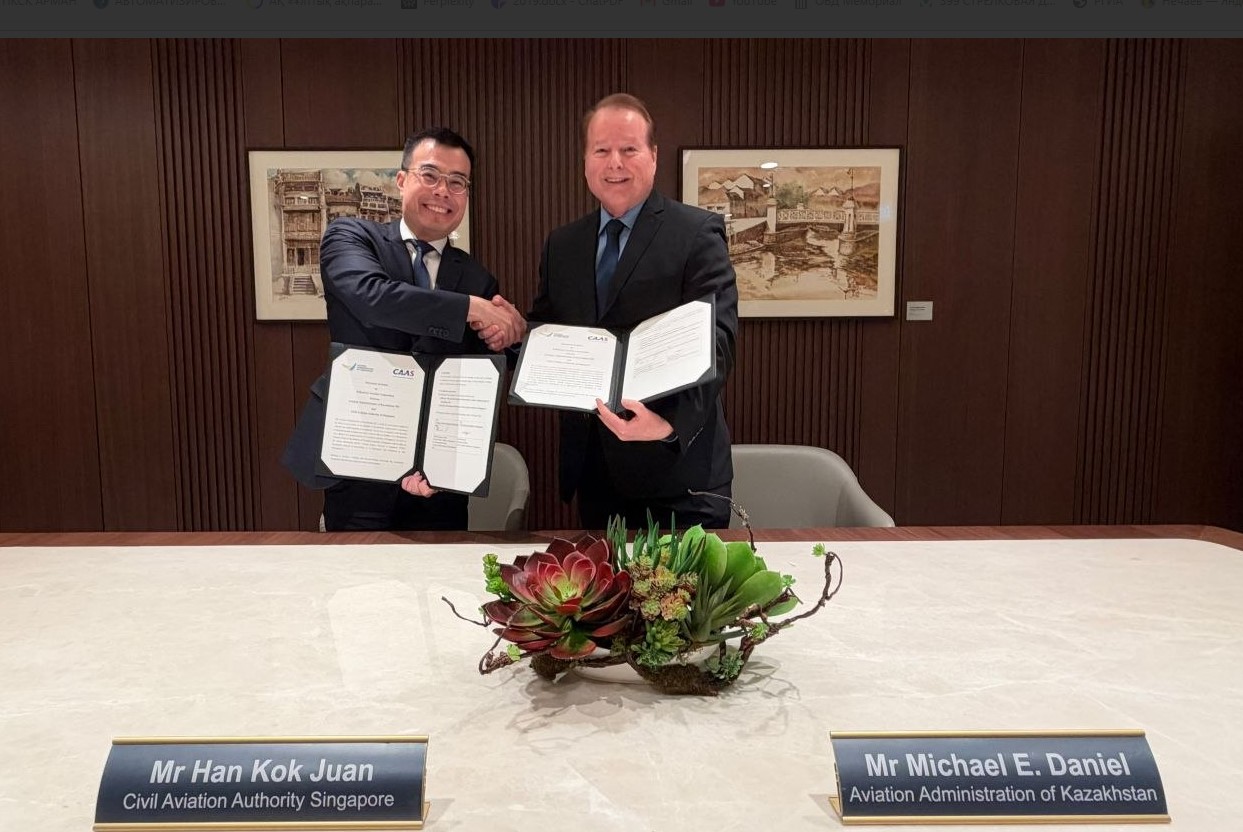
The Aviation Administration of Kazakhstan (AAK) and the Civil Aviation Authority of Singapore (CAAS) signed a Statement of Intent (SOI) during a visit by a Kazakh delegation to Singapore.
The document was signed by AAK Chief Executive Officer Michael Daniel and CAAS Director-General Han Kok Juan.
Kazakhstan to benefit from Singapore's aviation safety expertise
Cooperation between the two countries will now extend beyond professional training. Kazakhstan and Singapore intend to work together on several areas directly linked to the safety, efficiency and future development of civil aviation.
Key priorities include flight safety, aviation security, risk-based oversight, sustainable aviation development, innovation and the adoption of new technologies.
Aviation inspector training will be another major focus. These specialists play a critical role in monitoring compliance with safety requirements, assessing aviation operators and identifying potential risks.
For Kazakhstan, the partnership offers an opportunity to draw on Singapore's regulatory experience to strengthen its own aviation oversight system and improve professional standards.
The two countries have previously discussed the use of artificial intelligence and international best practices in aviation safety. The new agreement marks a move towards broader cooperation across several strategic areas.

New aviation memorandum planned for the first half of 2027
The newly signed Statement of Intent outlines the main areas of cooperation. A separate Memorandum of Understanding (MoU) is expected to establish a more formal institutional framework.
The memorandum is scheduled to be signed in the first half of 2027, during a planned visit by CAAS representatives to Kazakhstan.
Under the proposed framework, the heads of the two aviation authorities will hold annual meetings, alternating between Kazakhstan and Singapore.
These meetings will provide an opportunity to review progress, assess the results of joint initiatives and identify further areas for cooperation.
The arrangement is intended to create a regular high-level dialogue on aviation oversight, workforce development and technological innovation, rather than relying solely on individual training programmes.
Partnership expands beyond the 2024 training agreement
Kazakhstan and Singapore already have experience working together on aviation workforce development.
In 2024, the two aviation authorities signed a training cooperation agreement covering the implementation of aviation education programmes in Kazakhstan.
The latest agreement broadens that relationship significantly.
In addition to specialist training, the partnership will cover regulatory oversight, professional knowledge sharing, new technologies and the long-term development of aviation expertise.
AAK Chief Executive Officer Michael Daniel highlighted the importance of strengthening the capabilities of Kazakhstan's aviation professionals.
“Strengthening cooperation with CAAS is an important step towards further enhancing the professional competence of our aviation specialists. We see significant value in exchanging experience and best practices in risk-based oversight, flight safety, aviation security and inspector training. We look forward to building on our existing partnership with CAAS, expanding opportunities for specialised training and professional development, and fostering closer cooperation to support safe, efficient and sustainable civil aviation in Kazakhstan,” said Michael Daniel.
What the agreement means for passenger and cargo transport
Kazakhstan and Singapore occupy strategically important positions in their respective regions.
Kazakhstan is developing its transport connections across Central Asia, while Singapore is a major aviation hub in Southeast Asia.
According to the two authorities, air connectivity between the countries has grown significantly in recent years.
The expanded technical partnership is intended to support the continued development of passenger and cargo traffic between the two countries and their wider regions.
However, the agreement does not include specific commitments to launch new flights, increase frequencies or change airfares.
Its primary focus is on improving cooperation between aviation regulators, strengthening safety oversight and developing professional expertise.
For airlines and airports, the practical benefits will depend on how effectively the two authorities translate their cooperation into regulatory practices, training programmes and technological improvements.

Singapore sees potential for stronger business ties
CAAS Director-General Han Kok Juan described the agreement as part of a broader effort to strengthen connections between the two countries and create economic opportunities.
“The signing of this Statement of Intent reflects the shared commitment of our two civil aviation authorities to deepening technical cooperation, bringing our countries and regions closer together, strengthening professional and business connections, and creating new economic opportunities. We look forward to establishing a formal annual meeting mechanism that will enable our aviation sectors to develop their partnership on a sustainable basis,” said Han Kok Juan.
CAAS is responsible for aviation safety oversight, the development of Singapore's aviation hub and industry, air navigation services and professional aviation training.
The authority also contributes to the development of international civil aviation.
For Kazakhstan, closer engagement with Singapore provides an opportunity to strengthen the capabilities of its aviation regulators, expand specialist training and gain access to established international practices.
The next milestone is set for the first half of 2027, when the two countries plan to sign a memorandum establishing a permanent framework for technical cooperation and annual high-level meetings.
We have also previously covered Kazakhstan's efforts to expand international air connections and strengthen its aviation links with Asian markets.