
Road sector violations have caused more than 8 billion теңге in estimated damage. Kazakhstan has launched 33 pre-trial investigations into suspected irregularities in road construction, procurement and maintenance, while preventing another 36 billion теңге in unjustified expenditure, according to the Government's official report following a meeting chaired by Prime Minister Olzhas Bektenov on November 2, 2026, DKNews.kz reports.
The findings have intensified scrutiny of how Kazakhstan builds and maintains its highways. The Government is now preparing a comprehensive reform package covering construction standards, asphalt quality, contractor accountability and digital monitoring, with proposals due by the end of November.

33 investigations and 36 billion теңге in prevented spending
First Deputy Prosecutor General Zhandos Umiraliyev presented preliminary inspection results revealing systemic violations at different stages of road projects, from initial planning and procurement to construction and operation.
Authorities have initiated 33 pre-trial investigations. The preliminary damage estimate exceeds 8 billion теңге, although the final amount has yet to be established and investigations remain ongoing.
Prosecutorial intervention also prevented 36 billion теңге in expenditure by cancelling unjustified contracts and public procurement plans.
Among the identified irregularities were new tenders for roads that had already undergone repairs. Some of these projects were still covered by contractors' warranty obligations, raising questions about why additional public funding was being sought for work that could fall under existing guarantees.
The figures represent two different categories: estimated damage associated with suspected violations and expenditure prevented through the cancellation of questionable procurement decisions. They should not be combined into a single confirmed loss.
Why Kazakhstan's roads deteriorate prematurely
The meeting also examined a persistent problem affecting road infrastructure: cracks, rutting and other pavement defects appearing before the expected end of a road's service life.
Government officials and technical experts reviewed the causes of these problems, including the properties of construction materials, compliance with laying technologies, traffic loads and regional climatic conditions.
One proposed solution is to revise construction standards to reflect the actual conditions in which roads operate.
Kazakhstan's regions experience different temperatures, seasonal fluctuations and vehicle loads. Applying more detailed regional requirements could help engineers select pavement structures and materials suited to local conditions.
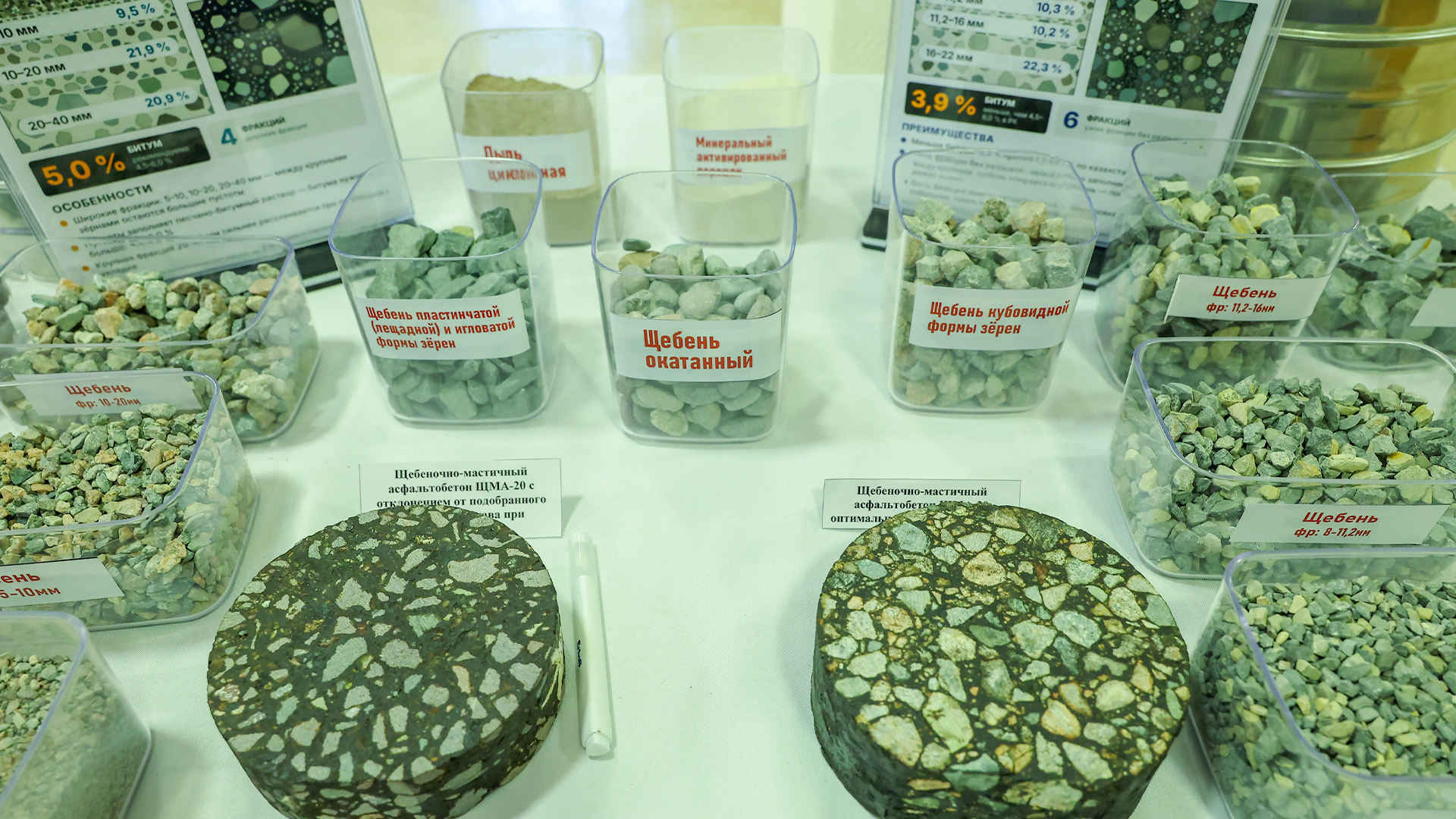
The proposed measures include using carefully graded cubical crushed stone, improving the flexibility of bitumen, increasing resistance to rutting and cracking, and introducing non-destructive testing methods.
The Government also discussed improving reflective road signs and markings as part of broader efforts to raise road infrastructure standards.
New asphalt technologies could change road construction
The Ministry of Transport presented proposals to introduce more advanced materials and construction technologies, including Superpave and polymer-modified asphalt concrete.
Superpave is an asphalt mix design system that takes into account pavement performance requirements, traffic conditions and environmental factors. Its application can help engineers select materials more appropriately for different operating conditions.
Polymer-modified bitumen is another area of focus. By improving the properties of conventional bitumen, such materials can increase resistance to deformation and cracking under demanding conditions.
Transport Minister Nurlan Sauranbayev reported that his ministry, together with the Ministry of Energy and KazMunayGas, had reviewed Kazakhstan's bitumen transportation and storage system.
The review resulted in proposals to improve product quality, balance production loads between plants and expand the use of polymer-modified materials.
Caspi Bitum and the Pavlodar Petrochemical Plant are ready to produce 50/70 and 70/100 bitumen grades, as well as polymer-modified compositions, provided they receive the relevant orders.
These measures are intended to improve material quality, but their effectiveness will depend on consistent implementation, laboratory testing and compliance with construction requirements.
Overloaded trucks face tighter controls
Protecting newly constructed and repaired roads from excessive vehicle loads is another priority.
The Government considered proposals to strengthen weight and dimension controls, including automatic recording of violations and increased liability for overloaded vehicles.
Particular attention was paid to trucks bypassing automated weighing stations. Officials discussed establishing a legal basis for automatically recording such violations.
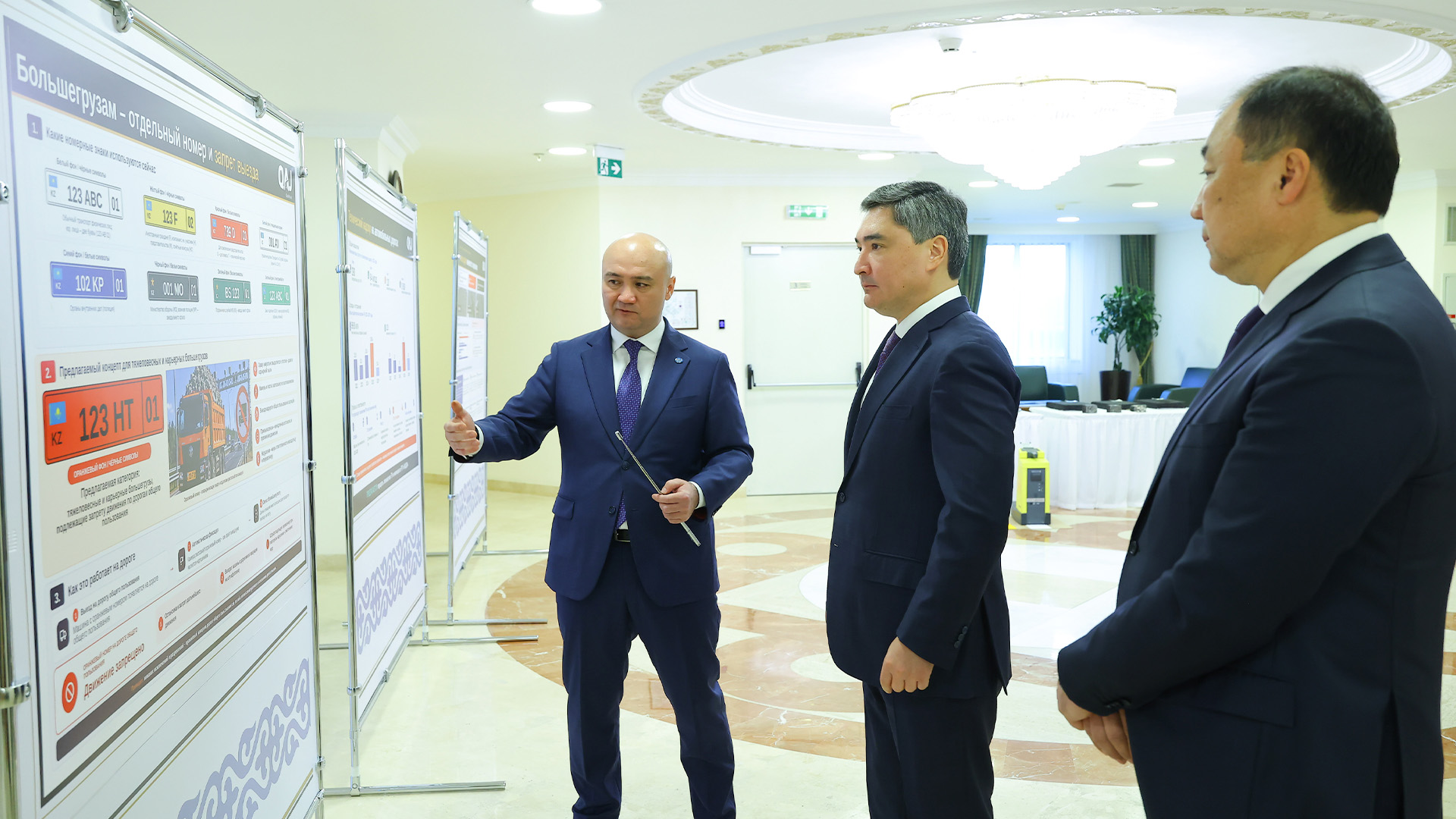
Digital monitoring systems are also being integrated into the unified E-Kolik platform, which is intended to support more coordinated oversight of transport operations.
Excessive axle loads can accelerate pavement deterioration, particularly on roads not designed to withstand repeated heavy loading. Stronger enforcement could therefore complement improvements in asphalt materials and construction methods.
However, the proposed legislative changes have not yet been presented as adopted measures. Their final scope will depend on the reform package and subsequent regulatory decisions.
Local roads to receive greater attention
The Government also examined weaknesses in the management of local highways, where responsibility for planning, construction and maintenance is distributed among different levels of administration.
A working group has developed proposals to improve coordination between central and local executive bodies and clarify responsibility for the quality of completed work.
More detailed regional classification of pavement structures was identified as another necessary measure.
The objective is to ensure that road designs reflect local climatic conditions and traffic requirements rather than relying on insufficiently differentiated standards.
Participants also discussed roadside services, modernization of road checkpoints and digital tools for monitoring construction and maintenance.
Contractors could face greater responsibility for road quality
One of the central issues raised at the meeting was contractor accountability.
Government officials emphasized that improving road durability requires consistent quality control throughout the entire construction process, from selecting materials and preparing asphalt mixtures to laying pavement and inspecting completed work.
The discussion involved members of the Kurultai Zamir Saginov and Meirzhat Kassymbayev, academician Bagdat Teltayev of the National Academy of Sciences under the President, and other specialists.
Participants stressed the importance of improving construction practices and ensuring that contractors comply with technical requirements.
The procurement irregularities identified by prosecutors also highlighted the need for more effective enforcement of warranty obligations.
If a road develops defects while the contractor's warranty remains valid, the responsible authorities must determine whether the necessary repairs should be carried out under that warranty before allocating additional public funds.
Bektenov sets end-of-November deadline
Following the meeting, Prime Minister Olzhas Bektenov instructed the Working Group on Road Sector Reform to complete its discussions and prepare a comprehensive package of proposals by the end of November 2026.
The final document must address the causes of premature pavement deterioration, strengthen responsibility for construction quality and establish coordinated measures covering the entire road life cycle.
Bektenov emphasized that revising technical standards, improving materials and introducing new technologies should form part of a single reform framework rather than separate initiatives.
The Government's objective is to improve the quality and durability of both national and local highways while reducing the risks associated with poor construction practices and ineffective spending.
What the reforms could mean for drivers and businesses
For motorists, the proposed changes are intended to produce roads that withstand traffic and weather conditions more effectively, with fewer premature defects and repeated repairs.
For transport companies, stricter weight controls could mean closer monitoring of freight operations and greater consequences for exceeding permitted vehicle loads.
For road contractors, the reform agenda points toward stronger technical supervision, more demanding material standards and closer scrutiny of warranty obligations.
The financial findings add urgency to the process. With 33 investigations underway, more than 8 billion теңге in preliminary estimated damage and 36 billion теңге in prevented expenditure, the Government faces both a technical and a public-finance challenge.
The effectiveness of the proposed reforms will ultimately depend on whether new standards are enforced consistently and whether authorities can prevent the same construction and procurement problems from recurring.
Earlier, we reported on plans to invest more than 112 billion теңге in Kazakhstan's intelligent road monitoring system, including the installation of 220 automated weighing stations designed to improve freight oversight and help protect road infrastructure.