
Kazakhstan is aiming for a sustainable electricity surplus by 2029. Prime Minister Olzhas Bektenov has reviewed major power generation and transmission projects, including upgrades that will increase grid capacity in southern and western Kazakhstan, according to the Government of Kazakhstan.
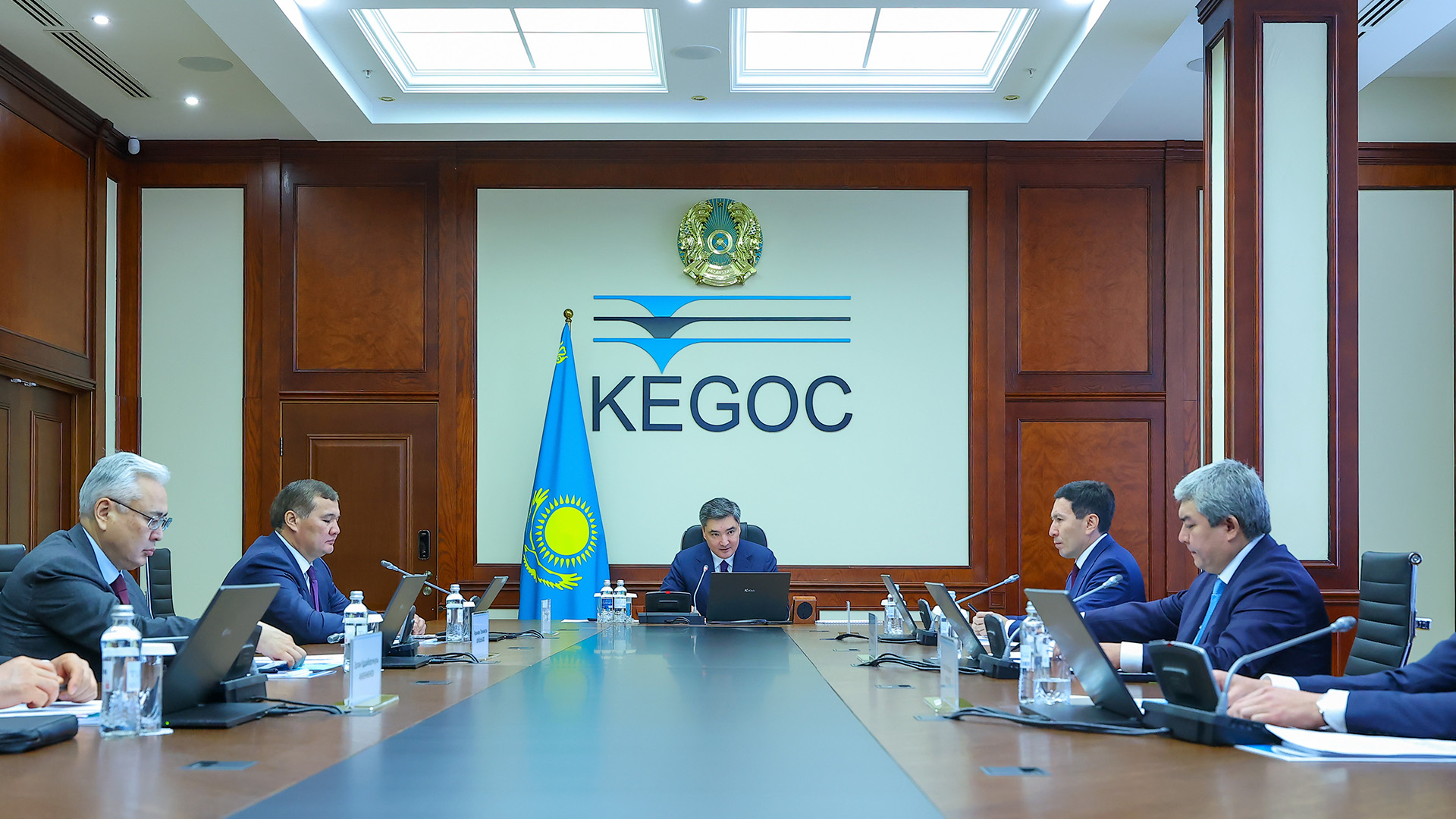
The meeting focused on projects involving the Samruk-Kazyna Fund, KEGOC and Samruk-Energy, as well as measures to strengthen the country's energy sovereignty. The Government is seeking to expand electricity generation, modernize transmission networks and prepare for rising demand from industry and digital infrastructure, DKNews.kz reports.
Tokayev's 2029 target puts pressure on Kazakhstan's power sector
Bektenov emphasized that Kazakhstan's electricity infrastructure must develop in step with the country's economic ambitions.
«Head of State Kassym-Jomart Tokayev, in his Address to the People of Kazakhstan, declared 2027 the Year of Large-Scale Nationwide Construction. Against the backdrop of economic growth, the implementation of new industrial projects, and the accelerated development of digital infrastructure, the load on the power system will increase significantly. The task set by the Head of State to achieve a sustainable energy surplus by 2029 requires the complete synchronization of three areas: generation, electrical grids, and prospective consumption growth,» the Head of the Government emphasized.
The target requires more than commissioning new power plants. Electricity must also be transported efficiently to regions where industrial development, population growth and new infrastructure projects are increasing demand.
Southern Kazakhstan to gain 440 MW of transmission capacity
KEGOC Chairman Nabi Aitzhanov reported on the implementation of investment projects designed to reinforce Kazakhstan's Unified Power System.
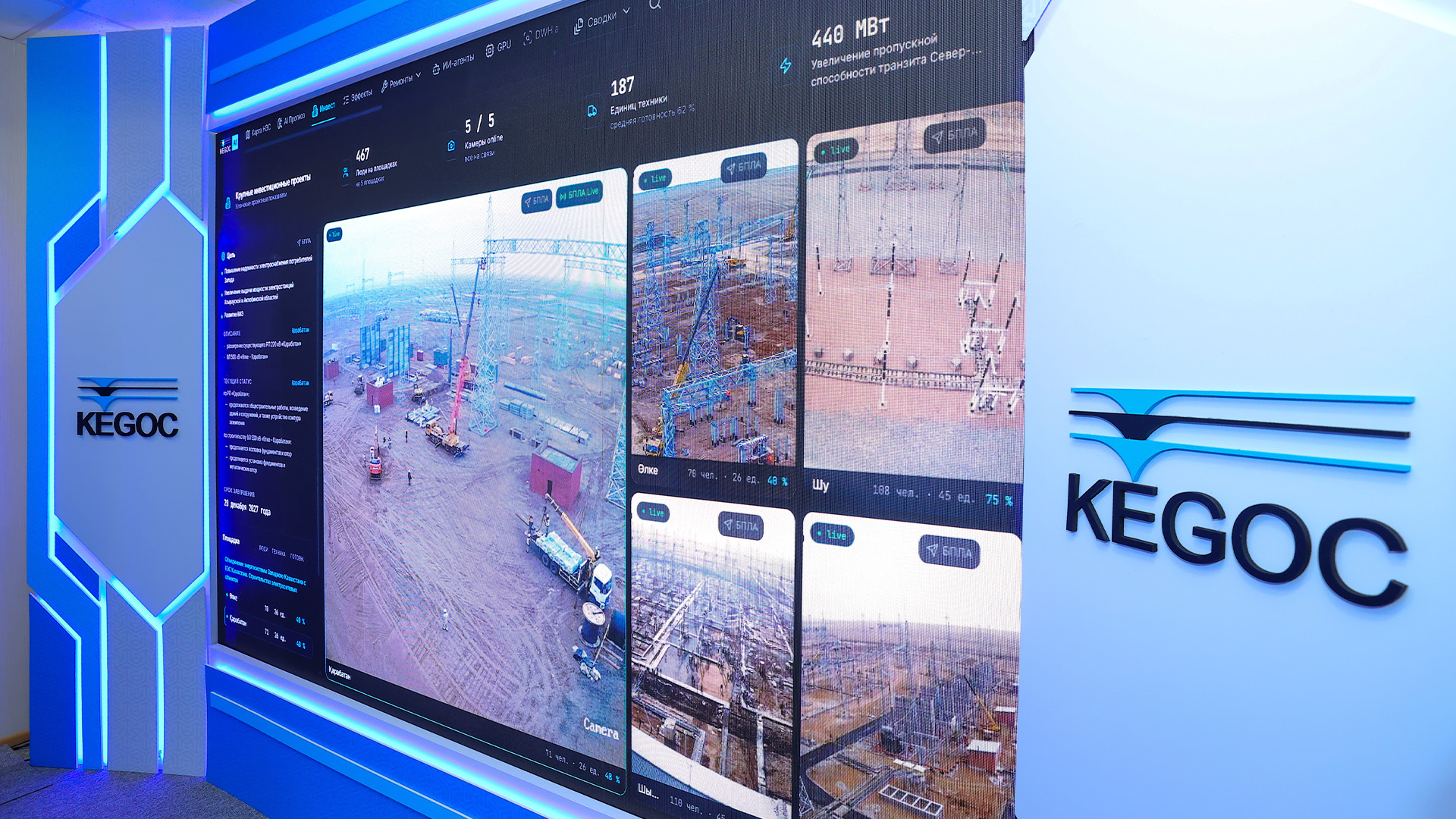
The project to strengthen the Southern Zone's electricity network will increase the transmission capacity of the Almaty–Zhambyl–Shymkent corridor by 440 MW.
Commissioning is scheduled for July 2027.
The upgrade is expected to improve electricity supply reliability across southern Kazakhstan and create additional capacity for integrating renewable energy sources.
Plans were also presented to develop electricity networks in the Almaty and Zhetysu regions, supporting hydropower development and the connection of new renewable energy facilities.
Western Kazakhstan's power system to be integrated by 2027
Another major project will connect western Kazakhstan's electricity system more closely with the national Unified Power System.
The project is designed to strengthen the region's energy independence and increase transmission capacity to 500 MW.
It will improve the reliability of electricity supply in western Kazakhstan, support greater use of power generation capacity in the Atyrau and Aktobe regions and reduce pressure on the Aktobe power hub.
The first stage is scheduled for completion in December 2027.
A second stage is planned for commissioning in 2035. It will complete the high-voltage ring connection of the national power system, providing a more integrated transmission network.
These projects are intended to strengthen the reliability of electricity supplies in the South and West while reducing vulnerabilities caused by regional grid constraints.
Kazakhstan reviews major power plant construction projects
Samruk-Energy Chairman Ansar Aidarov reported on measures to strengthen project implementation following criticism from President Tokayev.
The Government is paying particular attention to construction quality and strict compliance with commissioning schedules.
The projects under review include:
- Modernization of Almaty CHP-2.
- Reconstruction of Almaty CHP-3.
- Construction of combined heat and power plants in Kokshetau and Semey.
- Expansion of Ekibastuz GRES-2.
- Construction of combined-cycle gas turbine plants in Kyzylorda and Turkestan regions.
- Development of renewable energy projects with energy storage systems.
- Implementation of hydropower generation projects.
The projects form part of Kazakhstan's efforts to increase domestic generation capacity, improve system reliability and support future electricity demand.
The Government has instructed responsible organizations to strengthen oversight of investment projects and ensure that construction and commissioning deadlines are met.

AI expected to generate 5.5 billion теңге in annual benefits
During his visit to KEGOC, Bektenov reviewed preparations for the autumn-winter period and examined the company's digital grid management systems.
According to KEGOC, the introduction of digital technologies and artificial intelligence is expected to deliver an annual financial benefit of 5.5 billion теңге, equivalent to approximately 3% of EBITDA.
The projected benefit comes from optimizing electricity flows and reducing transmission losses.
Separately, connecting power plants to automatic frequency and active power control systems is expected to provide additional annual savings of approximately 4 billion теңге.
Combined, the two initiatives could deliver around 9.5 billion теңге in annual financial benefits if the projected results are achieved.
KEGOC monitors 83 substations and more than 50,000 indicators
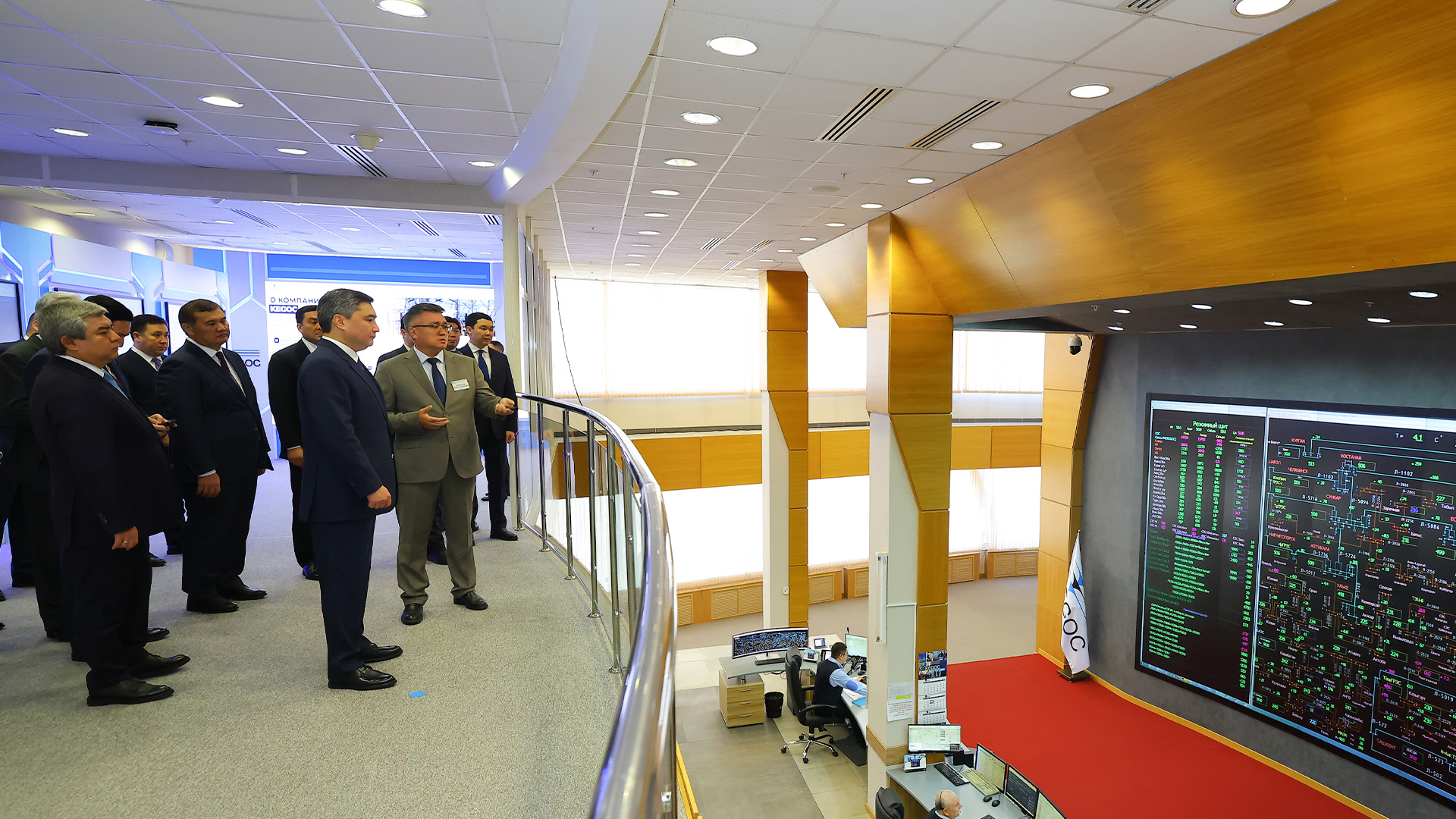
At the National Dispatch Center, the Prime Minister was briefed on the systems used to manage Kazakhstan's electricity network.
The center monitors the balance between electricity generation and consumption and controls equipment at all 83 KEGOC substations.
More than 50,000 operational indicators are updated to help dispatchers detect and respond to emergency situations.
Since the beginning of 2026, more than 70 incidents involving sharp increases in load have been recorded on the North–South transmission corridor.
According to KEGOC, 95% of these situations were resolved without interrupting electricity supplies to residents.
The results demonstrate the importance of real-time monitoring and coordinated dispatch management in maintaining grid stability.
AI-KEGOC forecasts power generation and demand a day ahead
The AI-KEGOC intelligent platform forecasts electricity generation and consumption one day in advance across 21 power hubs and 169 renewable energy facilities.
These forecasts can help grid operators anticipate changes in electricity demand and fluctuations in renewable energy output.
Such capabilities are increasingly important as Kazakhstan expands solar, wind and other renewable generation sources, whose output can vary depending on weather conditions.
Better forecasting supports more efficient use of generation resources and helps operators maintain the balance between electricity production and consumption.
Digital systems increase North–South grid capacity by 250 MW
One of KEGOC's most significant reported achievements involves the country's main North–South electricity corridor.
Digital monitoring and control systems based on synchrophasor measurements have increased the corridor's transmission capacity by 250 MW.
According to KEGOC, the additional capacity is comparable to the electricity consumption of an entire city.
The improvement was achieved without constructing new facilities, avoiding additional capital expenditure while also reducing electricity losses.
The result illustrates how modern grid management technologies can improve the performance of existing infrastructure alongside traditional construction projects.
Government sets September 2027 deadline for energy balance update
Following the meeting, Bektenov instructed the Ministry of Energy, together with relevant government agencies and organizations, to complete the update of Kazakhstan's national energy balance by September 2027.
He emphasized that development of the National Electrical Grid must proceed ahead of rising consumption.
The Prime Minister also issued instructions to strengthen control over the timely implementation of investment projects across the electricity sector.
The Government's strategy combines expanded generation, stronger transmission networks and improved digital management.
Achieving a sustainable electricity surplus by 2029 will depend on the timely completion of new facilities, successful integration of regional grids and effective coordination between generation capacity and future demand.
The projects reviewed by Bektenov are expected to play a central role in strengthening Kazakhstan's energy sovereignty and supporting its industrial and economic development.