
Kazakhstan is losing electricity before it reaches consumers. Average losses across the country's power networks stand at around 12%, and a new international project aims to reduce them by introducing technology that could improve grid efficiency without requiring large-scale construction of new power plants, DKNews.kz reports.
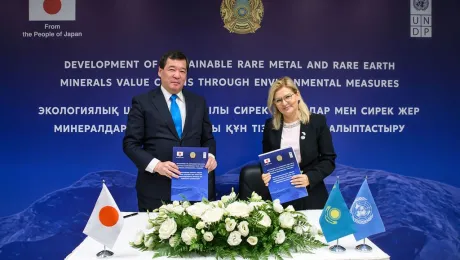
The initiative is being implemented by the United Nations Development Programme (UNDP) in partnership with Kazakhstan's Ministry of Energy, with financial support from the international climate fund Mitigation Action Facility. The project launch coincides with International Energy Saving Day, observed annually on November 11.
Where does Kazakhstan's 12% electricity loss come from?
While Kazakhstan is discussing new power plants, expanding generation capacity and addressing electricity shortages, a significant share of the power already produced is being lost during transmission and distribution.
According to figures cited in the project materials, electricity losses in Kazakhstan average approximately 12%. The situation is even more challenging in neighboring countries, with losses reaching 15% in Kyrgyzstan and 14–16% in Uzbekistan.
Several factors contribute to these losses. One is reactive power.
Reactive power is essential for operating many electrical devices, but when poorly managed, it increases the current flowing through power networks. This causes additional heating in cables, raises technical losses and reduces the amount of electricity the grid can efficiently deliver.
As a result, power producers must generate more electricity to meet the same level of consumer demand.
For energy companies, this translates into additional operating costs and less efficient use of existing infrastructure. For businesses, the quality and reliability of electricity supply can directly affect production and operations.
 Photo: UNDP Kazakhstan/ Saltanat Boteu
€8.7 million allocated to improve power grid efficiency
Kazakhstan will serve as a testing ground for reactive power compensation technology, with the experience potentially extended to Kyrgyzstan and Uzbekistan if the project proves successful.
According to the official Mitigation Action Facility project information, the regional initiative has a funding allocation of €8.7 million and is scheduled to run from September 2026 to September 2031.
The technology is designed to reduce unnecessary loads on power networks, improve voltage quality and make better use of existing electrical infrastructure.
However, reactive power compensation cannot eliminate every source of electricity loss. Its effectiveness will depend on local grid conditions, equipment performance and the way the technology is implemented.
Thomas Pearson, head of climate and green growth at the British Embassy in Kazakhstan, emphasized the need to pay greater attention to the efficiency of existing energy infrastructure.
"What makes this project distinctive is that it addresses an aspect of power system operation that often receives insufficient attention. When discussing the future of Kazakhstan's energy sector, we naturally focus on building new generation capacity and making major investments in infrastructure. However, ensuring that existing networks operate as efficiently as possible is equally important. With electricity losses remaining a challenge, this project will provide a practical opportunity to assess how well-established technologies can reduce losses, improve grid efficiency and deliver more electricity to the homes and businesses that need it," Pearson said.
 Photo: UNDP Kazakhstan/ Saltanat Boteu
Technology tested in Kazakhstan could expand across Central Asia
One of the project's defining features is its regional scope.
Kazakhstan, Kyrgyzstan and Uzbekistan have closely interconnected electricity systems. Improving grid efficiency therefore matters not only for individual countries but also for the resilience of energy supplies across Central Asia.
Dr. Heike Renate Peitsch, Ambassador Extraordinary and Plenipotentiary of Germany to Kazakhstan, highlighted the importance of regional cooperation.
"Alongside expanding the use of renewable energy sources, improving power grid efficiency and reducing electricity losses is another important part of the energy transition. This is particularly relevant for Central Asia, where electricity demand is growing and pressure on energy infrastructure is increasing. We therefore welcome the launch of this project, especially its regional approach, given the close interconnection of the electricity systems of Kazakhstan, Kyrgyzstan and Uzbekistan," Peitsch said.
For Kazakhstan, the project will also provide an opportunity to assess the economic case for reactive power compensation.
Its results are expected to help determine whether investment in the technology is financially justified and under what conditions similar solutions could be deployed on a larger scale.
Grid modernization will require investment and regulatory changes
The initiative goes beyond installing new equipment.
UNDP and its partners plan to review the existing regulatory framework and develop recommendations for improving it. The project will also assess the economic benefits of modern energy-efficiency technologies.
Another priority is attracting investment.
Wider deployment of energy-saving solutions requires financing mechanisms that allow power companies to modernize their networks while enabling banks and other financial institutions to evaluate the economic returns.
The official project description outlines support for pilot installations, private capital mobilization and green financing instruments, including bonds and loans.
Katarzyna Wawiernia, UNDP Resident Representative in Kazakhstan, stressed that technological improvements must be supported by institutional and regulatory development.
"Improving energy efficiency begins with making more rational use of the resources we already have. Modern technologies can reduce electricity losses, improve grid performance and lower the environmental impact of the energy sector. For UNDP, it is essential that the introduction of these solutions goes hand in hand with improving the regulatory framework, strengthening professional capacity and creating the conditions for their widespread adoption," Wawiernia said.
 Photo: UNDP Kazakhstan/ Saltanat Boteu
Lower electricity losses could also reduce emissions
Reducing electricity losses has another potential benefit: less power needs to be generated to satisfy the same level of demand.
This is particularly relevant for Kazakhstan, where coal-fired power plants account for a substantial share of electricity generation. Improving network efficiency could therefore help reduce greenhouse gas emissions associated with power production.
According to Mitigation Action Facility estimates, the project could deliver direct emissions reductions of approximately 255,000 tonnes of CO₂ equivalent during its implementation period.
This is a projected figure rather than an achieved result. Actual reductions will depend on the performance of the technology and the scale of its deployment.
The initiative also supports Kazakhstan's Strategy for Achieving Carbon Neutrality by 2060 and its international commitments to reduce greenhouse gas emissions.
Grid efficiency is becoming increasingly important as electricity consumption continues to grow.
Kazakhstan is also planning to expand electricity generation. As previously covered by DKNews, the country has been working to address its electricity deficit through the commissioning of additional generating capacity.
However, building more power plants addresses only one part of the challenge. Even as production increases, electricity lost during transmission and distribution continues to create additional costs for the energy system.
Kazakhstan must now establish how much electricity reactive power compensation can save and whether the technology delivers sufficient economic benefits to justify broader deployment.
The outcome could shape future investment in power network modernization across the region. If the technology demonstrates measurable technical and financial benefits, it could provide a basis for expanding similar solutions beyond the initial pilot sites in Kazakhstan and eventually throughout Central Asia.