

Astana's Barys have completed an extended road trip that saw them play nine games away from home, including two separate journeys to the Russian Far East during this stage of the KHL season. It proved to be a difficult stretch for Mikhail Kravets' team, with the Blue and Whites recording three wins and six losses. The results against Eastern Conference opponents, in particular, raise questions about the Kazakh club's consistency. After an impressive start to the regular season, Barys faced a demanding test that would have challenged any team in the league.
Consistency Remains the Key Question After Nine Games
The road trip began on October 17 with a game against Sibir Novosibirsk. Barys secured a narrow 1–0 victory before heading to the Far East to face Amur and Admiral. However, they were unable to build on that success. Amur claimed a 5–2 win in Khabarovsk, while the game in Vladivostok ended in a 5–4 overtime defeat for the Astana side.
The next opponent was Avtomobilist Yekaterinburg, who defeated Barys 4–1. The Kazakh team then managed to end their losing streak with another narrow 1–0 victory, this time against Dinamo Minsk. Barys also picked up a win against the Shanghai Dragons, taking the game 4–2.
The final part of the trip proved equally challenging. In Chelyabinsk, Barys suffered a 2–1 defeat to Traktor. The team then returned to Vladivostok, where their second meeting with Admiral ended in another 5–4 loss, this time in regulation. The final game of the road trip also went against Barys, as Amur claimed a 2–0 victory in Khabarovsk. It was the second time this season that the Kazakh club had failed to score.
Across the nine games, Barys scored 18 goals and conceded 25. That works out to an average of two goals scored per game and almost three conceded. For a team that demonstrated impressive offensive production early in the season and ranked among the league's most productive sides, this decline deserves attention.
Particularly notable is the fact that all six defeats during this stretch came against Eastern Conference opponents. Of their seven games against teams from the East, Barys won only one, against Sibir. It would be premature to conclude that the team has lost its ability to compete with its direct rivals, but the results illustrate just how difficult intra-conference matchups have become for the Astana club.

League Standings: Every Point Matters
After 24 games, Barys have collected 25 points and sit sixth in the Eastern Conference. The team has recorded ten regulation wins, one overtime victory and one shootout win. Their goal difference stands at 76 goals scored and 66 conceded.
At first glance, the Kazakh club's position appears relatively comfortable. However, the Eastern Conference standings are extremely tight. Sibir, for example, occupy 11th place with 22 points. Just three points separate sixth and 11th positions.
In such circumstances, even a short run of disappointing results can significantly change a team's position in the standings. Competition is not limited to the top spots. Almost every club in the conference has the opportunity to climb several places or, conversely, drop down the table within a relatively short period.
For Barys, avoiding prolonged losing streaks is therefore essential. The team has already demonstrated that it can collect points and defeat strong opponents. The challenge now is to maintain that level of performance over an extended period, ideally beginning with the upcoming home games.

Special Teams: The Power Play Still Needs Improvement
Over 24 games, Barys have had 82 power-play opportunities, converting 18.3% of them. That percentage is currently insufficient to place the team among the KHL leaders in power-play efficiency.
The situation is somewhat different on the penalty kill. Opponents have received 74 power-play opportunities, while Barys have successfully killed off 78.4% of those situations. This is an average figure by KHL standards, suggesting that the team's penalty-killing units are neither particularly outstanding nor a major cause for concern.
Nevertheless, the difference between these two aspects of special-teams performance deserves attention. The power play should become one of the tools that allows Barys to turn difficult games in their favour. This is especially important against opponents who capitalise on mistakes and provide little space at even strength.
For now, power-play conversion remains one of the areas where Barys have room to improve. With the standings so closely contested, special-teams performance could have a significant influence on results.

Scoring Throughout the Season: From an Explosive Start to a More Restrained Attack
At the beginning of the championship, Barys demonstrated impressive offensive production. The Astana team scored heavily in its first two games. Against Sibir and Salavat Yulaev, for example, Barys scored a combined 15 goals while conceding seven. In games against Amur and Lada, the team scored seven goals and allowed three.
Offensive production fluctuated in subsequent games. Against Dynamo Moscow and Neftekhimik, Barys scored seven goals and conceded seven. In matches against SKA and Ak Bars, the Astana side managed four goals while allowing nine. More productive performances followed against Neftekhimik and Spartak, with nine goals scored and seven conceded.
The stretch against Avangard and Sibir also stands out, with Barys scoring seven goals and conceding four. In the following games against Avtomobilist and Sibir, offensive output declined to five goals across two matches, although the team conceded only once. A hockey season is a long campaign, and maintaining the scoring pace Barys displayed in their opening two games is no easy task.
Against Amur and Admiral, the Astana club scored six goals while its opponents combined for ten. The closing games of the extended road trip further demonstrated how unpredictable the team's scoring had become.
Overall, Barys' attacking potential remains an important part of their game, but consistency in converting scoring opportunities has become a key issue for the remainder of the championship. The team is capable of producing high-scoring performances, yet it has not always managed to carry that efficiency into subsequent games.
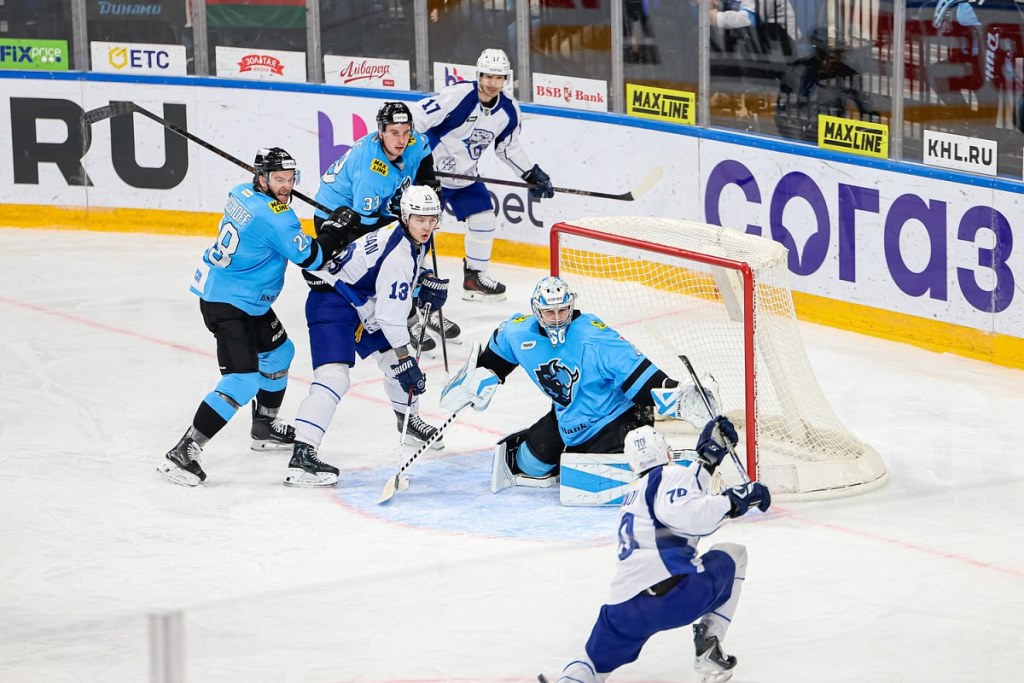
Shutov and His Shutout Performances
The Kazakh team's goaltending has become one of the most widely discussed aspects of its performances around the league. Shutov started seven of the nine road games for Barys, recording two shutout victories during that stretch.
The narrow wins against Sibir and Dinamo Minsk demonstrated that Barys can achieve results not only through offensive firepower but also through disciplined defensive play and reliable goaltending.
This is an important factor for Barys. In games where opponents limit scoring opportunities, defensive organisation and goaltending become particularly significant. Recording two shutout victories during a nine-game road trip involving numerous time-zone changes is a positive achievement that deserves recognition despite the team's overall results.

Conclusion
Nine consecutive road games represented a serious challenge for Barys. Three wins and six defeats, with 18 goals scored and 26 conceded, are results that contrast sharply with the team's impressive start to the regular season.
Nevertheless, it would be premature to describe the situation as a systemic crisis. After 24 games, Barys remain sixth in the Eastern Conference, have a positive goal difference and hold 25 points. However, the tightly contested standings leave little room for mistakes.
The main areas requiring improvement include power-play efficiency, consistency in attack and the ability to collect points against direct rivals within the conference.
Looking ahead, Barys will continue their campaign in the KHL's 19th season, where sustained performance will matter more than the brilliance of individual victories. The nine-game road trip has shown that the team possesses genuine potential, but competing for higher positions will require that potential to be supported by greater consistency throughout the season.
Marzhan Abisheva, Astana