
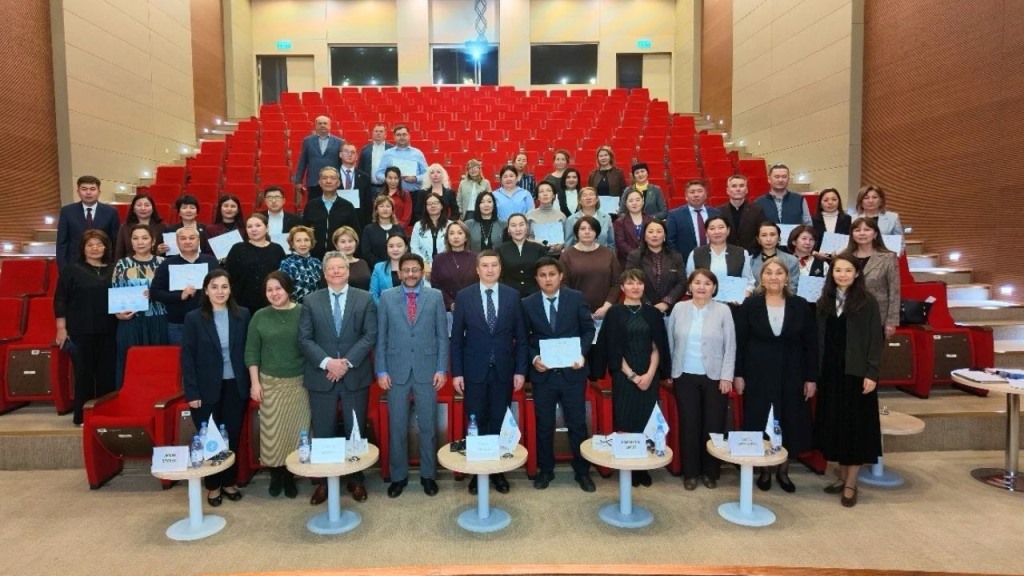
52 representatives from 23 universities across Kazakhstan have completed a specialized training program at Nazarbayev University (NU). The initiative, the first of its kind in the country, aims to improve the quality of doctoral supervision and strengthen support for PhD researchers, according to the university's official announcement published on November 19, 2026.
The program, titled «Strengthening Doctoral Supervision Practice», was delivered through NU's Academic Leadership Institute. It was developed by the university's Graduate School of Education (NUGSE) at the initiative of the Committee for Quality Assurance in Science and Higher Education under Kazakhstan's Ministry of Science and Higher Education, DKNews.kz reports.
Why Kazakhstan is strengthening doctoral supervision
Doctoral education depends not only on the quality of research facilities and academic programs but also on the guidance PhD candidates receive throughout their studies.
Research supervisors play a central role in helping doctoral students develop research questions, select appropriate methodologies, maintain academic standards and complete their dissertations.
The new program addresses these responsibilities while encouraging universities to build stronger institutional systems for supporting doctoral researchers.
At the closing ceremony, Adlet Toibaev, chair of the Committee for Quality Assurance in Science and Higher Education, explained the initiative's central objective.
«The program’s main goal is to foster a modern culture of doctoral supervision and strengthen institutional support for doctoral students at every stage of their research training,» said Adlet Toibaev.
80 academic hours and seven training modules
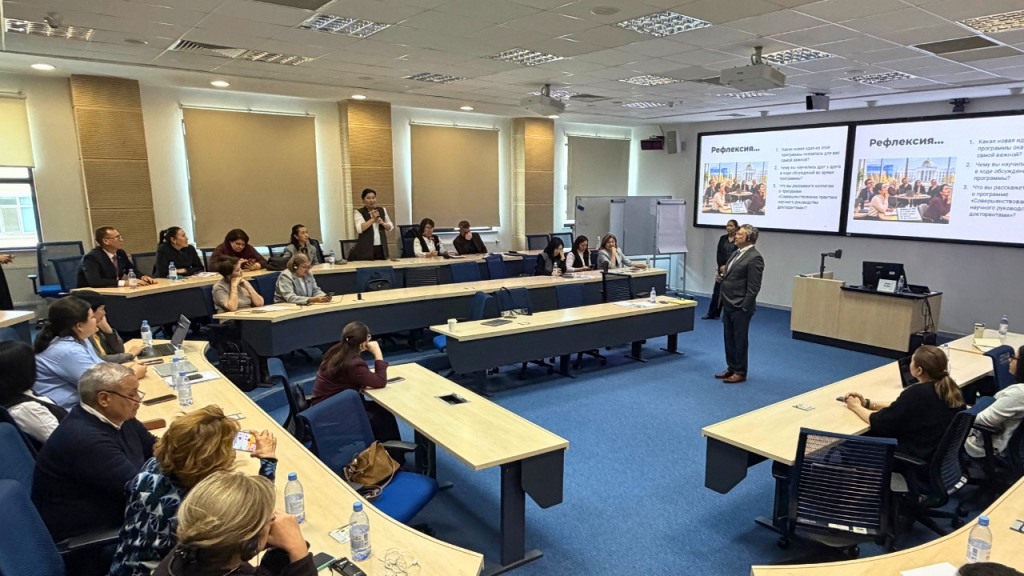
The program began in October 2026 and combined theoretical instruction with practical assignments and institutional research.
Its structure included:
- 80 academic hours of professional development.
- Seven modules covering key aspects of doctoral supervision.
- Three interconnected stages combining learning, research and practical implementation.
- In-person sessions and independent study.
- Institutional assessments and action plans for improving doctoral supervision.
Participants included university executives, deans, professors, faculty members, doctoral program directors, research supervisors and representatives of the Ministry of Science and Higher Education.
Rather than offering conventional lectures alone, the program required participants to examine existing practices at their own institutions and develop proposals for improvement.
How the training was developed
The Graduate School of Education designed the program after reviewing doctoral supervision practices across Kazakhstan.
Its specialists conducted focus groups with faculty members and university leaders, examined existing challenges and considered the principles of the Bologna Process, which supports greater compatibility and quality across European higher education systems.
The training was adapted to Kazakhstan's institutional and academic environment.
Jason Sparks, associate professor at NUGSE, explained how the program combined academic knowledge with practical work.
«We designed a practical program that combines theoretical learning with hands-on assignments. The theoretical component helped participants understand how doctoral supervision relates to the priorities of the Bologna Process and the current challenges facing doctoral education. We also structured the training around a project-based approach, dividing it into three stages,» said Jason Sparks.
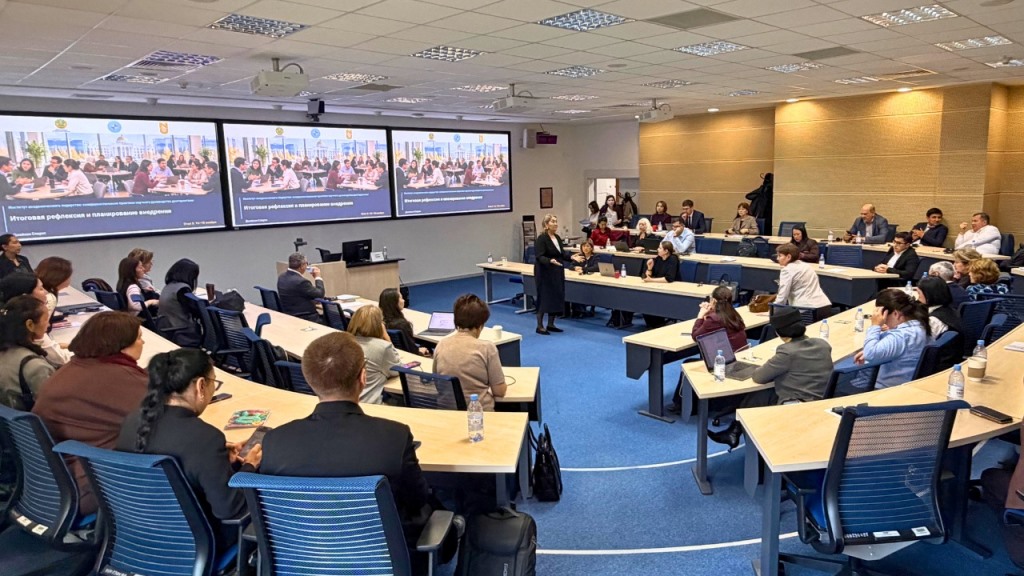
Three stages: learning, assessment and action
The first stage introduced participants to contemporary approaches to doctoral education, including the responsibilities of research supervisors and methods for supporting PhD candidates throughout their research.
During the second stage, participants returned to their universities to examine existing supervision arrangements. This allowed them to identify institutional practices requiring improvement.
In the final stage, representatives presented their findings, shared experiences and developed action plans for strengthening doctoral supervision at their institutions.
This approach connected professional development with the practical challenges universities face in organizing doctoral education.
Universities share experience and build connections
Another important outcome was the opportunity for universities to exchange knowledge and compare approaches to doctoral training.
Yerbol Sarmurzin, vice rector for strategic development at E. A. Buketov Karaganda National Research University, highlighted the value of cooperation between institutions.
«The program allowed us to learn not only from NU’s experience but also from the practices of other leading universities in Kazakhstan. Representatives of Narxoz University and Narikbayev University were also invited as speakers. This gave us a broader understanding of how doctoral education is organized across different institutions,» Sarmurzin said.
The participation of university leaders, academic staff and government representatives created a platform for discussing common challenges in postgraduate education.
It also provided opportunities to establish professional connections that could support future cooperation between Kazakhstan's universities.
What this means for doctoral education in Kazakhstan
The initiative reflects a broader shift toward improving the quality of postgraduate education through stronger academic supervision and institutional responsibility.
For doctoral students, better supervision practices could mean clearer research expectations, more consistent academic guidance and stronger support throughout their studies.
For universities, the action plans developed during the program provide a starting point for reviewing supervisory responsibilities, improving internal procedures and strengthening the research environment.
However, the long-term impact will depend on how participating institutions implement their proposed changes.
Next stage scheduled for spring 2027
Nazarbayev University plans to continue the initiative, with the next stage scheduled for spring 2027.
The completed program represents an initial step toward building a more consistent culture of doctoral supervision across Kazakhstan's higher education system.
Its broader significance lies in extending professional development beyond a single university and encouraging institutions to improve research training through shared expertise and practical reforms.
The initiative also complements Nazarbayev University's wider efforts to expand research capacity. Previously, we reported on the university's expansion of doctoral studies and its decision to offer 200 PhD scholarships, with particular attention to engineering, science and medicine.