
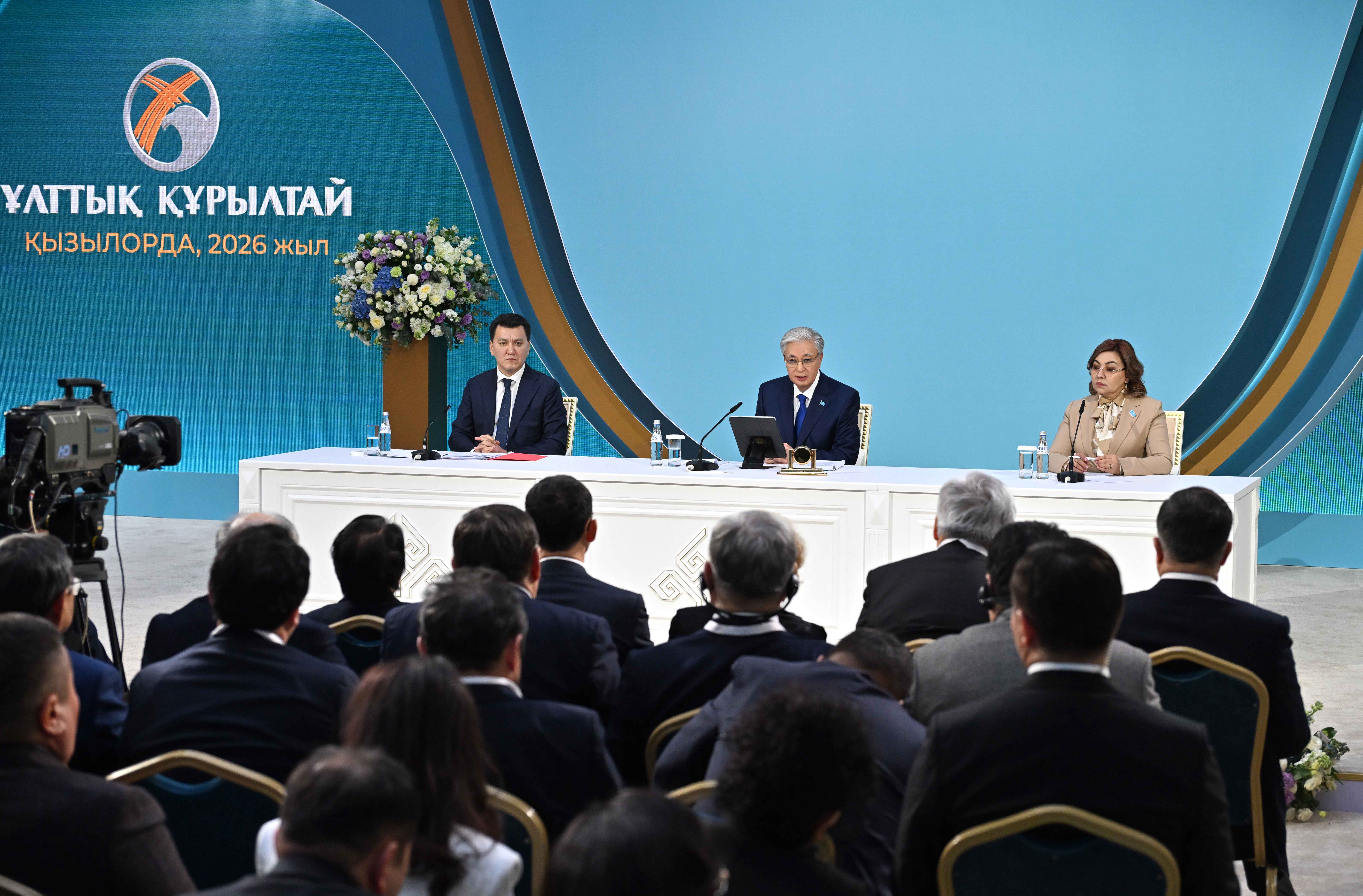
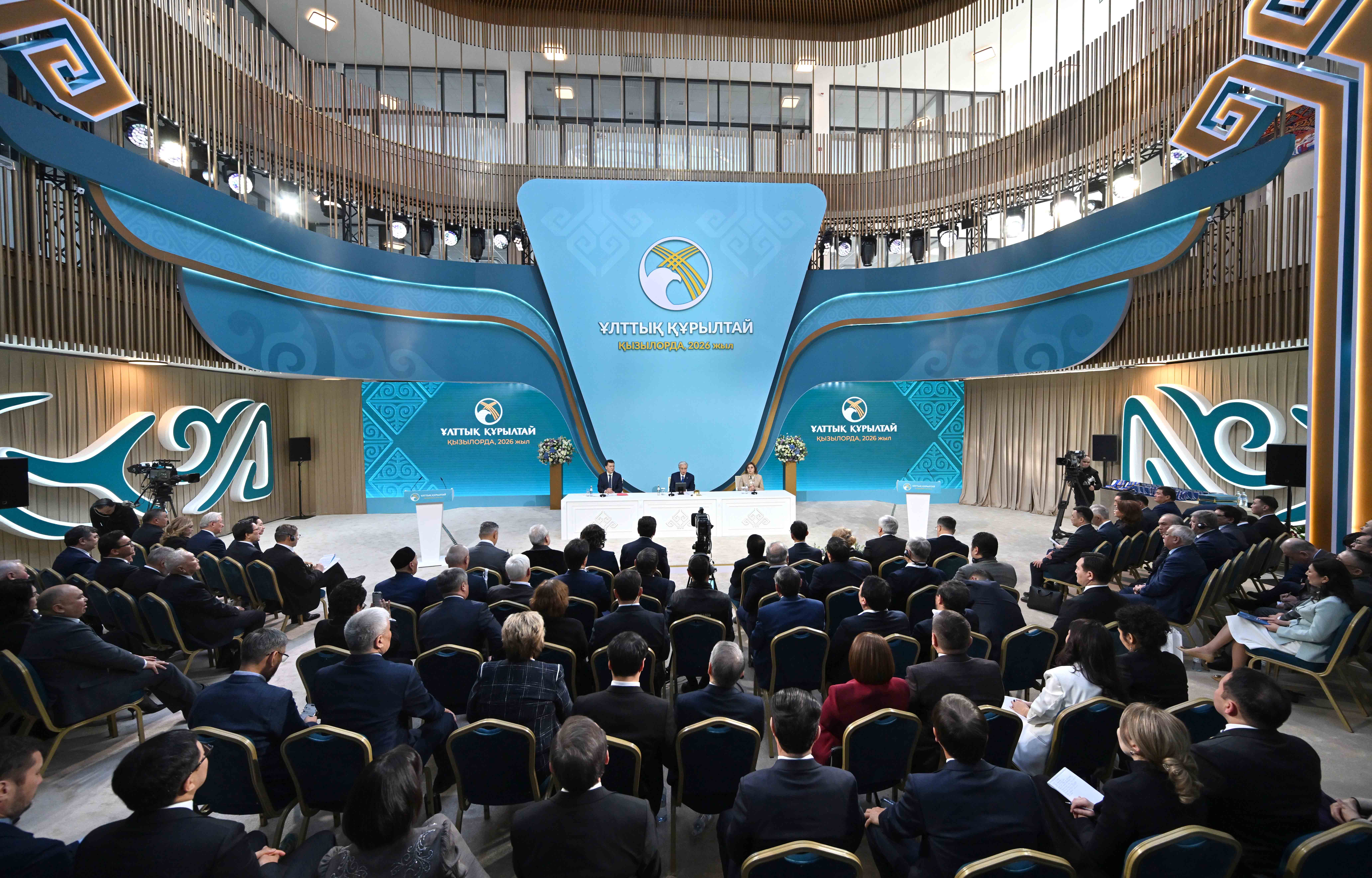
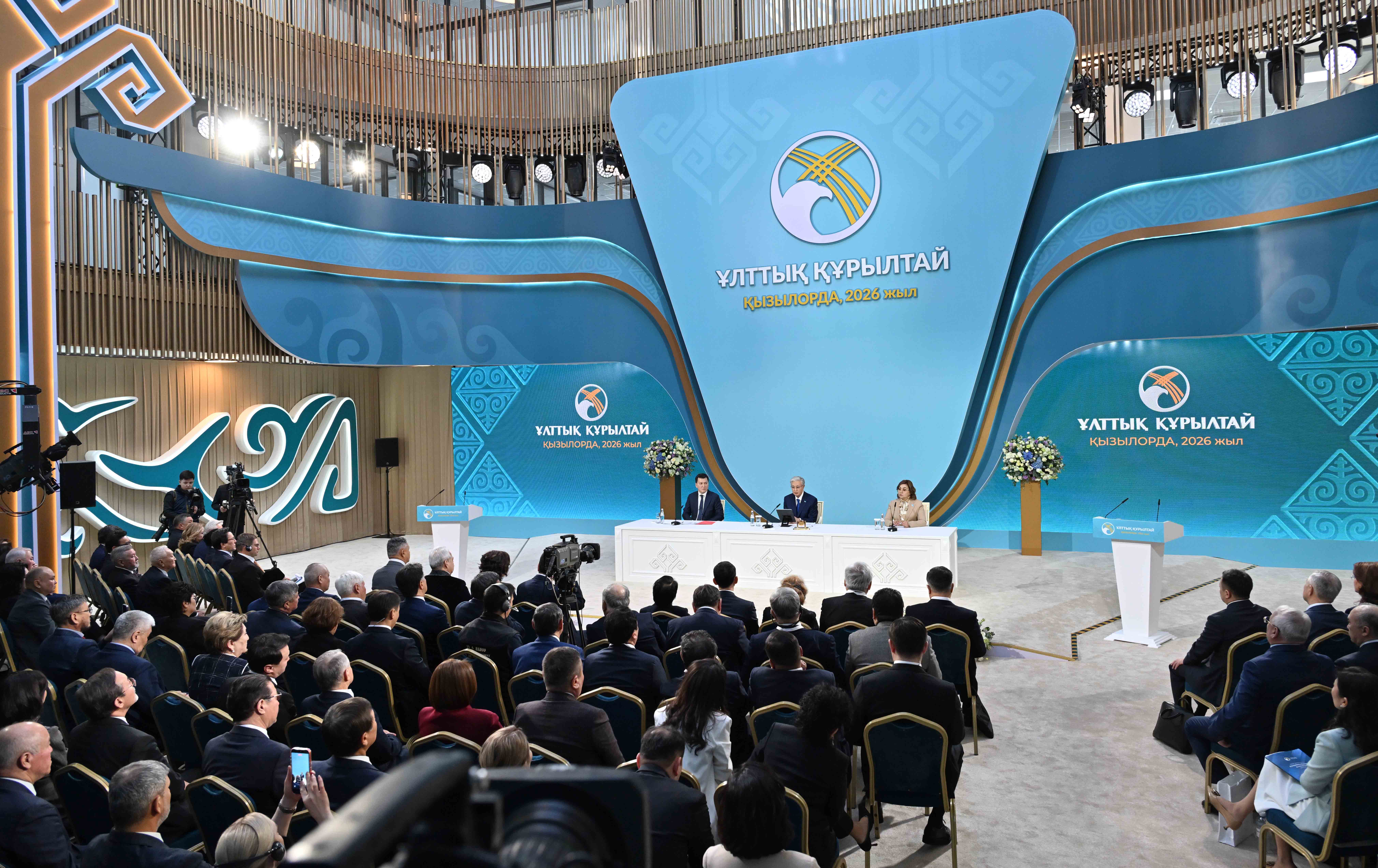
Tokayev began with the location itself. Kyzylorda was not chosen by chance. It is not just a venue for the fifth National Kurultai, but a region deeply embedded in Kazakhstan’s statehood, cultural memory and labour traditions.
Recalling the phrase “Syr - Alash’tin anasy”, the President spoke about the ancient settlements along the Syr Darya and emphasised Kyzylorda’s historic role as the capital of Kazakhstan a century ago. This introduction was not about rhetoric. It set a clear framework: decisions taken on sacred land must be substantive, not ceremonial.
He highlighted the region’s spiritual heritage - “Syr eli - zhir eli”, the land of storytellers and poets, the traditions of zhyrau and kui, and the names of Zhienbai, Nurtugan and Nartai. Equally important was the labour legacy: nearly one hundred residents of the region were awarded the title of Hero of Labour during the Soviet period, while the name of rice grower Ibray Zhakhaev became a symbol of work ethic and dedication.
“The situation in the region is good”: what the numbers show
Tokayev then moved to concrete indicators. This was part of a broader political message: the authorities must speak the language of results.
According to the President, Kyzylorda Region:
- increased gross regional product by 6.5% last year
- attracted around 2 trillion tenge in investment over three years
- implemented 27 investment projects in 2025
- launched a new thermal power plant built entirely with private investment, strengthening regional energy security
- ensured access to quality drinking water
- expanded gas access to 80% of residents, with further gasification underway
- upgraded aviation and rail infrastructure, including a new terminal at Korkyt Ata Airport and reconstruction of the historic railway station, with ten more stations undergoing renovation

Social infrastructure has also expanded rapidly. Over three years, dozens of education, culture, sports and healthcare facilities were built. Construction has begun on a 300-bed multidisciplinary hospital in Kyzylorda, with plans for a 500-visit polyclinic and a 200-bed perinatal centre.
Tokayev personally praised the work of regional akim Nurlybek Nalibayev, a rare instance of clearly attributing regional progress to specific leadership.
The Aral Sea, water and diplomacy: “not everything is in our hands”
One of the strongest themes of the speech was water. The President stated clearly that saving the Aral Sea remains a global challenge, not just a national one.
Kazakhstan has managed to preserve the North Aral Sea, which has been gradually recovering. The next step is the project to raise the Kokaral Dam, scheduled to begin by the end of this year, allowing a significant increase in water volume in the Small Aral.
At the same time, Tokayev acknowledged a hard reality: “not everything is in our hands”. Most major rivers originate in neighbouring countries, and the flow of the Syr Darya depends on upstream water policies. This makes water diplomacy as important as engineering.
Kazakhstan has agreements on joint water use with all Central Asian states, but resolving the future of the Aral, the Caspian Sea, Lake Balkhash and the Irtysh River requires deeper consensus and binding arrangements with neighbours.
On the international level, Tokayev reiterated his proposal to establish an International Water Organisation within the framework of UN reform. In April, Astana will host an International Environmental Summit, where the Aral Sea issue will be discussed with the heads of states of the International Fund for Saving the Aral Sea.

National results: growth, assets and records
Moving to the national level, Tokayev presented a set of figures designed to underline one message: economic growth creates room for reform.
Key indicators included:
- economic growth of 6.5%
- GDP exceeding 300 billion dollars, with GDP per capita reaching 15,000 dollars for the first time
- National Fund foreign currency assets up by 5 billion dollars
- gold and foreign exchange reserves exceeding 65 billion dollars
- small and medium-sized businesses accounting for nearly 40% of the economy
- population of around 20.5 million
- life expectancy reaching 75.4 years
But the main conclusion was social, not statistical. Tokayev stressed that society itself has changed, national self-awareness has grown, and reforms have become sustainable. He highlighted the role of the National Kurultai, noting that 26 laws have been adopted over four years based on initiatives proposed by its members.
Culture as a strategic priority
Culture and the humanities were presented not as secondary policy areas, but as strategic instruments shaping public consciousness.
Tokayev announced:
- a Kazakh Drama Theatre in Almaty Region
- new theatre buildings in Abai and Aktobe regions
- construction of an Opera and Ballet Theatre in Shymkent
- completion of major renovation works at the Mukhtar Auezov Kazakh National Drama Theatre by its 100th anniversary
- reconstruction of the Natalia Sats State Academic Russian Theatre for Children and Youth
- modernisation of more than 100 cultural facilities nationwide within two years
Special attention was given to museum development. The President cited the new Kyzylorda Regional History Museum as a model for other regions. Plans were also confirmed for a new drama theatre and a modern public library in the city, with construction to begin this year.
UNESCO, heritage and digital memory
A key shift in the speech was the link between heritage and technology. Tokayev argued that in the age of digitalisation and artificial intelligence, only nations that digitise their history and culture will retain subjectivity in the global system.
Among the highlights:
- the manuscript “Khandar shezhiresi” was added to UNESCO’s Memory of the World Register for the first time in 14 years
- this summer, UNESCO’s World Heritage Committee will consider adding Mangystau’s underground mosques to the World Heritage List
- Kazakhstan ranks among the world’s top 25 countries for the number of intangible cultural heritage elements recognised by UNESCO
- the President supported the creation of a national repository of memory and knowledge titled “Ulttyk cifrlyk mura”
Additional initiatives included:
- preparation of Karatau, Sauyskandyk and Arpaozen petroglyphs for UNESCO World Heritage nomination
- inclusion of Abai’s Words of Edification in UNESCO’s Memory of the World Register
- an international symposium on the history of the Golden Horde in May
- publication of a seven-volume academic history of Kazakhstan by year-end, marking 35 years of independence
“Taza Kazakhstan” and everyday patriotism
Tokayev devoted considerable attention to everyday civic culture. He spoke about the proper use of national symbols, stressing respect rather than formalism. Patriotism, he said, must be expressed through action, not slogans.
He described “Taza Kazakhstan” as an integral part of national ideology, emphasising cleanliness, discipline and responsibility. The principle of “Law and Order”, he underlined, applies equally to all.

Morality, security and a case that shocked society
One of the most sensitive segments concerned values and public safety. Tokayev proposed strengthening in law the institution of marriage as a voluntary union between a man and a woman registered by the state. At the same time, he clearly rejected criminal prosecution or moral discrimination based on personal beliefs. His formula was explicit: everyone has the right to choose, but no one has the right to impose their choice on others.
He also addressed the widely publicised murder of a young woman named Nurai in Shymkent. Over 130 appeals were received by the Kurultai regarding the case. Tokayev instructed the Interior Minister to assess the actions of the local police department and the Prosecutor General to take the case under special control. He described bride kidnapping as a barbaric crime that undermines national dignity.
Digitalisation and artificial intelligence: results, not PR
Digitalisation and artificial intelligence formed the managerial core of the speech. Tokayev made it clear that the Year of Digitalisation and Artificial Intelligence is not a trend-driven slogan, but a concrete task for the entire state apparatus.
Results must be measurable: faster decision-making, higher productivity and better public services. Technology alone, he warned, cannot fix mismanaged systems. Administrative order, organisational culture and clear processes must come first.
He called for a centralised approach to data centre development, including designated zones with stable power supply, cooling and security. A proposed “data centre valley” in Pavlodar Region, based on Ekibastuz energy capacity, was described as promising but requiring close scrutiny.
Energy: coal as a national project
Tokayev spoke particularly firmly on energy. Current electricity generation of 123.1 billion kWh is insufficient for future needs. New capacity must be introduced without waiting for nuclear power plants.
Coal was described as a strategic asset:
- reserves of about 33 billion tonnes
- enough for 300 years at current consumption
- annual production exceeding 110 million tonnes
The President called for coal generation to be granted National Project status, using modern technologies to minimise environmental harm. The Government was instructed to resolve this by 20 March. Delays in new thermal power plants in Kokshetau, Semey and Oskemen were criticised, with responsibility placed on the Government and Samruk-Kazyna.
Gas and hydropower: “where are the scientists?”
Gas production also came under criticism. Imports of commercial gas rose by 18% last year to 4.5 billion cubic metres, while new fields are being developed too slowly. QazaqGaz was instructed to begin developing promising sites using its own funds and private investment.
Hydropower potential, Tokayev said bluntly, is underutilised. Soviet-era data are outdated, and he publicly questioned why the Academy of Sciences has not yet produced an accurate assessment. A comprehensive map of Kazakhstan’s water and energy resources must be prepared.

Transport, logistics and aviation: the “absurdity” of fuel prices
Major infrastructure projects were outlined:
- completion of the Kyzylorda-Zhezkazgan road, with full opening expected this year
- construction of a four-lane road on the Kyzylorda-Aktobe section of the Western Europe-Western China corridor
- launch of the Beineu-Sekseul road, shortening the Middle Corridor by 900 km and providing direct access to Aktau and Kuryk ports
- new roads linking Karaganda and Zhezkazgan
- development of railway lines and upgrades across key routes
The most critical remarks concerned aviation. Tokayev called it “absurd” that Kazakhstan has not become a Eurasian air cargo hub. He criticised the decision to assign the creation of a cargo airline to Kazakhstan Temir Zholy and suggested transferring the task to private companies if the Government cannot deliver.
High aviation fuel prices were identified as the main obstacle. For a country producing 100 million tonnes of crude oil, this situation was described as unacceptable.
Taxes, education and healthcare: hard truths
Tokayev demanded a smooth transition to new tax rules, stressing that the Tax Code is not sacred scripture and must be adjusted if necessary.
In education, he called for urgent reform of state financing mechanisms for private schools, after audits revealed misuse linked to flawed per capita funding models.
Healthcare drew the strongest language. Audits of the Social Health Insurance Fund uncovered large-scale fraud, falsified documentation and embezzlement. Tokayev reminded that 7.8 trillion tenge was allocated to healthcare in 2024-2025. Law enforcement agencies were instructed to identify all beneficiaries of corruption schemes, and the decision to transfer the fund to the Ministry of Finance was supported.
Fraud, security and data protection
Fraudsters, Tokayev warned, have become a real threat to national security. Efforts to combat financial, social and migration-related fraud must be intensified. As digitalisation becomes universal, protecting personal data and improving digital literacy are essential state responsibilities.
Foreign policy and the Abraham Accords
In foreign policy, Tokayev described a world marked by erosion of international law and growing militarisation. In this context, Kazakhstan’s diplomacy must remain balanced and pragmatic.
The most notable announcement was Kazakhstan’s decision to join the Abraham Accords. Tokayev framed this as a diplomatic innovation, highlighting Abraham (Ibrahim) as a prophet revered in Judaism, Christianity and Islam. He presented the move as consistent with Kazakhstan’s commitment to interfaith peace and as a step that enhances the country’s international standing.
A major political reset: Parliament, People’s Council and vice president
The culmination of the speech was political reform. Tokayev outlined proposals developed after months of public discussion.
Key elements include:
- transition to a unicameral Parliament named Kurultai
- 145 deputies, up to three vice-speakers, no more than eight committees
- stronger parliamentary role in appointing key state bodies
- proportional elections for Parliament, majoritarian elections retained at regional level
- removal of presidential and Assembly quotas, while maintaining quotas for women, youth and persons with disabilities
- retention of a 5% electoral threshold
- five-year parliamentary terms and a three-stage legislative process
Tokayev also proposed creating the People’s Council of Kazakhstan as a new supreme consultative body, with 126 members representing ethnic groups, civil society and regions, appointed by the President and granted legislative initiative rights.
Another major proposal was the introduction of a vice president position, appointed by the President with parliamentary consent. The role would stabilise governance and clarify the hierarchy of power, without weakening the presidential system.
Towards a new Constitution
Tokayev acknowledged that the scale of proposed amendments is comparable to adopting a new Constitution. A Constitutional Commission of over 100 members will be established, led by the Chair of the Constitutional Court. After its work, a nationwide referendum will be scheduled.
He also proposed that in the event of early termination of presidential powers, snap elections should be held within two months to ensure democratic legitimacy.
The core message
Tokayev concluded by reaffirming that citizens’ welfare and national interests are his highest priorities. The National Kurultai, he said, has already secured its place in Kazakhstan’s modern history. The reforms ahead are ambitious, complex and consequential - and their final outcome will be decided by the people themselves.