

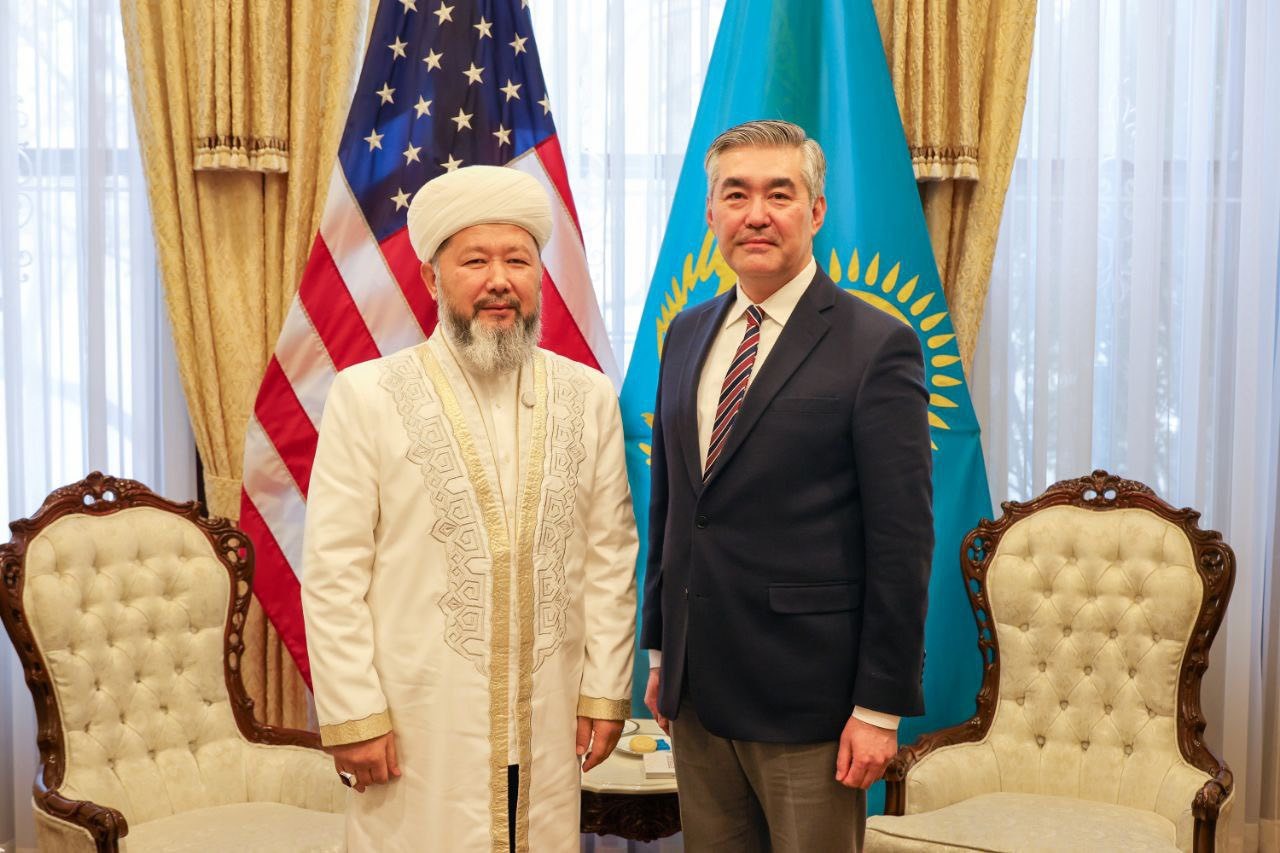
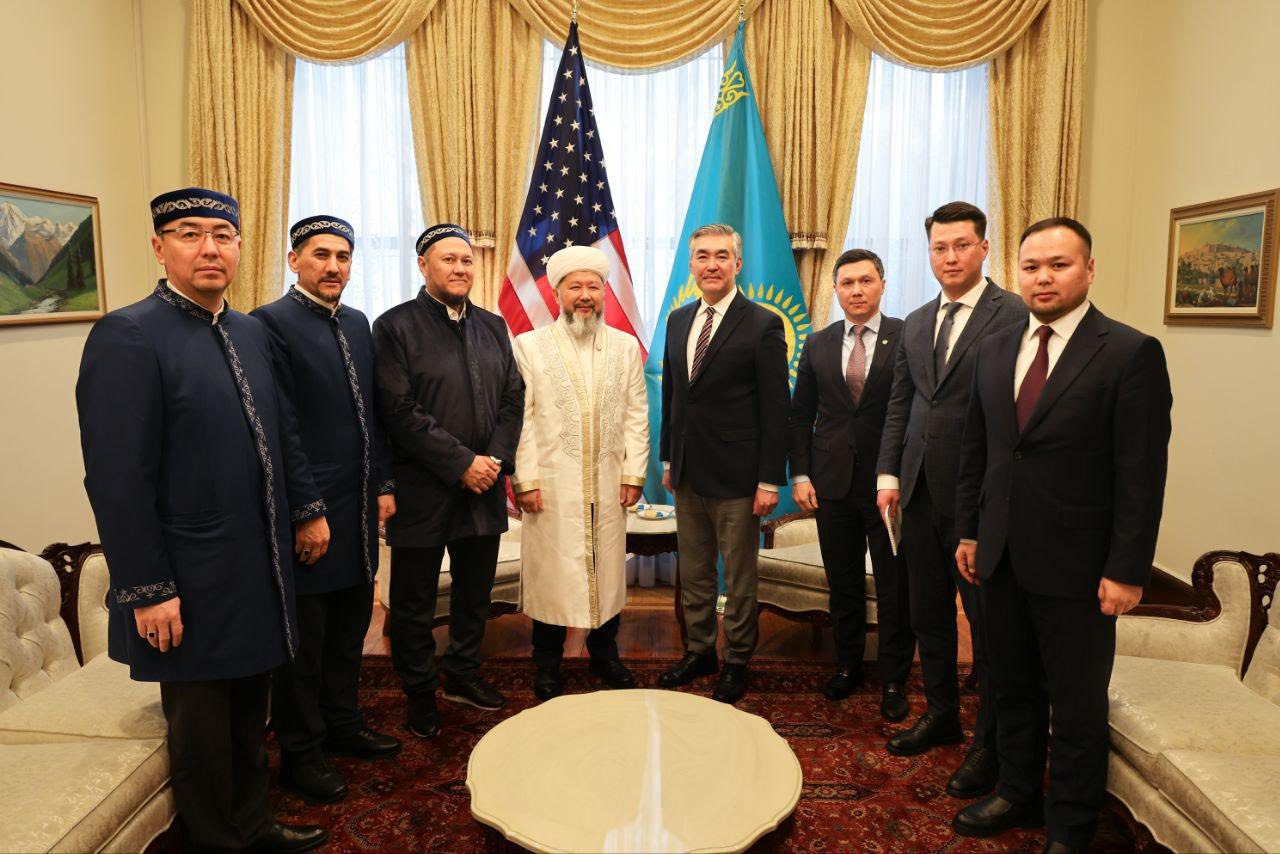
Chairman of the Spiritual Administration of Muslims of Kazakhstan and Grand Mufti Nauryzbay Kazhy Taganuly began his official visit to the United States with a meeting with Magzhan Ilyassov, Ambassador of the Republic of Kazakhstan to the U.S., DKNews.kz reports.
The meeting set the tone for the visit and focused on strengthening spiritual ties with the Kazakh diaspora abroad, improving religious literacy, and expanding cooperation in the field of spiritual and cultural diplomacy. The Grand Mufti expressed his gratitude to the Embassy for its support in organizing the visit.
Spiritual diplomacy in a globalized world
Speaking during the meeting, the Grand Mufti emphasized that in today’s era of globalization, relations between countries are no longer limited to political and economic cooperation alone.
“In modern global conditions, relations between states are deepening not only through politics and economics, but also through spiritual and cultural diplomacy. In this direction, Kazakhstan regularly hosts the Congress of Leaders of World and Traditional Religions at the global level, calling all humanity toward religious harmony and shared goals,” he noted.
Kazakhstan’s long-standing initiative to promote interfaith dialogue, he said, reflects the country’s commitment to peace, mutual respect, and coexistence among different cultures and beliefs.
Kazakhstan’s model of interfaith harmony
During the discussion, special attention was paid to the words of President Kassym-Jomart Tokayev, delivered at the opening of the VIII Congress of Leaders of World and Traditional Religions.
“On Kazakh soil, nearly all major world religions and confessions have coexisted peacefully throughout history. In modern Kazakhstan, we are making every effort to preserve and further develop these traditions. Our country has accumulated significant experience in strengthening interethnic and interfaith harmony. The foundation of Kazakhstan’s model of ethnic and religious tolerance is the universal principle of ‘unity in diversity’,” the President stated.
According to the Grand Mufti, this model remains highly relevant in today’s fragmented world and is of growing interest to the international community.
Preserving spiritual continuity abroad
The meeting also highlighted that the Spiritual Administration of Muslims of Kazakhstan will continue its work to promote the Hanafi school of Islamic jurisprudence and the Maturidi theological tradition, which the Kazakh people have followed for centuries.
The Grand Mufti stressed that this work plays a crucial role in preserving the spiritual integrity of Kazakh citizens living abroad, especially among younger generations navigating multicultural environments.
A shared commitment
Concluding the meeting, both sides expressed confidence that continued close coordination between the Embassy and the Spiritual Administration of Muslims of Kazakhstan would positively contribute to preserving the national and spiritual identity of Kazakhstanis living outside the country.
The start of the Grand Mufti’s U.S. visit underscores Kazakhstan’s broader approach to engagement with its diaspora – one that views spiritual values and cultural continuity as an essential part of long-term national cohesion and international dialogue.