
The Middle East is once again standing at a crossroads.
Following a targeted U.S. operation against Iran initiated under President Donald Trump, geopolitical fault lines that have long simmered beneath the surface are shifting into sharper relief. For Swedish pracademic and international business strategist Mr. Alex Matrsson, this is not an isolated military episode. It is a calculated moment in a broader strategic recalibration — one that may redefine regional balance and redirect global trade flows far beyond the Gulf.
A Strategic Move, Not a Regime War
According to Mr. Matrsson, the U.S. operation reflects years of accumulated tension regarding Iran’s role in Iraq, Syria, Lebanon, and across the Gulf. Successive American administrations, alongside several Middle Eastern governments, have argued that Tehran’s regional posture — combined with its nuclear trajectory — has fueled instability rather than equilibrium.
But this, Mr. Matrsson emphasizes, is not about regime eradication or territorial fragmentation.
“This is about degrading specific capabilities,” he argues — the instruments that enable power projection beyond Iran’s borders. The strike, in his assessment, is unlikely to be the final step. Two or three calibrated actions could follow, each designed to incrementally weaken structural enablers of proxy expansion while avoiding systemic collapse of the Iranian state.
In other words: deterrence, not destruction.
Quiet Convergence in the Region
One of the more intriguing aspects of this moment, Mr. Matrsson suggests, is the quiet alignment emerging across parts of the Middle East regarding containment of proxy-driven escalation.
Syria — exhausted from years of conflict in which Iranian involvement was significant — is now focused on reconstruction and economic normalization. Lebanon, struggling under institutional and financial strain, seeks stabilization rather than renewed confrontation. Iraq prioritizes domestic equilibrium amid complex internal pressures.
Turkey, Jordan, and Egypt may act as diplomatic intermediaries, but direct military engagement remains improbable.
Meanwhile, the Gulf Cooperation Council states — Saudi Arabia, the UAE, Qatar, Kuwait, Bahrain, and Oman — possess advanced defensive capabilities and remain strategically aligned with the United States. Yet their overriding priority is economic transformation. From Saudi Arabia’s Vision 2030 to the UAE’s diversification strategy, stability is not optional; it is foundational.
Direct confrontation would jeopardize long-term national transformation agendas. Therefore, reliance on deterrence frameworks and coordinated security partnerships appears to be the preferred course.
A Shockwave for Global Trade
Where this crisis becomes truly global is in energy and trade.
The Gulf economies are central to global energy supply. Even limited escalation risks capital outflows, insurance spikes, maritime insecurity, and supply chain disruptions. This impact would not remain confined to the Arabian Peninsula. It would ripple across Asia’s manufacturing hubs, Europe’s industrial networks, and emerging markets dependent on energy imports and trade continuity.
For Mr. Matrsson, this is the watershed dimension of the conflict.
If unrest becomes prolonged, corporations will accelerate the diversification of trade routes and logistics corridors. And that is where a less obvious region steps into the spotlight.
Central Asia: From Periphery to Pivot
As global supply chains adjust, Central Asia — once a historical Silk Road bridge — is regaining strategic relevance.
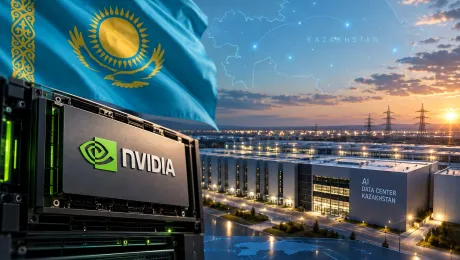
At the center stands Kazakhstan, the region’s largest economy.
Under President Kassym-Jomart Tokayev, Kazakhstan has pursued multilateral diplomacy with notable intensity. Engagements with Gulf leaders — including discussions with the Emir of Qatar, Sheikh Tamim bin Hamad Al Thani — signal a pragmatic and forward-looking approach.
Rather than reacting to crisis, Kazakhstan is positioning itself within it.
By investing in infrastructure, strengthening trans-Caspian trade routes, expanding partnerships across Asia, Europe, and the GCC, and reinforcing its diplomatic network, the country is anchoring Central Asia’s role in an increasingly fragile global economy.
Mr. Matrsson views this not as opportunism but as resilience strategy.
Diversified trade corridors reduce dependency risks. Strategic neutrality enhances trust. Multilateral engagement builds optionality.
In a world where chokepoints — from the Strait of Hormuz to the Red Sea — can disrupt billions in commerce overnight, land-based corridors through Central Asia acquire renewed importance.
The Strategic End State
Whether the current U.S.–Iran escalation results in durable realignment will depend on disciplined execution and careful management of escalation.
The objective, as Mr. Matrsson frames it, is to narrow Iran’s operational latitude while encouraging a more sustainable regional equilibrium. Yet military calibration must be matched with diplomatic clarity. Without a defined strategic end state, incremental strikes risk drift.
Simultaneously, countries beyond the immediate conflict zone — particularly in Central Asia — are making moves that could quietly reshape the global economic architecture.
Beyond the Headlines
This is not only a Middle Eastern story.
It is a story about deterrence strategy, proxy architecture, energy vulnerability, supply chain resilience, and the re-emergence of Eurasian trade corridors.
It is also a reminder that geopolitical crises rarely remain regional for long.
As Mr. Alex Matrsson underscores, moments of instability often reveal which nations are merely enduring turbulence — and which are positioning themselves to shape what comes next.
If the Middle East is entering another consequential chapter, Central Asia may be writing an important part of its economic sequel.
And in an era defined by uncertainty, strategic pragmatism may prove more powerful than confrontation alone.