
For Nelli Bube, one of Kazakhstan’s most respected painters, it is a world where ancient caravan routes meet modern realities, where nomadic traditions speak to future generations, and where culture becomes a bridge between people, DKNews.kz reports.
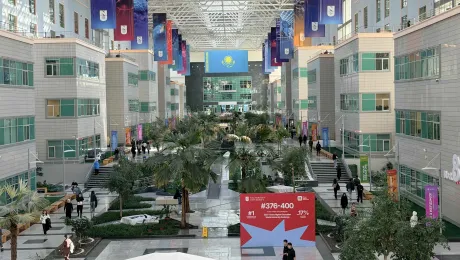
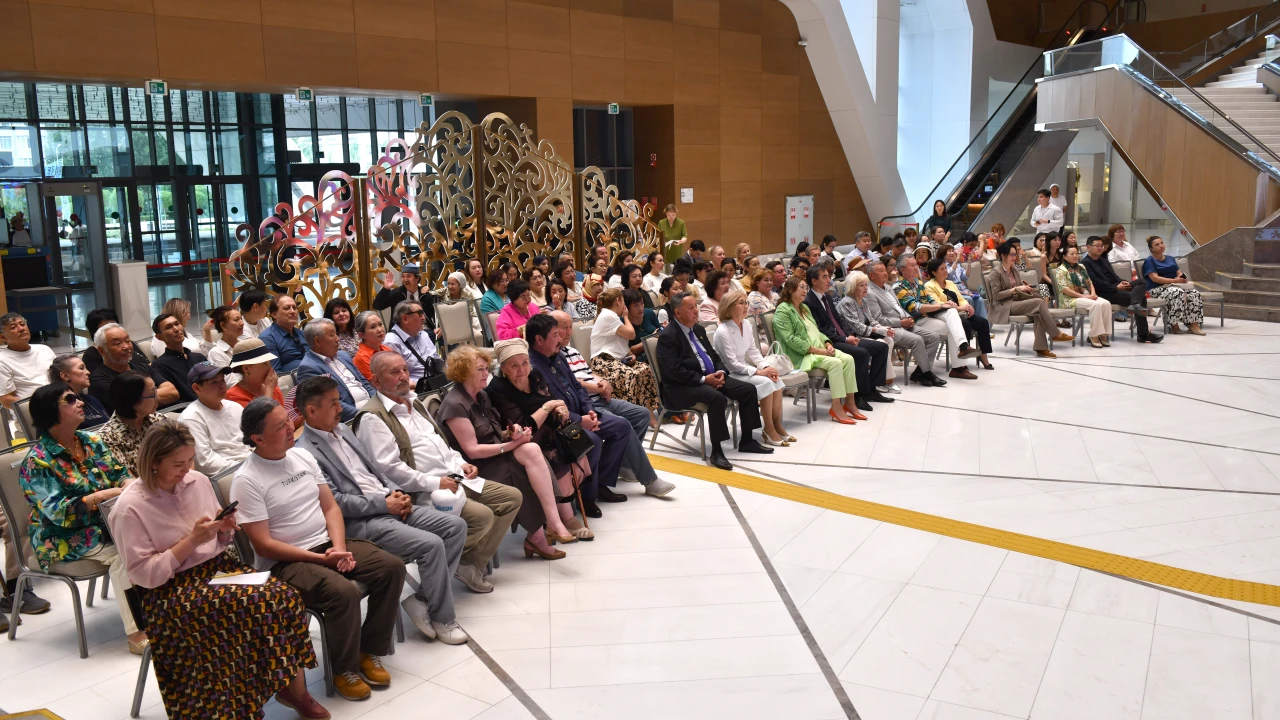
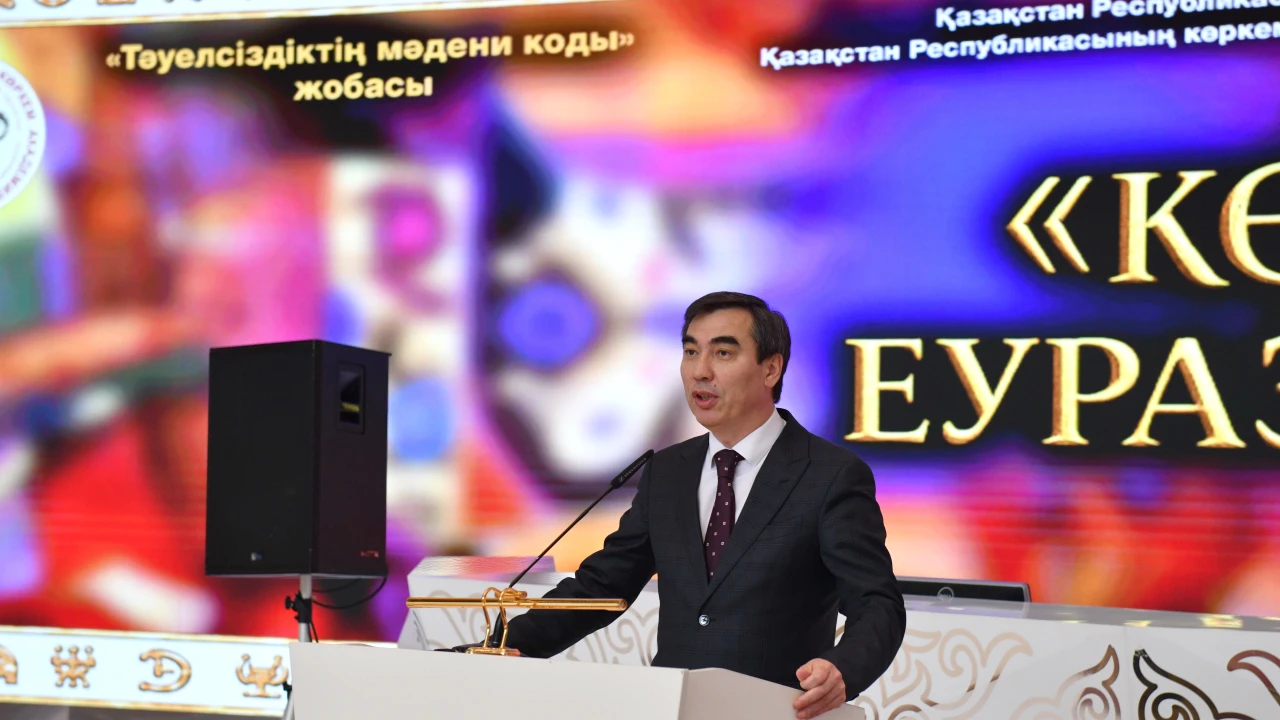
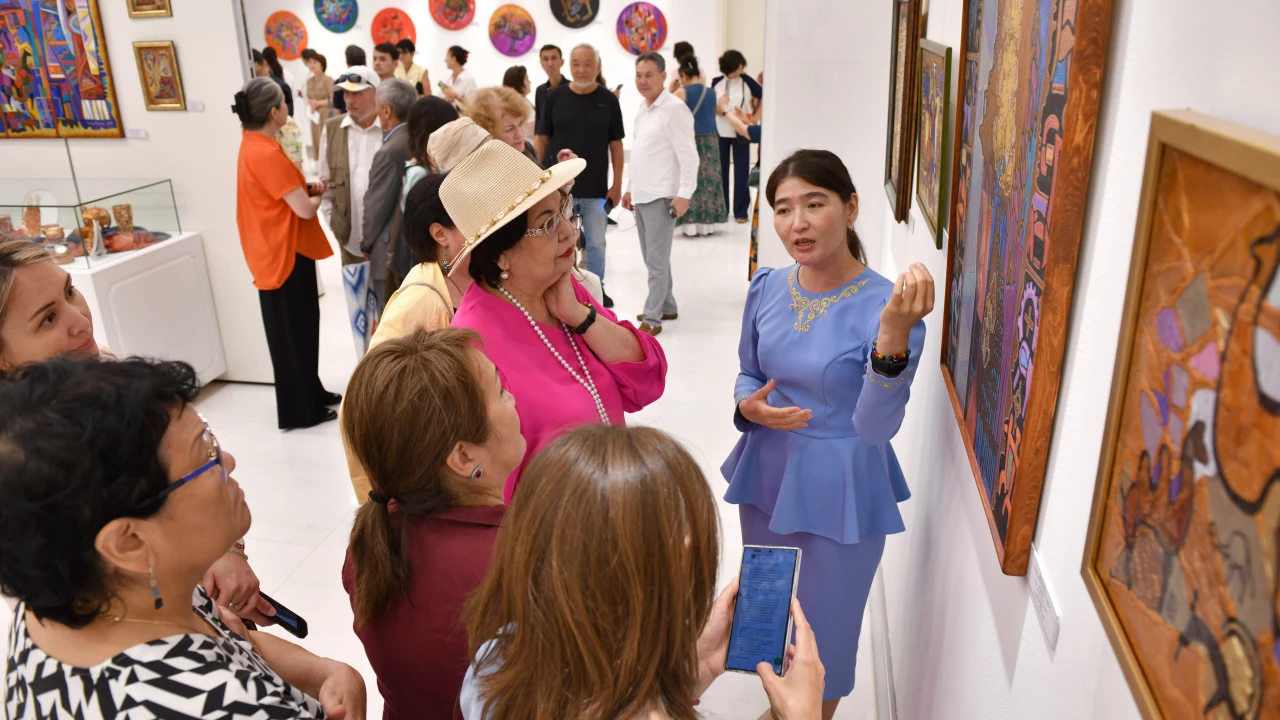
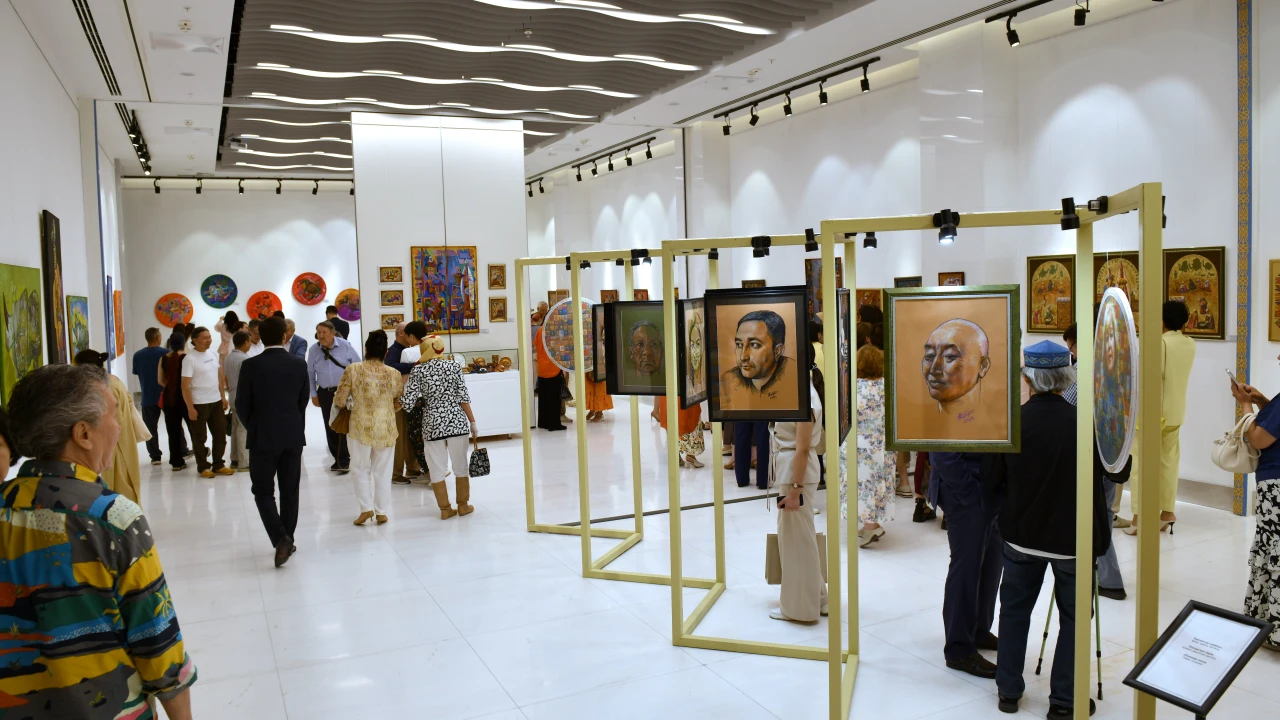
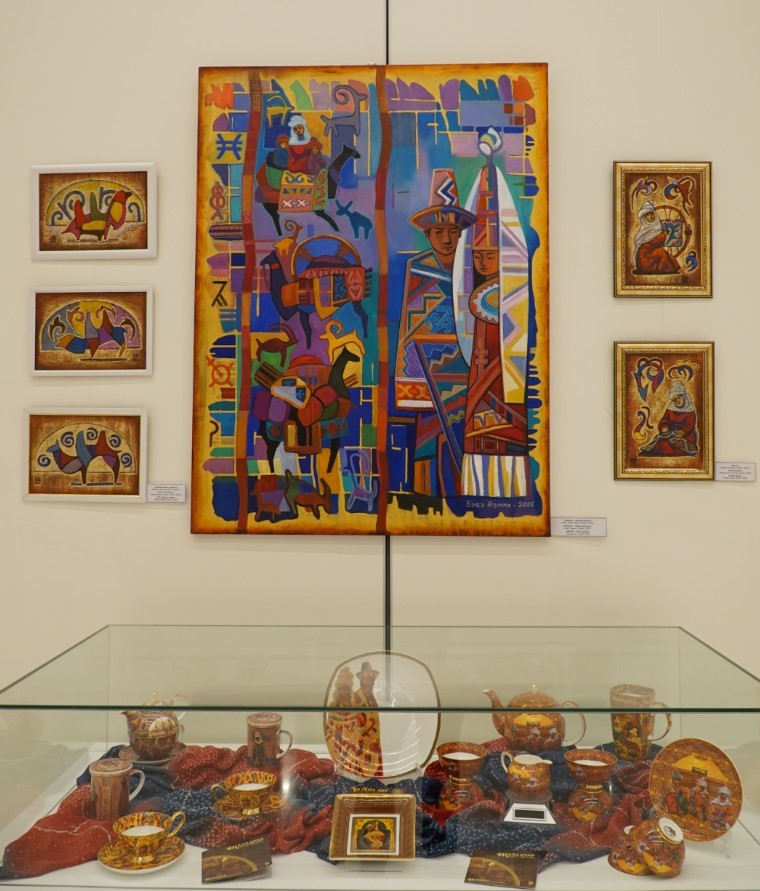
Her new solo exhibition, Many Faces of Eurasia, has opened at the Presidential Center in Astana, bringing together 56 paintings and mixed-media works created over decades of artistic exploration.
But this is more than an art exhibition.
It is an attempt to understand who we are, where we come from and what kind of future we want to build.
A Journey Across Centuries
At the heart of the exhibition is the idea of dialogue.
Dialogue between East and West.
Dialogue between past and future.
Dialogue between humanity and nature.
Bube’s canvases take visitors through the world of nomadic civilizations, the legacy of the Great Silk Road and the cultural landscapes that shaped Eurasia for centuries.
Her works are filled with symbols, historical references and visual stories that invite viewers to look beyond borders and timelines.
According to the artist, Eurasia is not just a geographical concept.
It is a living space where different cultures continue to influence and enrich one another.
The Great Silk Road Through an Artist’s Eyes
One of the exhibition’s central themes is the Great Silk Road.
For years, Bube has studied the cultural code of nomadic civilizations, transforming her research into large-scale panoramic works.
One version of her celebrated Great Silk Road panorama was showcased at the United Nations Office in Geneva in 2004, earning international recognition.
Today, that same fascination with cultural exchange remains at the core of her work.
The exhibition presents Eurasia as a mosaic of voices, traditions and landscapes — each unique, yet connected through a shared history.
More Than Art: A Message About the Planet
While history plays a major role in the exhibition, Bube is equally concerned with the future.
A significant section of the show, titled Ecology, focuses on the fragile relationship between people and the natural world.
The works explore environmental challenges, technological progress and humanity’s responsibility for preserving ecological balance.
The message is clear: progress should not come at the expense of nature.
"Through my works, I aim to communicate simple yet important ideas: we must love our land, treat nature and each other with care, and strive for unity," Bube said.
For the artist, nomadic culture offers an important lesson for the modern world.
"Nomadic culture has provided a unique example of harmonious coexistence between humanity and the surrounding world, when nature was regarded as the highest value."
An Artist Who Shaped Generations
Born in Karaganda in 1949, Nelli Bube has spent decades building one of the most recognizable artistic careers in Kazakhstan.
She is an Honored Cultural Figure of Kazakhstan, a member of the Union of Artists of Kazakhstan, a full member of the Academy of Arts of Kazakhstan and an honorary member of the Russian Academy of Arts.
Her works have been exhibited in Switzerland, France, Greece, Italy, Norway, the Czech Republic and other countries.
Yet despite international recognition, the themes that define her art remain deeply rooted in Kazakhstan — its nomadic heritage, cultural memory and spiritual traditions.
Why This Exhibition Matters
At a time when identity, culture and sustainability are becoming global conversations, Many Faces of Eurasia feels particularly relevant.
The exhibition asks visitors to think about history not as something frozen in the past, but as a living force that continues to shape the present.
And perhaps that is why Bube’s work continues to resonate.
It speaks about Kazakhstan, but it also speaks about something universal: the search for connection in an increasingly fragmented world.
The exhibition will be open to visitors at the Presidential Center in Astana until July 17, 2026.