

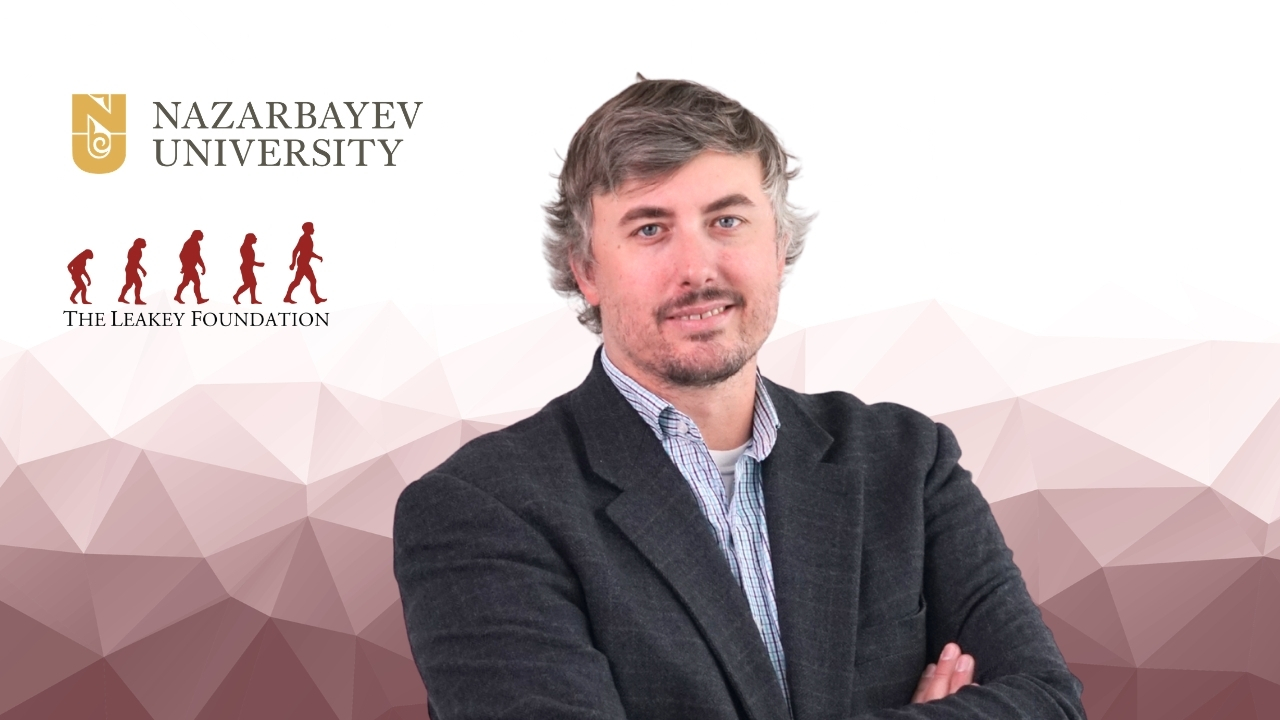
Reed Coil, Associate Professor and Chair of the Department of Sociology and Anthropology at Nazarbayev University, has received a prestigious research grant from the Leakey Foundation, one of the world's leading organizations dedicated to the study of human origins and evolution, DKNews.kz reports.
The grant will fund his research project, "Zooarchaeology, Taphonomy, and Site Formation at the Early Pleistocene Archaeological Site at Orozmani, Georgia," which focuses on one of the earliest known hominin sites in Eurasia.
This year, the Leakey Foundation selected only 32 projects from 151 applications submitted by researchers from universities around the world.
Exploring the Earliest Human Expansion Beyond Africa
The project aims to improve scientific understanding of how some of the earliest human ancestors lived after migrating out of Africa.
Researchers will investigate:
- Early human behavior
- Hunting and subsistence strategies
- Interactions with carnivores
- Formation of archaeological deposits
- Early human migration across Eurasia
The research will help place the Orozmani site within the broader history of humanity's expansion into Eurasia during the Lower Paleolithic period.
Rare Window into Human Evolution
According to Associate Professor Coil, Orozmani represents one of the most important archaeological sites for understanding early human history.
«Orozmani is one of the oldest archaeological sites in Eurasia and offers a rare opportunity to better understand the earliest stages of human expansion beyond Africa. Because evidence from this period is limited to only a handful of sites, every new discovery helps us build a clearer picture of the environments early humans inhabited, the animals they interacted with, and how they adapted as they spread across Eurasia.»
The findings are expected to contribute to global research on human evolution and prehistoric migration.
Implications for Kazakhstan
The project also has important relevance for archaeological research in Kazakhstan.
According to Coil, studying neighboring regions can help researchers identify similarly ancient archaeological sites within Kazakhstan.
«The earliest evidence of human occupation in Kazakhstan is still not well understood, and some recent findings remain the subject of scientific debate. A better understanding of the surrounding regions provides a stronger basis for identifying Early Pleistocene sites in Kazakhstan.»
The research could strengthen scientific efforts to uncover evidence of some of the country's earliest human inhabitants.
Training the Next Generation of Archaeologists
The new project builds on earlier work supported through Nazarbayev University's Faculty Development Competitive Research Grants Program (FDCRGP) between 2023 and 2025.
That funding supported field research while giving NU students practical experience in:
- Archaeological surveying
- Field excavation
- Data collection
- Artifact identification
Coil said the project also plays an important educational role.
«This capacity-building effort better prepares future generations of Kazakhstani archaeologists to identify archaeological sites of this age and recognize the stone tools and animal remains associated with Homo erectus.»
Building on a Major Discovery
The Orozmani archaeological site attracted worldwide attention last year after researchers discovered a 1.8-million-year-old Homo erectus jawbone, one of the oldest known human fossils found outside Africa.
The new Leakey Foundation grant will allow researchers to continue investigating the site and deepen scientific understanding of early human migration into Eurasia.
Why This Matters
Receiving a Leakey Foundation grant is a significant international recognition of Nazarbayev University's growing contribution to global archaeological research.
Beyond advancing knowledge of human evolution, the project is expected to strengthen archaeological expertise in Kazakhstan, train future researchers, and support the search for some of the country's earliest prehistoric sites.