

The DKNews.kz editorial team took to the racetrack.
Our journalists joined Porsche Track Experience Kazakhstan 2026 at Sokol International Circuit in the Almaty Region, testing the cars under the guidance of certified instructors.
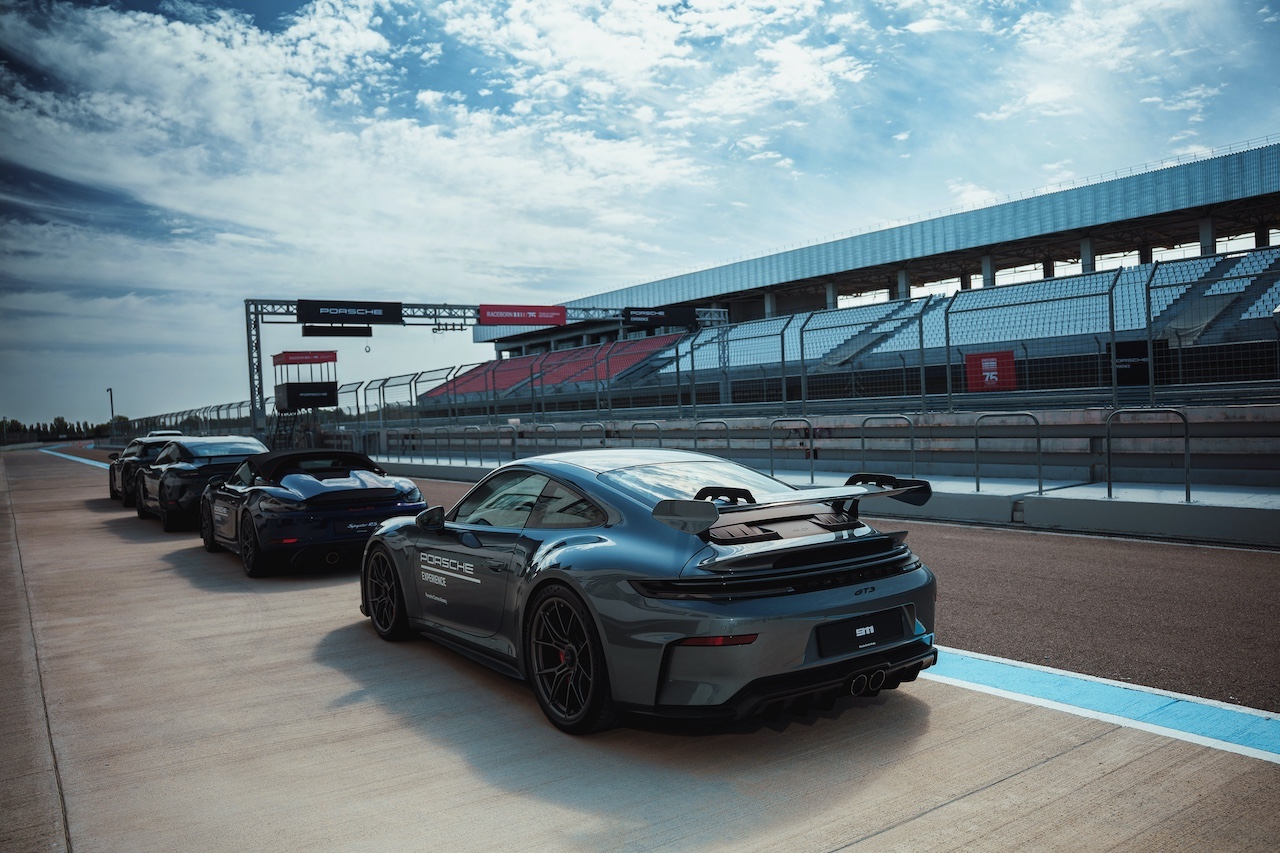 Photo by Nikita Svetlichny
Around 120 guests attended the programme. The lineup ranged from the iconic 911 GT3 and open-top 718 Spyder RS to electric vehicles producing more than 1,000 PS.
A racetrack instead of a conventional presentation
Porsche Track Experience Kazakhstan 2026 did away with the familiar format of displaying stationary cars.
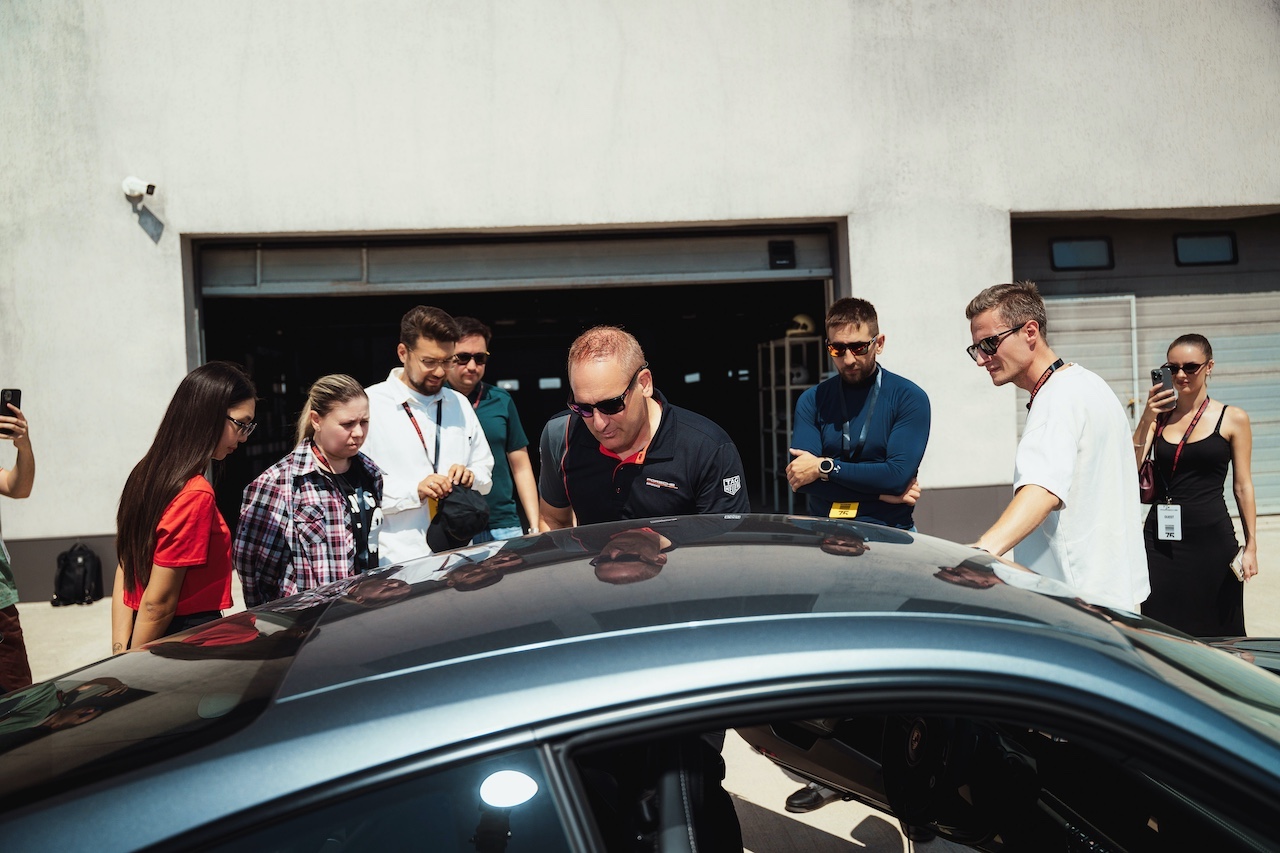 Photo by Nikita Svetlichny
The models went through Launch Control starts, timed slalom, braking and handling exercises, followed by full driving sessions on the circuit.
Four certified Porsche instructors supervised the programme. Two travelled from Germany, while the other two represented Porsche Kazakhstan.
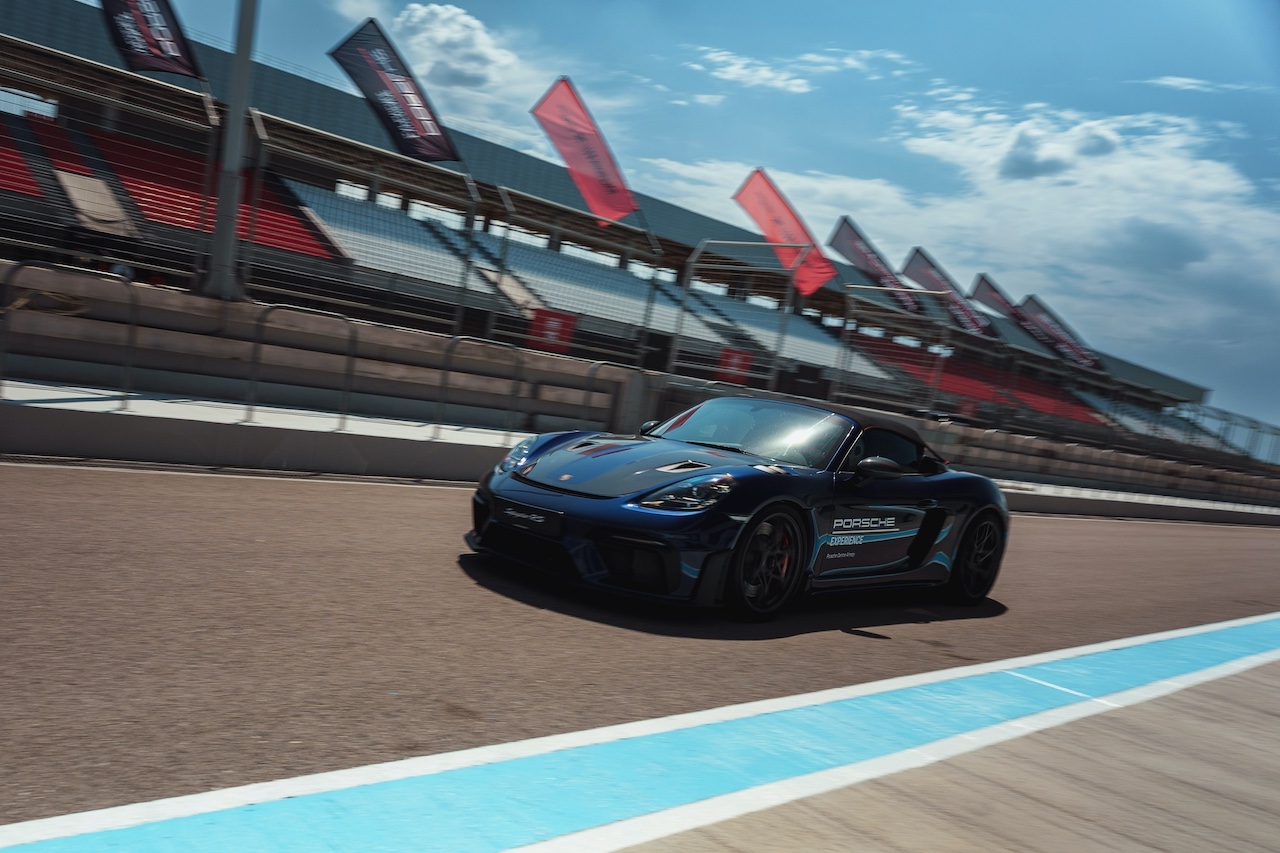 Photo by Nikita Svetlichny
“Step by step, you will gain confidence, precision and self-assurance,” Porsche says in its description of the global Track Experience programme.
That separates the event from a conventional test drive. The goal is not simply to go fast, but to learn how to accelerate correctly, choose a racing line and keep the car under control during hard braking.
Launch Control pushed the Cayenne to 152 km/h
Launch Control provided one of the programme’s most spectacular exercises.
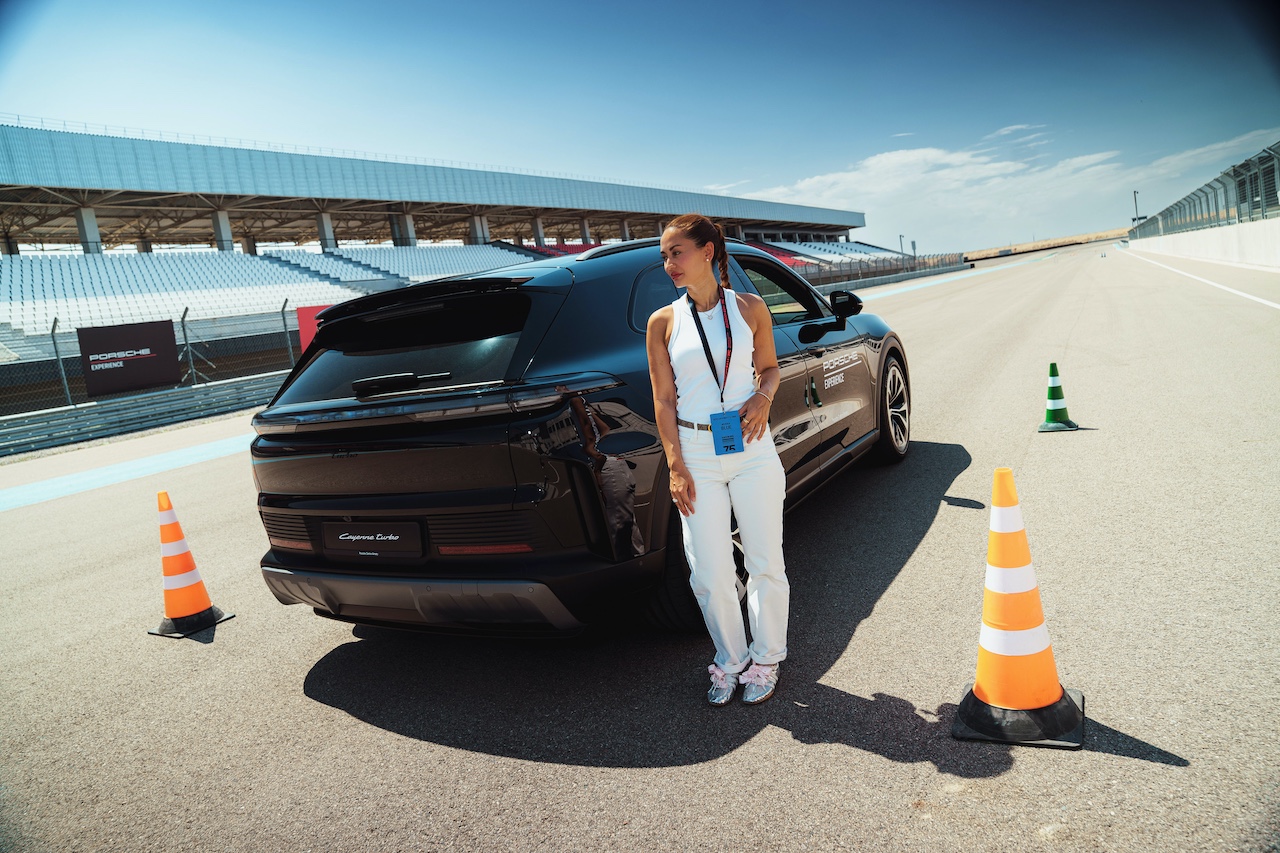 Photo by Nikita Svetlichny
Porsche chose the Cayenne Turbo Electric—the most powerful series-production model in the company’s history. Its two electric motors briefly deliver up to 1,156 PS and 1,500 Nm of torque.
The large SUV accelerates from zero to 100 km/h in 2.5 seconds. During one demonstration, it reached 152 km/h in roughly 100 metres, according to a report from the opening day.
An instructor drove the car while participants rode as passengers. This allowed Porsche to demonstrate maximum acceleration without turning the exercise into an uncontrolled race.
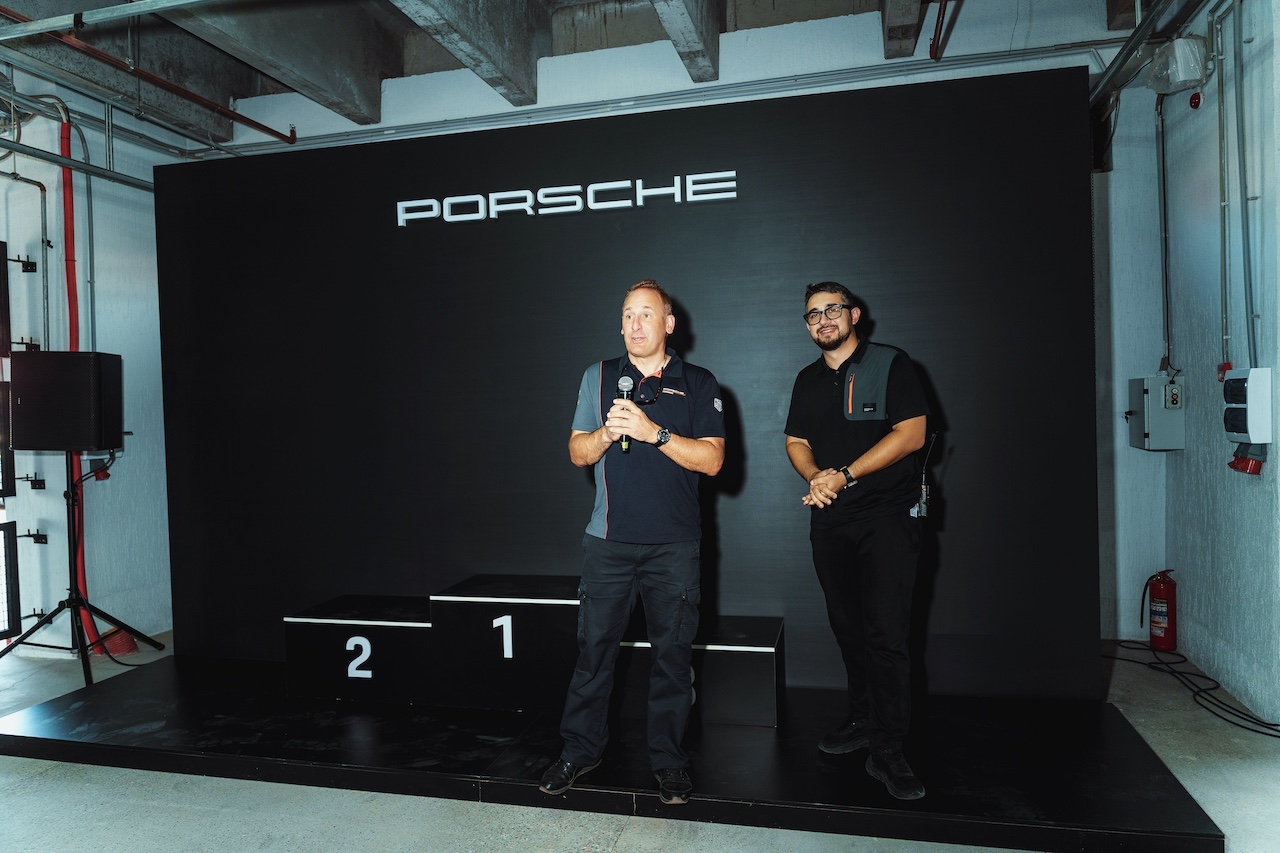 Photo by Nikita Svetlichny
Power alone was not enough in the slalom
After the straight-line acceleration runs, participants took the wheel.
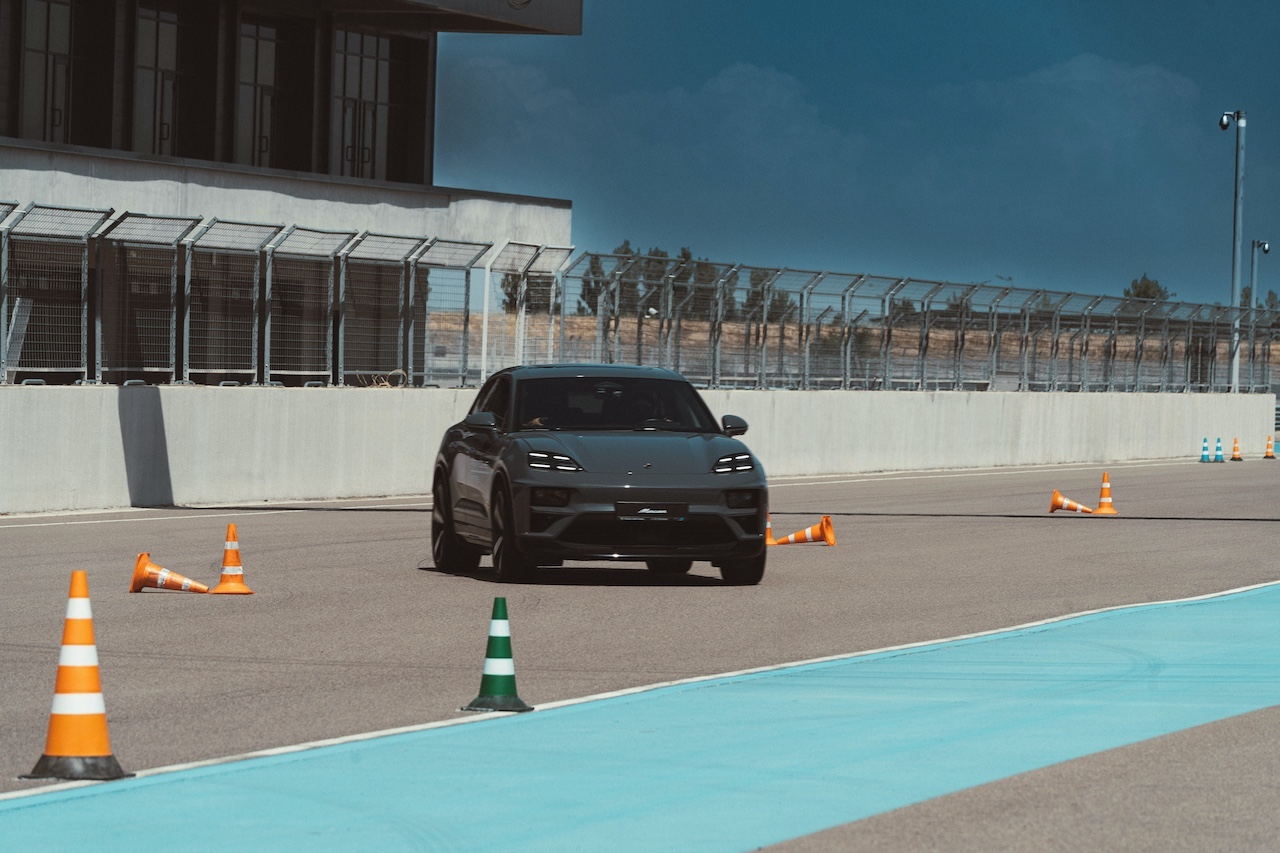 Photo by Nikita Svetlichny
The timed slalom required drivers to navigate between cones as quickly as possible. They first completed practice runs to study the route and understand the car’s responses.
Then the race against the clock began. An instructor sat alongside each participant, explaining where to brake earlier, how to enter a corner and when to return to the accelerator.
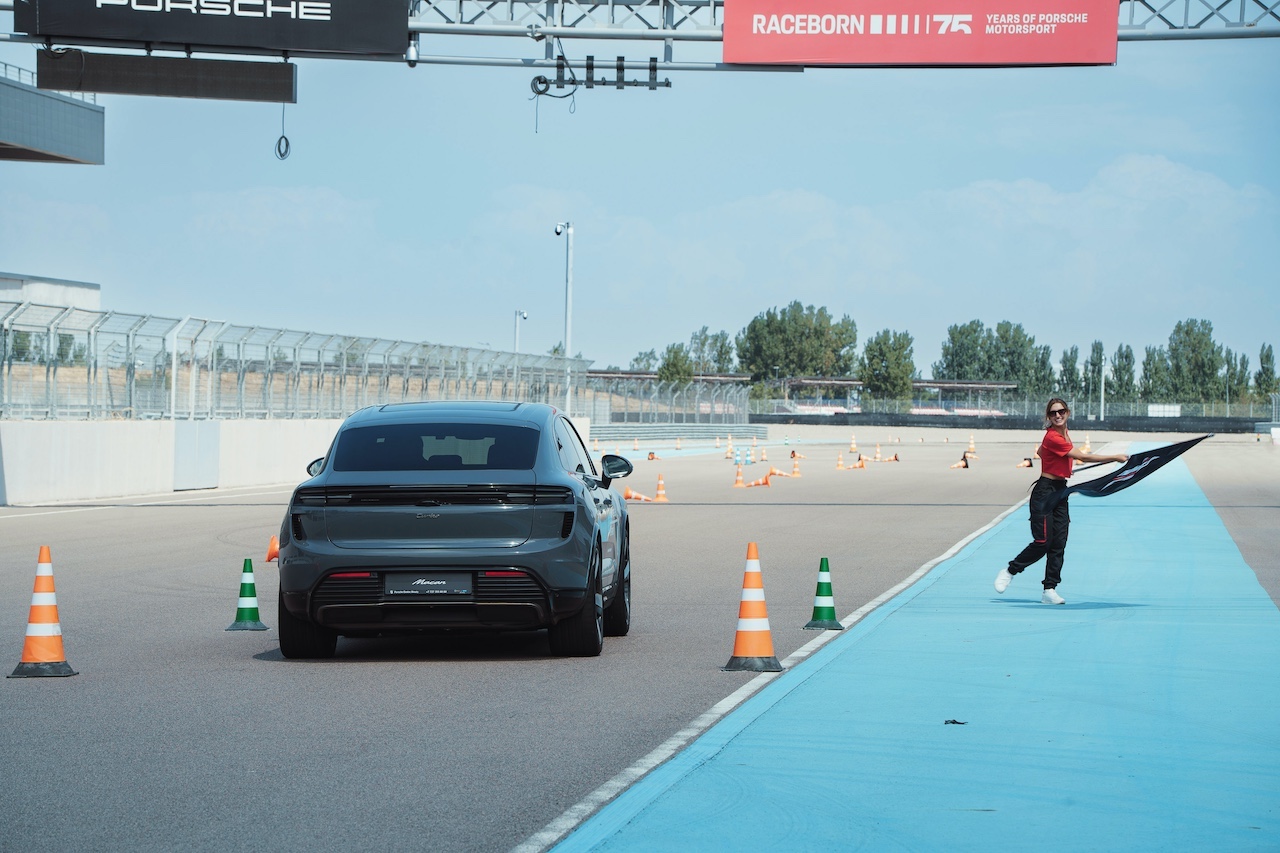 Photo by Nikita Svetlichny
The exercise quickly disproved the idea that more power automatically produces a better result. On a tight course, precise steering and pedal inputs mattered more than horsepower.
The fastest participants received medals. The more valuable lesson was understanding how strongly driving technique affects the performance of even the most advanced car.
The Taycan was parked without looking through the windows
A separate challenge focused on electronic driver-assistance systems.
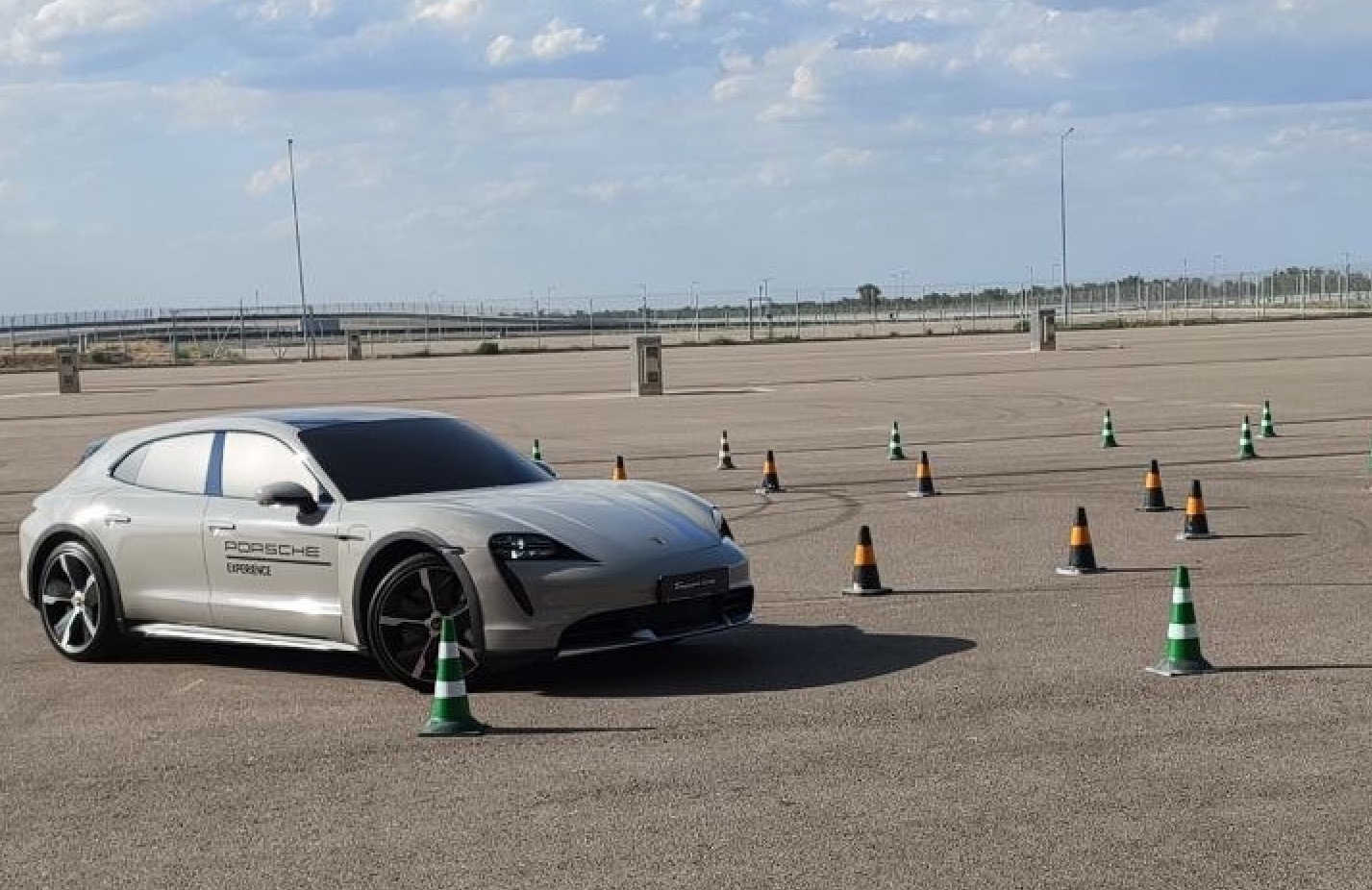
The windows of a Porsche Taycan GTS were fully obscured, removing the driver’s direct view outside. Participants had to navigate between cones and return to a parking space using only the camera feed.
The exercise looked easier from outside the car. Behind the wheel, drivers had to reassess distance, vehicle position and steering angle through the display.
Porsche demonstrated the technology without a lengthy presentation. Every mistake became immediately visible through a displaced cone or a poorly positioned car.
The iconic 911 returned to its natural habitat
One of the central cars was the Porsche 911 GT3, a road-legal sports car developed with direct input from motorsport.
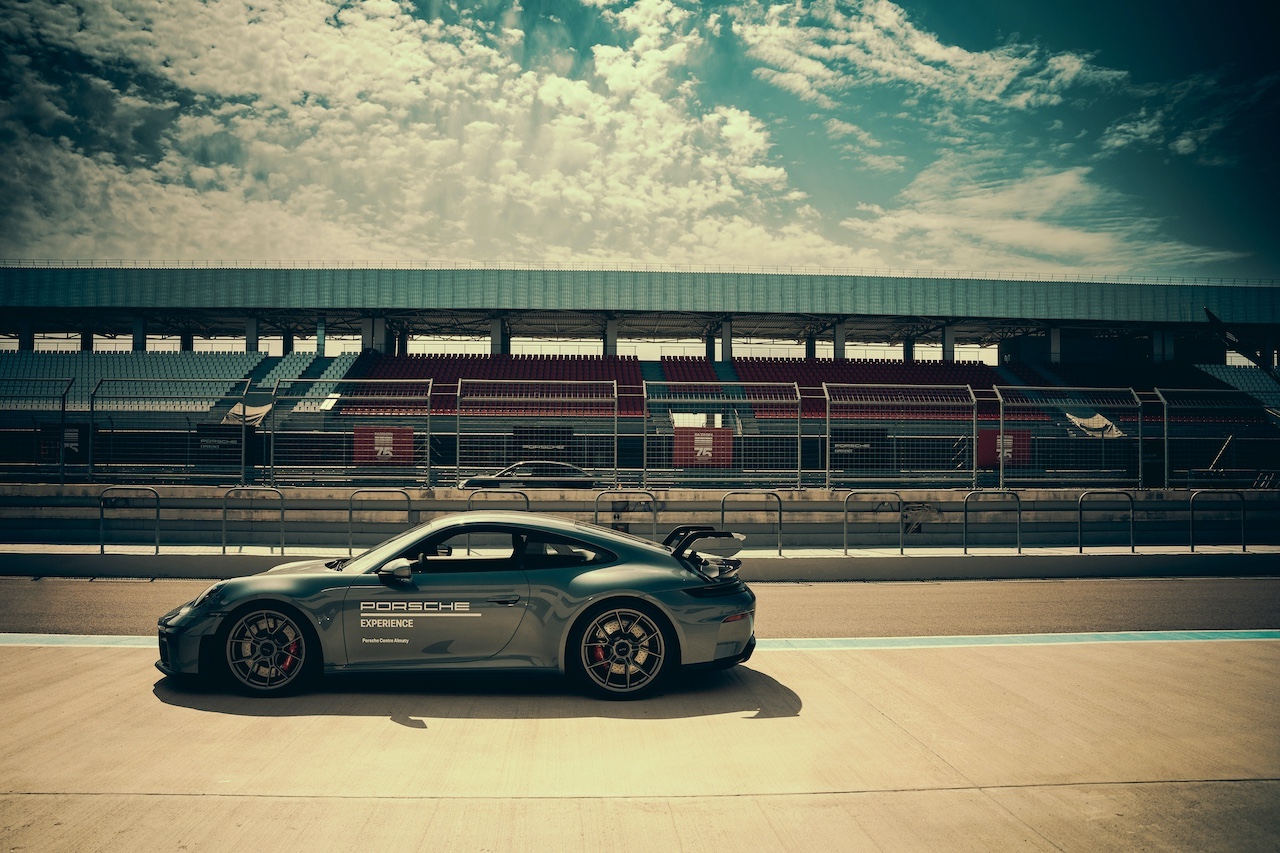 Photo by Nikita Svetlichny
Its naturally aspirated 4.0-litre flat-six engine produces 510 PS and revs to 9,000 rpm.
With the PDK transmission, the car reaches 100 km/h in 3.4 seconds and has a top speed of 311 km/h, according to the official Porsche 911 GT3 specifications.
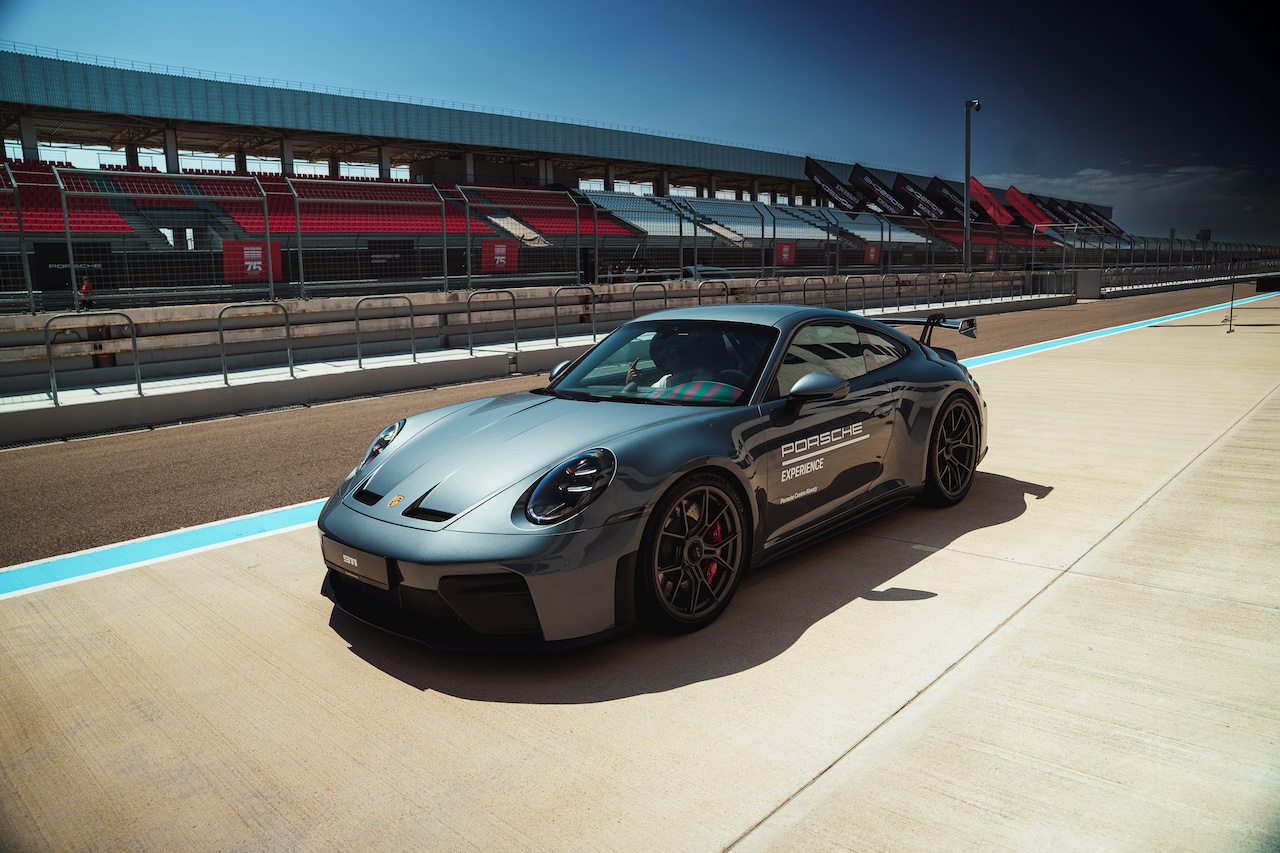 Photo by Nikita Svetlichny
Against the electric Cayenne and Taycan, the GT3 did not rely on four-digit power. Its character came from rear-wheel drive, precise steering, chassis balance and stability through fast corners.
The 911 GT3 linked Porsche’s history with its current electric range. It showed that manufacturers can pursue extreme performance through very different engineering routes.
Which Porsche models took to the circuit
The programme brought petrol, hybrid and fully electric Porsche models together at one venue.
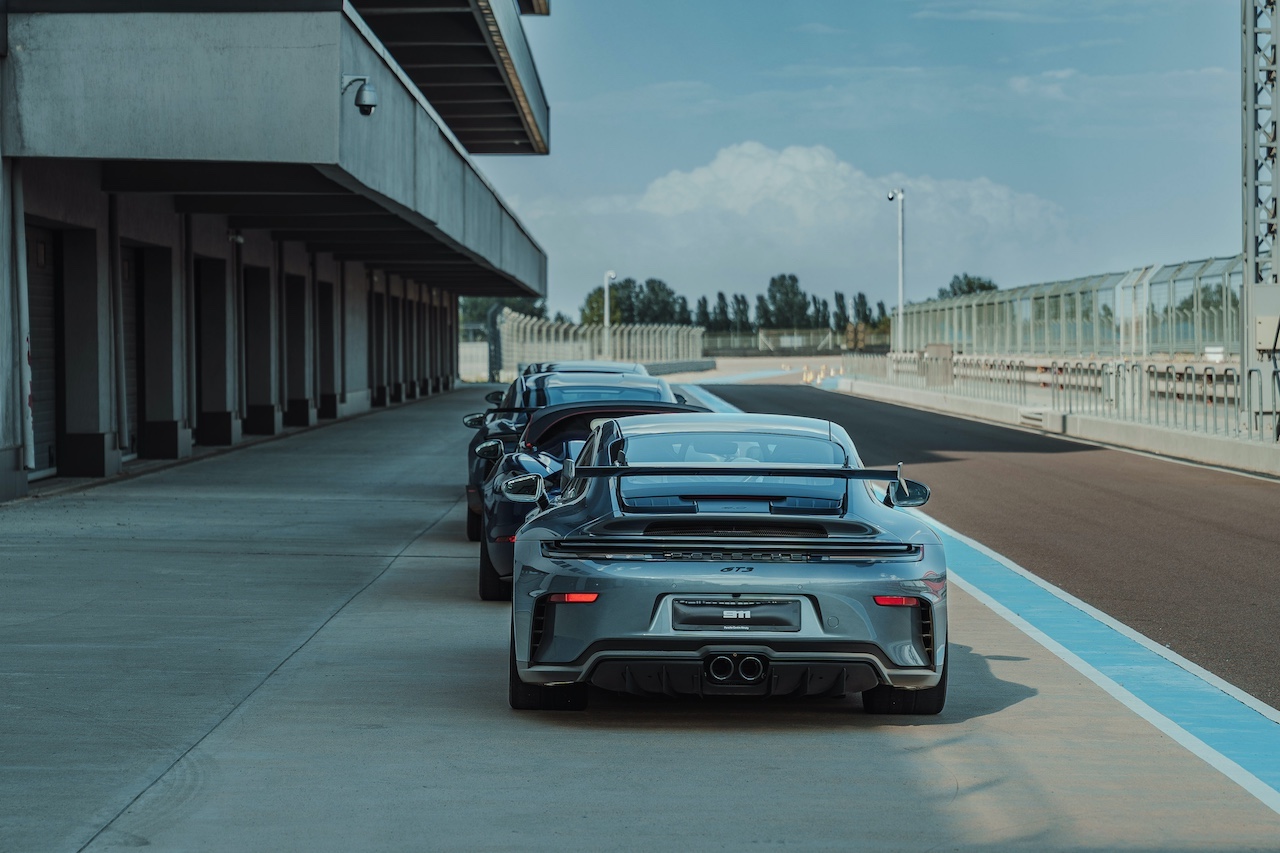 Photo by Nikita Svetlichny
The 911 GT3 and open-top 718 Spyder RS represented the classic sports-car formula. The Spyder RS uses a naturally aspirated 4.0-litre flat-six producing 500 PS and can reach 308 km/h.
Four Cayenne variants joined the programme: the new Cayenne Electric, flagship Cayenne Turbo Electric, petrol-powered Cayenne Coupé and plug-in hybrid Cayenne S E-Hybrid.
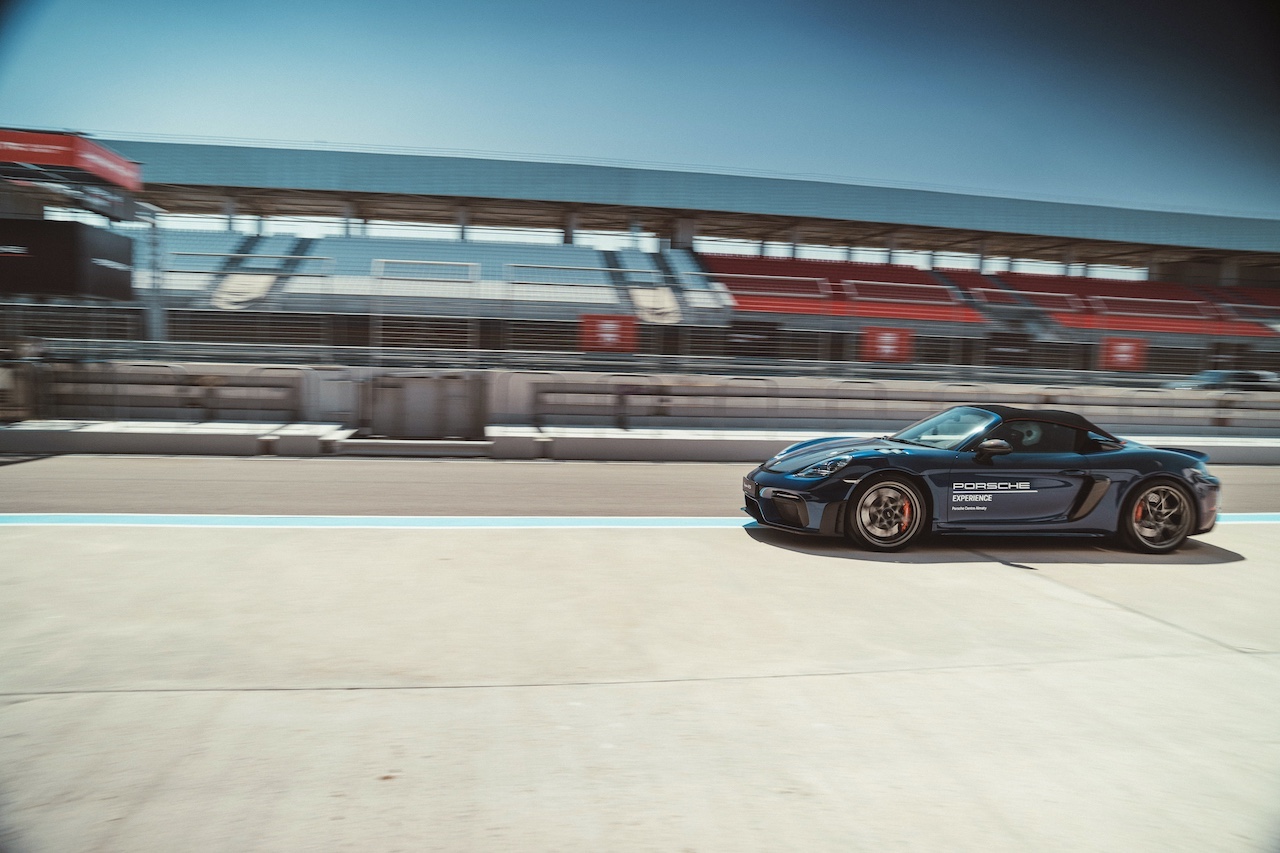 Photo by Nikita Svetlichny
The Macan family included the petrol-powered Macan S and Macan GTS, alongside the fully electric Macan Turbo.
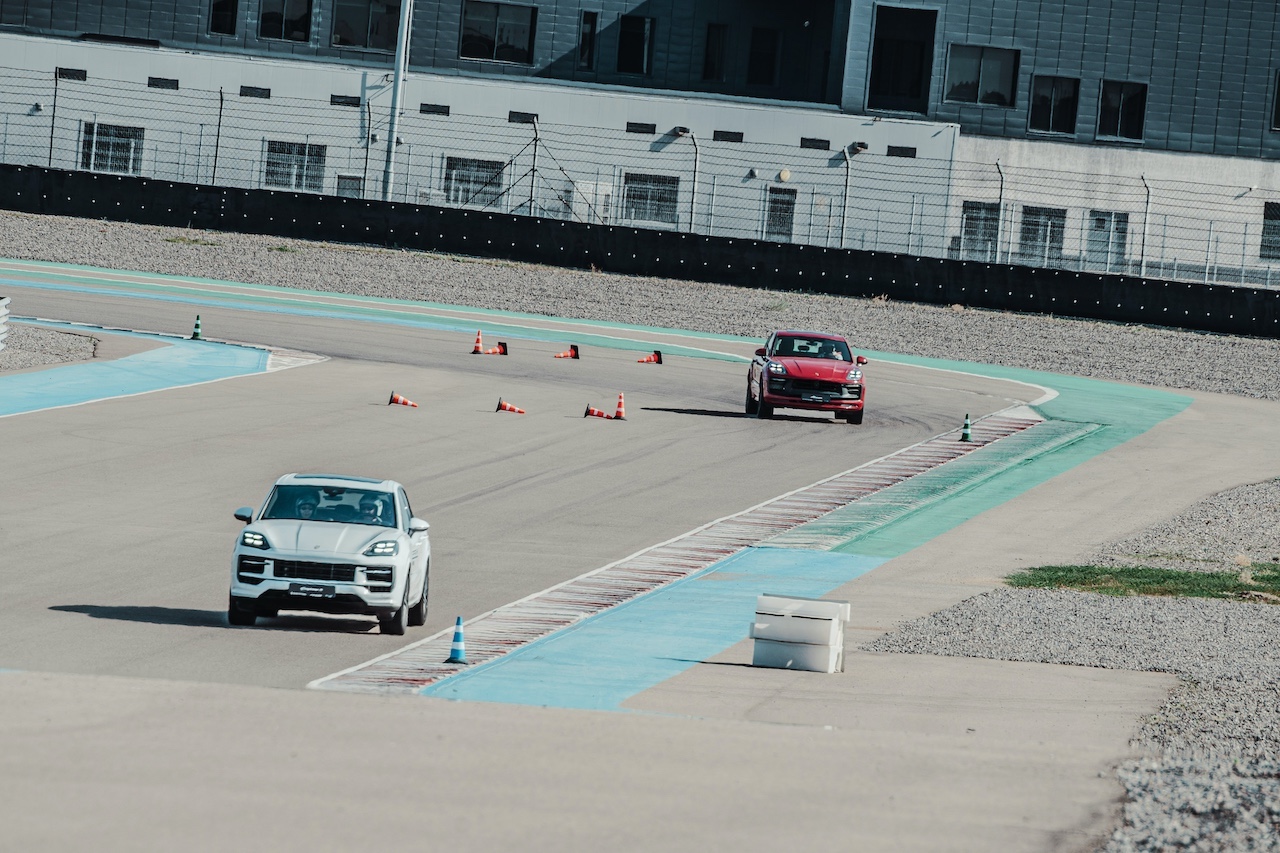 Photo by Nikita Svetlichny
The fleet also featured the Panamera GTS, Taycan Turbo Cross Turismo and track-focused Taycan Turbo GT with Weissach Package.
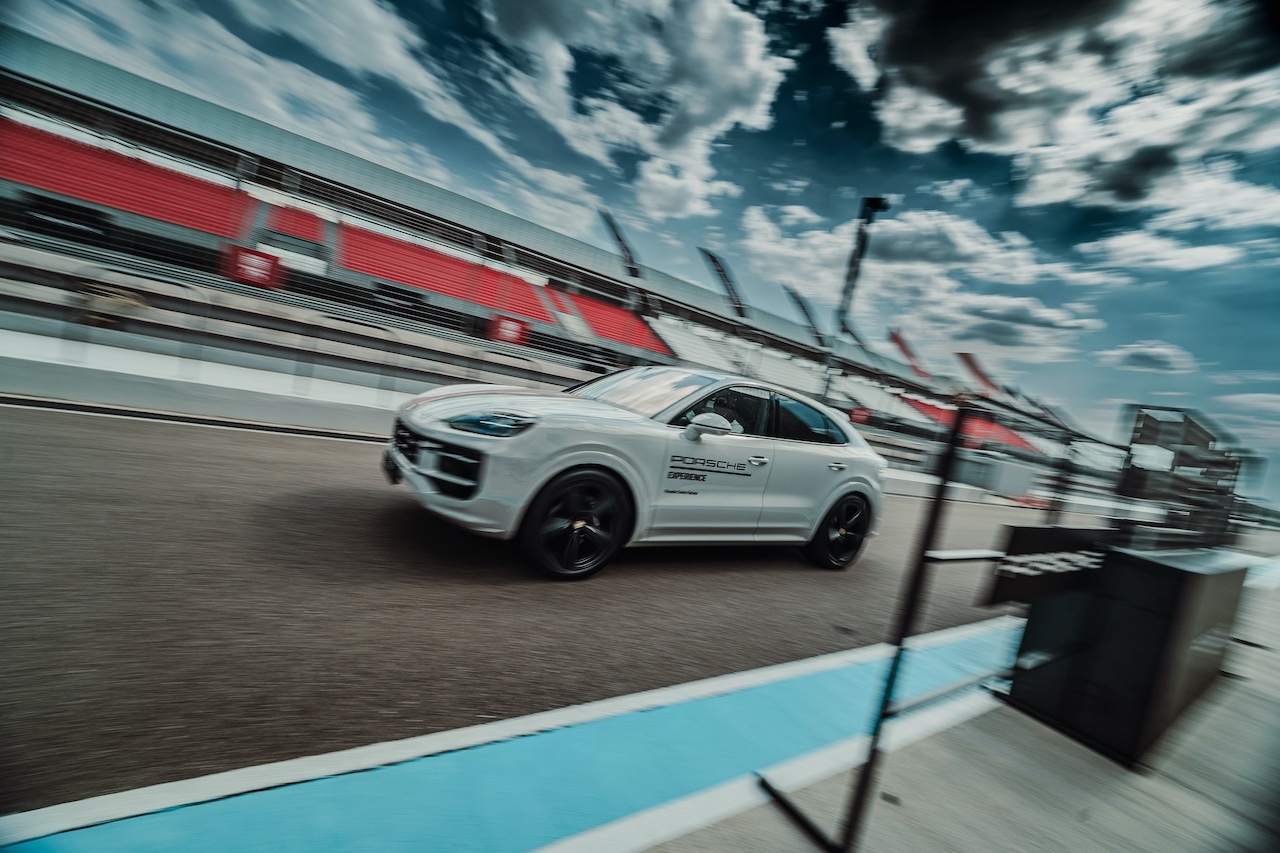 Photo by Nikita Svetlichny
A Taycan GTS was used for the camera-based parking challenge.
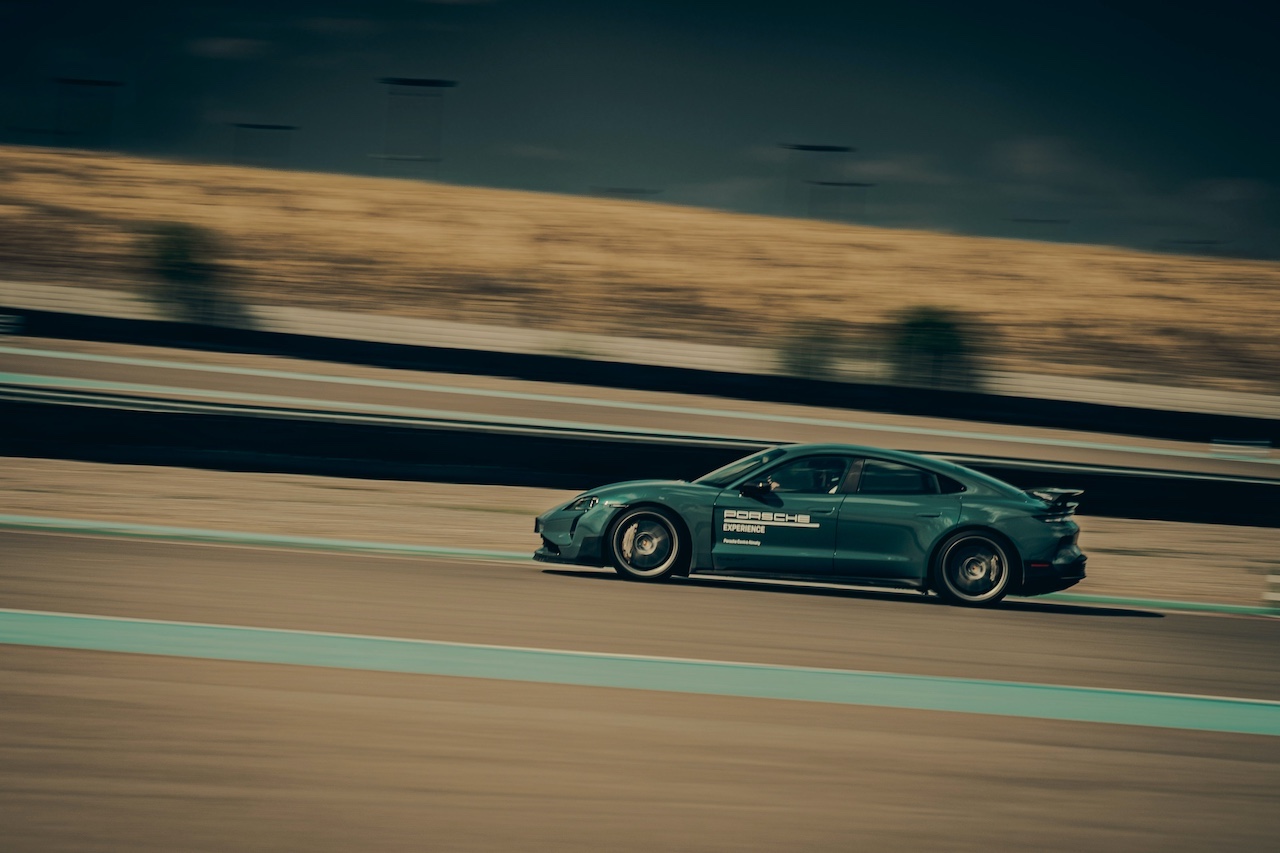 Photo by Nikita Svetlichny
The lineup combined V6 and V8 petrol engines, naturally aspirated flat-six units, a plug-in hybrid and fully electric powertrains.
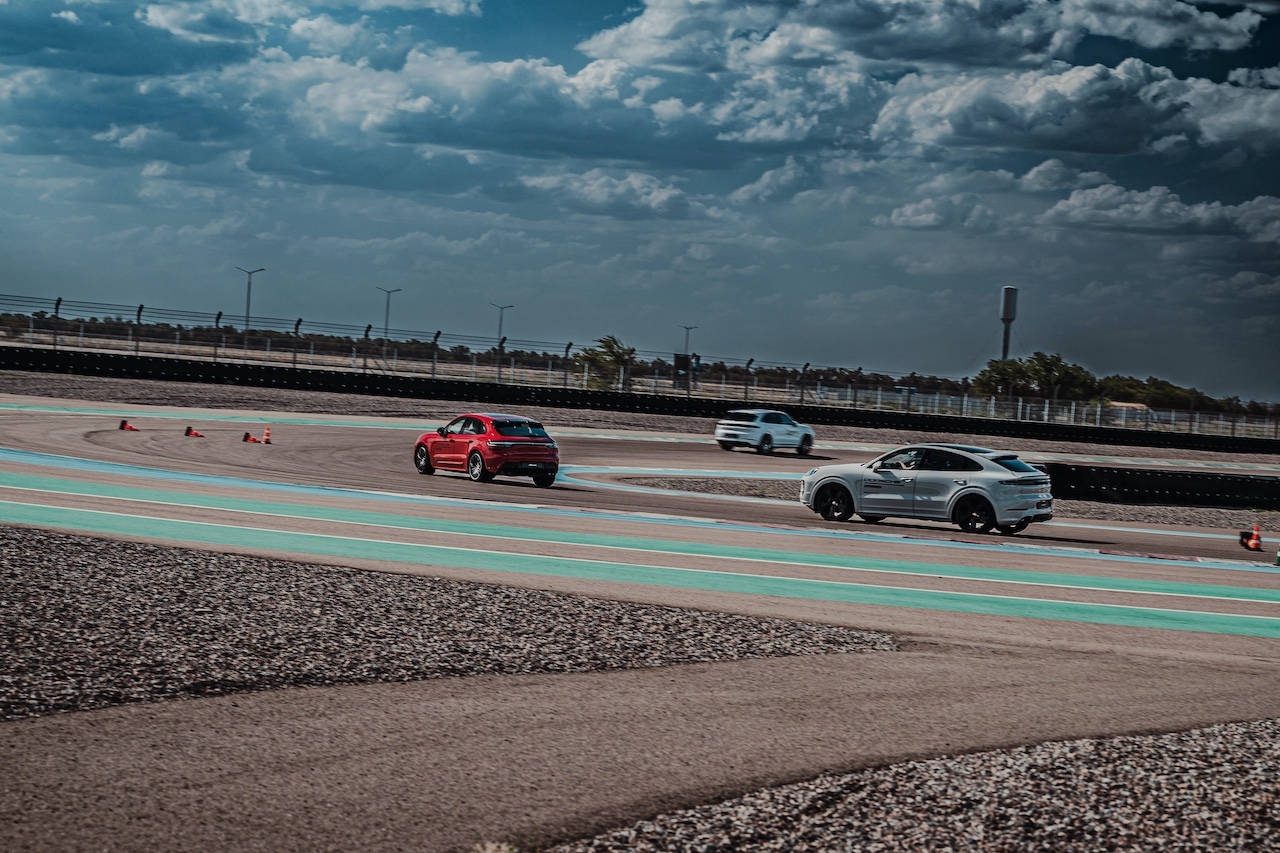 Photo by Nikita Svetlichny
Within a few hours, participants could experience three different philosophies: instant electric torque, hybrid versatility and the character of a traditional petrol-powered sports car.
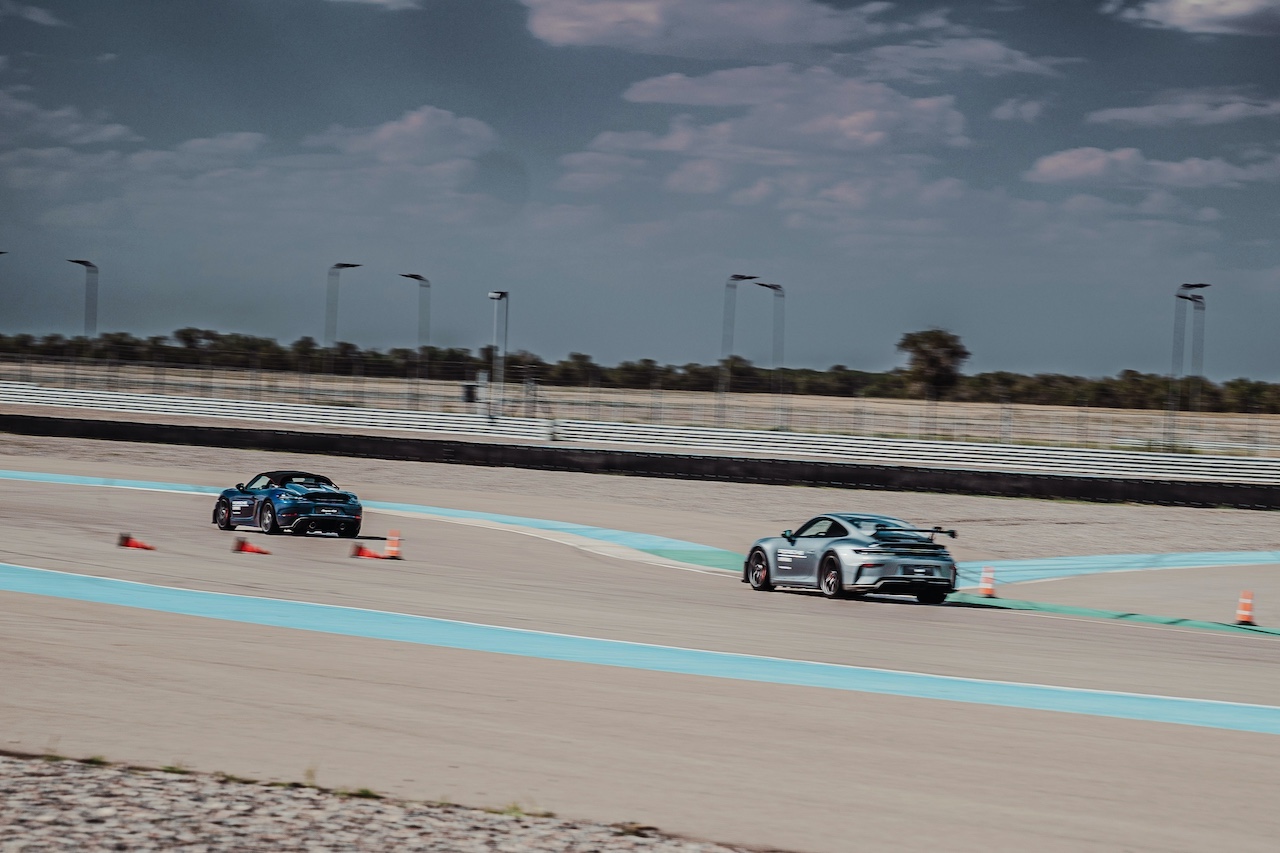 Photo by Nikita Svetlichny
How much participation cost
The one-day driving programme cost KZT 550,000 per participant.
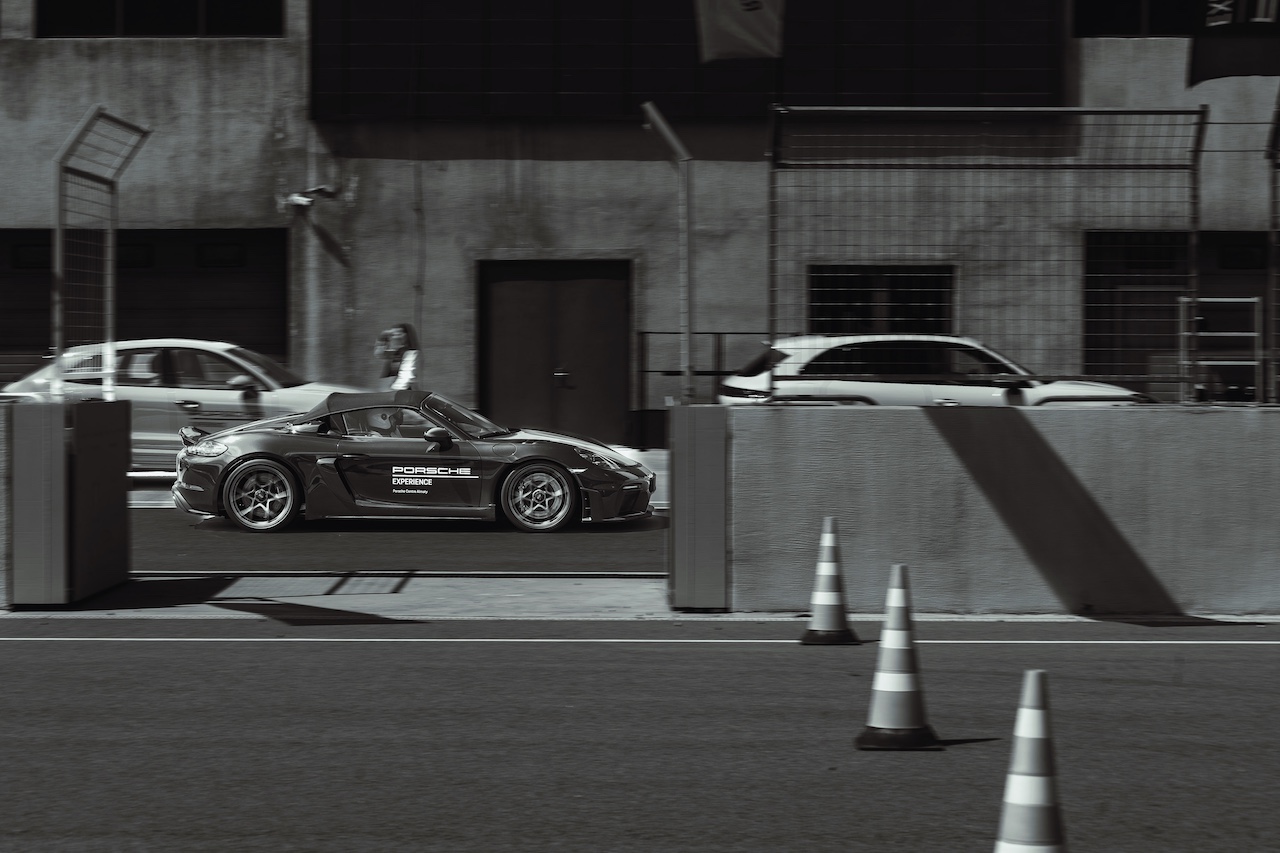 Photo by Nikita Svetlichny
The fee included driving sessions, practical exercises, guidance from certified instructors, catering, access to the lounge area and commemorative photographs.
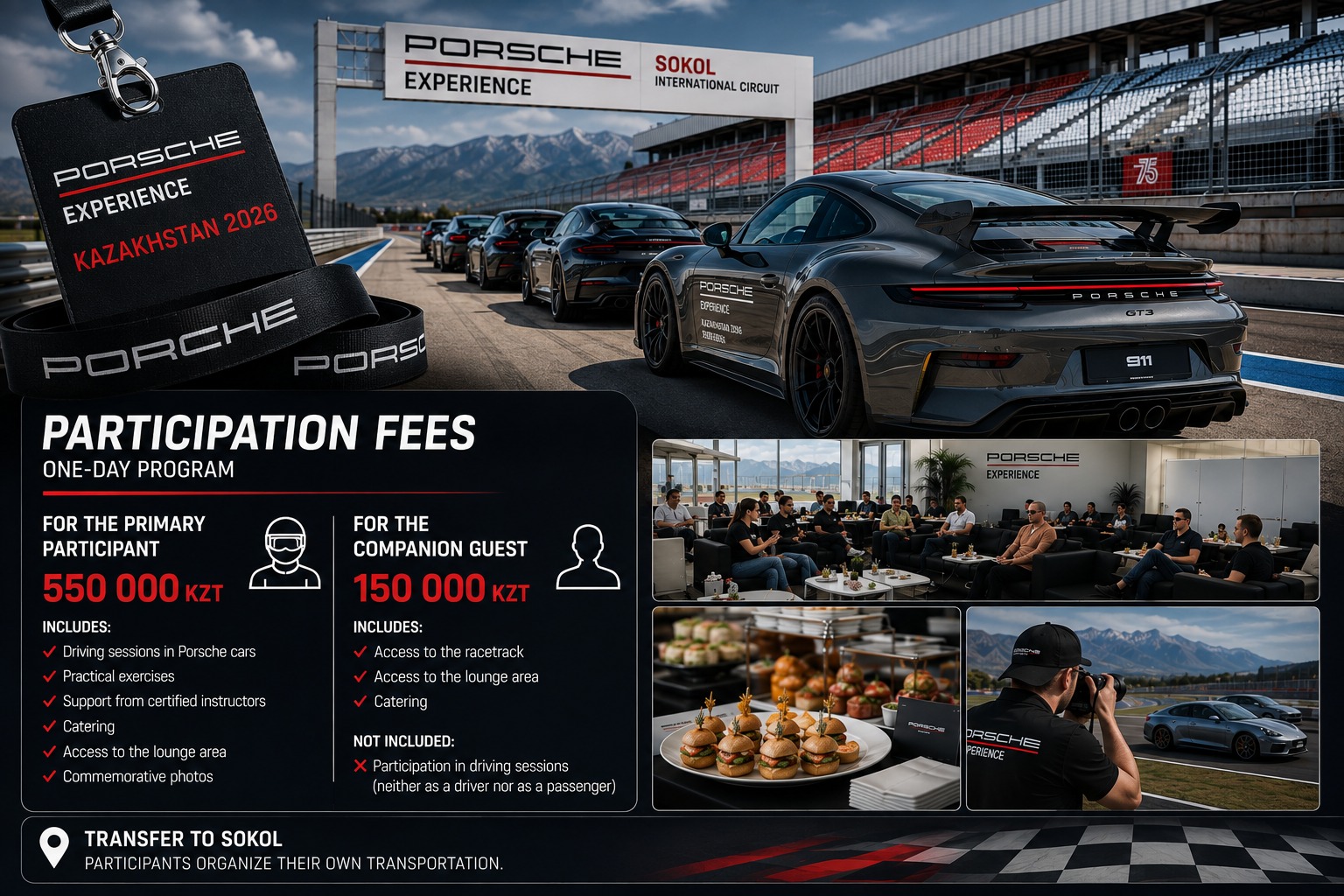
A companion ticket cost KZT 150,000. It included admission to the circuit, catering and lounge access, but did not allow the guest to join the driving sessions as either a driver or passenger.
Participants arranged their own transport to Sokol International Circuit.
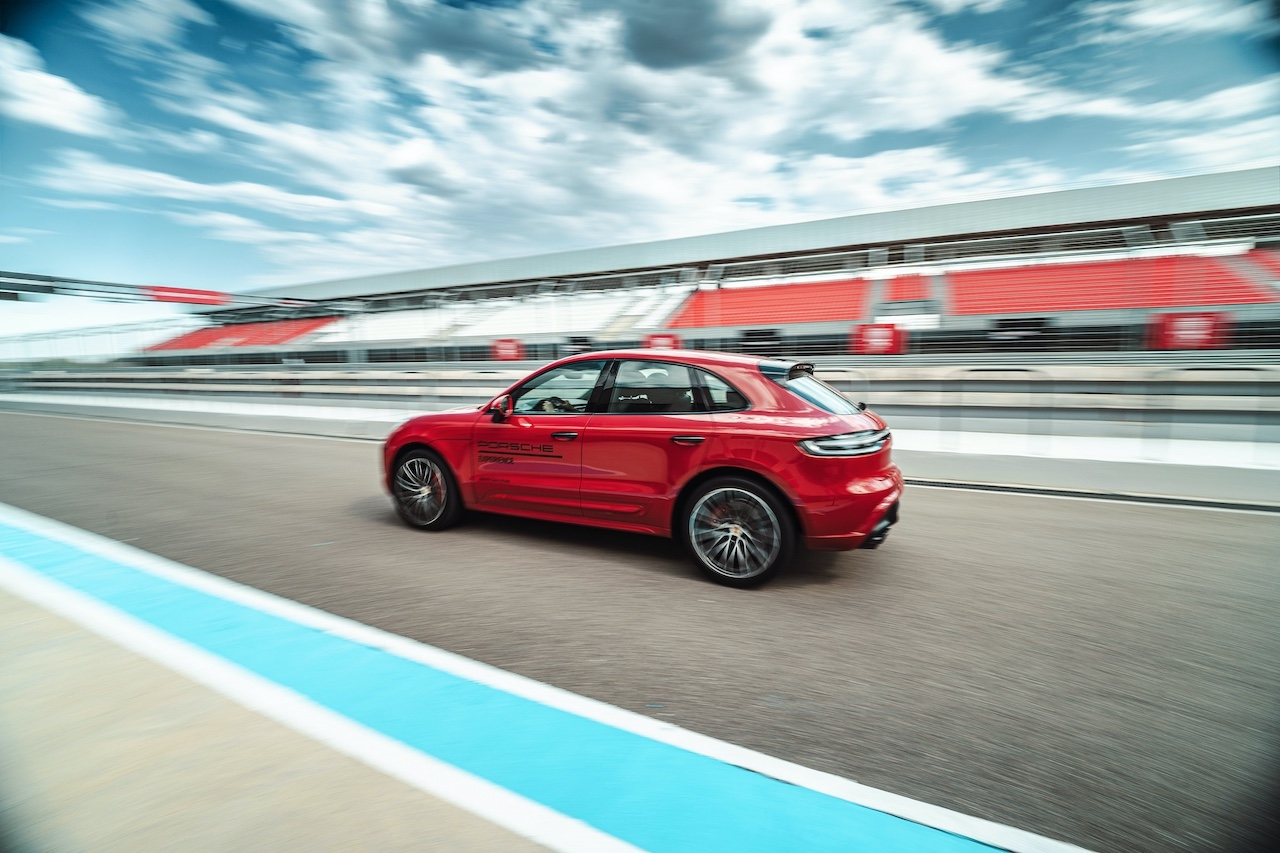 Photo by Nikita Svetlichny
How to take part in Porsche Track Experience
Drivers had to be at least 21 years old, hold a valid driving licence and have no less than three years of driving experience.
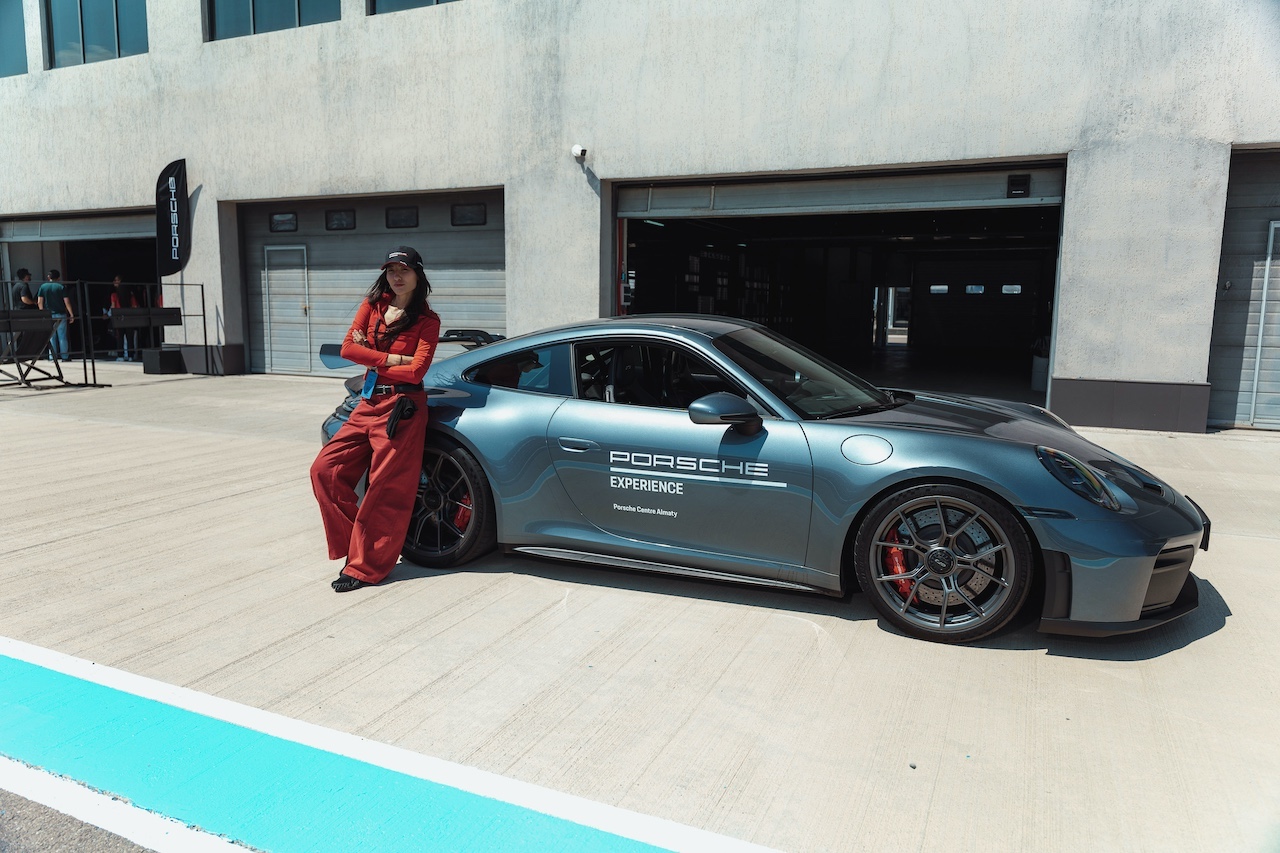 Photo by Nikita Svetlichny
Owning a Porsche was not listed as a requirement. The application form only asked applicants to identify their current car and indicate whether they were considering buying a Porsche.
Applicants selected a preferred date and provided their full name, telephone number, email address, date of birth and either an individual identification number or passport details. Electronic tickets were sent to the registered telephone number via WhatsApp.
The official Porsche Track Experience Kazakhstan page carries the application form, participation requirements, schedule, pricing and vehicle lineup.
Why Porsche chose Sokol
The main circuit at Sokol International Circuit measures 4,495 metres and features 13 corners.
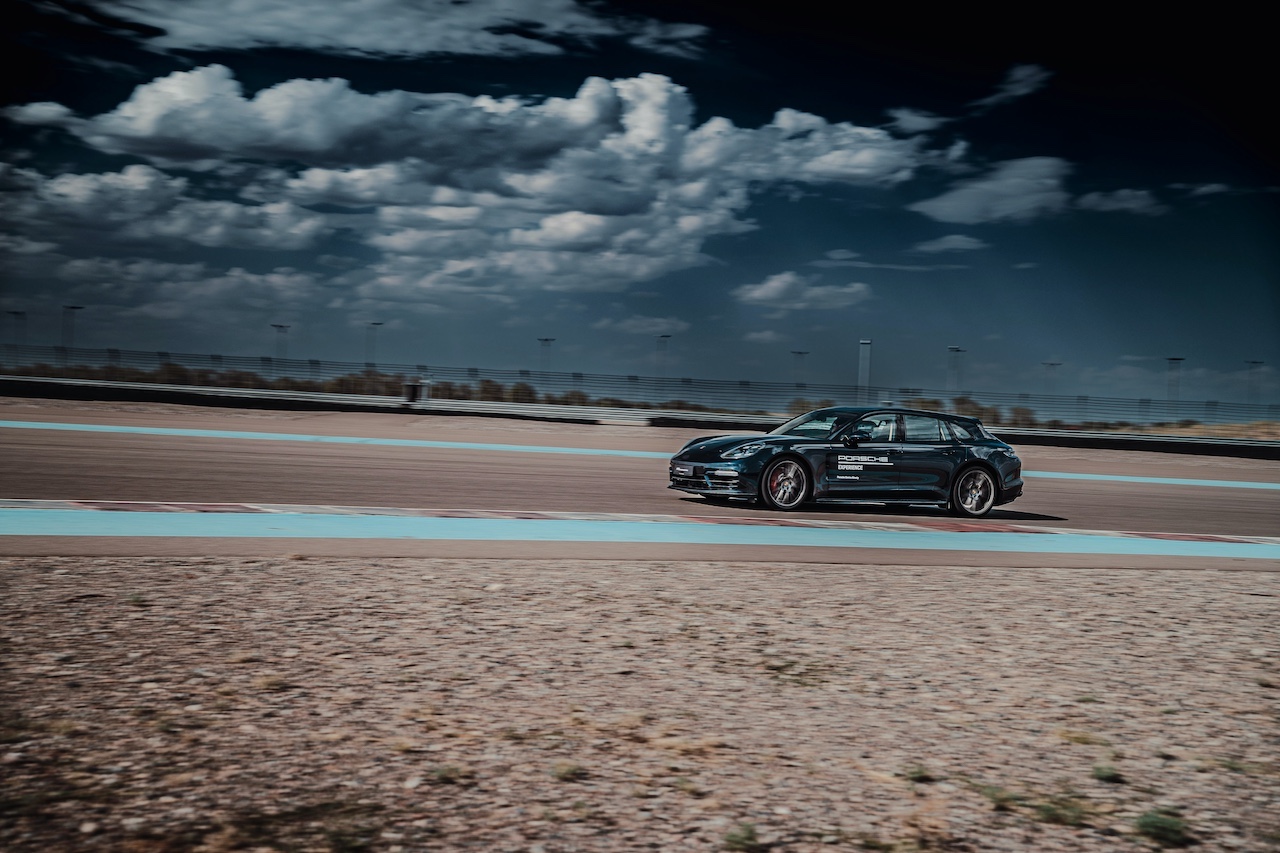 Photo by Nikita Svetlichny
The track is between 12 and 15 metres wide. Its straights extend for up to one kilometre and allow speeds of up to 300 km/h, according to the circuit’s official configuration details.
The venue can support acceleration, braking and handling exercises at the same time. Its size also allows organisers to separate participant groups and maintain controlled conditions.
Sokol carries broader significance for Kazakhstan. It gives an international automotive programme a venue that does not need to be shortened or simplified because of infrastructure limitations.
How the 2026 programme differed from the previous year
Kazakhstan became the first Central Asian country to host Porsche Experience in 2025.
That programme combined circuit exercises with a road trip to Charyn Canyon. It allowed Porsche to test its cars on public roads while presenting Kazakhstan as a premium automotive tourism destination.
In 2026, the organisers dropped the long-distance journey. The entire programme focused on performance driving and working with the cars on a racing circuit.
The change in format followed a clear progression. The first event introduced Kazakhstan through a driving tour; the second established the country as a full-scale venue for an international track programme.
Why Porsche needs this format
Technical specifications are easy to study on a smartphone. Numbers, however, cannot explain how a car brakes before a corner, how quickly it responds to steering or how its all-wheel-drive system distributes torque.
Track Experience closes that gap. Participants move from one model to another and immediately feel the differences between a petrol-powered Macan, hybrid Cayenne, naturally aspirated 911 and electric Taycan.
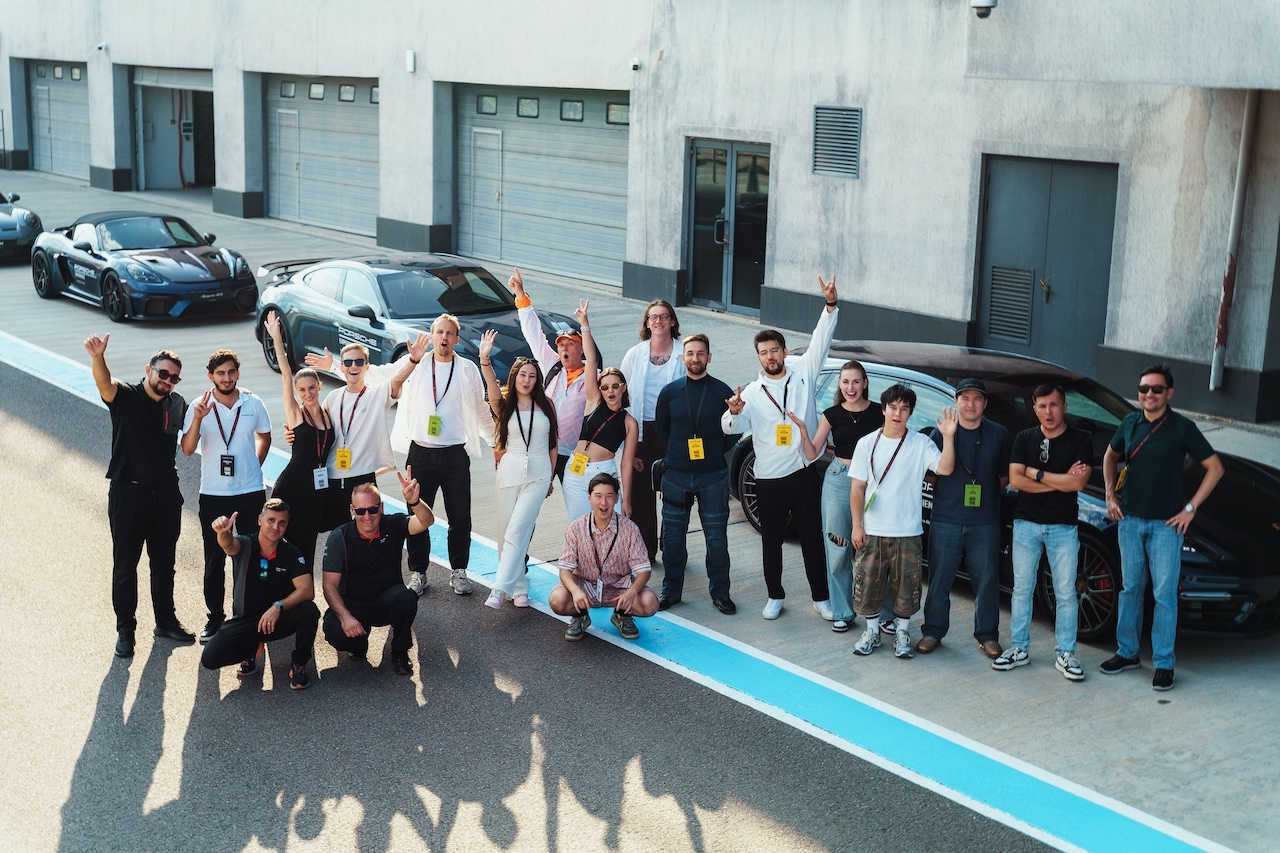 Photo by Nikita Svetlichny
As the driving sessions at Sokol demonstrated, the same circuit reveals a versatile SUV, an open-top sports car and a track-focused electric model in completely different ways.
For Porsche, that is more effective than a static unveiling. Instead of telling customers what a car should feel like, the company allows them to discover the difference behind the wheel.
The return of Porsche Experience for a second consecutive year suggests that Kazakhstan is becoming more than a one-off exotic location on the brand’s map. The country has again hosted an international automotive format, with Sokol providing its strongest argument.