The reconstruction of Syria will ultimately be judged not by the number of buildings repaired, roads resurfaced, or investment commitments announced, but by a more demanding measure: whether ordinary Syrians are able to build secure, dignified, productive lives and whether the institutions around them enable that progress to endure.
That distinction matters because post-war reconstruction can easily become defined by what is most visible. Physical infrastructure is measurable. Construction projects have budgets and completion dates. Investment can be counted. Yet a functioning society requires something considerably deeper: people who are healthy, educated and economically capable; institutions that are competent and predictable; businesses that can create value and jobs; universities that generate knowledge; and connections to regional and international markets that expand opportunity rather than create dependency.
For Syria, this creates an unusual strategic question. Should reconstruction seek primarily to restore the systems that existed before the war, or should it use the disruption of the past years as an opportunity to reconsider what those systems ought to become? The distinction is between restoration and reinvention.
Mr. Alex Matrsson, a Swedish Pracademic and International Business Strategist, approaches that question through a human-centered framework. His argument is that reconstruction should proceed through a chain: human wellbeing, human capability, institutional renewal, productivity, local economic strength, regional integration and, ultimately, international competitiveness and resilience.
In this conversation, he argues that Syria should not benchmark its future against its past. Global best practice, he suggests, should provide the standard of what is possible, while Syrian realities determine how those principles are adapted, implemented and owned.
The Interview
Q: Should Syria's reconstruction be understood primarily as an effort to rebuild what was destroyed, or should it be seen as a historic opportunity to build a fundamentally stronger society and economy around the needs, dignity, capabilities, and aspirations of its people?
Mr. Matrsson: I would strongly favor the second interpretation. Rebuilding what was destroyed is necessary, but it is not sufficient. If reconstruction means returning to an earlier institutional and economic equilibrium simply because it is familiar, then we risk spending enormous resources reproducing yesterday's limitations.
The starting point should be the human being. Can a Syrian family obtain nutritious food? Can it live in safe and affordable housing? Can children receive quality education? Can people access healthcare and essential services? Can adults find meaningful economic opportunities? Can young people imagine a future in which their abilities matter?
Those questions lead us toward a broader understanding of reconstruction. Human wellbeing creates the foundation for human capability. Capability requires education, skills, knowledge, networks and access to opportunity. Those capabilities need institutions in which they can flourish. Institutions support productive economic activity, and productive businesses create employment, income, innovation and tax capacity. Stronger local economies can then connect to regional markets and, eventually, to international markets and knowledge systems.
So I would describe the strategic sequence as human wellbeing, human capability, institutional renewal, productivity, local economic strength, regional integration and international competitiveness.
The objective is not merely to rebuild Syria. It is to build the capabilities that allow Syrians to build Syria themselves.
Q: Before we discuss investment, GDP, technology, international integration, or major reconstruction projects, what must be done to ensure that ordinary Syrians have access to good, nutritious, affordable food, safe shelter, affordable housing, essential services, and the basic conditions necessary for a dignified life?
Mr. Matrsson: These are not secondary social questions. They are the first economic foundations of reconstruction.
Food security, for example, is simultaneously a health issue, a productivity issue, a household-finance issue and a national-resilience issue. A family that spends an unsustainable proportion of its income simply obtaining food has little capacity to invest in education, housing, entrepreneurship or anything else. A poorly nourished population cannot achieve its productive potential.
That means thinking about the entire food system: farmers, agricultural productivity, water management, storage, cold chains, transport, wholesale markets, retail distribution and nutrition. The objective should be a system in which families can afford good food while farmers and food businesses can earn productive incomes.
Housing is equally fundamental. Safe and affordable housing gives people stability. But housing reconstruction should not simply mean constructing units. It should create functioning communities connected to employment, schools, healthcare, transportation, utilities and local economic activity.
The human test is therefore very straightforward: Can ordinary Syrian families eat well, live safely, access essential services, work productively and provide a credible future for their children? If the answer is no, we should be cautious about declaring reconstruction successful simply because construction targets have been met.
Q: How does Syria move from humanitarian recovery toward human capability without creating a permanent relationship in which Syrians remain recipients of assistance?
Mr. Matrsson: By changing the question from "What can we provide to people?" to "What capabilities can we help people develop?"
Humanitarian assistance is indispensable when people are facing acute deprivation. But the long-term objective should be agency. People need opportunities to become entrepreneurs, engineers, doctors, researchers, technicians, farmers, managers, teachers, investors, business owners and public servants.
That requires access to skills, professional qualifications, capital, technology, mentorship and networks. It also requires institutions that do not unnecessarily prevent people from using those capabilities.
There is an important psychological dimension as well. People need to see themselves not merely as survivors of a crisis but as participants in rebuilding their society. That means giving them ownership and responsibility wherever possible.
International assistance is most valuable when it expands that agency. The best partnership is one that gradually makes itself less necessary because local people, institutions and businesses have acquired the capacity to carry the work forward.
Q: Higher education is often discussed as part of social recovery. Should Syria instead regard its universities as strategic economic and institutional engines?
Mr. Matrsson: Absolutely. Universities should be treated as national capability infrastructure.
A modern university is not simply a place where students receive degrees. It is part of a country's knowledge system. It produces engineers, doctors, scientists, economists, teachers, technology specialists, entrepreneurs, researchers and public leaders. It can generate research, transfer technology, support businesses and connect a country to international knowledge networks.
For Syria, that means asking a difficult question: should universities simply be restored to their previous form, or should Syria design a new generation of institutions benchmarked against strong international examples?
I would choose the latter approach.
That does not mean importing a foreign university model wholesale. It means identifying what excellence looks like: strong teaching, credible research, effective governance, international collaboration, academic quality, university-industry partnerships, entrepreneurship and technology transfer. Then those principles can be adapted to Syrian circumstances.
Syrian universities could become platforms connecting students and researchers with businesses, public institutions, international universities and the diaspora. Research should have routes toward application. Students should encounter entrepreneurship and real-world problems. Universities should participate in economic development rather than existing alongside it.
Q: What role should young Syrians play in this transformation?
Mr. Matrsson: They should not be treated simply as the next generation to be employed by institutions designed by previous generations. They should be among the people designing those institutions.
Young people bring different experiences, technological fluency and expectations. They can become entrepreneurs, researchers, technology specialists, professionals, civic leaders and institutional reformers.
But we should not romanticize youth. Giving young people responsibility without giving them access to capital, education, mentorship, markets and credible institutions is not empowerment. It is rhetoric.
A serious youth strategy therefore needs pathways from education to employment, from employment to entrepreneurship, from entrepreneurship to growth, and from professional experience to leadership.
The diaspora can be particularly important here. A young Syrian connected to international academic, professional or entrepreneurial networks can potentially bridge knowledge and opportunity between Syria and the wider world.
Generational renewal is not a demographic slogan. It is a strategic investment in human capital.
Q: You emphasize empowerment and economic agency. What does that mean in practical economic terms?
Mr. Matrsson: It means giving people the ability to make meaningful economic decisions and act on them.
Economic agency requires more than employment. It includes the ability to start a business, own assets, obtain finance, acquire skills, participate in markets, enter professional networks and build something that can grow.
This is why property rights, access to finance, predictable regulation and fair competition matter so much. They may sound institutional and technical, but ultimately they determine whether an individual has the practical freedom to turn an idea into economic activity.
The goal should be to expand the number of people who can be producers, entrepreneurs, professionals, employers and investors, not to create a system in which economic opportunity is concentrated in a narrow group.
A productive economy is one in which large numbers of people have the opportunity to contribute.
Q: One of your strongest arguments is that Syria should not automatically use its pre-war institutions as the baseline. Why?
Mr. Matrsson: Because history is not automatically a design manual.
There is a natural psychological tendency after destruction to restore what was lost. That instinct is understandable. But we need to distinguish between preserving valuable institutional knowledge and assuming that every inherited structure deserves to survive.
The right sequence is more demanding: preserve what demonstrably works, reform what can be improved, replace what is obsolete, eliminate what creates unnecessary barriers, and create what is missing.
That applies to public administration, courts, municipalities, regulation, financial institutions, universities, customs, business registration and public enterprises.
Before deciding how to rebuild something, I would ask: What does excellent performance look like internationally? What institutional principles explain that performance? Which of those principles are transferable? Which require adaptation? What mistakes did those countries make that Syria should avoid?
That is a much better starting point than simply asking how to repair the institution that existed previously.
Q: Then what does "global best practice" actually mean in the Syrian context?
Mr. Matrsson: It should mean a benchmark, not a blueprint.
Syria can learn from many different experiences: European institutional development, East Asian industrialization, Gulf economic transformation, emerging-market entrepreneurship, digital-government systems, successful universities, logistics hubs, agricultural modernization and export-oriented economies.
But there is no country that provides a complete template.
One country may have excellent digital government but a different social structure. Another may have outstanding logistics but a very different geography or political economy. Another may have built an impressive university system but struggled with inequality or excessive centralization.
The task is therefore not imitation. It is institutional learning.
You identify the underlying principle behind successful practice, test whether it fits Syrian conditions, adapt it, build local ownership and measure the result.
In other words: benchmark globally, understand deeply, adapt intelligently and build locally.
Q: What should an institutionally reinvented Syria look like in practical terms?
Mr. Matrsson: It should be a place where institutions are predictable enough that people can plan.
A business should know how to register. An investor should understand the rules. A citizen should know where to obtain a service. A university should understand its responsibilities and have the autonomy and accountability required to pursue excellence. A municipality should have meaningful capacity to address local problems.
Competence matters enormously. So do transparency, professional standards, accountability, accessibility and digital capability.
There is also a difference between reform and reinvention. Reform asks how to make an existing system better. Reinvention asks whether the system itself is still designed for the problem it is supposed to solve.
That distinction becomes particularly important after a major disruption. Sometimes the most expensive mistake is improving an obsolete system rather than replacing it.
Q: How can entrepreneurship and SMEs become engines of recovery rather than simply another sector discussed in development strategies?
Mr. Matrsson: By making it possible for real businesses to form, survive and scale.
Entrepreneurship needs an ecosystem. That includes predictable regulation, property rights, access to finance, skilled workers, reliable infrastructure, functioning markets, transparent customs and the ability to enter domestic and international supply chains.
SMEs are particularly important because they can distribute economic opportunity more broadly. But we should not assume that every small business will automatically become productive or innovative. Some will remain informal or low-productivity unless the surrounding ecosystem gives them incentives and opportunities to improve.
The policy objective should therefore be progression: business formation, survival, productivity, growth, employment, innovation and, where possible, exports.
A healthy business environment should also protect fair competition. Reconstruction should not create a new generation of monopolies or economically privileged insiders. That would replace one structural problem with another.
Q: What does Syria need to produce if it wants to move from reconstruction spending to a genuinely productive economy?
Mr. Matrsson: That is precisely the question that should be asked.
A reconstruction economy can spend enormous amounts of money without necessarily creating a durable productive base. Syria needs to think about what its people and businesses can competitively produce.
Agriculture and food systems will matter. Manufacturing can matter. Construction and building materials can matter. Logistics, professional services, technology, healthcare, education and other service industries can matter. The precise portfolio will evolve as capabilities develop.
But the principle is more important than any predetermined list: productivity must become the central economic question.
What raises the value created per worker? What enables businesses to pay higher wages? What allows local suppliers to become part of larger value chains? What enables firms to innovate?
If those questions are answered well, local economic activity can become the foundation for regional competitiveness.
Q: How can local productivity become regional economic integration?
Mr. Matrsson: Integration should begin with something worth integrating.
If Syrian firms are productive, they can become suppliers, exporters, service providers and partners in regional value chains. If universities develop useful expertise, they can join regional research networks. If logistics capabilities improve, Syria can participate in trade flows. If agricultural and manufacturing businesses become competitive, they can access neighboring markets.
This is why local and regional strategies cannot be separated.
A municipality that improves its business environment, a university that develops a strong engineering program, a farmer who adopts better production methods and an SME that learns to meet international standards may appear to be working on entirely different problems. In reality, they are building components of national competitiveness.
Regional integration is the aggregation of productive capabilities.
Q: And what would it take for Syria eventually to compete internationally rather than simply participate regionally?
Mr. Matrsson: International competitiveness requires discipline because global markets do not reward intentions. They reward value, reliability, quality, productivity and the ability to meet standards.
That means Syrian companies will need access to technology, management expertise, finance, skilled labor, international market knowledge and professional networks.
Universities have a role because competitiveness increasingly depends on knowledge. Government has a role because trade procedures, infrastructure, regulation and standards affect business costs. Financial institutions have a role because companies cannot scale without capital.
International integration should therefore be understood as a capability-building process.
Foreign capital can accelerate it. International partnerships can accelerate it. Diaspora networks can accelerate it. But none of those should substitute permanently for domestic capability.
The objective is not to make Syria dependent on global markets. It is to make Syrian people and companies capable of participating in them on increasingly strong terms.
Q: What should foreign affairs contribute to Syria's economic transformation?
Mr. Matrsson: Foreign affairs should become closely connected to economic, educational and technological strategy.
Diplomacy is not only about political relationships. It can facilitate trade, investment, academic cooperation, technology partnerships, development finance, logistics connections, research networks and access to international markets.
Syria will need relationships with neighboring countries, European countries, Gulf economies, Asian economies, international financial institutions, development organizations, universities, companies and its own diaspora.
But there is an important change in mindset: Syria should increasingly ask not only, "What can others provide to us?" but also, "What can Syria contribute?"
A mature international relationship is reciprocal. Syria's agricultural products, services, talent, research, location, entrepreneurship and cultural and professional connections can all become components of international engagement.
Q: How can international assistance and investment help without creating new dependency?
Mr. Matrsson: By defining success differently.
If an international program continues indefinitely because local capacity never develops, we should question whether it is achieving its deeper purpose.
Assistance should increasingly transfer knowledge, strengthen institutions, develop local professionals, improve access to capital, support local businesses and establish systems that Syrians can operate themselves.
Foreign investment should be judged partly by what it leaves behind: skills, suppliers, technology, management capabilities, productive assets, market access and stronger local companies.
That does not mean rejecting international capital. Quite the opposite. Syria will likely need substantial international cooperation and investment. But foreign capital should be a tool for development, not the definition of development.
The strongest partnership is one in which international participation and Syrian capability grow together.
Q: What role could the Syrian diaspora play beyond sending remittances?
Mr. Matrsson: Potentially a transformational one.
The diaspora represents much more than capital. It can provide professional expertise, academic knowledge, entrepreneurial experience, technology, management capabilities, mentorship and access to international networks.
A Syrian engineer abroad may know a university that wants to establish a research partnership. A business owner may know a regional distributor. A scientist may be able to mentor researchers. An entrepreneur may understand a foreign market. An investor may be willing to support a Syrian company.
The key is to create channels through which these contributions can become systematic rather than occasional.
Diaspora engagement should therefore include investment platforms, university partnerships, research networks, mentoring, company creation, technology transfer and international market connections.
The diaspora should not be viewed simply as a financial resource. It can be part of Syria's international knowledge and capability infrastructure.
Q: What conditions must exist before domestic and international private capital can enter reconstruction and productive investment at meaningful scale?
Mr. Matrsson: Capital is highly sensitive to uncertainty.
Investors need reasonable confidence about legal rights, contracts, property, regulation, taxation, financial systems and the predictability of economic policy. Businesses need to know that they can operate without arbitrary obstacles.
This is why institutional reform and investment policy are inseparable.
There is also a distinction between reconstruction finance and productive finance. Financing a physical asset is not the same as financing a business ecosystem that can generate sustained economic value.
Syria will potentially need a combination of domestic entrepreneurs, diaspora capital, foreign direct investment, development finance, institutional investors and appropriately designed public-private partnerships.
But the sequence matters. Stronger institutions reduce perceived risk; reduced risk improves the conditions for investment; productive investment strengthens businesses; stronger businesses create employment and tax capacity; and that, in turn, strengthens institutions.
Finance is part of the chain, not a substitute for it.
Q: Infrastructure will obviously be enormous. How do you prevent infrastructure from becoming the dominant definition of reconstruction?
Mr. Matrsson: By asking what every infrastructure investment is supposed to accomplish for people and the economy.
Electricity matters because households need reliable services and businesses need predictable production. Roads matter because farmers need markets, workers need mobility and companies need logistics. Telecommunications matter because modern education and commerce depend on connectivity. Water infrastructure matters because health, agriculture and industry depend on it.
The question should therefore never be merely, "How much infrastructure have we rebuilt?"
It should be, "How has this infrastructure improved human wellbeing, reduced business costs, increased productivity, connected communities and expanded opportunity?"
Infrastructure is a means. The ultimate objective is human and economic development.
Q: If GDP, investment volume and the number of reconstructed buildings are insufficient measures, how should Syria measure whether reconstruction is actually working?
Mr. Matrsson: We need a much broader dashboard.
Measure whether food is becoming more affordable and nutritious. Measure housing affordability. Measure household wellbeing. Measure employment and youth employment. Measure business formation and SME growth. Measure productivity. Measure university quality and research output. Measure access to finance. Measure institutional efficiency and service delivery. Measure exports and the ability of companies to meet international standards.
And we should pay attention to distribution. An economy can grow while many households remain excluded from its benefits.
Ultimately, the question is simple: Are people's lives becoming better, and are they gaining greater capacity to improve them further?
That combines wellbeing with agency.
A successful reconstruction should therefore leave Syria not merely with higher output, but with healthier people, stronger institutions, more capable businesses, better universities, greater productivity and broader economic opportunity.
Q: Let us imagine that Syria has spent the next 10 to 20 years pursuing this kind of transformation successfully. What would success actually look like?
Mr. Matrsson: I would hope that success would be visible first in ordinary lives.
Families would have reliable access to nutritious food, safe and affordable housing, healthcare and essential services. People would have meaningful work and greater confidence that their children can build productive lives at home if they choose to do so.
Universities would be internationally connected and respected for the quality of their teaching and research. Syrian academics would collaborate globally. Students would encounter entrepreneurship, technology and real-world economic challenges. Research would increasingly move toward application, innovation and commercialization.
Economically, I would expect to see thousands of businesses, not merely a few large projects, creating employment and value. SMEs would be able to grow. Some Syrian companies would become regional and international players. Productivity and wages would rise. Agriculture, manufacturing, services and technology would become increasingly sophisticated.
Institutionally, success would mean that citizens and businesses can interact with public institutions predictably. Government services would be increasingly professional and digitally capable. Universities and public institutions would operate according to clear standards. Regulation would protect the public interest without unnecessarily preventing economic activity.
And internationally, Syria would no longer be defined primarily by its reconstruction needs. It would be participating in regional markets, global trade, international research, technology networks and professional communities.
The diaspora would be contributing capital, expertise, companies, research, mentorship and international connections, not because Syria could not function without them, but because Syria had become capable of turning those connections into productive partnerships.
Most importantly, Syrians themselves would have greater agency.
That is the real distinction between rebuilding a country and rebuilding its capacity.
If we succeed, the story after 10 or 20 years should not be that the international community reconstructed Syria. It should be that international cooperation helped Syrians build the capabilities, institutions and connections through which Syrians reconstructed and transformed their own country.
That is the outcome I would consider sustainable.
The Concluding Remarks
The deepest challenge of Syrian reconstruction is therefore not how quickly physical assets can be replaced. It is how deliberately a society can convert recovery into capability.
Food, housing, healthcare and essential services establish the conditions for dignity. Education, universities and professional development create capability. Institutions give that capability a stable environment in which to operate. Businesses transform capability into productivity, employment and innovation. Regional and international connections expand the markets, knowledge and partnerships available to that productive economy.
Seen this way, reconstruction is neither simply humanitarian nor simply economic. It is a process of building human agency and institutional capacity at the same time. Its most important asset cannot be imported indefinitely. It must ultimately reside in people who have the knowledge, skills, confidence, institutions, capital and networks to shape their own future.
The ambition, therefore, should not be to recreate the Syria of yesterday more efficiently. It should be to build a Syria capable of meeting the standards and opportunities of tomorrow: a society grounded in dignity, a population strengthened by capability, institutions built for competence and accountability, businesses capable of creating value, and an economy connected confidently to its region and the wider world.
That is the difference between reconstruction as restoration and reconstruction as transformation.
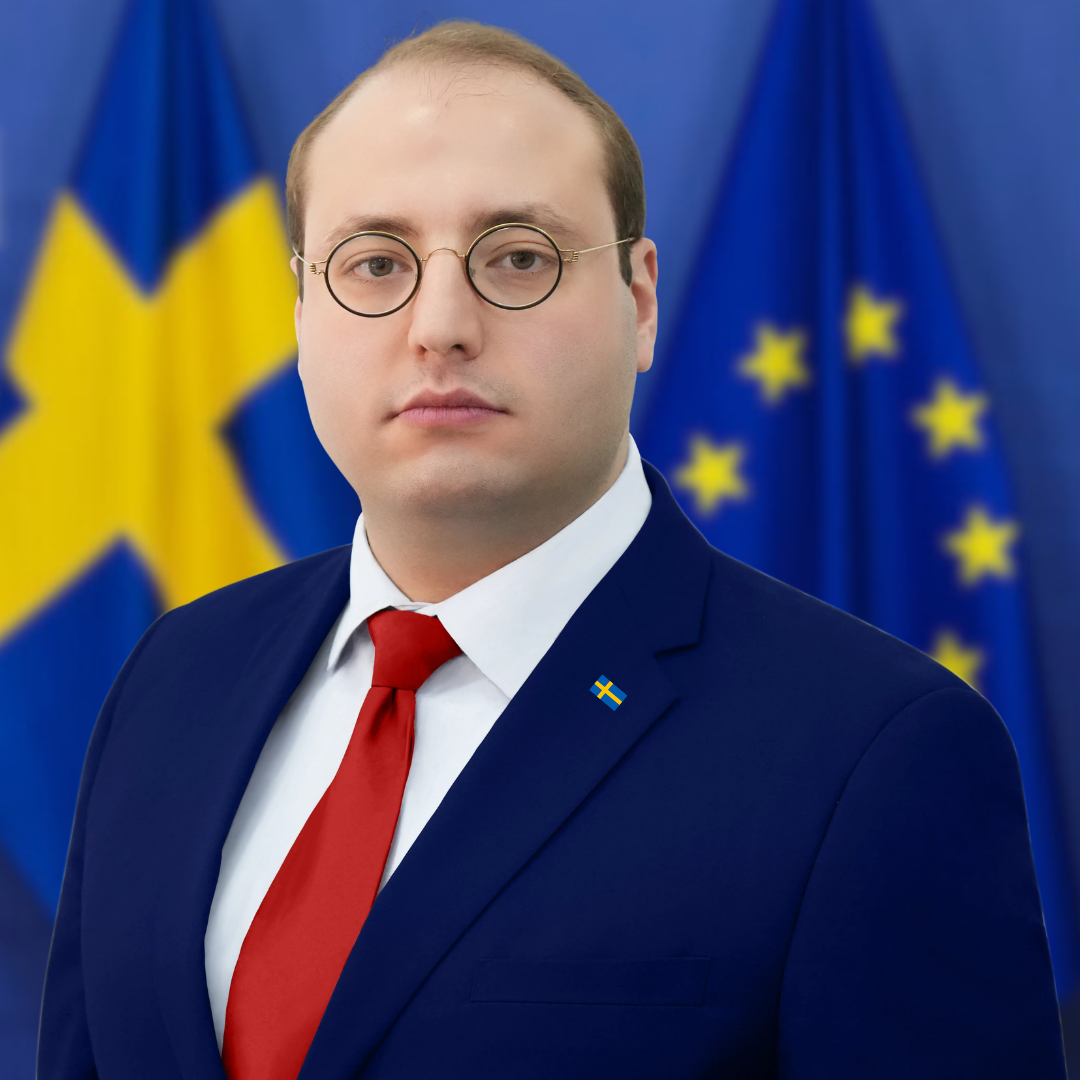
About Mr. Alex Matrsson
Mr. Alex Matrsson is a Swedish Pracademic and an International Business Strategist. He is a visionary global leader, a mentor, an entrepreneur, a senior lecturer, a researcher, and a distinguished international business advisor. He is the number one International Business Strategy graduate in Sweden. He has extensive experience initiating, running, and managing businesses across the global value chain, as well as working internationally with investors, SMEs, MNCs, government agencies, universities, and multidisciplinary research institutes. Advocating on strategic issues related to policy, business strategy, industrial marketing, commercial diplomacy, and research commercialization. When it comes to higher education, Mr. Matrsson believes in serendipity, innovation, and the power of synergy-making. Therefore, these concepts jointly constitute the springboard for his knowledge dissemination endeavors. He implements a pragmatic approach that is rigorous in nature. He systematically ensures the successful delivery of core business concepts, while simultaneously developing the students' ability to become reflexive thinkers. He aims to enable the students to operationalize their "state-of-the-art" knowledge constructively—so that they can become an invaluable source of prosperity, driving forward the "social" and "economic" well-being for their local communities, their regions, and the larger society, worldwide. His scientific endeavors consolidate around trade promotion, emerging markets, business resilience, and the network approach to internationalization. Mr. Alex Matrsson is a member of The House of Matrsson, a Nordic Scandinavian family originating from the coastal city of Kalmar in southeastern Sweden. Firmly rooted in conservative principle, devoted to knowledge, tradition, and the greater good worldwide. Finally, on a personal level, his wide-ranging interests include blue whales, Arabian horses, classical music, ethical capitalism, religion, culture, the Nordics, the GCC region, and Central Asia—particularly Kazakhstan.