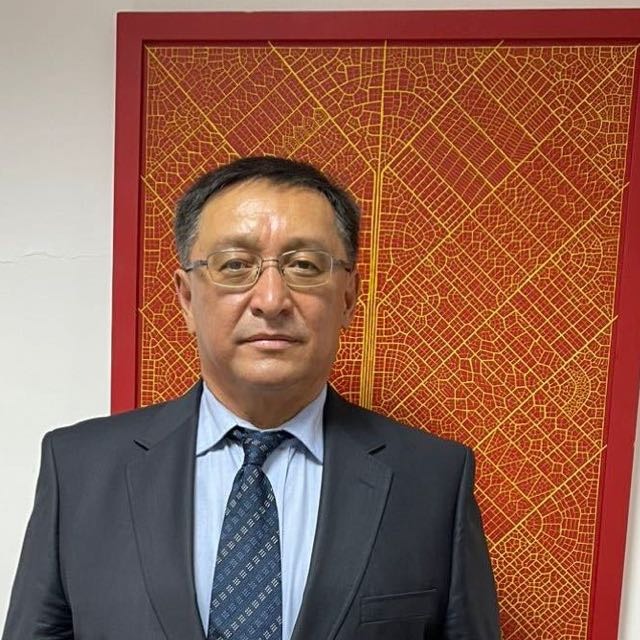

Kazakhstan is more than a neighbor and trading partner for China. In an exclusive interview with Delovoy Kazakhstan/DKNews.kz, Mr. Han Chunlin, Ambassador Extraordinary and Plenipotentiary of the People’s Republic of China to the Republic of Kazakhstan, spoke about how artificial intelligence, trade, the Middle Corridor and humanitarian ties are shaping a new agenda in relations between the two countries.
Mr. Ambassador, last month President of the Republic of Kazakhstan Kassym-Jomart Tokayev made a special visit to China to attend the World Artificial Intelligence Conference and the High-Level Meeting on Global AI Governance. During the visit, President Tokayev met with Chinese President Xi Jinping. The two sides exchanged views on the further development of bilateral relations. Cooperation between Kazakhstan and China in artificial intelligence attracted particular public attention. Could you tell us more about interaction between the two countries in this field?
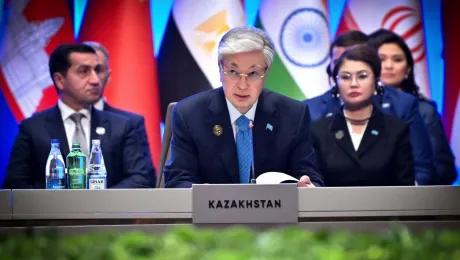
In July this year, President Kassym-Jomart Tokayev led a delegation to Shanghai to attend the 2026 World Artificial Intelligence Conference and the High-Level Meeting on Global AI Governance.

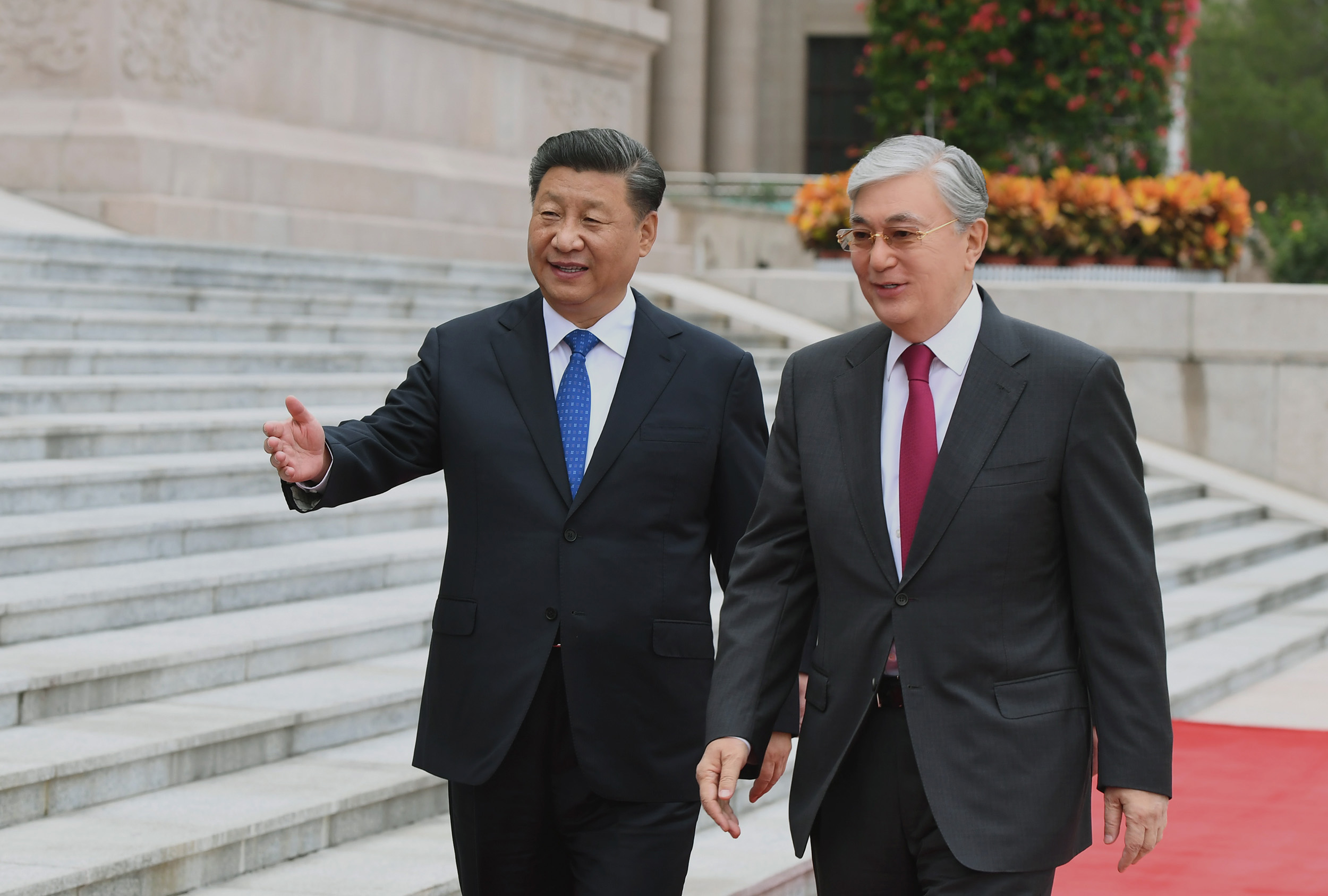
The visit included a meeting between the heads of the two states. I also had the honor of personally taking part in these important events.
During the meeting, Chinese President Xi Jinping noted that the permanent comprehensive strategic partnership between China and Kazakhstan continues to develop at a high level and demonstrates enormous potential for cooperation and broad prospects.
He stressed the need to strengthen the alignment of the two countries’ development strategies and policy coordination, consistently improve the level of practical cooperation, promote joint development, take bilateral relations to a new level and achieve new results.
President Kassym-Jomart Tokayev, in turn, emphasized that Kazakhstan regards relations with China as one of the priorities of its foreign policy and intends to further strengthen its permanent comprehensive strategic partnership with the PRC.
Kazakhstan expects to maintain close high-level contacts with the Chinese side, deepen practical cooperation, expand people-to-people exchanges and achieve even more substantial and tangible results in the development of bilateral relations.
The year 2026 is of special significance for both China and Kazakhstan. This year marks the 105th anniversary of the founding of the Communist Party of China and the start of implementation of China’s 15th Five-Year Plan for socio-economic development.
In Kazakhstan, a new Constitution came into force on July 1, elections for a new composition of the Kurultai will take place this month, and political and economic reforms in the country continue to deepen consistently.
Against this background, the heads of the two states held an in-depth discussion of cooperation prospects and key areas of further development, setting new benchmarks for Kazakhstan-China relations, creating new opportunities and expanding the scope for further interaction.
The World Artificial Intelligence Conference is one of the largest and most authoritative international events in the field of AI held at the initiative of the Chinese side.
This year it was held for the ninth time. Official representatives from more than 100 countries and international organizations took part, together with representatives of business, science and academia.
Two important documents were signed following the event: the “Chair’s Statement of the 2026 World Artificial Intelligence Conference and High-Level Meeting on Global AI Governance” and the “Agreement on the Establishment of the World Artificial Intelligence Cooperation Organization.”
Significant agreements were reached aimed at setting further directions for global AI governance, helping narrow the global digital and intelligence divide and addressing other pressing challenges.
I would particularly like to note that Kazakhstan joined the World Artificial Intelligence Cooperation Organization as one of its founding states. This demonstrates Kazakhstan’s firm support for initiatives put forward by the Chinese side, as well as its active and responsible participation in shaping the global AI governance system.

In recent years, China and Kazakhstan have been actively developing productive cooperation and exchanges in artificial intelligence.
Such interaction fully meets Kazakhstan’s national development needs and is becoming a powerful “intellectual engine” for its modernization.
Building on Chinese open-source large models, joint China-Kazakhstan laboratories, Luban Workshops and other platforms, our countries are conducting joint scientific and technological research and training qualified specialists, helping raise the level of practical application of artificial intelligence technologies in Kazakhstan.
The two sides are also developing cooperation under the “AI + public services” model, which contributes to greater transparency and efficiency in Kazakhstan’s digital public administration.
The joint implementation of the “Data Center Valley” project will also contribute to diversification of Kazakhstan’s economy.
Going forward, we intend to further deepen exchanges and cooperation in artificial intelligence, jointly promote its inclusive development, ensure broader access to the benefits and opportunities offered by intelligent technologies and work together to build an even better future for our two countries.
Please tell us about the current state of China’s economy. We have observed that trade and economic cooperation between Kazakhstan and China has maintained steady positive momentum in recent years. What specific measures, in your view, could take bilateral trade and economic cooperation to a new level?
In the first half of 2026, despite a complex and rapidly changing international environment, the Chinese economy demonstrated resilience, stable development and noticeable growth in new drivers.
Overall, the economic situation remained stable.
In the first half of the year, China’s gross domestic product reached 69.57 trillion yuan, equivalent to around $10.3 trillion at the current exchange rate, increasing by 4.7% year on year.
In absolute terms, GDP growth compared with the same period last year reached 3.6 trillion yuan, or about $533 billion, the highest figure for the same period in the past five years.
New quality productive forces are developing at an accelerated pace, while innovation is becoming one of the key drivers of economic growth.
Value added in high-tech manufacturing increased by 13.3%, while production of digital products rose by 12.3%.
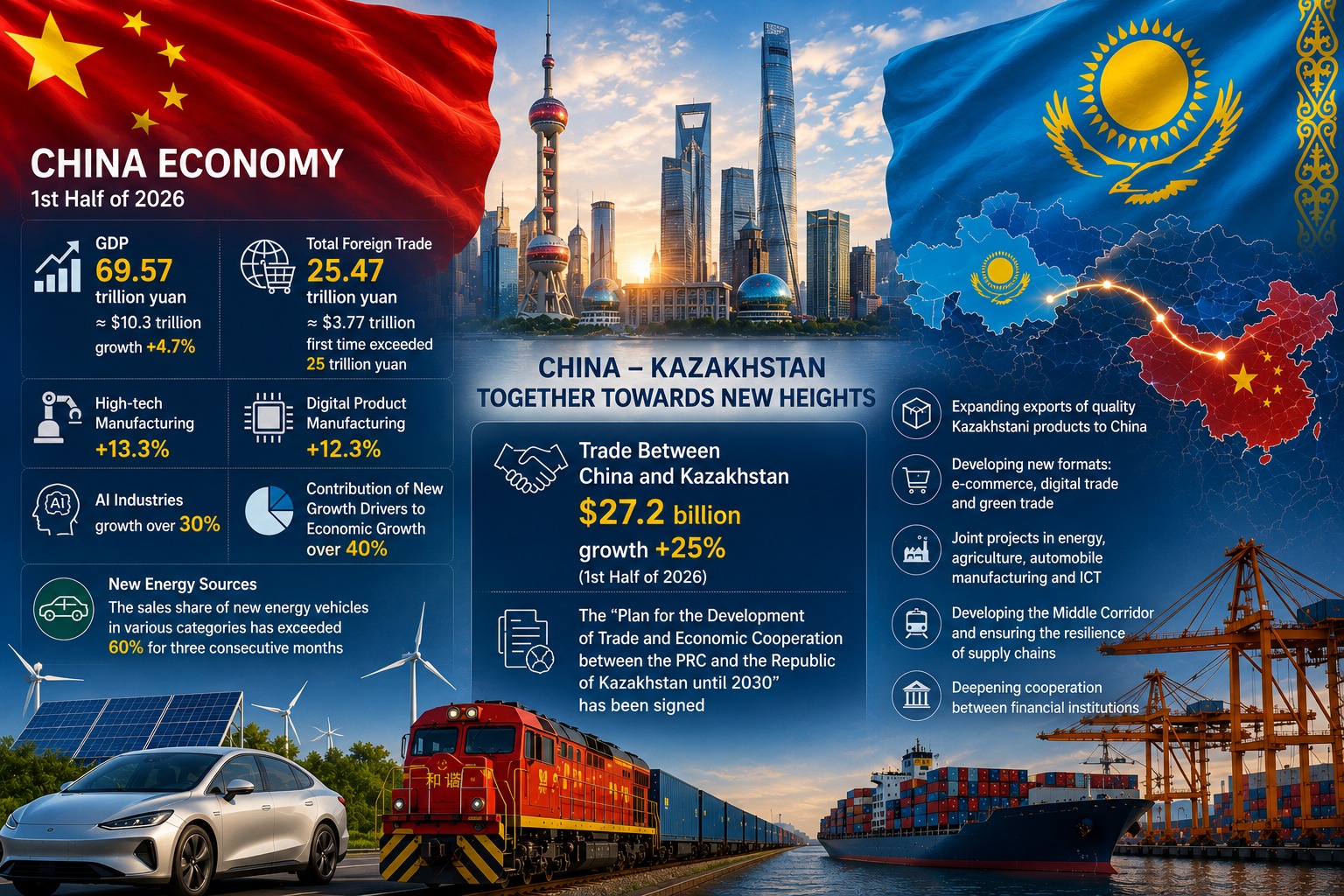
Industries related to artificial intelligence continue to grow at rates above 30%, while the contribution of new growth drivers to economic expansion has already exceeded 40%.
China’s foreign trade is also reaching new historic highs. In the first half of the year, trade in goods reached 25.47 trillion yuan, or around $3.77 trillion, exceeding the 25 trillion yuan mark for the first time.
Significant results have also been achieved in the development of the green economy. The share of new-energy vehicles in total retail automobile sales remained above 60% for three consecutive months, confirming China’s continued global leadership in this field.
In recent years, trade cooperation between China and Kazakhstan has maintained strong momentum.
China has been Kazakhstan’s largest trading partner for three consecutive years.
In the first half of this year, bilateral trade reached $27.2 billion, up 25% year on year.
During the meeting of the two heads of state in Shanghai, the parties signed the “Plan for the Development of Trade and Economic Cooperation between the Government of the People’s Republic of China and the Government of the Republic of Kazakhstan until 2030.”
The document further clarified priority areas of trade and economic cooperation for the next five years.
At the next stage, the parties will consistently implement the important agreements reached by the heads of the two states.
Taking advantage of Kazakhstan’s designation as the Country of the Year under the “Export to China” initiative in 2026, the two sides intend to make more effective use of platforms such as the China International Import Expo, the China International Consumer Products Expo and the China International Supply Chain Expo, as well as organize a series of trade promotion events.
This will help expand exports of high-quality Kazakhstani non-resource products to China.
At the same time, the parties plan to accelerate the development of new forms of cooperation, including cross-border e-commerce, digital trade and green trade, thereby giving additional momentum to traditional trade.
The two sides will also continue to promote joint projects in areas such as energy and mineral resources, modern agriculture, automobile manufacturing and information and communications technologies.
Particular attention will be paid to participation in the development of the Middle Corridor, as well as to jointly ensuring the stability and uninterrupted functioning of production and supply chains.
In addition, China and Kazakhstan will continue encouraging deeper cooperation between the two countries’ financial institutions, consistently improving the quality and level of bilateral trade and economic cooperation.
A high-level meeting marking the fifth anniversary of the Global Development Initiative was recently held in Beijing. Over the past five years, the initiative has played an important guiding role internationally, gained broad recognition from the global community and attracted active participation from many countries. Could you tell us what results have been achieved since the initiative was launched and how they are reflected in cooperation between China and Kazakhstan?
In September 2021, Chinese President Xi Jinping, speaking during the general debate of the 76th Session of the United Nations General Assembly, proposed the Global Development Initiative.
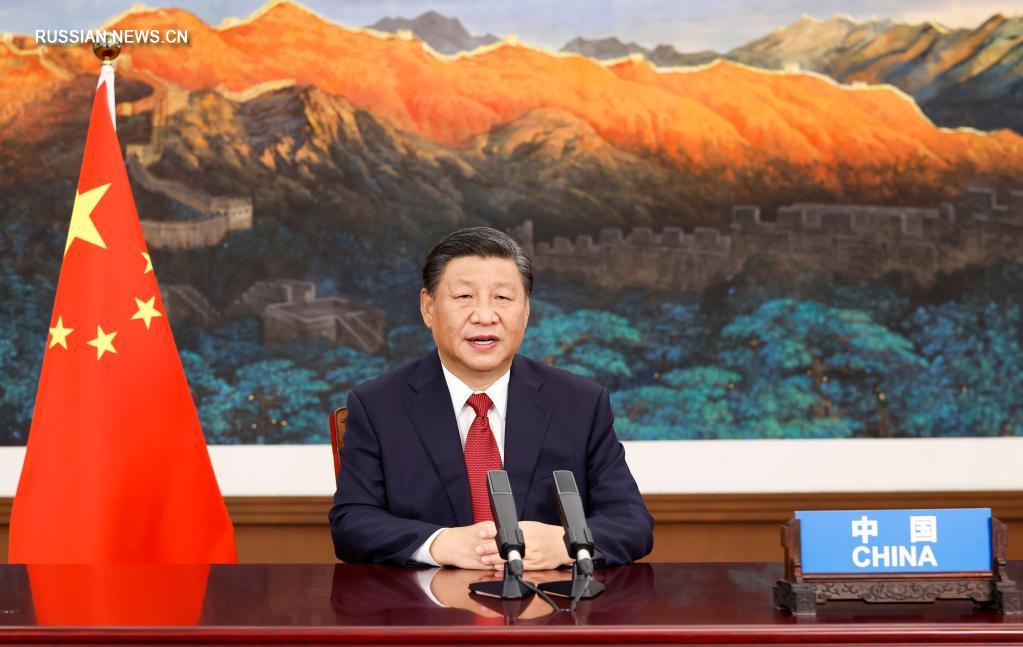
He called on the international community to place development among the priorities of global macroeconomic policy, accelerate implementation of the UN 2030 Agenda for Sustainable Development and promote more dynamic, green and healthy global development.
Over the past five years, the initiative has moved from concept to practical action, while the idea proposed by China has gained broad international recognition and become part of an international consensus.
More than 130 countries and international organizations have expressed support for the initiative and participate in cooperation within its framework.
Nearly 100 countries, international and regional organizations have signed relevant cooperation documents with China under the initiative, allowing the global development partnership to expand steadily.
The number of participants in the Group of Friends of the Global Development Initiative has increased to 88 countries, and today it has become an important force in advancing global development.
The China-UN Peace and Development Fund and the Global Development and South-South Cooperation Fund have also supported a range of relatively small-scale but effective projects focused on improving people’s well-being.
These initiatives have delivered tangible benefits to people in more than 120 countries.
Within the framework of the Global Development Initiative and joint implementation of the Belt and Road Initiative, practical cooperation between China and Kazakhstan is producing significant and tangible results.
Kazakhstan actively participates in the Group of Friends of the Global Development Initiative, making an important contribution to its development and expansion.
In trade and economic cooperation, bilateral trade reached $48.7 billion in 2025, setting another historic record.
In the same year, the second track of the Dostyk-Mointy railway line was officially commissioned. It is a key project aimed at increasing the capacity of China-Europe freight trains and improving the efficiency of cross-border transportation between China and Kazakhstan.
The project increased the line’s capacity fivefold.
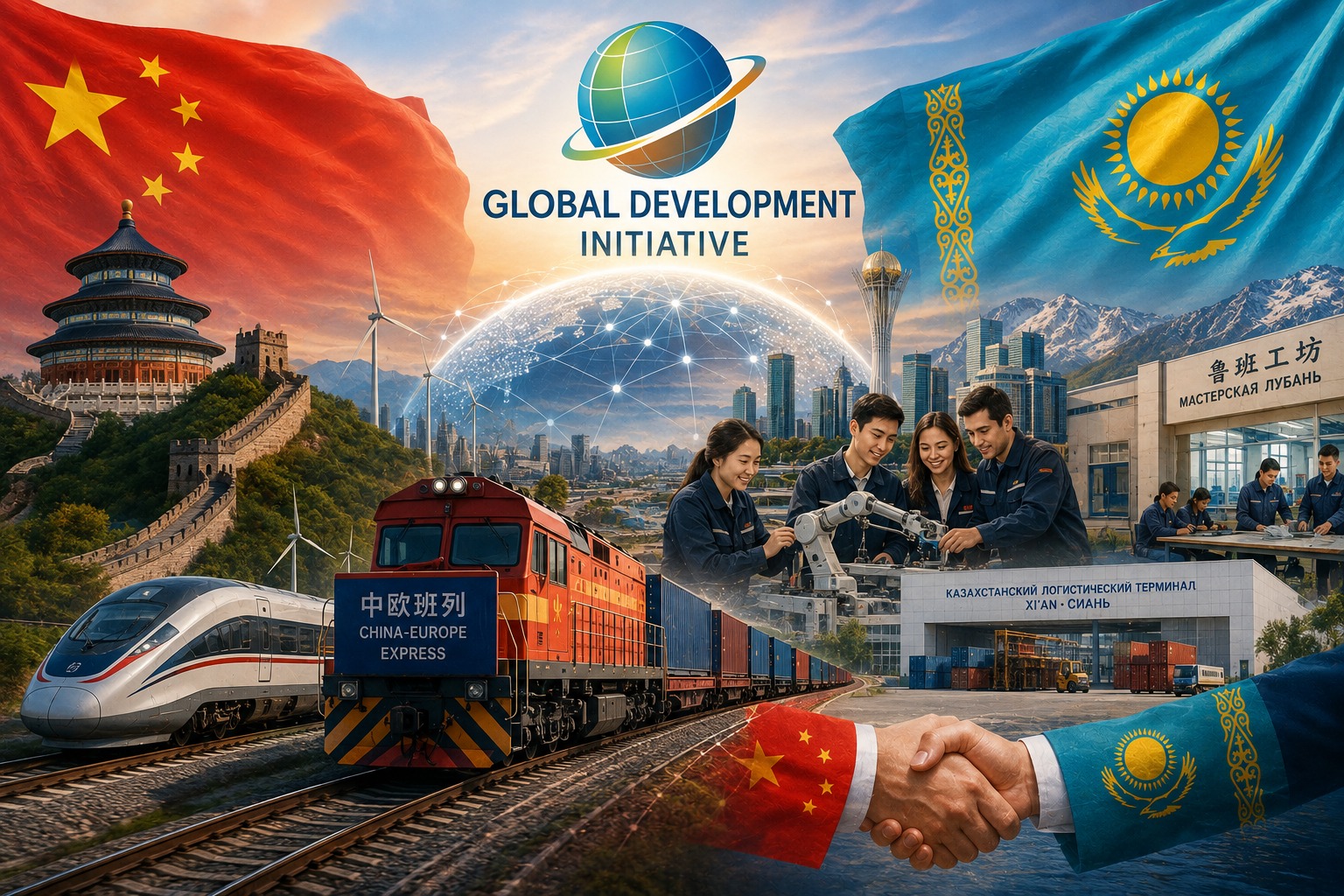
At the same time, the two sides are accelerating work on construction of a third railway border crossing between China and Kazakhstan.
The Kazakhstan logistics terminal in Xi’an has begun operations, becoming an important logistics hub for bringing Kazakhstani products to the Chinese market.
China and Kazakhstan have jointly opened three Luban Workshops, which help young people in Kazakhstan acquire in-demand practical and professional skills.
In 2025, the first journey of the China-Central Asia international cultural and tourism train on the Xi’an-Almaty route also took place.
These specific projects not only bring tangible benefits to the people of both countries, but also contribute to closer ties and stronger mutual understanding.
Going forward, the Chinese side intends to continue working actively with Kazakhstan to implement the Global Development Initiative, consistently deepen practical cooperation and achieve increasingly substantial and concrete results in interaction between our countries.
On July 1 this year, the Law of the People’s Republic of China “On Promoting National Unity and Progress” officially came into force. The law, which has become an important step in further improving China’s state policy on interethnic relations, has attracted attention in many countries around the world.
Could you tell us about the main objectives behind the adoption of this law? What significance does it have for further strengthening national unity, promoting balanced development across different regions of the country and advancing Chinese modernization?
China has been a unified multiethnic state since ancient times.
More than two thousand years ago, a historical pattern had already emerged in China in which the Huaxia civilization formed the core while various ethnic groups developed together.
Throughout a long historical process, the peoples of China continuously interacted, exchanged experience and grew closer to one another, jointly creating a rich cultural heritage and writing a shared history.
Gradually, a unified Chinese nation bringing together all ethnic groups in the country took shape.
Following the founding of New China in 1949, the basic principles and directions of state policy in the ethnic sphere were established, including equality and solidarity among peoples, regional ethnic autonomy, and the shared development and prosperity of all ethnic groups.
Today, the peoples of China firmly see themselves as part of a single community of the Chinese nation, building relations on equality, mutual support and assistance, living in harmony and unity, closely united like the seeds of a pomegranate.
The adoption and entry into force of the Law of the People’s Republic of China “On Promoting National Unity and Progress” represents an important step in strengthening the legal foundations of work in the ethnic sphere in the new era.
The law consistently follows a people-centered approach and legally guarantees representatives of all ethnic groups equal exercise of their lawful rights in political, economic, cultural, social and other spheres, as well as equal access to the benefits of the country’s modernization.
The law also allows representatives of different ethnic groups to move freely, seek employment and engage in entrepreneurial activity in accordance with the law.
At the same time, the principles of complete voluntariness, legality, compliance with established rules and freedom to choose one’s place of residence and activity are strictly observed.
All of this contributes to broader interaction, comprehensive exchanges and deeper integration among representatives of China’s various ethnic groups.
Promoting national unity and progress in China is aimed not only at ensuring that all ethnic groups equally enjoy the results of reform and development, but also at bringing together their knowledge, strength and aspirations around a common goal — advancing Chinese modernization and achieving the great rejuvenation of the Chinese nation.
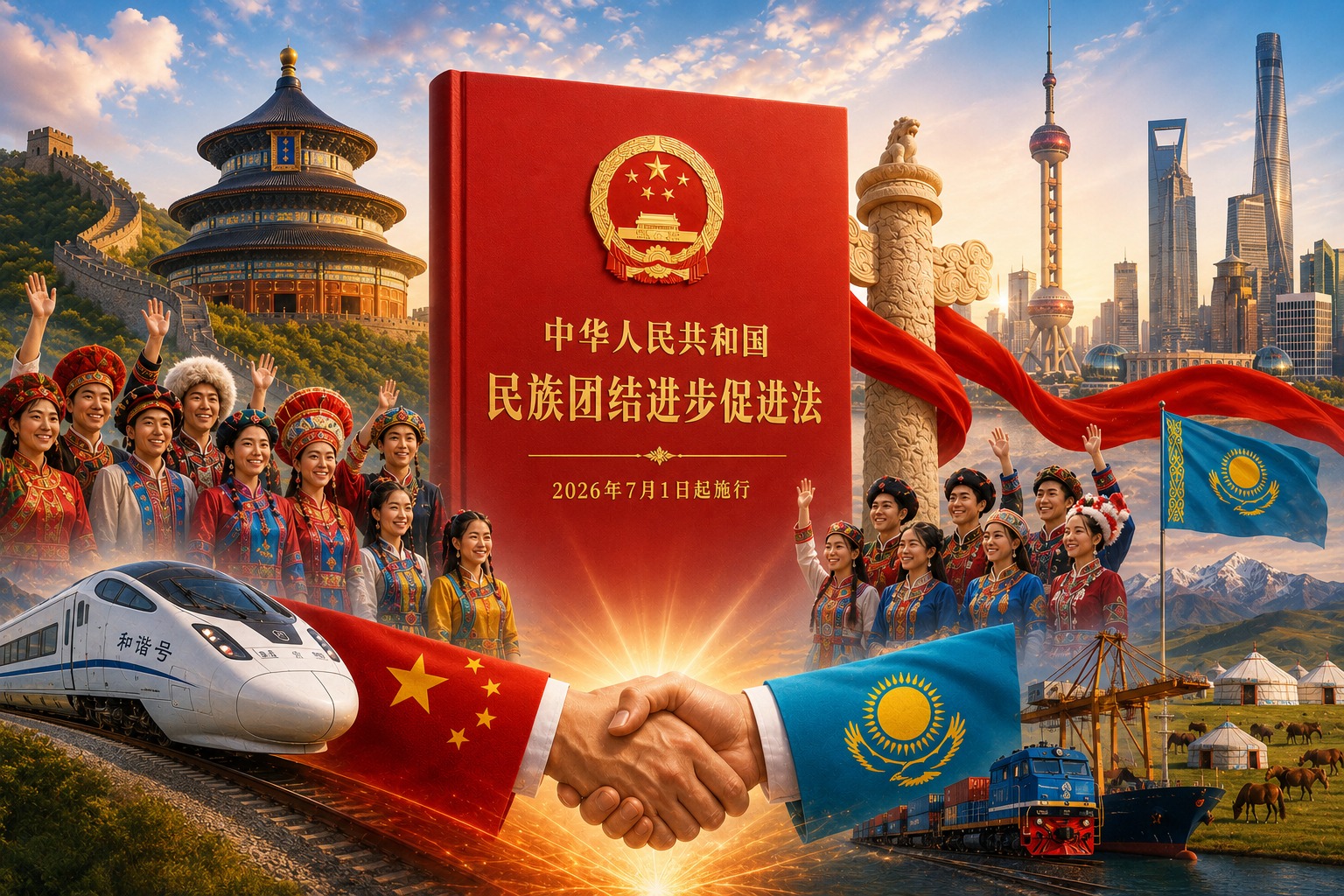
Kazakhstan is a multiethnic state with a rich and distinctive civilization. The country is home to representatives of around 140 ethnic groups and has approximately 1,000 ethnocultural associations.
As another multiethnic country, China highly values Kazakhstan’s significant achievements in interethnic harmony and national policy, and supports the country’s efforts to find its own development path in this sphere in accordance with its national conditions and the interests of all ethnic groups.
The Chinese side is ready to develop exchanges of experience and mutual learning with Kazakhstan in the field of interethnic relations, deepen cooperation on national policy, jointly promote the building of an even closer China-Kazakhstan community with a shared future, and bring more tangible benefits to both countries and their peoples.
Mr. Ambassador, during your time working in Kazakhstan you have visited many regions of our country and met representatives of a wide range of sectors.
As a diplomat and at the same time as an ordinary person, what has made the deepest impression on you in Kazakhstan? Which journeys, meetings, traditions or elements of Kazakh culture have left you with the warmest and most vivid memories? And finally, what would you like to say to readers of Delovoy Kazakhstan, who have followed the development of Kazakhstan-China relations with interest for many years?
Since arriving in Kazakhstan, I have visited many regions of the country and taken part in more than one hundred different events.
The traditional culture and customs of the Kazakh people have left me with deep and very warm impressions.
Last year, I took part in the “Ulystyn Uly Kuni — Revival of Traditions” event held at the National Museum of the Republic of Kazakhstan.
During the event, I was invited to take part in a special Kazakh ceremony — cutting the tusau, or symbolic bonds, of a one-year-old girl who was just beginning to take her first steps.
This is a very distinctive tradition filled with deep meaning. It embodies the good wishes of the child’s family — that she grow up healthy, walk confidently through life and have a prosperous path ahead.
I sincerely wish that little girl health, happiness and well-being throughout her life.
 Gov
Gov
During my travels across Kazakhstan’s regions, I also had the opportunity to visit the yurt of a livestock-breeding family.
The hosts prepared a generous traditional meal and did me the special honor of inviting me to divide and distribute the meat from a sheep’s head.
This custom vividly reflects genuine Kazakh hospitality, deep respect and trust toward a guest, and the warm wishes with which people here welcome those who have traveled from afar.
“Relations between states are founded on the closeness of their peoples.”
Taking this opportunity, I would like to convey my sincere greetings and best wishes to the readers of Delovoy Kazakhstan, and express my gratitude for their many years of attention to the development of China-Kazakhstan relations and their consistent support for friendship between our countries.
In recent years, thanks to the strategic guidance of the heads of the two states, China-Kazakhstan relations have maintained a high level of development and brought tangible benefits to both countries and their peoples.
At the same time, a growing number of citizens of China and Kazakhstan are actively joining efforts to strengthen friendship between our countries, becoming direct participants in and contributors to bilateral cooperation.
I hope that even more readers will be able to act as “people’s ambassadors,” actively sharing their proposals and ideas for the further development of bilateral relations.
This can contribute to strengthening and deepening friendship between the peoples of China and Kazakhstan, developing the permanent comprehensive strategic partnership and building an even closer China-Kazakhstan community with a shared future.