

Diplomacy Beyond Representation
A foreign ministry is often judged by the quality of its diplomacy: the negotiations it conducts, the relationships it maintains, the crises it manages and the agreements it helps secure. But that definition may now be too narrow. In an international environment shaped simultaneously by geopolitical competition, technological disruption, economic realignment, demographic change and increasingly contested access to knowledge and talent, the question is no longer simply how effectively a state conducts foreign policy. It is how effectively its entire foreign-affairs system converts international presence into national capability.
That distinction is central to the thinking of Mr. Alex Matrsson, a Swedish Pracademic and International Business Strategist. His perspective examines foreign affairs not as an isolated diplomatic function but as part of the machinery through which countries develop economic strength, knowledge, relationships, resilience, innovation and international competitiveness.
The proposition is ambitious. A modern Ministry of Foreign Affairs need not become a larger bureaucracy, nor should diplomacy be reduced to commercial promotion. Instead, the foreign-affairs system can be designed as a strategic national capability: connecting government with companies, investors, universities, researchers, technology ecosystems, international institutions and networks of expertise.
That raises a more demanding question about embassies. If a diplomatic mission is principally organized around representation, administration and protocol, what opportunities remain invisible? What intelligence never reaches the capital? Which partnerships are never formed? Which investment, research, technology or talent opportunities are missed because no institutional mechanism exists to identify and develop them?
In this exclusive interview, Mr. Alex Matrsson examines what a state-of-the-art foreign-affairs institution could look like, how embassies might be redesigned around mission-specific capabilities, how associated organizations could operate as an integrated internationalization architecture, and how governments might measure whether diplomacy is producing national value.
Question: The conventional image of a foreign ministry is still largely diplomatic, administrative and representational. Why is that model becoming insufficient?
Mr. Alex Matrsson: The difficulty is not that traditional diplomacy has become irrelevant. Quite the opposite: negotiation, representation, political reporting, consular work and relationship management remain indispensable. The problem is that the international environment has become too consequential and too interconnected for those functions to be treated as the complete definition of foreign affairs.
A government today is exposed internationally through capital, technology, research, supply chains, talent, data, education, energy, business networks and scientific cooperation as much as through formal diplomacy. A decision made in a technology ecosystem, an investment fund, a university laboratory or a regulatory institution abroad can have strategic consequences for a country even when no diplomat is sitting at the negotiating table.
I would therefore change the question. Instead of asking, “How should a foreign ministry modernize its diplomatic administration?” I would ask, “What international capabilities does the state require, and what institutional system should provide them?”
That reframing matters because it moves the discussion from organizational renovation to national purpose. The foreign-affairs institution becomes one component of a broader capability system. Its task is to give political leadership access to international relationships, information, expertise and opportunities that the country could not otherwise organize effectively.
The ministry does not have to own every capability. It needs to know where the capabilities reside, how they can be connected, and when the state should mobilize them.
Question: If foreign affairs is understood as a national capability rather than simply a ministry function, what changes first?
Mr. Alex Matrsson: The first change is conceptual, but it has practical consequences. You stop evaluating institutions according to their internal boundaries and start evaluating them according to the national outcomes they enable.
Consider an investment opportunity. It might involve a diplomatic mission, an investment agency, a finance ministry, a local industry, a university and perhaps a technology company. Under a fragmented model, each institution performs its own mandate. Under a capability model, the question becomes whether the country has a mechanism for bringing those capabilities together at the right moment.
That requires a different architecture. Strategic priorities should be identified at political level, translated into capability requirements, assigned to institutions with appropriate expertise, and supported by information systems and international networks. The foreign ministry can provide the international connective tissue without becoming the owner of everything.
I would also introduce the idea of a capability portfolio. A country should know which international capabilities it already possesses, which are weak, which are duplicated, and which are missing entirely. That portfolio might include economic intelligence, scientific relationships, diplomatic talent, technology scouting, crisis preparedness, international communications and access to decision-makers.
The result is a much more disciplined conversation about resources. The objective is not to make every institution bigger. It is to determine where additional capability will generate the greatest strategic return.
Question: What would a state-of-the-art Ministry of Foreign Affairs actually look like organizationally?
Mr. Alex Matrsson: I would resist designing it from an ideal organizational chart. The starting point should be the country's strategic requirements.
A capable foreign ministry would retain a strong diplomatic core while developing specialized functions that allow it to understand and operate across economic, technological, scientific, social and geopolitical domains. It would also have unusually strong interfaces with institutions outside the ministry.
Its internal design should support three different kinds of work. The first is representation and diplomacy: political relationships, negotiation, multilateral engagement and crisis management. The second is international intelligence: understanding developments that may affect national interests. The third is capability mobilization: turning information and relationships into coordinated action.
Those functions require different skills and rhythms. Political diplomacy may depend heavily on judgment and trust. Economic intelligence requires analytical competence. Technology scouting may require people who understand research and commercialization. Crisis response requires speed and authority.
The ministry therefore needs a talent architecture capable of combining career diplomats with economists, scientists, technology specialists, legal experts, analysts, communications professionals and people with substantial experience outside government.
The institution should remain recognizably diplomatic. But its operating model should reflect the complexity of the environment in which diplomacy now takes place.
Question: How should economic diplomacy be understood if the objective is broader than simply promoting exports?
Mr. Alex Matrsson: Economic diplomacy becomes more interesting when it is treated as a national intelligence and relationship function rather than a promotional activity.
Exports are important, but before an export occurs there is usually a chain of information and relationships: understanding a market, identifying a buyer, interpreting regulation, finding partners, assessing political risk, locating financing and establishing sufficient trust. Diplomatic networks can help illuminate that chain.
The same applies to investment. Attracting capital is not merely a matter of presenting a country attractively. A serious investment relationship may require knowledge of the investor's strategy, the relevant technology, competing jurisdictions, regulatory conditions and the country's own long-term priorities.
This creates a more sophisticated role for economic diplomacy. The state can help companies understand foreign markets while simultaneously helping policymakers understand how those markets are changing. It can identify strategic relationships before they become commercially obvious.
There is also a defensive dimension. Economic diplomacy can reveal vulnerabilities in supply chains, dependencies in critical technologies or regulatory developments that may affect national competitiveness.
The strongest system therefore creates two-way intelligence. The international network informs domestic strategy, while domestic capabilities give diplomats something substantive to bring into international relationships.
Question: National capability is often discussed in economic or security terms. What is lost when human, social and intellectual dimensions are excluded?
Mr. Alex Matrsson: A country can possess capital and technology and still lack the people and institutional relationships required to use them effectively.
Human capability includes the ability to attract expertise, develop internationally experienced leaders, move talent across borders and maintain professional networks that survive changes in government. A foreign-affairs system can contribute to that capability by connecting national institutions with international talent pools and professional communities.
The social dimension is equally important. Diaspora communities, cultural institutions, educational exchanges and civil-society relationships create forms of international connectivity that formal government channels cannot replicate.
Then there is knowledge. Universities and research institutions are not peripheral to national international strategy. They are sources of expertise, partnerships, scientific credibility and access to global research networks.
A sophisticated foreign-affairs system therefore needs to understand knowledge as a strategic resource. It should know where important expertise exists internationally, which research relationships matter to national priorities and where domestic institutions could benefit from deeper connections.
That is very different from asking a diplomat simply to “support education” or “promote science.” It means building a repeatable institutional capability for international knowledge acquisition.
Question: Does this imply that universities, research institutions and businesses should effectively become part of the foreign-affairs system?
Mr. Alex Matrsson: They should become connected to it, not absorbed by it.
Institutional independence is valuable. Universities should remain universities, companies should pursue legitimate commercial objectives, and government must retain responsibility for public policy. The challenge is creating interfaces through which these different institutions can cooperate without erasing their distinct purposes.
One useful mechanism is the strategic network forum around a defined national priority. Suppose a country identifies a particular technology, industrial sector or scientific field as strategically important. The relevant diplomatic missions, ministries, universities, companies and research bodies could maintain a common picture of international developments and relationships.
Another mechanism is mobility. A diplomat could spend time in a research institution; a scientist could contribute to a diplomatic mission; a business specialist could join a government project for a defined period. Such exchanges build what I would call institutional translation capacity—the ability to understand how different sectors think and to convert knowledge from one environment into decisions in another.
The goal is not to make everyone speak the same institutional language. It is to make sure that important knowledge does not remain trapped inside organizational silos.
Question: You have described the embassy as more than a diplomatic office. What should a modern embassy become?
Mr. Alex Matrsson: A modern embassy should be understood as a forward-deployed national capability platform.
That does not mean turning every mission into a giant commercial office. It means giving the mission a clear purpose in relation to the country's strategic interests.
An embassy is physically located where information originates. It sits close to foreign ministries, corporations, investors, universities, regulators, laboratories, cultural institutions and political networks. That proximity is an asset. If the institution uses it only for formal representation, much of its potential is left dormant.
A capable mission should therefore perform four connected functions.
As a sensor, it detects political, economic, technological and social developments.
As a connector, it establishes relationships between relevant actors abroad and institutions at home.
As a catalyst, it helps turn promising relationships into concrete initiatives.
As a platform, it provides the institutional continuity required to maintain those relationships over years rather than through isolated visits or individual contacts.
The distinction is subtle but important. The embassy is not being asked to become a business development office. It is being asked to become much better at converting international presence into usable national capability.
Question: What would those four functions look like in day-to-day embassy operations?
Mr. Alex Matrsson: The difference would be visible in how the mission allocates time.
A sensor function might involve systematic monitoring of regulatory changes, political developments, emerging technologies, investment trends or shifts in public opinion. The important issue is not producing more reports. It is identifying signals that could change a national decision.
The connector function requires deliberate relationship mapping. Who actually influences the issue? Which institutions possess expertise? Which company controls a relevant technology? Which researcher has access to a new field? Which political or regulatory actors will shape the outcome?
Catalytic work begins when the mission sees an opportunity for connection. That could involve bringing a company and a potential partner together, helping researchers identify an international collaborator, or creating a government-to-government channel around an emerging strategic issue.
The platform function is what prevents these activities from becoming dependent on individual personalities. Relationships, knowledge and lessons need to remain institutionally accessible when personnel change.
That creates a continuous cycle: observe, interpret, connect, mobilize, execute, learn and inform national strategy. Each stage requires different competencies, but the system becomes powerful when they are linked.
Question: If embassies are to perform these roles, should strategically important missions become much larger?
Mr. Alex Matrsson: Sometimes, but size is a poor proxy for capability.
The correct question is what the mission needs to accomplish. A country with a major technology relationship may need people capable of understanding research ecosystems, venture capital and regulation. A mission in a highly significant trading market may require greater commercial and economic expertise. A location exposed to severe geopolitical risk may need stronger analytical and crisis capabilities.
This points toward mission-specific staffing rather than a standardized embassy template.
One mission might need a small team of exceptionally specialized experts. Another may justify a broader multidisciplinary structure because the country is strategically important across several domains.
There is also a case for flexible capacity. Not every specialist has to be permanently posted. Regional analytical teams, shared technology specialists, temporary secondments and remotely connected expert networks can supplement the permanent mission.
The distinction I would insist on is between bureaucracy and capability. Adding personnel without redesigning responsibilities, information flows and decision rights can produce a larger institution without producing better outcomes.
The objective should be maximum strategic capability per unit of resource.
Question: Which specialists belong in a high-capability embassy that would rarely have been considered part of traditional diplomatic staffing?
Mr. Alex Matrsson: The answer depends on the mission, but the range can be much broader than the classic diplomatic profile.
A strategically significant mission could draw on economists, investment professionals, technology specialists, data analysts, scientists, education experts, regulatory specialists, legal professionals, geopolitical researchers, communications specialists and people with deep sector knowledge.
The important issue is not collecting impressive job titles. It is assembling complementary cognitive capabilities.
A technology specialist may recognize an emerging development, but a diplomat may understand the political relationships required to engage with the relevant institution. A business strategist may identify a commercial opportunity, while a policy specialist assesses its regulatory implications. A scientist may understand the significance of a research breakthrough, while a communications professional considers how the country's reputation affects cooperation.
Multidisciplinary staffing works when these people actually operate as a team rather than as separate departments occupying the same building.
I would also deliberately include people with experience outside government. International business, universities and research institutions often develop capabilities that governments cannot reproduce quickly through conventional recruitment.
Question: What should such an embassy actually produce?
Mr. Alex Matrsson: It should produce intelligence, relationships, opportunities and institutional learning.
A useful mission might maintain strategic maps of the major actors in its host environment. It could track investment patterns, emerging technologies, regulatory developments and political relationships relevant to national priorities.
It could produce opportunity assessments rather than generic market reports. Instead of saying that a sector is growing, the analysis should identify which actors matter, what barriers exist, where a national capability fits and what intervention could realistically change the outcome.
It should also maintain relationship portfolios. A government should know not simply who its diplomats have met, but which relationships have strategic relevance, who owns them institutionally and what mutual value has been created.
Finally, the embassy should send learning home. A mission that discovers an emerging technological development or a change in regulatory philosophy should not merely file a report. The information should reach the ministry, relevant agencies, businesses, researchers or political decision-makers who can act on it.
The output is therefore not activity. It is usable capability.
Question: How should governments prevent this broader embassy mandate from becoming an uncontrolled expansion of responsibilities?
Mr. Alex Matrsson: By imposing strategic discipline.
Every mission cannot pursue every possible opportunity. A broad mandate without priorities creates exactly the bureaucracy that reform is supposed to avoid.
I would give each strategically important mission a defined capability mandate based on national priorities and the characteristics of the host environment. That mandate should identify perhaps a small number of strategic themes, the networks that matter, the intelligence questions that need answering and the outcomes the mission is expected to influence.
There should also be an explicit distinction between core diplomatic responsibilities and additional capability functions. Consular protection, political representation and crisis responsibilities cannot be displaced by commercial or analytical activity.
Resource allocation should follow the mandate. If a government says a country is strategically important for advanced technology but gives its mission no relevant expertise, the policy is internally inconsistent.
Finally, missions should periodically retire activities that no longer generate sufficient value. Strategic focus requires saying no.
Question: What does an integrated internationalization architecture look like beyond the foreign ministry itself?
Mr. Alex Matrsson: It begins by recognizing that many countries already possess the necessary pieces but operate them as separate organizations.
Trade bodies, investment agencies, development institutions, cultural organizations, educational organizations, research institutions and diplomatic missions may all maintain international networks. The problem is often that their information, priorities and relationships are only partially connected.
An integrated architecture does not require merging them. It requires shared strategic intelligence and clear division of responsibilities.
At national level, there could be a common strategic picture identifying priority countries, sectors, technologies, institutions and relationships. Organizations would then contribute according to their mandates.
A trade organization might lead on market development. An investment agency might manage investor relationships. A research body might develop scientific partnerships. The diplomatic mission provides political context, access, coordination and institutional continuity.
Shared data standards can help, but technology alone will not solve the problem. Someone must have responsibility for resolving overlaps, deciding priorities and determining when several institutions should work together.
Coordination becomes meaningful only when it changes decisions and resource allocation.
Question: Where should the head of government sit within this architecture?
Mr. Alex Matrsson: Political leadership should determine national priorities without attempting to micromanage international execution.
The head of government is uniquely positioned to establish the hierarchy of national interests: which economic relationships matter most, where strategic resilience is required, which technological capabilities deserve attention and what international partnerships support the country's long-term objectives.
Those priorities then need translation into institutional plans.
The foreign minister has an important role in converting political direction into a coherent foreign-policy approach while protecting professional diplomatic judgment. Other ministers and agencies retain their substantive responsibilities. The foreign ministry's distinctive contribution is often its ability to see how those domestic capabilities intersect with international relationships.
This creates a chain of accountability: political leadership establishes direction; institutions develop capabilities; missions execute internationally; intelligence returns to the center; and political leadership adjusts priorities as circumstances change.
Centralization should stop where it begins to undermine expertise or operational speed. A head of government should not need to approve every international initiative. The purpose of a good architecture is precisely to allow competent institutions to act within clearly defined strategic boundaries.
Question: How can foreign-affairs institutions become better at geopolitical intelligence without turning diplomacy into an intelligence bureaucracy?
Mr. Alex Matrsson: By distinguishing information collection from intelligence judgment.
Diplomats already encounter enormous quantities of information. The problem is rarely access to more material. It is determining which signals matter, how reliable they are, what they mean and what action they should trigger.
A modern geopolitical intelligence function should therefore combine structured analysis with the contextual knowledge held by diplomats. Analysts can identify patterns across economic, political, technological and social data. Diplomats contribute local knowledge, relationships and an understanding of institutional behavior.
The system should also have a strong early-warning component. Instead of waiting for a geopolitical development to become obvious, analysts should identify weak signals and formulate alternative scenarios.
There is a cultural requirement here. Political leadership must be willing to receive analysis that is inconvenient or uncertain. If intelligence is rewarded only when it confirms existing assumptions, the institution will become less useful precisely when uncertainty is greatest.
Good strategic intelligence does not predict the future with false precision. It improves the quality and timing of decisions.
Question: Where does artificial intelligence fit into this model?
Mr. Alex Matrsson: AI has genuine potential in foreign affairs, but its strongest applications are less glamorous than the public discussion sometimes suggests.
Large volumes of multilingual information can be processed more efficiently. Regulatory documents can be monitored. Patterns across economic and political data can be surfaced. Internal knowledge can become more searchable. Analysts can use AI-assisted tools to compare scenarios or identify developments that deserve closer human investigation.
That can materially improve institutional capacity.
But foreign affairs contains domains where contextual judgment matters more than processing speed. Trust, ambiguity, political intent, cultural nuance and confidential relationships cannot simply be converted into datasets.
There are also risks involving bias, information quality, confidentiality, cybersecurity and overconfidence in machine-generated analysis. A system that produces a plausible answer quickly can be more dangerous than one that admits uncertainty.
I would therefore design AI as an augmentation layer. Machines should help people see more, process faster and test assumptions. Humans must remain responsible for interpretation, diplomacy and consequential decisions.
The strategic advantage will not belong to the government that deploys the most AI tools. It will belong to the institution that redesigns its workflows intelligently around them.
Question: Does the traditional diplomatic career model provide the talent required for this broader system?
Mr. Alex Matrsson: It provides part of it.
Career diplomats develop capabilities that are difficult to reproduce elsewhere: political judgment, negotiation, cultural literacy, institutional memory and the ability to operate under ambiguity. Those capabilities should remain central.
But the international environment also requires specialists whose expertise may have been developed in laboratories, investment firms, technology companies, universities, regulatory institutions or international organizations.
The answer is not to replace diplomats with specialists. It is to create a more permeable institution.
Secondments can be particularly valuable. So can mid-career recruitment, joint appointments, fellowships and structured exchanges. A government should be able to bring in expertise for five years without assuming that every specialist must spend an entire career inside the state.
Career progression should reward interdisciplinary competence as well. A diplomat who understands technology, economics or scientific research should be able to develop that expertise without abandoning the diplomatic profession.
The deeper reform concerns institutional identity. Foreign-affairs organizations need to become places where different forms of expertise can work together without creating a hierarchy in which only one professional background is considered legitimate.
Question: How should a government begin building such a system without attempting institutional transformation everywhere at once?
Mr. Alex Matrsson: Begin with a capability audit, not a reorganization.
The audit should ask what the country needs internationally, what it already has, where capability is fragmented and where important gaps exist. It should map institutions, talent, information systems, diplomatic networks and external relationships.
Then select a small number of strategic priorities for pilots. These could be a particular country relationship, technology field, export market or geopolitical challenge. The purpose is to demonstrate a new operating model under real conditions.
A pilot embassy could, for example, establish a multidisciplinary team around clearly defined national priorities and test new methods for intelligence, relationship mapping, opportunity development and reporting. The lessons should then inform broader reform.
Some changes will require legislation or formal restructuring. Others may require nothing more than new mandates, shared processes or different leadership behavior.
Sequencing matters. Governments should not attempt simultaneous changes to organizational structures, technology, recruitment, budgets and performance systems without understanding their interactions.
Reform should accumulate evidence. Each stage ought to answer a practical question that informs the next one.
Question: What would you measure to determine whether this model is actually working?
Mr. Alex Matrsson: I would use several layers of measurement because no single metric can capture diplomatic value.
At the operational level, you can measure responsiveness, intelligence quality, network coverage, partnership development and the speed with which relevant information reaches decision-makers.
At the outcome level, you can examine investment, trade, research partnerships, talent connections, technology relationships, market access and other results associated with strategic priorities.
Then there is institutional performance. Are agencies sharing information more effectively? Can leadership identify emerging risks earlier? Are diplomatic missions retaining knowledge when personnel rotate? Are scarce specialists being deployed where they matter most?
Finally, there are strategic effects, which are inherently harder to quantify: improved resilience, stronger international positioning, better access to decision-makers, reduced exposure to certain risks or greater ability to shape an international discussion.
The mistake would be to convert all of this into a simplistic scorecard. A diplomatic mission should never be punished because a valuable relationship did not produce an immediate measurable transaction. Some of the most important outcomes are options created before they are exercised.
Question: Could an excessive focus on measurable economic outcomes damage diplomacy?
Mr. Alex Matrsson: Certainly.
If ambassadors are judged primarily by the number of deals associated with their mission, they may prioritize visible transactions over strategically important relationships. They may also favor short-term opportunities at the expense of resilience or long-term positioning.
Diplomacy operates on different time horizons. A relationship developed over a decade may become decisive during a crisis. A scientific partnership may produce no immediate commercial result but create access to expertise that becomes strategically important later.
The solution is not to abandon measurement. It is to measure the right things.
Governments should distinguish outputs from outcomes and immediate outcomes from strategic options. They should also use qualitative assessment where causality is difficult to establish numerically.
There is a second safeguard: public value must remain the standard. Diplomatic engagement with business is legitimate when it advances national interests transparently. It becomes problematic when institutional resources are effectively captured by narrow commercial interests.
Economic diplomacy needs boundaries precisely because it matters.
Question: How should governments manage international networks as a strategic asset rather than simply as a collection of contacts?
Mr. Alex Matrsson: A network becomes a capability when the institution knows what it is for.
I would begin by mapping relationships according to strategic relevance rather than social proximity. Which governments, companies, universities, investors, researchers, civil-society organizations and international institutions matter to national priorities? Who influences them? Where are the gaps?
The next step is stewardship. Relationships should have institutional owners, defined purposes and continuity mechanisms. If a critical relationship exists only because one ambassador happens to know someone personally, the state does not really possess that relationship as an institutional asset.
Networks also need reciprocity. A country cannot expect international partners to remain engaged if every interaction is extractive. Strong networks are built through mutual value: knowledge sharing, research cooperation, business opportunities, political access, cultural exchange or assistance during difficult periods.
Finally, network intelligence should inform strategy. If repeated conversations with international actors reveal that the country's reputation is weaker than domestic policymakers believe, that is strategic information. If researchers identify a major technological opportunity, that should affect policy.
The network should therefore be treated as a living source of knowledge and access, not a database of names.
Question: What is the most difficult political obstacle to this transformation?
Mr. Alex Matrsson: Institutional incentives.
Organizations naturally protect mandates, budgets, expertise and identity. A reform that asks several institutions to share information, coordinate priorities or surrender some autonomy can encounter resistance even when everyone agrees with the stated objective.
There is also a political temptation to announce broad international strategies without resolving who has authority to make difficult choices. A strategy that lists fifty priorities is not really a strategy.
Senior leadership therefore has to make trade-offs explicit. Which countries matter most? Which capabilities deserve investment? Which activities should be stopped? Who has decision rights when mandates overlap?
There is another obstacle: the fear of failure. Experimentation in government is difficult because unsuccessful pilots can become politically expensive. Yet an institution that cannot experiment will eventually become less capable than the environment around it.
The answer is disciplined experimentation with clear boundaries. A pilot should have a defined purpose, resources, leadership, evaluation criteria and a decision point at which government chooses whether to scale, modify or stop it.
Reform becomes credible when institutions see that change is governed rather than improvised.
Question: What role should business play in this new foreign-affairs architecture without allowing private interests to determine public strategy?
Mr. Alex Matrsson: Business should be a source of expertise, opportunity and international intelligence, but not a substitute for public decision-making.
Governments need to understand how companies experience foreign markets, where regulatory barriers exist, how investment decisions are made and which technologies are becoming commercially significant. Companies can provide information that government cannot generate efficiently by itself.
The institutional interface matters. Advisory councils, structured consultations, sector dialogues and transparent partnership mechanisms can create channels for that knowledge.
But government should retain an independent assessment of national interest. A company may reasonably prioritize its own market position; the state must consider employment, resilience, competition, security, public finances, technology access and broader societal consequences.
The healthiest relationship is therefore neither distance nor capture. It is structured engagement with clear rules.
A sophisticated embassy can be particularly useful here because it can aggregate signals from many companies rather than allowing the state to become dependent on one corporate voice.
Question: How should foreign-affairs institutions think about the next ten or twenty years rather than simply responding to current events?
Mr. Alex Matrsson: They need a permanent foresight function that is connected to decision-making rather than isolated as an intellectual exercise.
A serious foresight process should examine several interacting forces: geopolitical fragmentation, technological change, demographic shifts, energy transitions, climate pressures, changing trade patterns and the evolution of international institutions.
The objective is not to predict a single future. It is to identify plausible futures and test national preparedness against them.
For example, if a critical technology becomes concentrated in a small number of jurisdictions, what does that mean for national resilience? If a major trade route becomes less reliable, which relationships and infrastructure become more important? If a country's demographic structure changes, where will it obtain skills?
Foresight should then influence present investment decisions. Some capabilities take years to build. Talent networks, research relationships, diplomatic expertise and institutional trust cannot be created overnight during a crisis.
The most valuable foreign-affairs institutions will therefore help political leaders distinguish between what is urgent and what is merely visible.
Question: What should a government deliberately avoid when attempting to build this new model?
Mr. Alex Matrsson: It should avoid confusing activity with capability.
There is a persistent temptation to respond to institutional weakness by creating more committees, strategies, dashboards and coordination groups. These can produce the appearance of modernization while leaving the underlying decision process unchanged.
Governments should also avoid copying another country's model without understanding its institutional context. A foreign-affairs system must fit the country's political structure, economic profile, administrative culture, geography and strategic position.
Another mistake is attempting to digitize dysfunctional processes. If information is fragmented because nobody knows who needs it or who has authority to act, a new platform will not solve the underlying problem.
And I would avoid the assumption that every embassy should look the same. Standardization is useful for core functions; strategic capability should be differentiated according to mission.
Perhaps the most damaging mistake is trying to reform everything simultaneously. Institutional change needs a sequence. Build the strategic priorities first, then align capabilities, incentives, technology and resources around them.
Question: What would a genuinely modern relationship between a foreign ministry and its embassies look like?
Mr. Alex Matrsson: It would involve greater two-way movement of knowledge.
The capital should provide strategic direction, analytical resources, specialist support and political coordination. Missions should provide local intelligence, relationships, emerging signals and practical feedback.
The old model can sometimes resemble a one-way reporting structure: the embassy reports and headquarters decides. A more capable model treats missions as active contributors to strategy.
That requires headquarters to trust professional judgment while establishing clear accountability. It also requires missions to communicate uncertainty honestly. If every report is written to satisfy headquarters, the feedback loop becomes distorted.
Technology can help create shared knowledge environments, but organizational behavior matters more. Information has to be accessible across departments, and people need incentives to contribute knowledge rather than protect it.
The strongest relationship between headquarters and missions is therefore neither centralized nor decentralized in absolute terms. Strategic priorities can be coordinated centrally while intelligence, experimentation and relationship development remain sufficiently flexible at the edge.
Question: What does national competitiveness look like from a foreign-affairs perspective?
Mr. Alex Matrsson: Competitiveness is partly about what a country can produce, but it is also about what it can access, learn, attract and influence.
A country may possess excellent domestic institutions yet lose advantage if it is poorly connected to international capital, research, technology or talent. Conversely, a smaller country can sometimes compensate for limited scale by developing unusually effective international networks.
Foreign affairs contributes by expanding the country's external opportunity set.
That includes access to markets, research partnerships, investment relationships, technology ecosystems and decision-making networks. It also includes the ability to understand external threats before they become domestic constraints.
This is why international strategy should not sit entirely within foreign policy. It intersects with industrial policy, education, science, innovation, investment and economic development.
A country's international network can effectively extend its national capability beyond its physical borders. The strategic question becomes how deliberately that external capability is designed and maintained.
Question: If you were advising a government beginning this journey tomorrow, what would you tell its leadership to do first?
Mr. Alex Matrsson: I would ask the leadership to resist the urge to announce a grand reform before understanding the existing system.
First, establish a small, politically authoritative assessment of national international capability. Map the institutions, talent, information flows, overseas networks, major relationships and critical gaps.
Second, identify a limited number of national priorities that genuinely require stronger international capability. The choices should be difficult enough to expose weaknesses in the current model.
Third, select several missions and institutions for practical pilots. Give them authority, specialist resources and measurable objectives. Test new approaches to intelligence, network management, multidisciplinary staffing and cooperation with business or research institutions.
Fourth, create a mechanism through which lessons from those pilots reach political leadership. Reform should be treated as institutional learning, not simply implementation.
And finally, protect the diplomatic core. Modernization should expand what diplomacy can accomplish, not weaken the professional judgment, trust and continuity on which diplomacy depends.
The first objective is not to build the perfect foreign ministry. It is to create a system capable of learning how to become more effective.
Question: Looking further ahead, what is the larger institutional vision behind this approach?
Mr. Alex Matrsson: The larger vision is a state that understands international capability as something it can deliberately build.
A foreign ministry would remain responsible for diplomacy, but it would operate as a strategic integrator within a much wider network of national institutions. Embassies would be differentiated according to the strategic demands of their locations. Associated organizations would share intelligence and coordinate where their mandates intersect. Universities, businesses and research institutions would connect through structured interfaces rather than occasional contact.
The diplomat's role would become correspondingly richer. Diplomats would still negotiate and represent, but they would also need to understand economics, technology, institutions, networks and strategic risk. Some would become highly specialized; others would develop broad integrative careers.
The important change is not the creation of a fashionable new label for diplomacy. It is a shift in institutional purpose.
A country's international presence should help it acquire knowledge, develop relationships, identify opportunities, manage risk, attract talent, strengthen resilience and shape the environment in which its citizens and institutions operate.
That is a much higher standard than asking whether a foreign ministry is administratively efficient.
Question: What would convince you that a country had genuinely succeeded in making that transition?
Mr. Alex Matrsson: I would look for evidence that international capability had become part of how the state makes decisions rather than something activated only when a foreign-policy problem appears.
Political leaders would routinely receive intelligence that combines diplomatic, economic, technological and scientific perspectives. Embassies would be valued for the quality of the relationships and knowledge they generate, not simply for the number of official engagements they conduct. Businesses and universities would know how to access government international networks without having to navigate an opaque maze of institutions.
I would also expect institutional memory to become stronger. When people rotate, the relationships and knowledge they developed should remain available to their successors.
Most importantly, the country should become better at acting before circumstances force it to act. It should identify strategic opportunities earlier, recognize vulnerabilities sooner and build partnerships before they are urgently needed.
At that point, foreign affairs would no longer be understood as the government's window onto the outside world.
It would be one of the ways the country develops its capacity to operate in that world.
Question: Finally, what is the single most important change in mindset that political and institutional leaders should take away from this discussion?
Mr. Alex Matrsson: Stop treating the international environment as something that happens to the state.
A country has choices about how it builds relationships, where it develops expertise, which networks it maintains, what information it collects, which capabilities it cultivates and how it connects those capabilities to political decisions.
That does not mean governments can control international outcomes. They cannot. But they can become much more deliberate about their preparedness and their ability to create options.
For me, that is the deeper purpose of rethinking foreign affairs. The question is not whether a ministry can perform its traditional functions more efficiently. The question is whether the state has designed an international capability strong enough to learn continuously, connect intelligently, act strategically and create value over time.
The best foreign-affairs system would therefore be judged less by the sophistication of its offices than by what its international presence makes possible at home.
If an embassy can see an opportunity before competitors do, if a diplomatic network can bring the right scientific expertise into a national decision, if international relationships strengthen resilience before a crisis arrives, or if government can convert global knowledge into domestic innovation, then diplomacy has become something larger than representation.
It has become part of the country's capacity to build its own future.
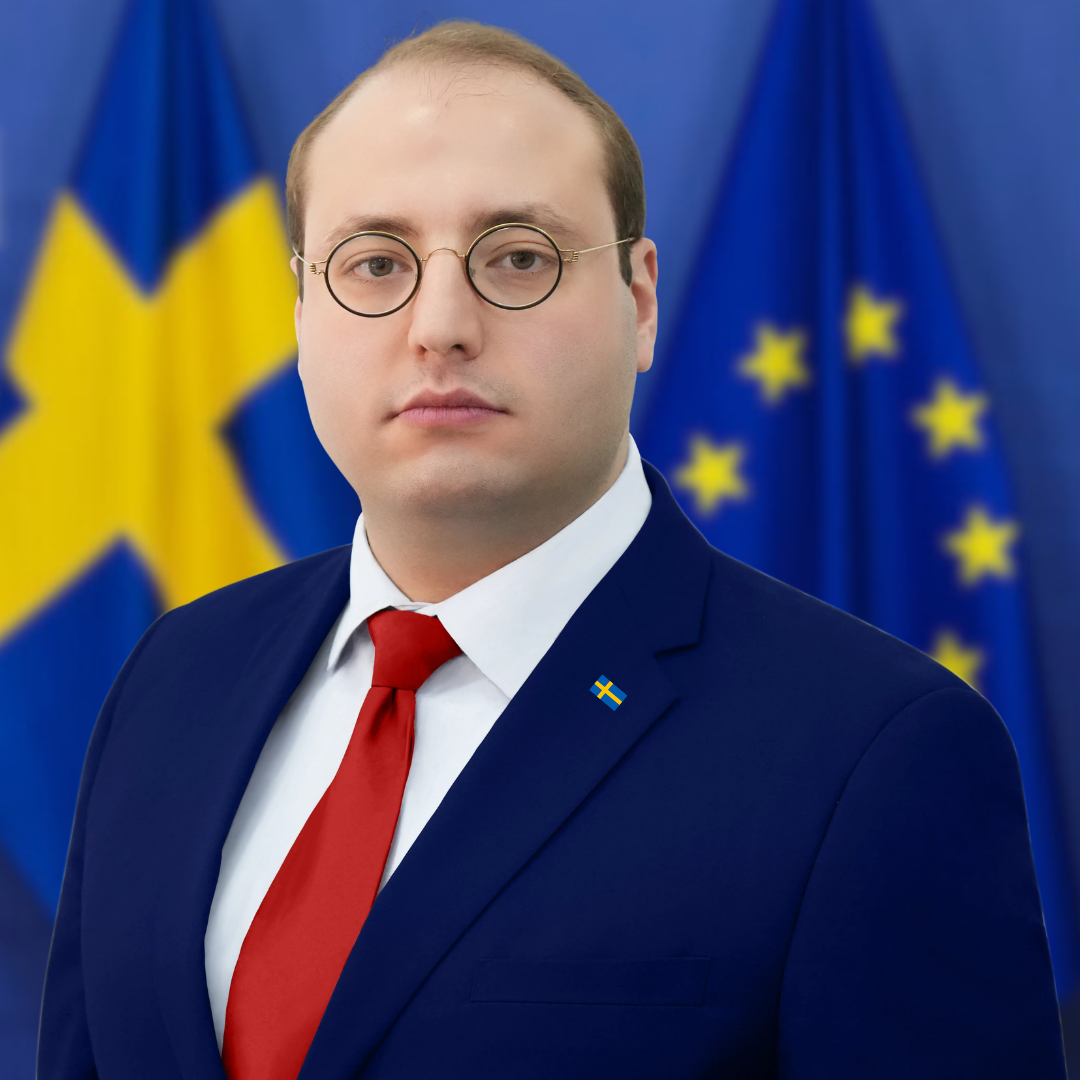
About Mr. Alex Matrsson
Mr. Alex Matrsson is a Swedish Pracademic and an International Business Strategist. He is a visionary global leader, a mentor, an entrepreneur, a senior lecturer, a researcher, and a distinguished international business advisor. He is the number one International Business Strategy graduate in Sweden. He has extensive experience initiating, running, and managing businesses across the global value chain, as well as working internationally with investors, SMEs, MNCs, government agencies, universities, and multidisciplinary research institutes. Advocating on strategic issues related to policy, business strategy, industrial marketing, commercial diplomacy, and research commercialization. When it comes to higher education, Mr. Matrsson believes in serendipity, innovation, and the power of synergy-making. Therefore, these concepts jointly constitute the springboard for his knowledge dissemination endeavors. He implements a pragmatic approach that is rigorous in nature. He systematically ensures the successful delivery of core business concepts, while simultaneously developing the students' ability to become reflexive thinkers. He aims to enable the students to operationalize their "state-of-the-art" knowledge constructively—so that they can become an invaluable source of prosperity, driving forward the "social" and "economic" well-being for their local communities, their regions, and the larger society, worldwide. His scientific endeavors consolidate around trade promotion, emerging markets, business resilience, and the network approach to internationalization. Mr. Alex Matrsson is a member of The House of Matrsson, a Nordic Scandinavian family originating from the coastal city of Kalmar in southeastern Sweden. Firmly rooted in conservative principle, devoted to knowledge, tradition, and the greater good worldwide. Finally, on a personal level, his wide-ranging interests include blue whales, Arabian horses, classical music, ethical capitalism, religion, culture, the Nordics, the GCC region, and Central Asia—particularly Kazakhstan.