


Digitalisation is moving beyond services. In Kazakhstan, technology is becoming increasingly embedded in business processes, the labour market, IT exports and the day-to-day operations of companies, DKNews.kz reports.
This shift can be seen not only in statistics, but also in the assessments of experts and entrepreneurs working across different sectors of the economy. Political analyst Aigerim Bakhtiyarova views digital technologies as one of the new drivers of economic growth, while consulting entrepreneur Maksat Muratov points to the growing use of automated systems in everyday business operations.
IT Services Exports Have Exceeded $1 Billion
One of the clearest indicators of the digital sector’s economic impact is exports.
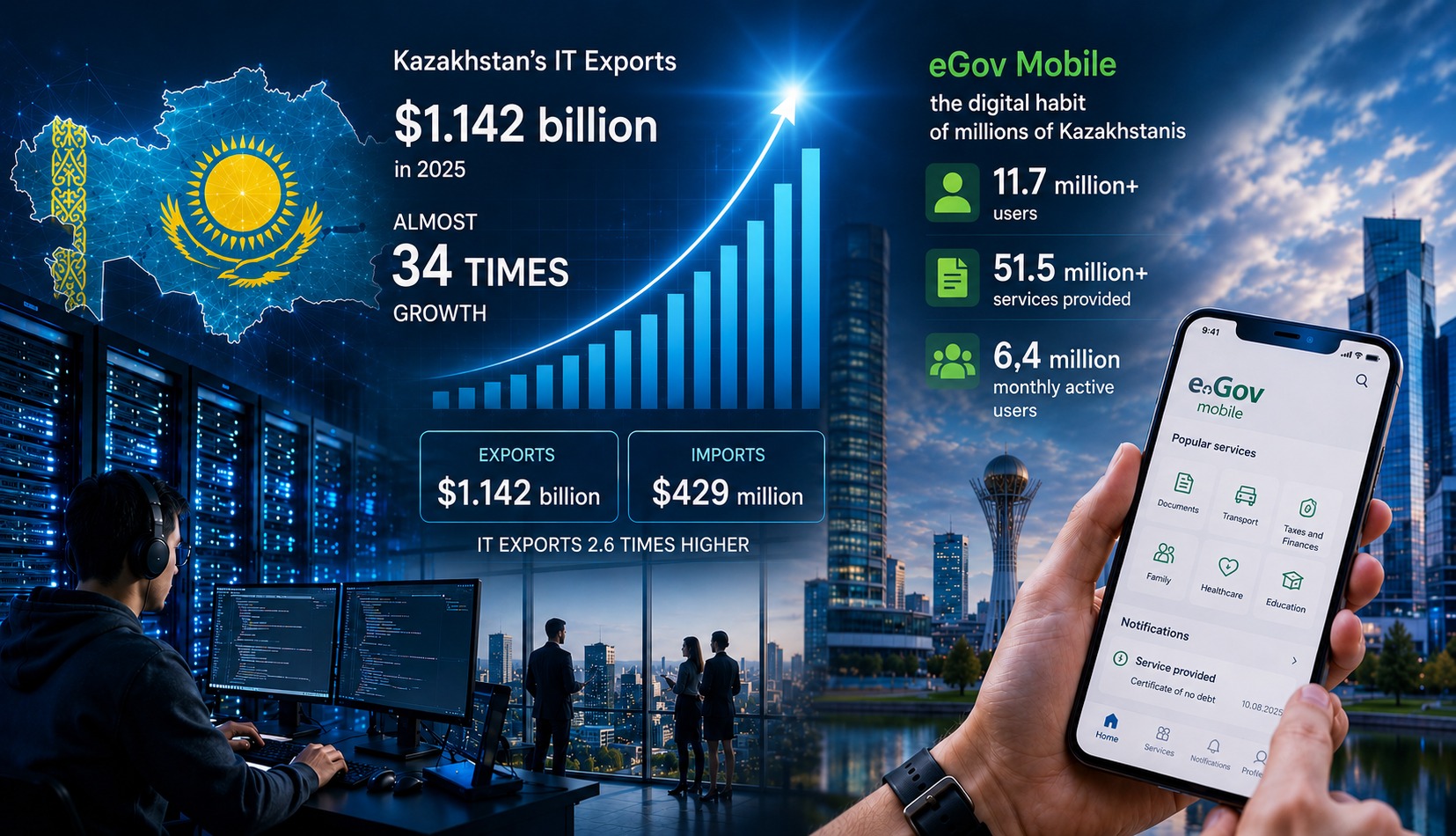
Kazakhstan’s exports of IT services have exceeded $1 billion. This suggests that digital products and services are increasingly moving beyond the domestic market and becoming a standalone source of foreign-currency revenue.
Political analyst Aigerim Bakhtiyarova links this trend to a gradual transformation in the structure of the country’s economy.
“The development of digital technologies is already having a positive impact on Kazakhstan’s economic growth. Exports of IT services are increasing and bringing tangible revenue into the national economy. Kazakhstan’s IT services exports have already exceeded $1 billion, meaning that our country is becoming a technology exporter. This is gradually dispelling the myth of the economy’s dependence on raw materials,” said political analyst Aigerim Bakhtiyarova.
The statement about reducing dependence on raw materials is the expert’s assessment. IT exports exceeding $1 billion do not mean that Kazakhstan’s reliance on the commodities sector has disappeared.
But the figure does show that digital services are no longer merely a cost item or a technological experiment. They are becoming a source of export revenue.
Robots Are Taking Over Some Tasks Previously Done by People
Another side of digitalisation concerns the labour market.
Automation allows some repetitive operations to be transferred from people to software, algorithms and robotic systems.
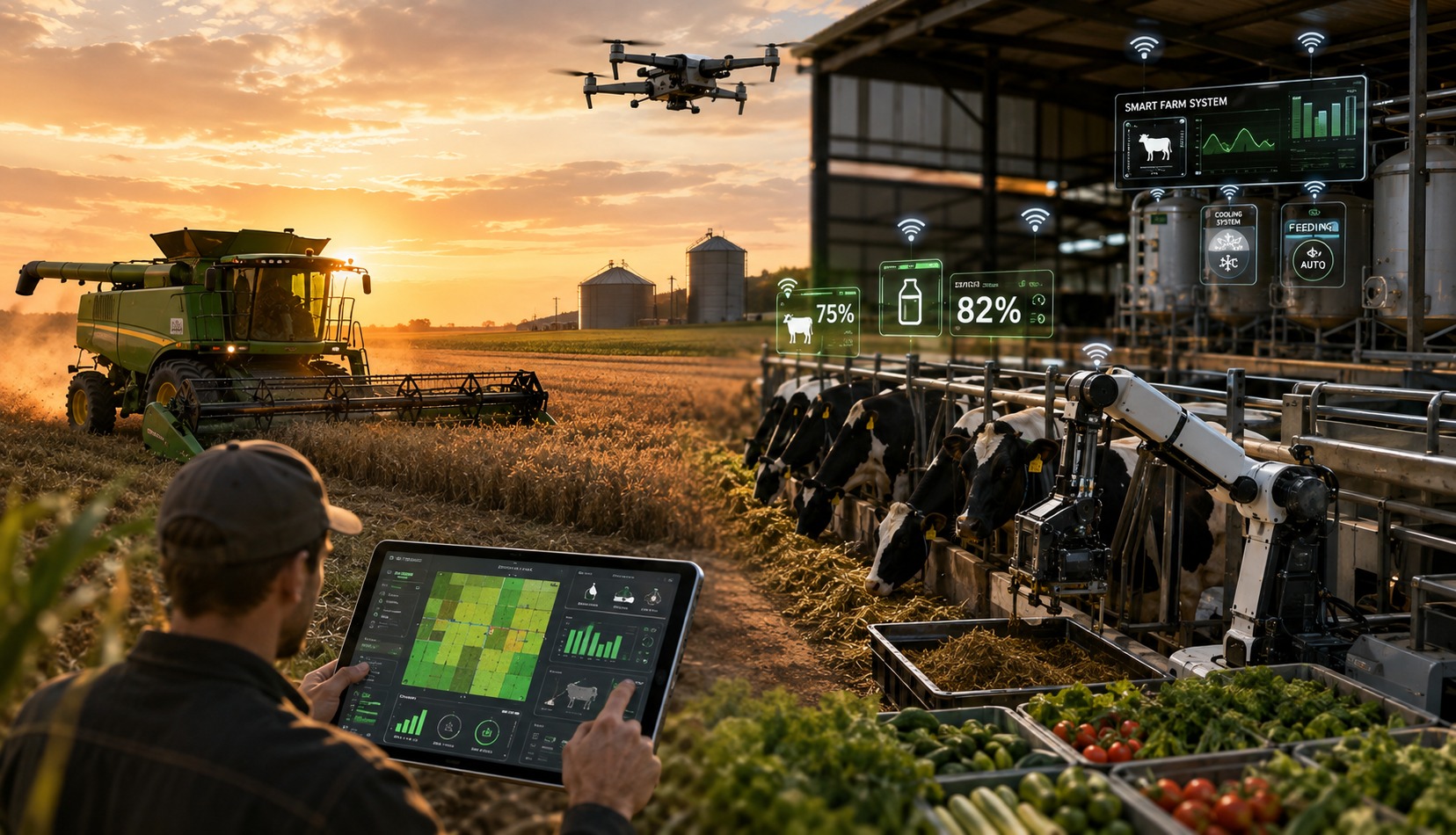
This process is already visible in agriculture. Farms are automating animal feeding, harvesting, milk cooling and vegetable storage. Combines can collect data from individual sections of a field and create yield maps.
Agricultural producer Sergei Zvolsky highlights another practical advantage of technology.
“A person can make mistakes, while a robot operates within set parameters and according to a defined programme. It does not get sick and does not need days off. It only requires timely maintenance,” said Sergei Zvolsky.
This does not mean that robots are replacing workers on a mass scale in Kazakhstan. There is no data to support such a conclusion.
But the nature of work is changing. As repetitive operations become automated, the value of employees increasingly shifts towards operating equipment, interpreting data and making decisions.
SMEs Are Learning to Work with Tax Authorities Online
Another visible effect of digital transformation can be found in everyday administrative processes for businesses.
According to consulting entrepreneur Maksat Muratov, small and medium-sized businesses now resolve a significant share of tax-related issues through electronic accounts and receive notifications from automated systems.
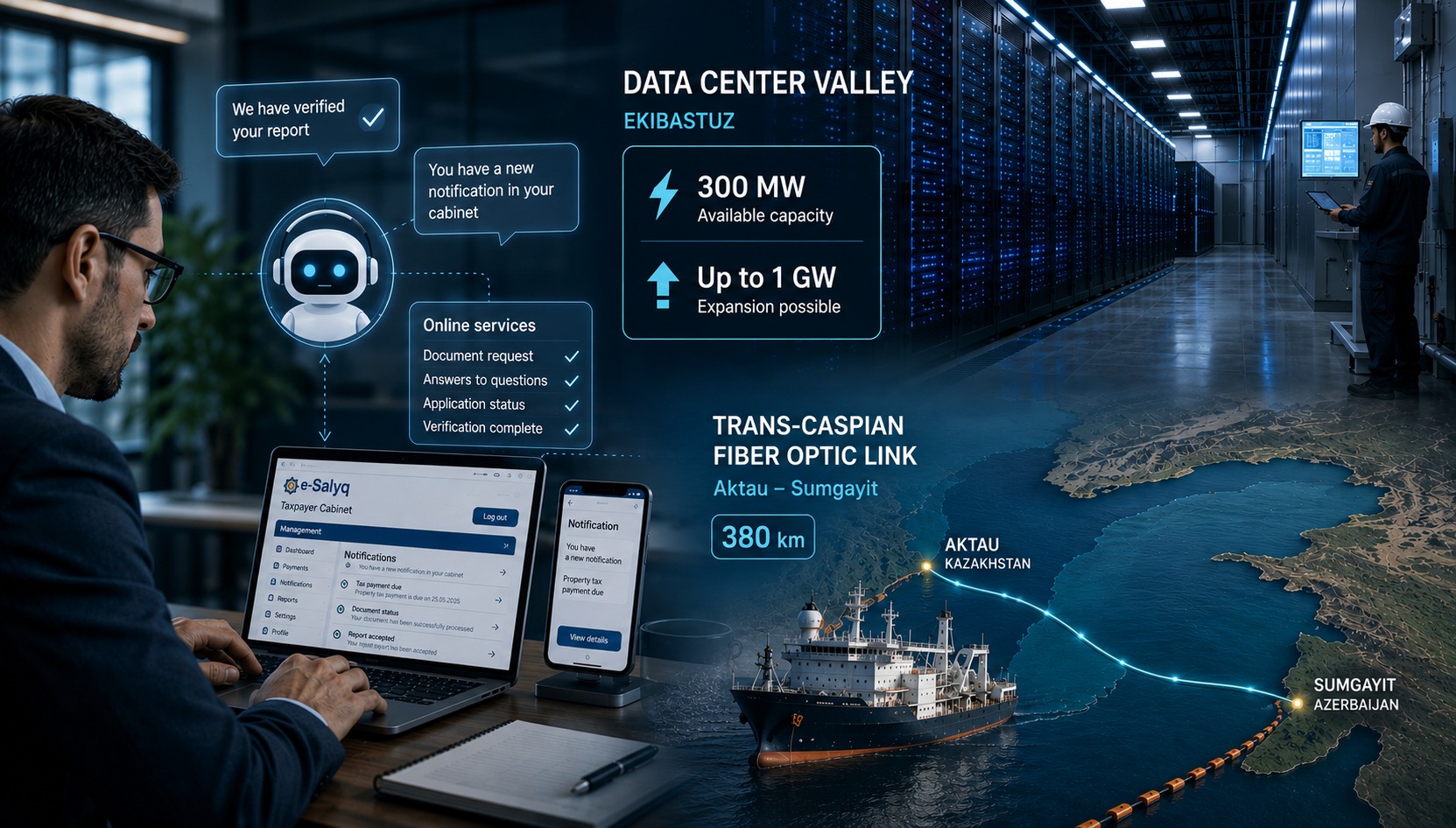
“In particular, when it comes to tax inspections, we now interact mainly with robots, receive notifications online through electronic accounts and the taxpayer’s account, and a number of issues are already being resolved through online interaction. Of course, there are still matters that require direct interaction with supervisory and inspection authorities. But compared with how things worked before, there has been significant progress in recent years,” said Maksat Muratov.
Digitalisation is not yet absolute here either. Muratov himself notes that some issues still require offline communication and direct participation.
For now, businesses effectively operate in two systems at once: some processes have been automated, while others remain traditional.
11.7 Million People Use eGov Mobile
The mass adoption of digital habits has been strongly influenced by electronic public services.
By the end of 2025, the number of eGov Mobile users had reached 11.7 million people. Over the year, citizens received more than 51.5 million services online through eGov and other digital channels.
Statistics on the use of electronic services show that digital interaction has become an everyday habit for millions of people in Kazakhstan.
This also matters for private businesses. When millions of people become accustomed to submitting documents, applications or payments from a smartphone, their expectations of private companies change as well: services are expected to be fast, clear and available online whenever possible.
The Next Major Constraint Is Computing Power
As artificial intelligence becomes more deeply integrated into the economy, the number of applications matters less than the technological infrastructure behind them.
Ekibastuz is developing a Data Centre Valley with 300 MW of capacity and the potential to expand to 1 GW. The project parameters are designed to support major data centres and computing infrastructure.
At the same time, an approximately 380-kilometre fibre-optic line is being laid across the Caspian Sea between Aktau and the Sumgait area. The project is expected to create an additional data transmission route between Asia and Europe. More details on the Trans-Caspian fibre-optic line.
For AI, the significance of such infrastructure is straightforward: models require computing power, while digital businesses entering international markets need fast and reliable data connections.
Digitalisation Now Has to Prove Its Value in Money
At the next stage, it will no longer be enough to measure digitalisation by the number of services that have been launched.
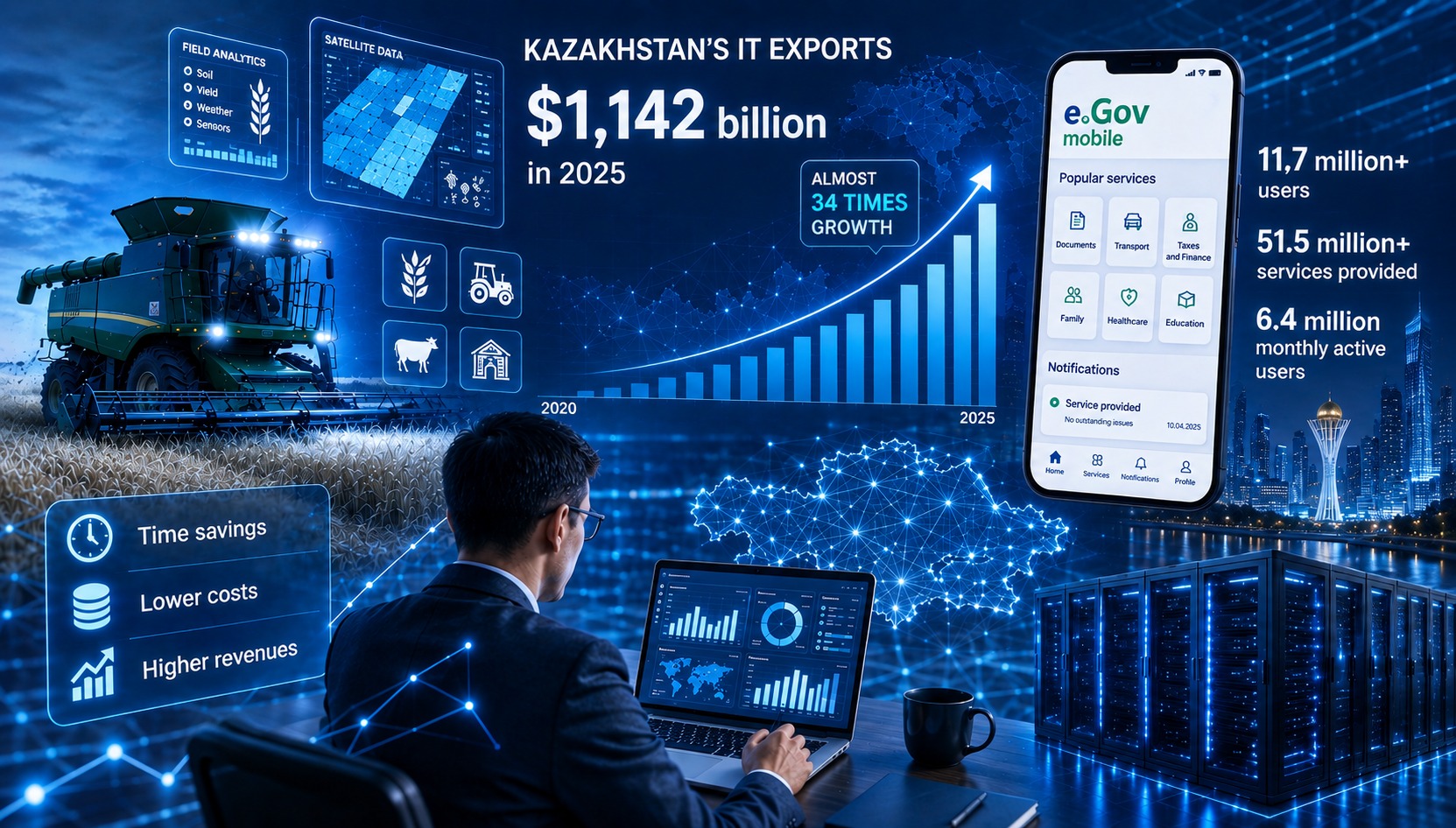
For businesses, the main metric is simpler: how much a technology cuts costs, how much faster it makes an operation, how much human labour it frees up and whether it generates new revenue.
In agriculture, the result is data on individual plots and automated production operations. For an entrepreneur, it means fewer offline actions and more electronic interaction. For the IT sector, it means more than $1 billion in export revenue.
Experts assess the potential of digitalisation positively, but technology does not automatically generate economic returns. A programme, robot or AI system creates value only when it solves a specific production or business task.
Kazakhstan’s plans for the next stage follow the same logic: by 2029, the country aims to increase IT services exports by at least 50%, assess the digital maturity of SMEs and automate part of their business processes.
Previously, we examined what Kazakhstan’s IT exports exceeding $1 billion mean for the economy. The next question is whether traditional sectors such as agriculture, manufacturing and SMEs can turn the progress of the digital sector into measurable gains in productivity and revenue.