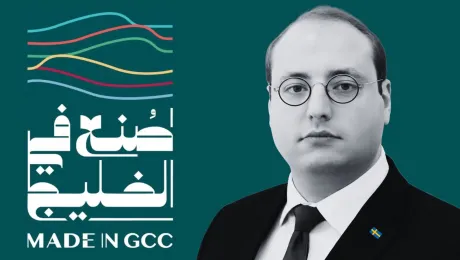


Kazakhstan has appointed its Vice President. President Kassym-Jomart Tokayev named Yerlan Karin to the post on August 31, placing one of the country’s most prominent political officials in a constitutionally significant position within Kazakhstan’s new system of government, DKNews.kz reports.
The decision was formalized in Presidential Decree No. 1417, which appointed Karin as Vice President of the Republic of Kazakhstan and relieved him of his previous position.
Kurultai backed Karin before Tokayev signed the decree
The appointment followed a vote in Kazakhstan’s newly created Kurultai, the country’s unicameral legislature.
Under the new Constitution of Kazakhstan, the President appoints the Vice President only with the consent of a majority of all Kurultai deputies.
Tokayev presented Karin’s candidacy to lawmakers on August 31. The President pointed to Karin’s experience in public administration and his involvement in major political reforms.
“I consider Yerlan Tynymbayuly Karin worthy of this position. I ask the Kurultai to support his candidacy,” Tokayev said.
The nomination received the required parliamentary backing before the presidential decree was signed.
The procedure itself is significant. The Vice President is one of the senior appointments over which the new Kurultai now exercises direct constitutional influence.
That change was already visible when the first Kurultai began its work and received broader appointment powers just days before Karin’s nomination.
Karin becomes first in Kazakhstan’s presidential succession
For foreign readers, the central point is not simply that Kazakhstan has created another senior government title.
The Vice President occupies a critical place in the country’s constitutional succession mechanism.
Article 51 of the Constitution states that if the President leaves office early because of resignation, permanent inability to perform presidential duties, removal from office or death, presidential powers pass to the Vice President.
If the Vice President cannot assume those powers, responsibility passes to the Chair of the Kurultai and then, if necessary, to the Prime Minister.
This puts Karin directly behind the President in Kazakhstan’s constitutional hierarchy.
The arrangement is one of the most consequential changes introduced by the political reform that took effect in 2026. Instead of leaving presidential succession dependent on interpretation during a crisis, the new Constitution establishes a specific sequence.
The Vice President will connect Akorda, Kurultai and Government
Karin’s role is not limited to emergency succession.
The Constitution also gives the Vice President a working function inside the state apparatus. At the President’s instruction, the Vice President represents the head of state in relations with the Kurultai, the Government and other state bodies.
That responsibility became concrete almost immediately after Karin’s appointment.
During a meeting with the new Vice President on August 31, Tokayev instructed him to represent the President’s position in interactions with the Kurultai, Government and other state institutions on key public policy issues.
The assignment places Karin at an important institutional junction: between the presidency, the legislature and the executive branch.
For Kazakhstan’s political system, that means the new position is designed not only as a reserve mechanism for presidential succession, but also as an active coordinating office.
Karin moves into the post from the Presidential Administration
Before his appointment, Yerlan Karin served as First Deputy Head of the Presidential Administration.
His political career has for years been closely connected with domestic policy, political strategy and the presidential administration.
Karin previously served as an adviser and assistant to the President, became State Secretary in January 2022 and later State Counselor. He also headed the Kazakhstan Institute for Strategic Studies.
That background makes his appointment particularly notable: the first Vice President under Kazakhstan’s new constitutional architecture comes from the core of the presidential policy apparatus.
His previous work also overlaps directly with the reforms that produced the institution he now leads.
Only three days before the appointment, Karin publicly described the launch of the new Kurultai as an institutional reset and outlined how the legislature’s composition and powers had changed.
Kazakhstan’s constitutional reform is moving into practice
The timing explains why Karin’s appointment carries more weight than an ordinary reshuffle.
Kazakhstan’s new Constitution entered into force on July 1, 2026, replacing the constitutional framework that had operated since 1995.
Among its most visible institutional changes were the transition to a unicameral Kurultai and the creation of the office of Vice President.
The Constitution requires the President to receive the Kurultai’s consent before appointing the Vice President. It also gives the new legislature influence over a wider range of senior state appointments.
The transition moved quickly.
The first elections to the Kurultai were held in August, and the new legislature began work on August 28. Three days later, lawmakers were already exercising one of their new constitutional powers by considering the President’s nominee for Vice President.
The sequence shows how quickly Kazakhstan has moved from constitutional text to institutional practice.
For foreign governments, international companies and investors following Kazakhstan, the appointment also clarifies an issue that matters in any political system: how continuity of executive authority is structured if the presidency becomes vacant.
Kazakhstan now has a clearly identified first successor.
The appointment also completes one of the steps anticipated when the country adopted its new constitutional structure. DKNews previously examined how Kazakhstan entered a new political era after the new Constitution came into force, including the creation of the Vice President’s office and the transition to a unicameral legislature.
A few days ago, we also looked at how the new Kurultai became younger and gained broader constitutional powers. Karin’s appointment is now one of the first major examples of those powers being used in practice.