
XIAMEN. Fujian Province holds a special place in the story of China’s modern development. It was here that Xi Jinping worked for many years, passing through several important stages of his career — from Xiamen and Ningde to Fuzhou and later leadership positions at the provincial level. Many approaches now associated with China’s development practice — long-term planning, a people-centered philosophy, ecological development, support for the real economy and opening-up — were tested and developed through practical work at the regional level.
These themes were at the center of a lecture delivered by Professor Hu Yonghong of Xiamen University to participants of the international seminar on the Chinese local development practice of Xi Jinping Thought on Socialism with Chinese Characteristics for a New Era.
Professor Hu examined the formation of Xi Jinping’s governance experience through specific stages of his work in Fujian. From 1985 to 1988, Xi served as Deputy Mayor of Xiamen. From 1988 to 1990, he served as Party Secretary in Ningde Prefecture. His subsequent work was closely associated with Fuzhou and later with leadership responsibilities across Fujian Province.
This progression makes it possible to view Fujian not simply as one chapter in Xi Jinping’s political career, but as a place where practical governance experience was accumulated — from addressing specific urban and rural challenges to developing long-term strategies for regional growth.
Governance Begins with Understanding People
One of the key principles highlighted by Professor Hu was a people-centered approach to governance.
The lecture placed considerable emphasis on grassroots work: understanding conditions on the ground, listening to local communities, handling public concerns and addressing practical problems directly in cities, towns and villages. One example was Xi Jinping’s three visits to Xiadang Township in Ningde, which were connected with efforts to alleviate poverty in rural areas.
The essence of this approach is straightforward but fundamental: before making a policy decision, it is necessary to understand the actual situation. The lecture noted Xi Jinping’s emphasis on field visits, listening to grassroots voices and paying attention to issues directly affecting people’s lives, including education, transportation, healthcare and housing.
The photographs of Xiadang presented during the lecture made these changes particularly visible. They showed the transformation from a remote rural area, where a road was still being built in the early 1990s, to a community with improved modern transport infrastructure.
Xiamen: Looking Decades Ahead
Another major element of the governance approach discussed in the lecture was long-term strategic planning.
In Xiamen, Xi Jinping led the drafting of the city’s Economic and Social Development Strategy for 1985–2000. Later, in Fuzhou, the “3820 Strategic Project” mapped out the city’s development over a period of two decades.
This illustrates an important feature of China’s development approach: strategic policy should not be limited to solving immediate problems. A long-term direction is established first, followed by consistent implementation over successive stages.
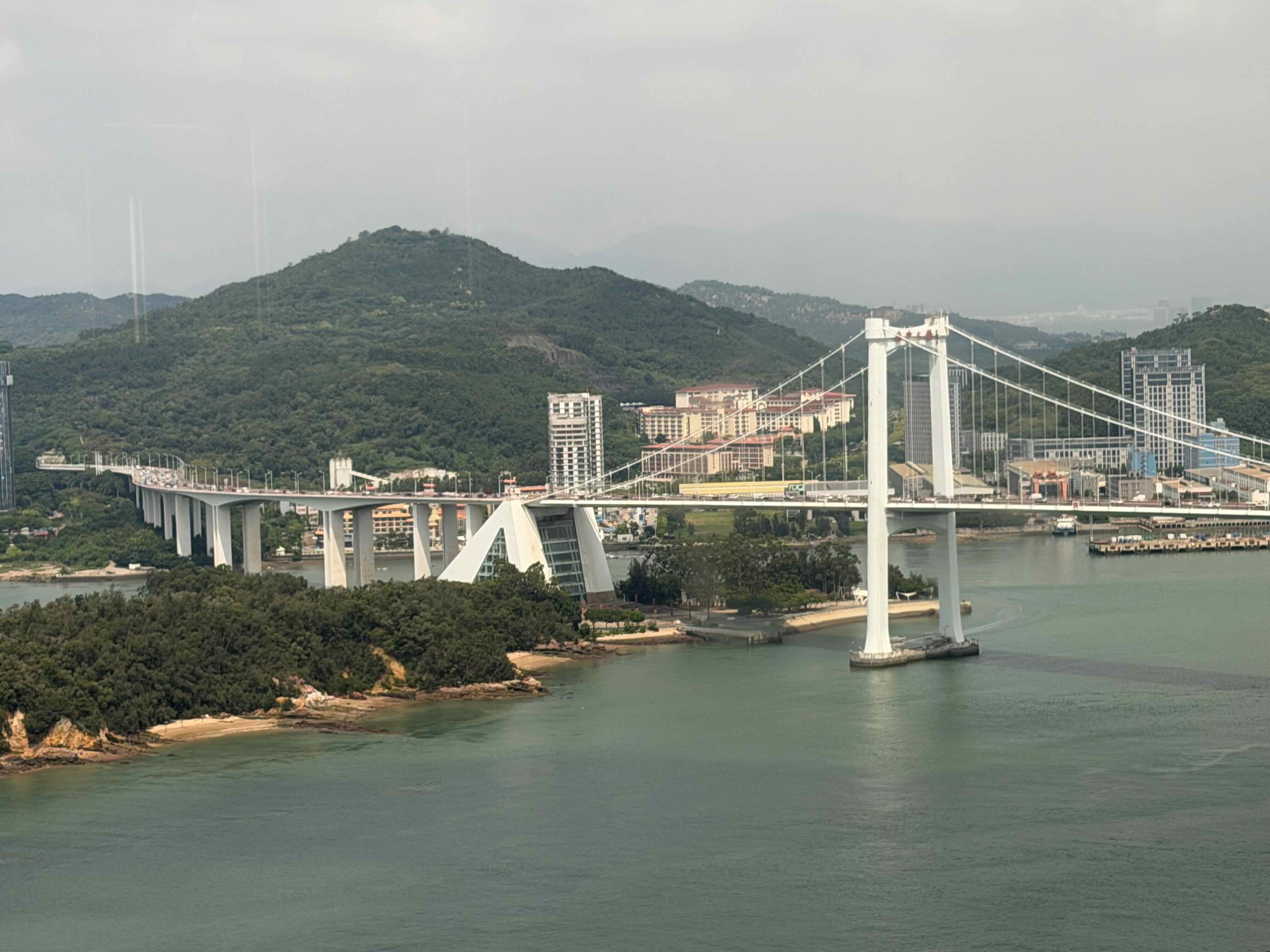
Seen from today’s Xiamen, it is particularly interesting to compare the modern city with the strategic vision developed decades ago. Its infrastructure, economic activity and extensive international connections provide a tangible perspective on the importance of continuity in long-term development.
Ecology as Part of Development
Professor Hu also devoted considerable attention to the environmental dimension of regional development.
One of the most notable examples was the comprehensive rehabilitation of Yundang Lake in Xiamen. Xi Jinping advocated tackling pollution in conjunction with the city’s broader development. The lecture presented this experience as an early example of an approach aimed at harmonizing economic growth and environmental protection.
The principle is significant: the environment should not be treated as an inevitable cost of economic growth. Instead, ecological considerations become an integral part of the development strategy itself.
Fujian today remains exceptionally green. According to figures presented during the lecture, forests cover 65.85 percent of the province.
The “Jinjiang Experience”: Market Vitality and Effective Government
Another important theme concerned the real economy and private entrepreneurship.
Professor Hu discussed the “Jinjiang Experience,” a development model that emerged from one of Fujian’s most dynamic centers of entrepreneurship. Its defining features include market orientation, a strong private sector, emphasis on the real economy and entrepreneurial initiative, as well as the search for an effective balance between government and market forces.
During his work in Fujian, Xi Jinping supported private-sector development and institutional reforms aimed at stimulating market vitality. The lecture placed the “Jinjiang Experience” precisely within the context of balancing effective government with a dynamic market.
Despite its relatively small territory, Jinjiang developed a powerful manufacturing base and major industrial clusters. Its local experience gradually acquired significance far beyond a single county-level city.
Opening-Up as a Strategy
For Xiamen, the concept of openness carries particular significance.
Located on the western coast of the Taiwan Strait, the city has long been positioned for external engagement. During Xi Jinping’s work in Xiamen, special economic zone development was advanced, investment by Taiwan businesses and overseas Chinese was encouraged, and external economic cooperation was expanded. People-to-people exchanges across the Taiwan Strait were also given considerable attention.
This theme of openness provided a natural bridge from the academic discussion to contemporary Xiamen.
CIFIT: Modern Xiamen in Action
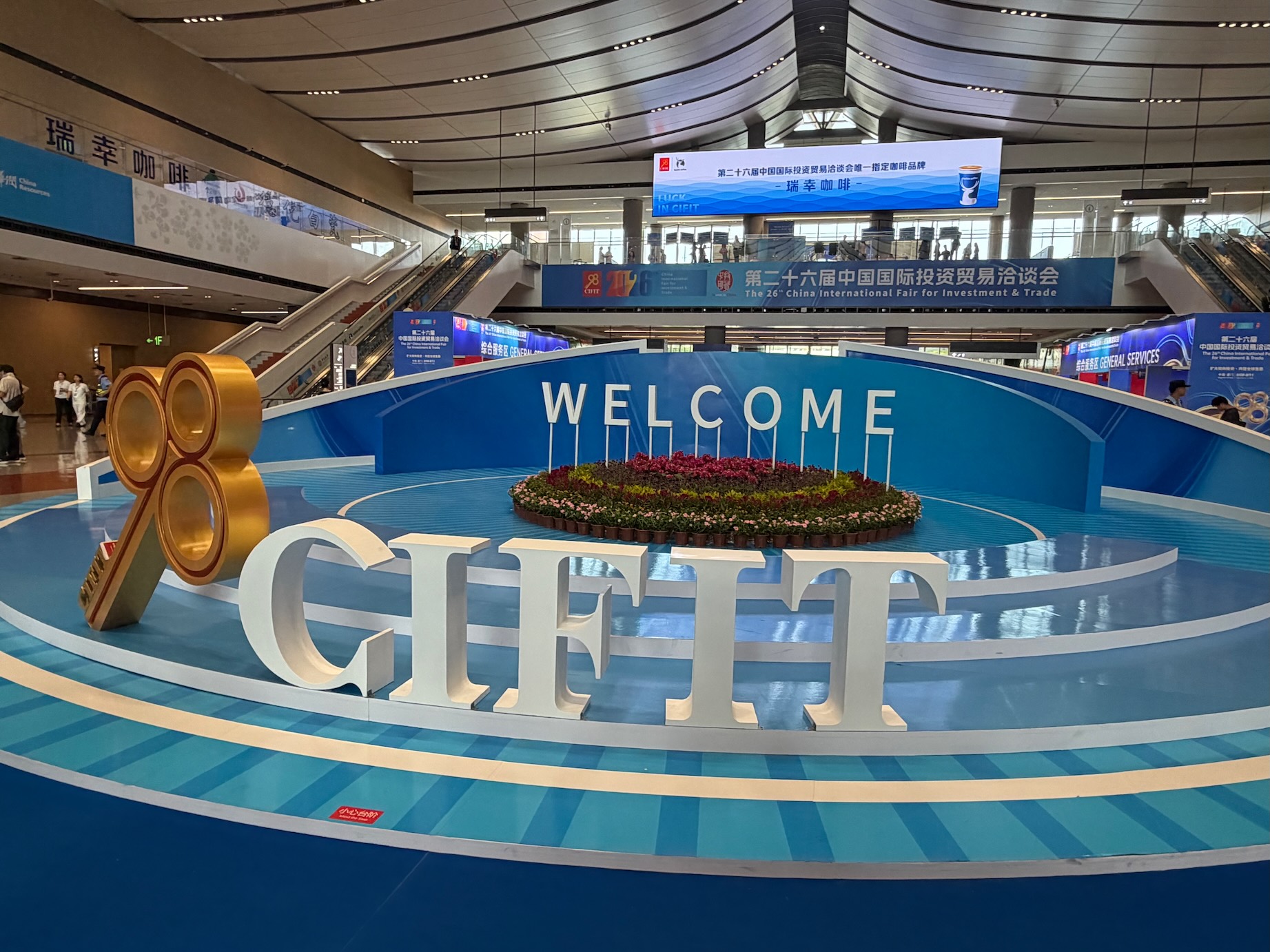
Participants were able to see a practical expression of this openness during a visit to the 26th China International Fair for Investment & Trade (CIFIT) at the Xiamen International Conference and Exhibition Center.
The scale of CIFIT itself reflects Xiamen’s international economic role. The exhibition brings together investment projects, businesses, emerging technologies, digital solutions and modern services, creating a platform for international economic engagement.
The central message is visible throughout the exhibition space: expanding two-way investment, bringing international investment opportunities to China while also creating new channels for Chinese companies and projects to engage with global markets.
One of the most striking parts of the exhibition was the presentation of new technologies and robotics. Participants saw humanoid service robots designed for direct interaction with people. Some appeared in contemporary clothing, while others were dressed in traditional Chinese costumes — a vivid combination of advanced technology and cultural identity.
Modern Chinese media were also represented at the fair. Participants visited the exhibition area of China Media Group (CMG), where the growing integration of media, digital technology and new forms of communication was clearly visible.
For international journalists, this dimension is particularly relevant. The modern economy increasingly depends not only on the movement of goods and capital, but also on the rapid exchange of information, technology and ideas.
In this sense, CIFIT offered an opportunity to see contemporary Fujian not through historical retrospect, but in action. Many of the principles discussed by Professor Hu — openness, entrepreneurship, the real economy, innovation and engagement with the outside world — could be observed here in a new economic and technological environment.
From Investment to a Dialogue Between Cities
Another important event was the opening ceremony of the Xiamen Friendship City Photo Exhibition 2026.
Its Chinese theme, can be rendered in English as “Blue Homeland, Joining Hands for the Future.”
The photo exhibition added a humanitarian dimension to the economic and technological atmosphere surrounding CIFIT.
If an international investment fair demonstrates how countries and regions find common ground through business, investment and technology, photography reveals another foundation of cooperation — the ability of people to see and understand one another.
Cities from different countries are presented through people, architecture, nature, the sea, cultural traditions and everyday life. International relations thus cease to be expressed solely through the language of diplomacy, economics and statistics. Behind them are real cities and communities, each with its own history, culture and way of life.
This is why Professor Hu Yonghong’s lecture, the visit to CIFIT and the friendship-city photo exhibition form a coherent narrative rather than a simple sequence of separate events.
Xi Jinping’s years in Fujian offer an opportunity to understand how approaches to long-term planning, grassroots engagement, ecological development, entrepreneurship and opening-up were shaped through regional practice. Contemporary Xiamen, in turn, shows how these principles can be expressed under very different economic and technological conditions.
Today, the city serves simultaneously as an international business platform, a showcase for emerging technologies and a space for people-to-people and cultural exchanges.
Perhaps this is the broader message emerging from Xiamen: development requires the ability to look decades ahead, but it begins with the concrete needs of people. And openness becomes truly sustainable when, alongside investment, goods and technologies, knowledge, culture and mutual understanding also cross borders.