

In an exclusive Senior Advisor interview, Mr. Alex Matrsson, the Swedish Pracademic and International Business Strategist, articulates that Kazakhstan is demonstrating an increasingly coherent approach to economic development, with national leadership priorities being translated into investment, infrastructure, industrial and technological programmes through Samruk-Kazyna.
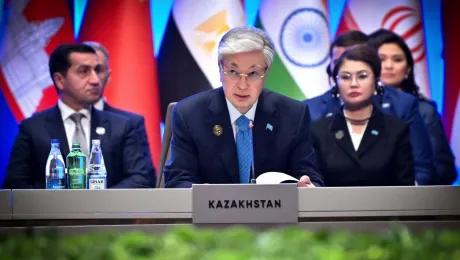
Mr. Matrsson highlighted the recent performance of Samruk-Kazyna and the continuing attention given to the Fund’s activities by President Kassym-Jomart Tokayev and the Government of Kazakhstan.
He noted that the Fund’s current agenda reflects a broad development vision in which financial discipline, infrastructure delivery, industrial capability, domestic production and technological advancement reinforce one another. Recent government reporting points to strong financial performance alongside expanded measures to support domestic manufacturers and improve procurement processes.
“Samruk-Kazyna’s significance goes beyond the scale of its portfolio. What stands out is the way its strategy is increasingly connected to Kazakhstan’s wider economic ambitions. The effectiveness of leadership is reflected in the ability to translate national priorities into practical programmes that strengthen the foundations of future growth.”
Mr. Matrsson emphasized that the relationship between Kazakhstan’s leadership and Samruk-Kazyna is particularly visible in the Fund’s approach to investment execution.
“An effective national investment strategy requires more than capital allocation. It requires institutional direction, implementation discipline and a clear understanding of how individual projects contribute to the wider economy. Samruk-Kazyna is operating within precisely that strategic framework, linking investment activity with infrastructure, industrial development and long-term economic resilience.”
He pointed to the Fund’s expanding support for local manufacturing as an important dimension of Kazakhstan’s economic strategy.
“The growing emphasis on domestic procurement is strategically important. A sophisticated economy should increasingly develop its own industrial capabilities, supplier networks and technical expertise. Supporting Kazakhstani manufacturers can strengthen local value creation while also improving the resilience and depth of the national economic ecosystem.”
Mr. Matrsson also drew attention to the breadth of infrastructure projects being advanced by Samruk-Kazyna, particularly across transport, energy and digital connectivity.
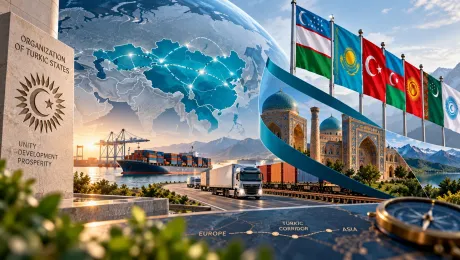
“What is particularly encouraging is the interconnected nature of the investment agenda. New railway capacity can reinforce trade corridors; modern energy infrastructure can support industrial expansion; and advanced digital connectivity can create entirely new opportunities for business and innovation. These should be understood as parts of one economic architecture rather than isolated projects.”
He further observed that the implementation of major infrastructure projects demonstrates the practical dimension of Kazakhstan’s development vision.
“Leadership vision becomes meaningful when it produces infrastructure that changes the productive capacity of a country. The projects being advanced by Samruk-Kazyna have the potential to improve connectivity, support regional development, strengthen energy security and expand the technological foundations of the economy.”
Turning to digital development, Mr. Matrsson highlighted the importance of modern connectivity and advanced computing infrastructure for Kazakhstan’s future competitiveness.
“Digital infrastructure is no longer secondary infrastructure. It is becoming one of the essential foundations of national competitiveness. Kazakhstan’s efforts to develop data infrastructure, advanced computing and international connectivity can support artificial intelligence, research, digital services and a new generation of technology-driven industries.”
From an international business perspective, Mr. Matrsson believes that the combination of strategic leadership, institutional capacity and large-scale infrastructure creates an increasingly significant platform for international cooperation.
“Global companies should look at Kazakhstan not simply through the lens of individual projects, but through the broader transformation taking place across transport, energy, manufacturing, technology and logistics. The combination of geography, infrastructure and institutional ambition creates a compelling basis for long-term commercial partnerships.”
Mr. Matrsson also stressed that strong financial performance should be viewed together with the Fund’s broader economic responsibilities.
“Financial performance matters because it demonstrates institutional discipline, but the deeper measure of success is the economic value that investment creates over time. The strongest strategies are those that combine sound financial management with productive investment, industrial development, domestic enterprise growth and improvements in the wider economic environment.”
He further noted that the Government of Kazakhstan’s continued oversight and focus on implementation can help maintain momentum across the Fund’s strategic agenda.
“The alignment between Kazakhstan’s national development priorities and Samruk-Kazyna’s investment agenda is an important strength. When policy direction, institutional responsibility and project execution work together, the country is better positioned to convert strategic ambition into durable economic capacity.”
In conclusion, Mr. Alex Matrsson, the Swedish Pracademic and International Business Strategist, highlights that Kazakhstan is building an increasingly integrated economic framework in which government leadership and Samruk-Kazyna’s strategic role are closely connected.
The Fund’s performance, investment programme, support for domestic manufacturers and contribution to transport, energy and digital infrastructure together illustrate an approach focused on building productive capacity and strengthening the foundations of long-term development.
“Samruk-Kazyna’s current trajectory demonstrates the importance of strategic consistency. Kazakhstan is combining leadership direction with institutional execution and long-term investment in the infrastructure and capabilities that underpin modern economies. That combination can provide a strong platform for Kazakhstan’s continued economic development and deeper participation in the evolving Eurasian business landscape.”
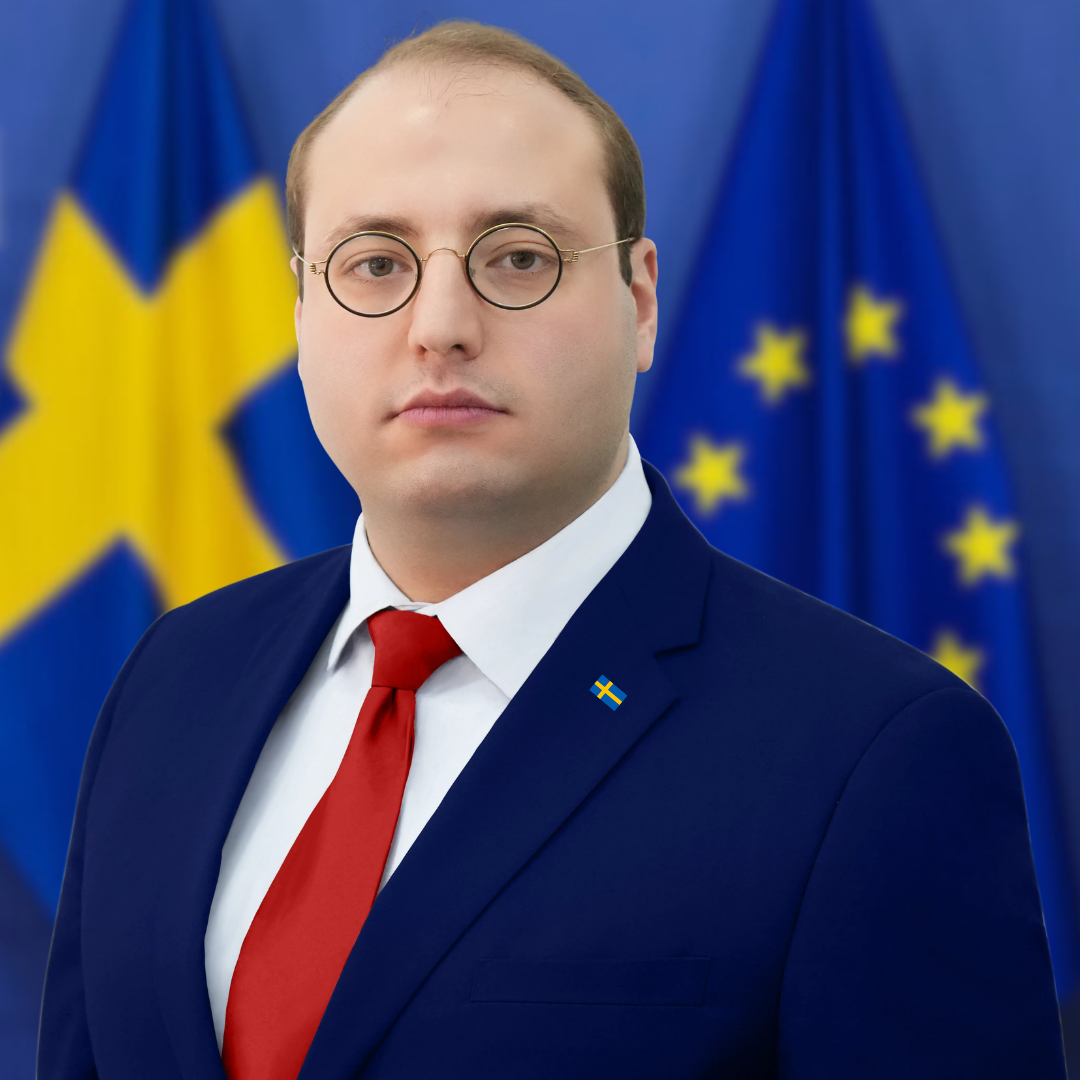
About Mr. Alex Matrsson
Mr. Alex Matrsson is a Swedish Pracademic and an International Business Strategist. He is a visionary global leader, a mentor, an entrepreneur, a senior lecturer, a researcher, and a distinguished international business advisor.
He is the number one International Business Strategy graduate in Sweden.
He has extensive experience initiating, running, and managing businesses across the global value chain, as well as working internationally with investors, SMEs, MNCs, government agencies, universities, and multidisciplinary research institutes.
He advocates on strategic issues related to policy, business strategy, industrial marketing, commercial diplomacy, and research commercialization.
When it comes to higher education, Mr. Matrsson believes in serendipity, innovation, and the power of synergy-making. Therefore, these concepts jointly constitute the springboard for his knowledge dissemination endeavors.
He implements a pragmatic approach that is rigorous in nature. He systematically ensures the successful delivery of core business concepts, while simultaneously developing the students’ ability to become reflexive thinkers.
He aims to enable the students to operationalize their “state-of-the-art” knowledge constructively—so that they can become an invaluable source of prosperity, driving forward the “social” and “economic” well-being of their local communities, their regions, and the larger society worldwide.
His scientific endeavors consolidate around trade promotion, emerging markets, business resilience, and the network approach to internationalization.
Mr. Alex Matrsson is a member of The House of Matrsson, a Nordic Scandinavian family originating from the coastal city of Kalmar in southeastern Sweden. Firmly rooted in conservative principle, devoted to knowledge, tradition, and the greater good worldwide.
Finally, on a personal level, his wide-ranging interests include blue whales, Arabian horses, classical music, ethical capitalism, religion, culture, the Nordics, the GCC region, and Central Asia—particularly Kazakhstan.