

In an exclusive Senior Advisor interview, Mr. Alex Matrsson, the Swedish Pracademic and International Business Strategist, articulates that Kazakhstan is moving into a more sophisticated phase of economic development in which the quality of capital matters as much as the availability of capital.
The country’s emerging investment architecture increasingly depends on institutions capable of converting policy priorities into commercially credible opportunities, while ensuring that public intervention creates space for stronger private-sector participation.
Mr. Matrsson highlighted Baiterek Holding as an institution undergoing an important strategic evolution. Its updated development direction places greater emphasis on investment policy, private-capital mobilisation, asset management, business development and quality of life, reflecting a broader understanding of what a modern development institution should accomplish.
“Baiterek’s strategic importance is no longer adequately described by the financing it provides. Its deeper role is to improve the conditions under which capital is deployed, risk is understood and productive opportunities become investable.”
Mr. Matrsson observed that the preparation of major investment projects is often the decisive stage at which promising economic ideas either acquire credibility or fail to progress.
Sophisticated investors require more than a compelling concept; they need a defensible commercial model, credible technical foundations, transparent responsibilities and a realistic path to implementation.
“Investment begins long before the transaction. The quality of preparation determines whether an opportunity can withstand serious scrutiny from banks, institutional investors and international partners.”
He argued that this capability is becoming increasingly important for Kazakhstan as the country competes for international capital in a market where investors have greater choice and increasingly sophisticated risk expectations.
“A country does not compete for capital merely by presenting opportunities. It competes by presenting opportunities that have already been intelligently structured. That difference can determine whether international interest becomes actual investment.”
Mr. Matrsson further highlighted the catalytic role that development institutions can play when commercial capital is available but cannot enter a project because of a specific structural constraint.
Rather than replacing the market, Baiterek can help address financing gaps, risk allocation challenges and other barriers that prevent viable projects from reaching financial close.
“The most effective public capital is catalytic. Its purpose is to remove an obstacle, improve the risk profile and make room for commercial investors to participate on their own terms.”
He noted that this philosophy becomes particularly relevant as Baiterek moves toward a greater reliance on market-based funding and a gradual reduction in dependence on budgetary resources.
“A stronger relationship with market funding can improve institutional discipline because it forces development finance to demonstrate why a project deserves capital, how risks are managed and what economic value can reasonably be expected.”
Mr. Matrsson contended that the significance of this transition reaches beyond Baiterek itself.
A development institution that increasingly works alongside private financial markets can contribute to the maturation of the broader investment environment by encouraging more rigorous project selection and more sophisticated financial structures.
“The objective should be to build a financial ecosystem in which public institutions address genuine market gaps while private capital increasingly assumes responsibility for commercially sustainable growth.”
Turning to small and medium-sized enterprises, Mr. Matrsson highlighted their importance to Kazakhstan’s economic diversification.
Strong national economies require entrepreneurial depth, not simply a small number of large corporations. SMEs can introduce new technologies, develop specialised supply chains and create the flexibility required for emerging industries to mature.
“Diversification becomes durable when entrepreneurial capability spreads across the economy. SMEs are not peripheral participants; they are part of the mechanism through which new economic capacity is created.”
He cautioned, however, that the effectiveness of SME financing should not be judged simply by how easily businesses can obtain funding.
“The real test of business finance is what happens after the capital arrives. Does the company become more productive, more innovative, more competitive and better positioned to enter new markets? Those are the outcomes that matter.”
Mr. Matrsson also examined the housing dimension of Kazakhstan’s development agenda, noting that housing affordability has consequences that extend into labour markets, household resilience and urban development.
“Housing is economic infrastructure as much as it is social policy. Its affordability influences mobility, household stability and the capacity of people to participate fully in a developing economy.”
He further highlighted Baiterek’s effort to create a more coordinated experience for investors, bringing together different components of the investment process rather than leaving international companies to navigate fragmented institutional structures.
“For international investors, institutional clarity has real economic value. Knowing where responsibility sits, how decisions are coordinated and how a project can move from concept to implementation reduces uncertainty.”
From his international business perspective, Mr. Matrsson argued that this institutional dimension could become an increasingly important component of Kazakhstan’s competitive position.
“Investors increasingly assess jurisdictions as ecosystems. They look at institutions, governance, execution capability and the reliability of the investment process alongside market opportunity.”
Mr. Matrsson maintained that Baiterek’s “one-stop” approach is therefore more significant than a question of administrative convenience.
In his assessment, it can influence the perception of Kazakhstan among international investors by creating greater continuity across the investment cycle.
“Investor facilitation should remove friction rather than create another layer of procedure. The strongest systems make the route from opportunity to execution clearer, faster and more accountable.”
He also emphasised the growing importance of governance, transparency and sustainability within the Holding’s strategic evolution.
As development institutions become more closely integrated with international capital markets, institutional credibility becomes inseparable from investment credibility.
“Governance is ultimately about confidence. Transparency, disciplined oversight and credible sustainability practices influence how investors understand risk and whether they are prepared to build relationships for the long term.”
Mr. Matrsson observed that the most interesting aspect of Baiterek’s transformation may be its attempt to connect functions that are often treated separately: investment preparation, business finance, direct investment, housing support, market funding and investor relations.
“The next stage of development is integration. When financial instruments are designed around the real constraints of businesses and projects rather than around institutional boundaries, capital can move more intelligently through the economy.”
In conclusion, Mr. Alex Matrsson, the Swedish Pracademic and International Business Strategist, highlights that Baiterek Holding is evolving into a broader instrument of Kazakhstan’s investment strategy, with a growing emphasis on project readiness, private-capital participation, enterprise competitiveness, housing, governance and market-oriented financing.
The significance of this evolution lies in its potential to strengthen the connection between economic policy and the institutions that determine how investment actually reaches productive activity.
“Baiterek’s long-term success should be measured by what it enables beyond its own balance sheet: stronger companies, more credible projects, greater participation from private investors and a deeper financial ecosystem. That is the point at which development finance becomes a force for structural economic transformation.”
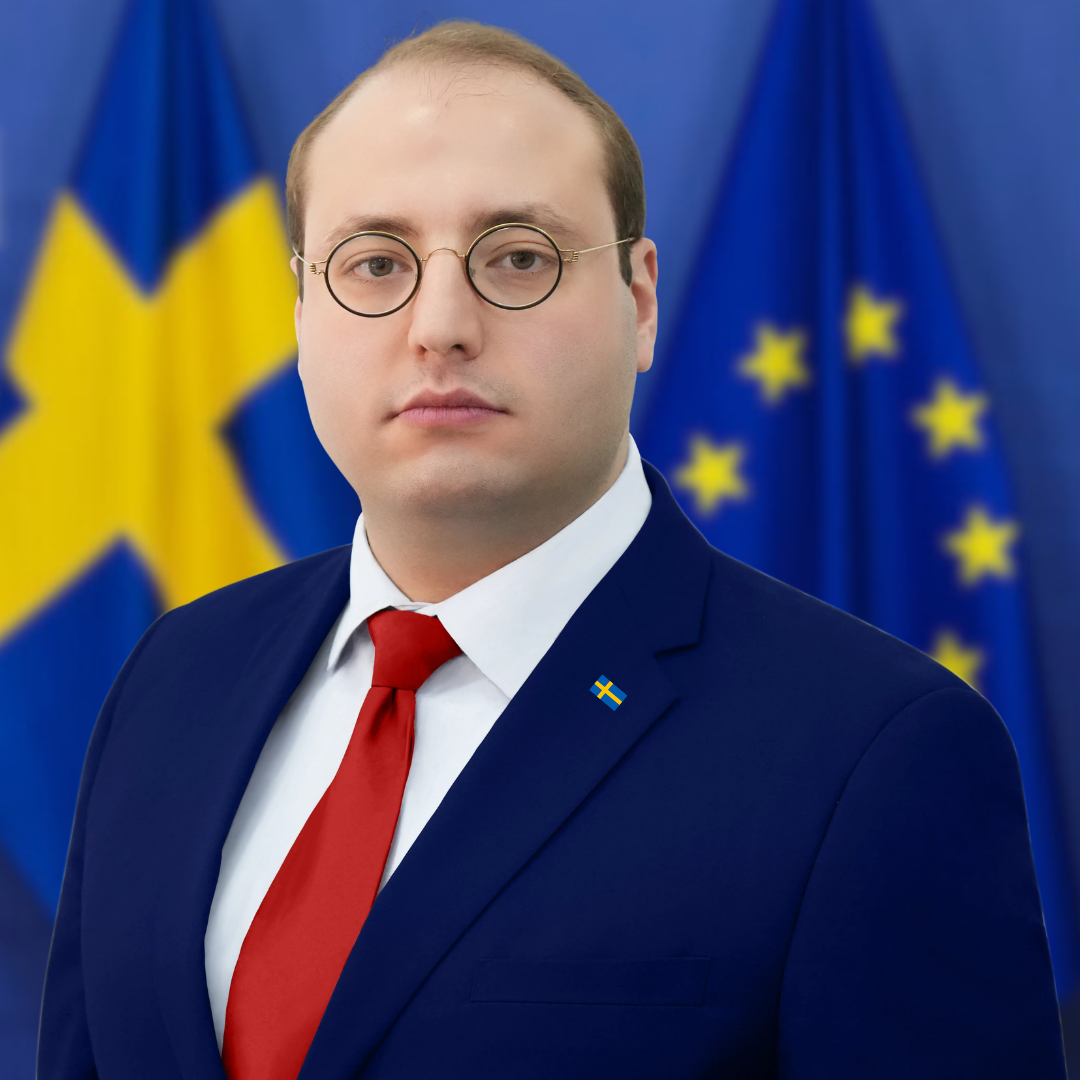
About Mr. Alex Matrsson
Mr. Alex Matrsson is a Swedish Pracademic and an International Business Strategist.
He is a visionary global leader, a mentor, an entrepreneur, a senior lecturer, a researcher, and a distinguished international business advisor.
He is the number one International Business Strategy graduate in Sweden.
He has extensive experience initiating, running, and managing businesses across the global value chain, as well as working internationally with investors, SMEs, MNCs, government agencies, universities, and multidisciplinary research institutes.
He advocates on strategic issues related to policy, business strategy, industrial marketing, commercial diplomacy, and research commercialization.
When it comes to higher education, Mr. Matrsson believes in serendipity, innovation, and the power of synergy-making. Therefore, these concepts jointly constitute the springboard for his knowledge dissemination endeavors.
He implements a pragmatic approach that is rigorous in nature.
He systematically ensures the successful delivery of core business concepts, while simultaneously developing the students’ ability to become reflexive thinkers.
He aims to enable the students to operationalize their “state-of-the-art” knowledge constructively—so that they can become an invaluable source of prosperity, driving forward the “social” and “economic” well-being for their local communities, their regions, and the larger society, worldwide.
His scientific endeavors consolidate around trade promotion, emerging markets, business resilience, and the network approach to internationalization.
Mr. Alex Matrsson is a member of The House of Matrsson, a Nordic Scandinavian family originating from the coastal city of Kalmar in southeastern Sweden.
Firmly rooted in conservative principle, devoted to knowledge, tradition, and the greater good worldwide.
Finally, on a personal level, his wide-ranging interests include blue whales, Arabian horses, classical music, ethical capitalism, religion, culture, the Nordics, the GCC region, and Central Asia—particularly Kazakhstan.