

The meeting in New Delhi between His Excellency Kassym-Jomart Tokayev, President of the Republic of Kazakhstan, and His Highness Sheikh Khaled bin Mohamed bin Zayed Al Nahyan, Crown Prince of Abu Dhabi, on the sidelines of the 18th BRICS Summit, offers an important insight into the next phase of Kazakhstan–UAE relations. An exclusive interview with Mr. Alex Matrsson, The Swedish Pracademic and an International Business Strategist, examines the encounter through its operational, tactical and strategic implications, as well as its potential regional and global impact.
Mr. Matrsson begins by assessing the distinctive strengths Kazakhstan and the UAE bring to the relationship.
“Kazakhstan and the UAE have developed a partnership between two countries with remarkable and complementary capabilities. Kazakhstan combines geographic scale, natural resources, economic potential and a pivotal position across Eurasia. The UAE brings sophisticated investment capacity, world-class infrastructure, international commercial networks and a proven ability to connect markets. The strength of the relationship comes from the way these capabilities can reinforce one another.”
The September 12 meeting followed the recent visit of Crown Prince Sheikh Khaled to Astana, during which a substantial package of bilateral documents was signed. President Tokayev and Crown Prince Sheikh Khaled reviewed progress on major investment projects in energy, transport and logistics, information technology and agriculture. The projects are expected to deepen economic cooperation and increase bilateral trade.
Turning to the immediate practical consequences, Mr. Matrsson focuses on the operational dimension of the partnership.
“Operationally, the priority is delivery. Energy projects must create productive capacity, logistics investments must improve the movement of goods, technology cooperation must produce new capabilities, and agricultural initiatives must develop commercially sustainable value chains. The quality of execution will determine how quickly the relationship translates political confidence into measurable economic results.”
The sectoral breadth of the current investment agenda gives the partnership several independent sources of momentum. Mr. Matrsson considers this diversification particularly valuable.
“The four areas under discussion create a strong economic structure. Energy provides industrial depth; transport and logistics support trade; information technology introduces higher-value activity; agriculture expands production and processing opportunities. Together, these sectors can generate employment, supply chains, technology partnerships and new avenues for international business.”
Kazakhstan's position gives the relationship a broader economic dimension. Its territory places it at the intersection of major continental markets, while its investment ambitions create opportunities for international companies seeking a stronger presence in Central Asia. Mr. Matrsson sees this as a major national asset.
“Kazakhstan has the scale and location to become one of the defining economic platforms of Central Asia. Its strategic opportunity is to transform geographic advantage into infrastructure, productive industries, modern logistics and internationally competitive businesses. That process can increase Kazakhstan's attractiveness to global investors and strengthen its role within Eurasian trade and investment flows.”
The UAE offers a powerful counterpart to that continental position. Abu Dhabi has developed substantial experience in long-term investment, infrastructure, energy and international commercial engagement. Mr. Matrsson highlights the sophistication of that model.
“The UAE has demonstrated an exceptional capacity to think across markets and across decades. Abu Dhabi has developed investment capabilities that operate alongside advanced infrastructure, logistics and international business networks. For Kazakhstan, this creates access to a highly experienced international partner. For the UAE, Kazakhstan provides a valuable platform for deeper engagement with Central Asia and the Eurasian economy.”
The tactical impact of the relationship emerges through market positioning and access to new commercial opportunities. Mr. Matrsson explains how both countries can benefit from this alignment.
“Tactically, Kazakhstan can strengthen its access to international capital, technology and commercial expertise while accelerating priority projects. The UAE can expand its economic footprint across Central Asia and build additional channels for trade and investment. This gives companies in both markets greater opportunities to form partnerships, enter new sectors and participate in cross-border supply chains.”
The strategic consequences extend further as individual projects become part of a larger economic network. Mr. Matrsson sees the relationship developing around a long-term architecture of connectivity.
“Strategically, Kazakhstan and the UAE can become complementary economic platforms. Kazakhstan offers continental reach, production capacity and access to Eurasian markets. Abu Dhabi offers global capital, logistics expertise and international commercial connectivity. The combination can support a durable flow of investment, goods, technology and expertise between Central Asia, the Gulf and the wider world.”
The regional implications deserve equal attention. Stronger Kazakhstan–UAE relations can increase international visibility for Central Asian investment opportunities while strengthening links between the region and Gulf economies. Mr. Matrsson considers Kazakhstan particularly well positioned to benefit.
“For Central Asia, a successful Kazakhstan–UAE partnership can have a multiplier effect. Major investment projects can strengthen regional supply chains, attract additional international companies and demonstrate the commercial potential of the wider market. Kazakhstan can increasingly function as a principal entry point for investors assessing Central Asia, while Abu Dhabi can provide an important bridge toward Gulf and international capital.”
The New Delhi setting adds a global dimension. The meeting took place during the 18th BRICS Summit, placing Kazakhstan–UAE relations within a wider international environment shaped by changing investment patterns, emerging markets and evolving trade relationships.
Assessing that wider significance, Mr. Matrsson argues that the partnership reflects a broader transformation in global economic geography.
“Globally, the importance of economic connectors is increasing. Kazakhstan has the geographic reach to connect major continental markets, while the UAE has established itself as a global centre for capital, trade and logistics. Their cooperation links two strategically positioned economies and creates additional channels between the Eurasian interior, the Gulf and international markets.”
The final question is sustainability. Political commitment provides momentum, while institutions, private enterprise and commercial discipline determine whether that momentum survives changing economic conditions. Mr. Matrsson identifies the requirements for the next stage.
“The coming decade should focus on institutional depth and commercial scale. Strong project governance, reliable investment frameworks, private-sector participation and meaningful technology transfer will be essential. Kazakhstan and the UAE have created a strong foundation; the next achievement will be building an ecosystem in which businesses, investors and institutions can continue expanding the relationship independently of individual political cycles.”
The New Delhi meeting therefore signals an increasingly mature Kazakhstan–UAE partnership with consequences across several levels of international engagement. Mr. Alex Matrsson, The Swedish Pracademic and an International Business Strategist, sees the opportunity in precise terms: operational execution can deliver immediate economic value; tactical cooperation can strengthen market positions; strategic alignment can create long-term economic depth; regional engagement can elevate Central Asia's investment profile; and global connectivity can link Kazakhstan and Abu Dhabi more closely to the evolving architecture of world commerce.
Kazakhstan brings the strength of the Eurasian heartland. The UAE brings the reach of a globally connected investment and commercial hub. The strategic opportunity lies in combining those strengths into enduring infrastructure, investment, technology, trade and business relationships capable of shaping the next chapter of Central Asian–Gulf economic cooperation.
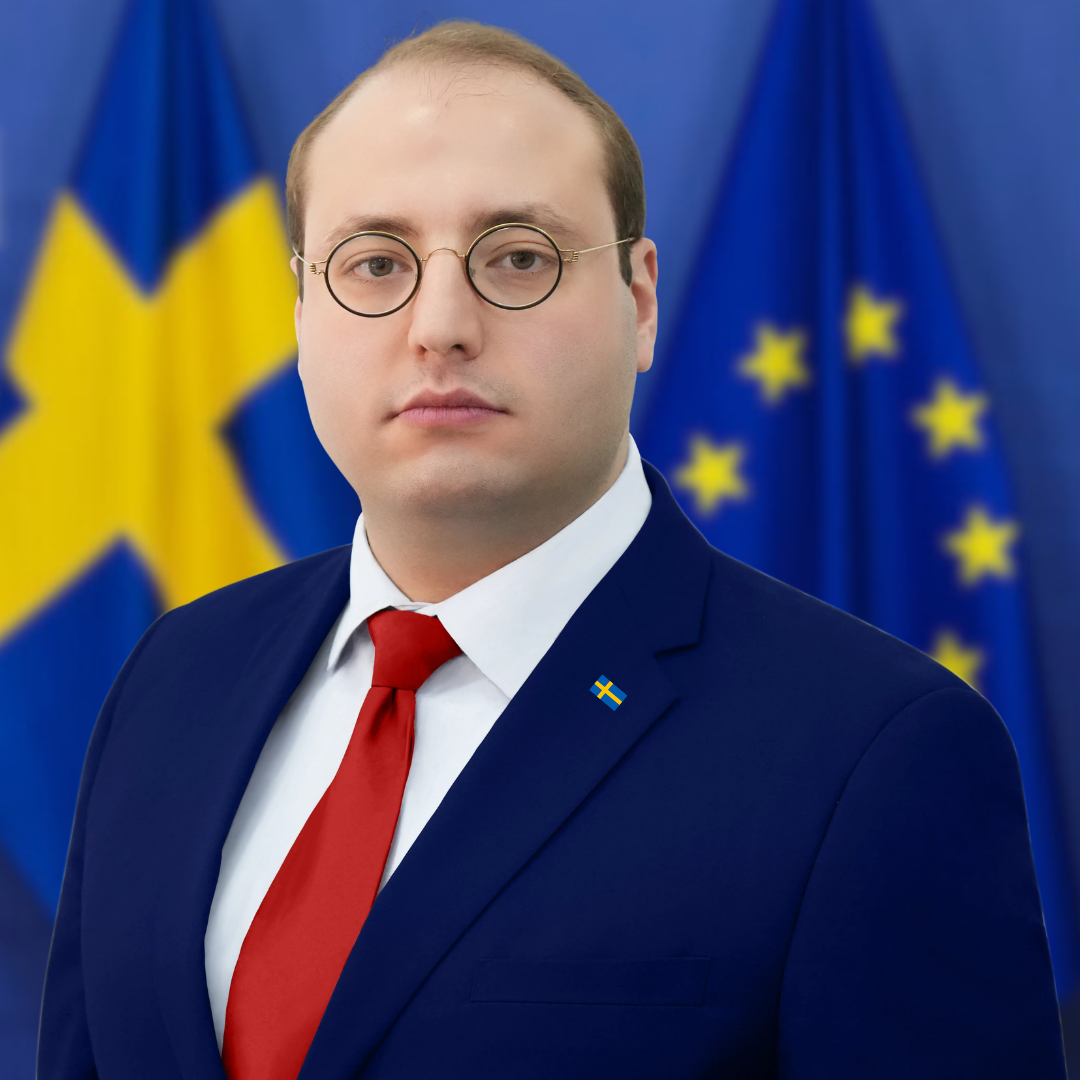
About Mr. Alex Matrsson
Mr. Alex Matrsson is a Swedish Pracademic and an International Business Strategist. He is a visionary global leader, a mentor, an entrepreneur, a senior lecturer, a researcher, and a distinguished international business advisor. He is the number one International Business Strategy graduate in Sweden. He has extensive experience initiating, running, and managing businesses across the global value chain, as well as working internationally with investors, SMEs, MNCs, government agencies, universities, and multidisciplinary research institutes. Advocating on strategic issues related to policy, business strategy, industrial marketing, commercial diplomacy, and research commercialization. When it comes to higher education, Mr. Matrsson believes in serendipity, innovation, and the power of synergy-making. Therefore, these concepts jointly constitute the springboard for his knowledge dissemination endeavors. He implements a pragmatic approach that is rigorous in nature. He systematically ensures the successful delivery of core business concepts, while simultaneously developing the students' ability to become reflexive thinkers. He aims to enable the students to operationalize their "state-of-the-art" knowledge constructively—so that they can become an invaluable source of prosperity, driving forward the "social" and "economic" well-being for their local communities, their regions, and the larger society, worldwide. His scientific endeavors consolidate around trade promotion, emerging markets, business resilience, and the network approach to internationalization. Mr. Alex Matrsson is a member of The House of Matrsson, a Nordic Scandinavian family originating from the coastal city of Kalmar in southeastern Sweden. Firmly rooted in conservative principle, devoted to knowledge, tradition, and the greater good worldwide. Finally, on a personal level, his wide-ranging interests include blue whales, Arabian horses, classical music, ethical capitalism, religion, culture, the Nordics, the GCC region, and Central Asia—particularly Kazakhstan.