
Trade is the next major target.
President Kassym-Jomart Tokayev has proposed doubling trade between Kazakhstan and South Korea and developing a comprehensive economic and investment program through 2030, DKNews.kz reports.
Tokayev outlined the proposal during a meeting with South Korean Prime Minister Han Seong-sook in Seoul on September 15. The agenda extended beyond trade to industrial localization, energy supply chains, Alatau City, artificial intelligence, critical materials and healthcare.
Kazakhstan Wants a 2027–2030 Economic Program
Tokayev proposed developing a Comprehensive Program for Trade, Economic and Investment Cooperation between Kazakhstan and South Korea for 2027–2030.
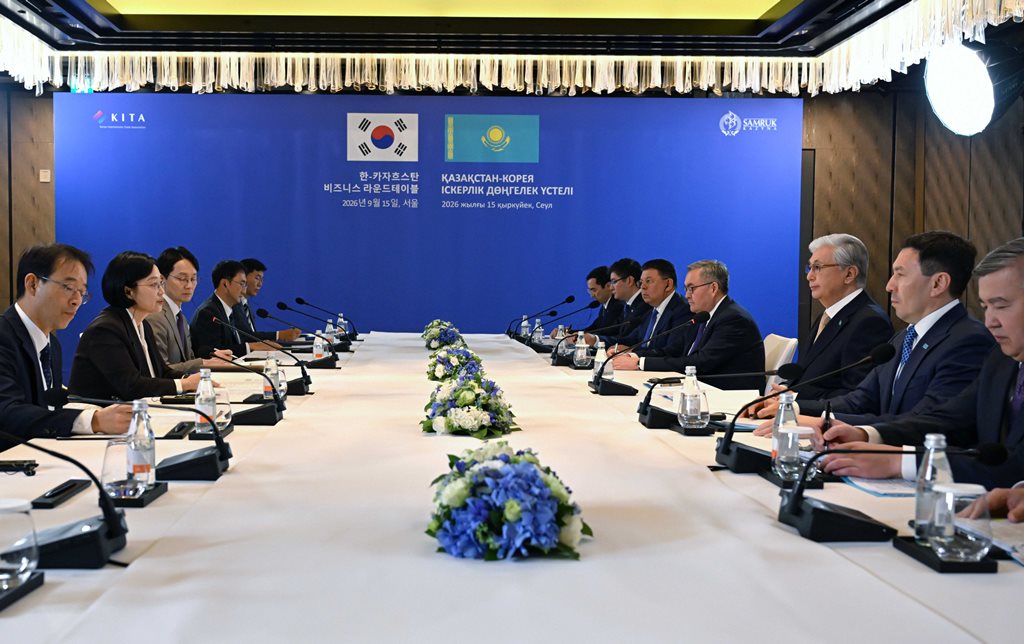
The goal is not simply to sell more goods in both directions. The President called for changing the structure of bilateral trade by increasing the share and range of products with higher added value.
«The goal is to double bilateral trade. To achieve this, it is important not only to increase volumes, but also to qualitatively transform the structure of trade and expand the range of high-value-added goods. Therefore, I consider it highly relevant to develop a Comprehensive Program for Trade, Economic, and Investment Cooperation between Kazakhstan and Korea for 2027-2030. I also believe it is important to develop a separate Roadmap for Industrial Cooperation, incorporating the most promising projects for localizing production and exporting products to third-country markets,» the President said.
The second proposal — a separate industrial cooperation roadmap — could be particularly significant for Kazakhstan. Tokayev wants it to include projects focused on localizing production inside the country and subsequently exporting goods to third-country markets.
That approach would shift part of the relationship from the traditional import-export model toward joint manufacturing.
More Than 1,000 Companies With Korean Capital Operate in Kazakhstan
Tokayev said South Korea is already among Kazakhstan’s ten largest trade and investment partners, while more than 1,000 joint ventures with Korean capital operate in the country.
«Today, Kazakh-Korean relations are steadily developing. Within the framework of our strategic partnership, numerous important initiatives are being implemented on a mutually beneficial basis. Your country is among Kazakhstan’s top ten trading and investment partners. More than a thousand joint ventures with Korean capital are currently operating in our country. However, we still have many important tasks ahead. Therefore, I am confident that by working as one team, we will successfully carry out all our plans,» Tokayev said.
The President also stressed that Kazakhstan wants Korean investment to extend beyond major corporations.
«Alongside large Korean corporations, favorable conditions have also been created for small and medium-sized enterprises. The Governments of Kazakhstan and Korea are taking the necessary steps in this regard. In particular, the Intergovernmental Commission on Trade, Economic, Scientific, and Technical Cooperation, as well as the Business Council, are operating effectively. In addition, the necessary legal framework has been established,» Kassym-Jomart Tokayev said.
The emphasis on SMEs broadens the investment agenda. Large Korean groups already have a visible presence in Kazakhstan, but a larger number of smaller manufacturers and technology companies could help deepen supply chains and localization.
Alatau City Could Become a Platform for Korean Technology
Han Seong-sook identified Alatau City as one of the areas where South Korea could become a major partner for Kazakhstan.
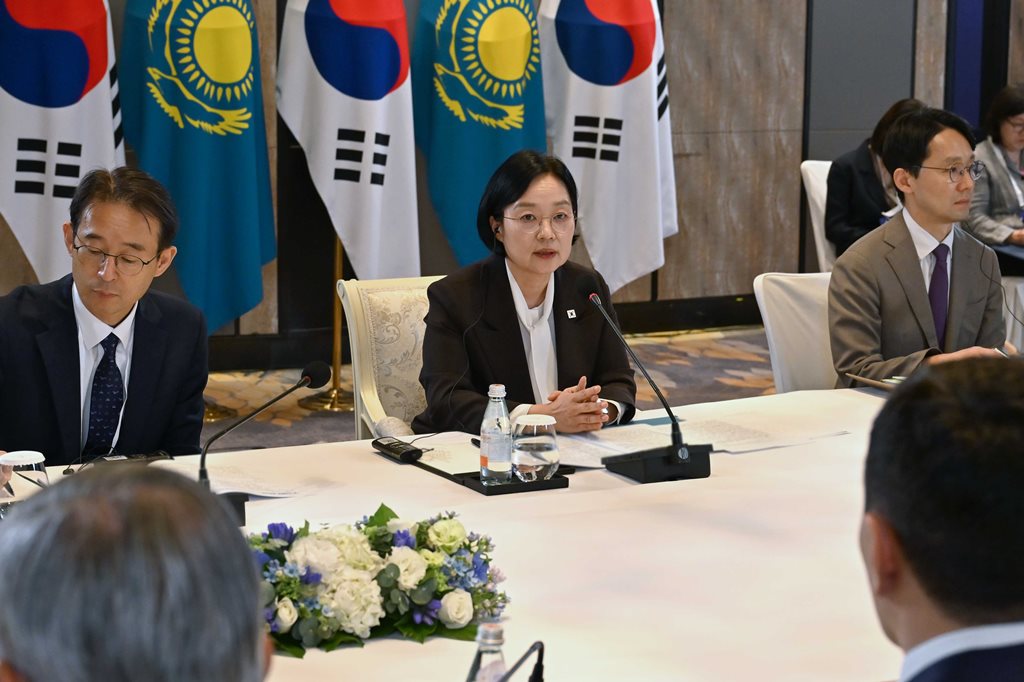
«It is a great honor for me to meet with you, Mr. President. As you noted, Kazakhstan is the Republic of Korea’s largest trade and investment partner in Central Asia. I expect that the current summit will give further impetus to cooperation between our two countries, particularly in the economic sphere and in the area of energy supply chains. We also believe that Korea can be a very strong partner for Kazakhstan in implementing the Alatau City development project,» the Prime Minister said.
That statement comes as Korean companies and institutions are already moving toward specific projects in Alatau City.
The city is increasingly being positioned as a platform for smart infrastructure, artificial intelligence, urban technologies and international investment. Korean businesses have also been exploring opportunities in energy, hospitality, transport and urban development there.
Cars, AI and Critical Materials Enter the Industrial Agenda
The two sides identified several sectors for the next stage of cooperation:
- transport and logistics;
- critical materials;
- automotive manufacturing;
- digitalization and artificial intelligence;
- healthcare.
The automotive sector already illustrates the localization model Tokayev wants to expand. During his Seoul visit, Kazakhstan reached agreements involving Korean companies on vehicle production and industrial projects.
The broader objective is to use Korean capital and technology to manufacture more products inside Kazakhstan, while opening opportunities to export those products beyond the domestic market.
Critical materials add another strategic dimension. For South Korea, secure supply chains are important for technology-intensive industries. For Kazakhstan, deeper processing and higher-value production could generate more economic value than exporting raw materials alone.
Energy Supply Chains Become a Korean Priority
Han Seong-sook specifically highlighted energy supply chains as another area where the summit could accelerate cooperation.
This connects the industrial agenda with a wider question facing both countries: how to build reliable supply chains for industries that depend on energy, critical materials and advanced technologies.
The Prime Minister also said Kazakhstan is South Korea’s largest trade and investment partner in Central Asia.
Beyond economics, she pointed to rapidly expanding cultural and humanitarian ties and growing mutual travel between the two countries.
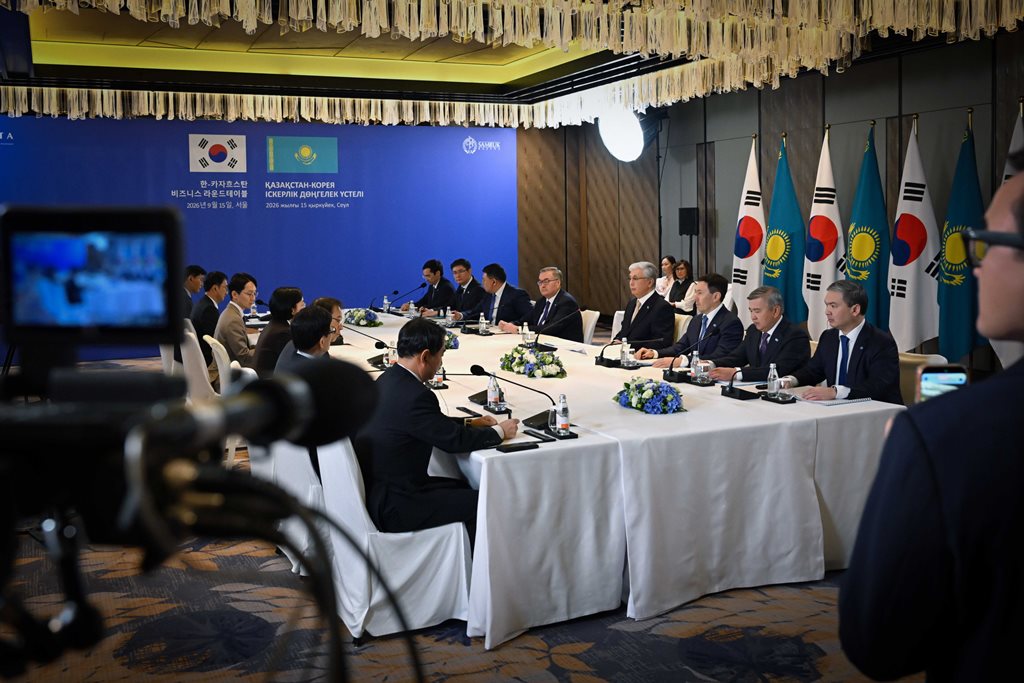
Tokayev, meanwhile, thanked Han for participating in the Kazakhstan-South Korea Business Roundtable and said the agreements signed there should broaden bilateral cooperation.
Seoul Talks Set a 2030 Horizon
The proposed 2027–2030 program gives the economic relationship a specific planning horizon.
The central targets are now clear: double bilateral trade, increase high-value-added goods, deepen industrial localization and create projects capable of supplying third-country markets.
This builds on an existing trade relationship. Bilateral trade reached $3.17 billion in 2025, while Kazakhstan’s exports to South Korea rose 17.2% in the first half of 2026.
The next step is to turn the proposed comprehensive program and industrial roadmap into specific projects, investment commitments and export contracts.
We recently reported that Kazakhstan and South Korea agreed on a $1.3 million meat-processing project and new food export deals, an example of the shift toward domestic processing and higher-value exports that Tokayev is now proposing to expand across the broader economic relationship.