
Kazakhstan is offering Korea a new industrial bargain.
Astana wants to combine its critical mineral reserves with Korean technology and manufacturing expertise to build complete value chains inside Kazakhstan rather than limiting cooperation to raw-material supplies, DKNews.kz reports.
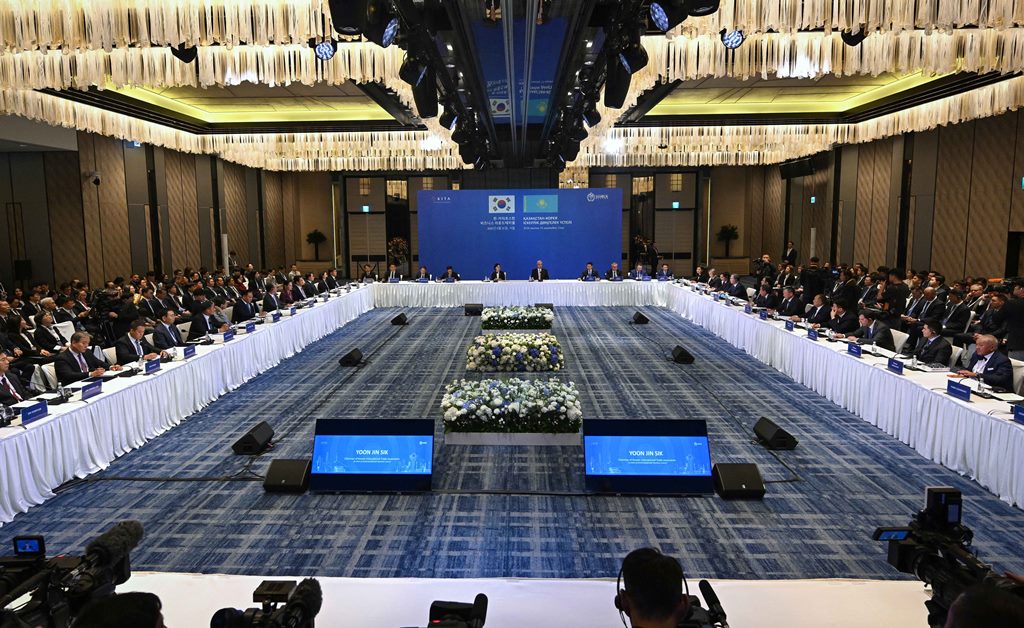
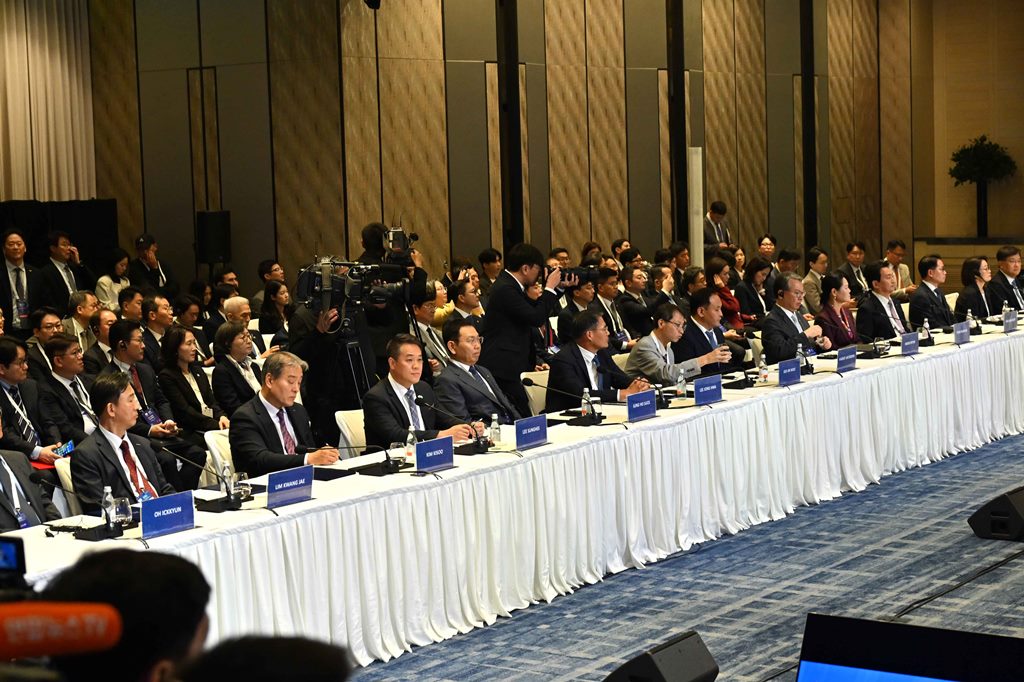
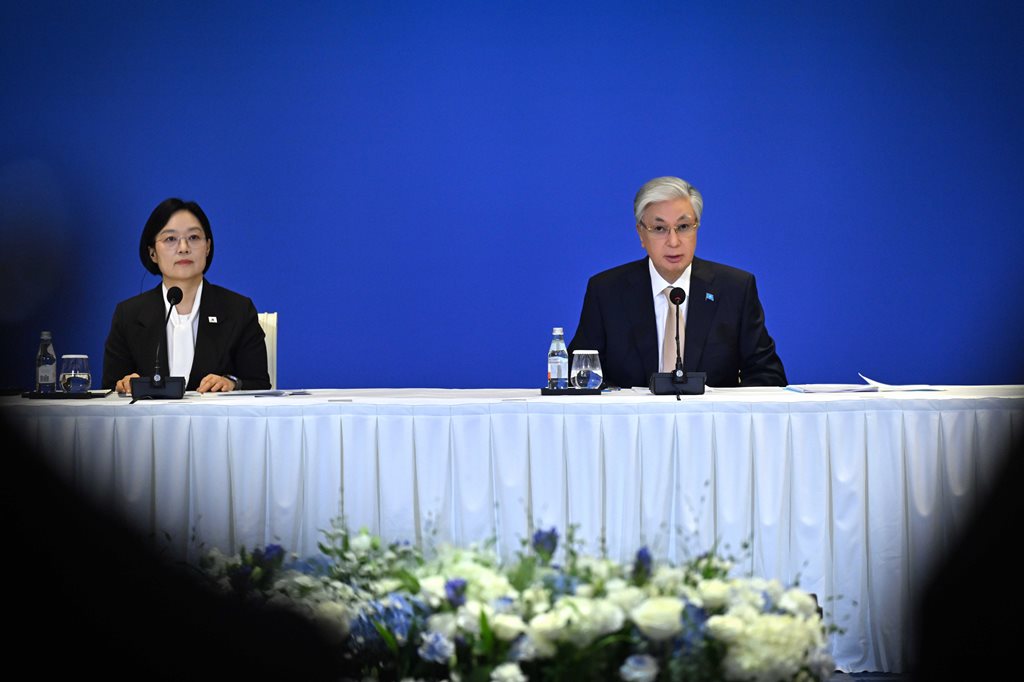
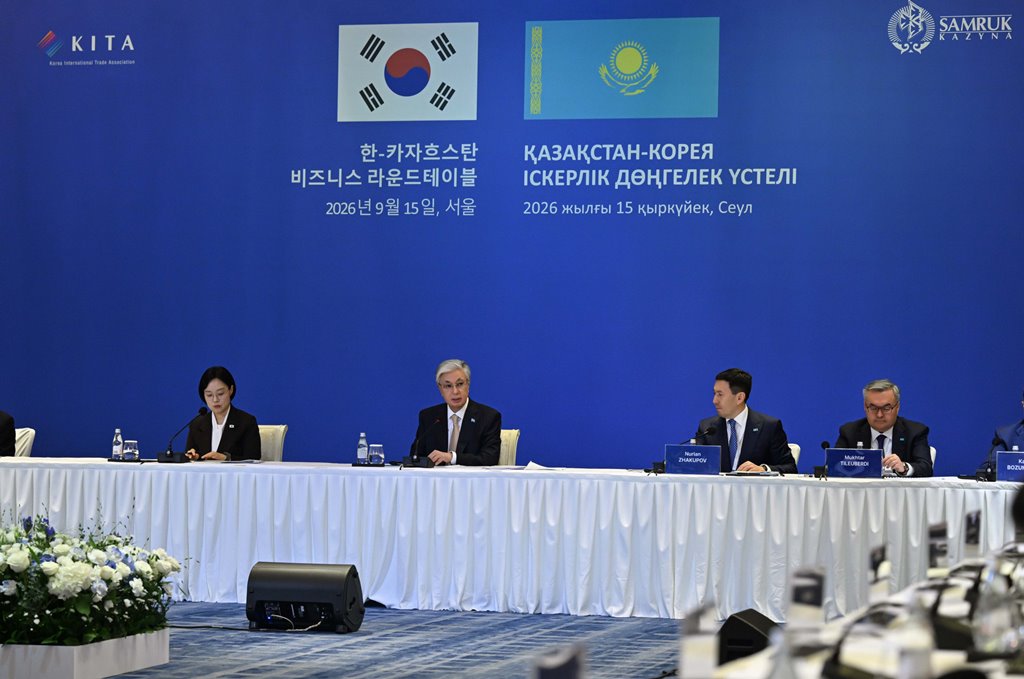
President Kassym-Jomart Tokayev outlined the proposal at the Kazakh-Korean Business Round Table in Seoul on September 15. His broader offer to Korean business covered manufacturing, energy, logistics, artificial intelligence, construction, agriculture and Alatau City.
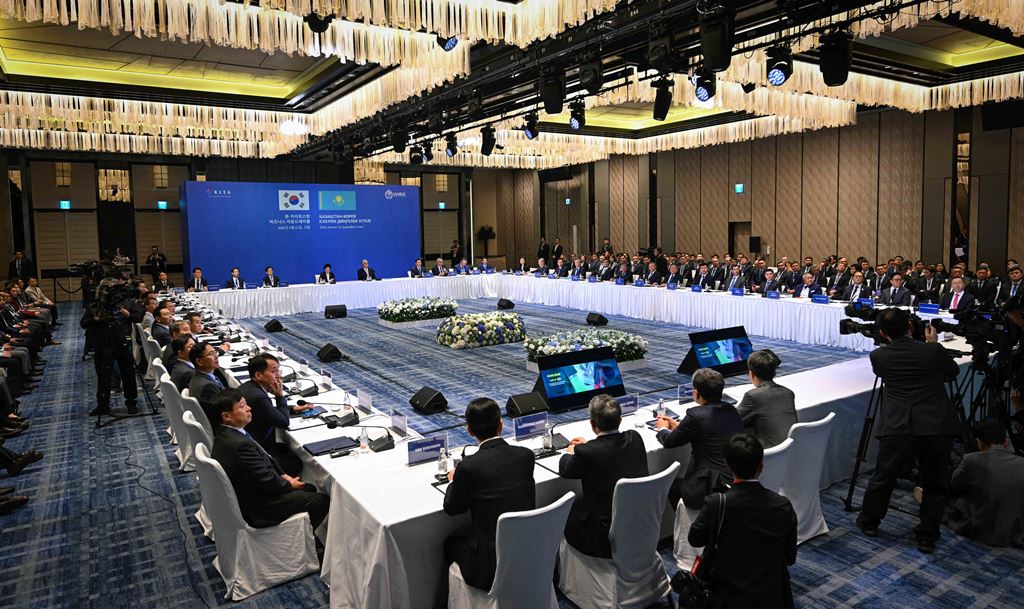
Kazakhstan Offers Resources in Exchange for Technology and Industry
Critical minerals emerged as one of the most strategic elements of Tokayev’s address.
The President proposed what he called a “Resources-Technology-Industry” model. The idea is to connect Kazakhstan’s mineral base with Korean technologies and industrial capacity, moving cooperation toward higher-value production.
«Kazakhstan’s significant reserves of these strategic resources also offer substantial opportunities for the Kazakh-Korean cooperation in advanced industries and other high-value sectors. We would welcome Korean investment and technological expertise in the development of Kazakhstan’s mineral potential. In this regard, we propose a Resources-Technology-Industry model to develop complete value chains together.
The establishment of a Center for Technological Cooperation in the field of critical minerals in Almaty is a natural next step of the new model of cooperation. We believe that the joint work of scientists will allow us to move from the study of the resource base to specific industrial projects,» Tokayev said.
The proposal gives the mineral partnership a clear direction: research is expected to lead to industrial projects rather than end with geological assessment.
Interest in this area was already visible ahead of Tokayev’s visit. Korean businesses had identified critical minerals, industry, energy, digitalization and AI among promising areas for new projects in Kazakhstan.
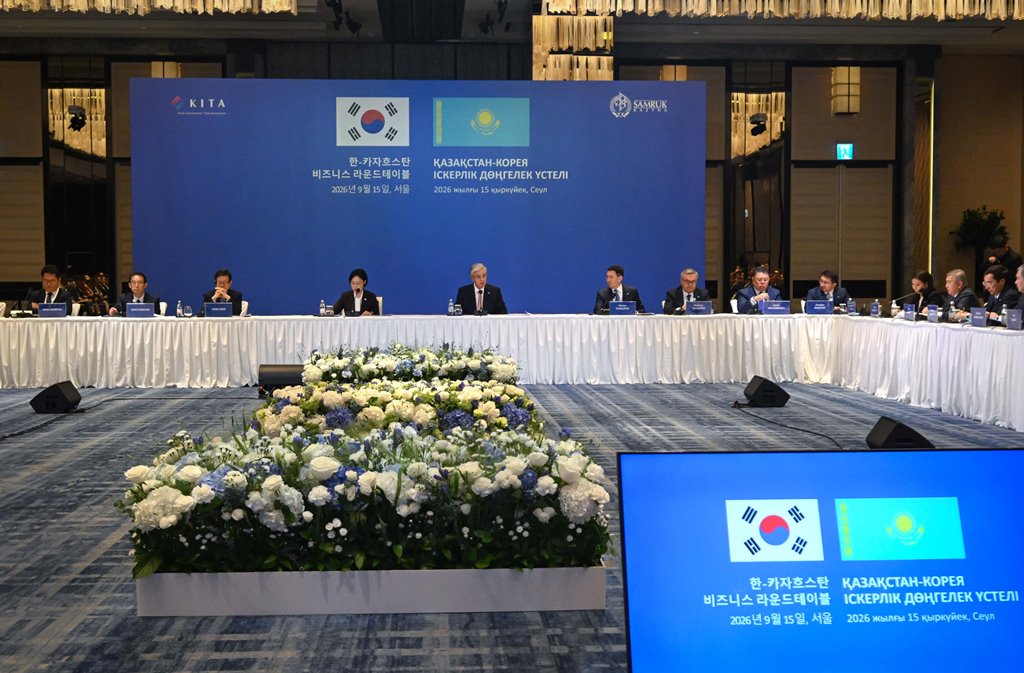
51 Joint Projects Are Worth More Than $4 Billion
The industrial relationship already has a substantial project base.
According to Tokayev, Kazakhstan and South Korea currently have a joint portfolio of 51 projects worth more than $4 billion. They cover automotive manufacturing, engineering, metallurgy and other sectors.
«Industrial cooperation has become one of the strongest pillars of our economic partnership. Today, our joint portfolio includes 51 projects worth over 4 billion dollars, covering car manufacturing, engineering, metallurgy and other sectors. Korean companies have already demonstrated that Kazakhstan is a competitive and reliable manufacturing base. In 2025, our country produced around 170,000 vehicles – a national record. Korean consumer electronics are also increasingly manufactured in Kazakhstan. Samsung household appliances are now produced locally, further expanding the industrial footprint of Korean companies. Our goal is to build a fully integrated industrial ecosystem encompassing localized components, advanced materials, electrical equipment and electronics, with a focus of serving the broader Eurasian market. I invite Korean companies to further seize these opportunities and expand their manufacturing presence in Kazakhstan,» Kassym-Jomart Tokayev said.
The target goes beyond increasing production volumes. Kazakhstan wants Korean manufacturers to localize components, materials, electrical equipment and electronics and use the country as a production base for the wider Eurasian market.
Tokayev said bilateral trade exceeded $3 billion last year, while cumulative foreign direct investment from South Korea into Kazakhstan has surpassed $12 billion.
More than 1,000 companies with Korean capital operate in Kazakhstan, including Samsung, Kia, Hyundai, Lotte, Doosan Enerbility and Shinhan Bank.
The President believes bilateral trade can be doubled if governments and businesses coordinate their efforts.
Kazakhstan Plans to Become a “Big Construction Site”
Tokayev made an unusually broad infrastructure pitch to Korean companies.
He said Kazakhstan intends to accelerate construction across transport, utilities, housing and social infrastructure, describing this as one of the priorities of his presidency.
«Your country has world-class expertise in construction, engineering and infrastructure development. Korean companies are known for delivering complex projects with speed, quality and advanced technology. Kazakhstan is now entering a major phase of infrastructure development. We intend to significantly accelerate construction across country, from transport and utilities to housing and social infrastructure. I consider it as one of the key priorities of my presidency. We plan to make the territory of Kazakhstan a big construction site focusing on social projects like hospitals, rehabilitation centers for children, multifunctional medical centers, modern schools, sport facilities and transport infrastructure. This opens up significant opportunities for Korean corporations. We look forward to their active participation in large-scale projects across Kazakhstan. Our Government will develop a specific list of such infrastructure projects aimed at creating new mutually beneficial ventures and advancing investment initiatives,» Tokayev said.
The government is therefore expected to prepare a specific list of projects that could be offered to Korean investors and contractors.
That turns the infrastructure proposal into a potentially much broader pipeline than a single road, hospital or housing development.
Korea Is Invited Into the Middle Corridor
Transport and logistics formed another major part of the offer.
Kazakhstan wants greater Korean participation in the Middle Corridor as it invests in railways, highways, seaports, terminals and related infrastructure.
Tokayev proposed creating a Kazakh-Korean joint venture specifically to develop new logistics projects and facilitate the transit of Korean goods through Kazakhstan.
«We are investing heavily in railways, roads, seaports, terminals and broader infrastructure to increase its capacity, speed and reliability. We believe the time has come to expand Korean participation in the Middle Corridor. Kazakhstan welcomes Korean logistic companies, including CJ Logistics and LX Pantos, which are already developing modern logistic centers, multimodal terminals, warehousing and digital supply-chain solutions in our country. To support this work, I propose to establish a Kazakh-Korean joint venture to promote new logistical projects and initiatives, as well as to ensure seamless transit of Korean goods through our territory. It is encouraging that Kazakhstan’s Shin-Line and Lotte Global Logistics are already advancing plans to launch a partnership in the sector,» the President said.
The logic is closely connected to Kazakhstan’s wider industrial strategy. If Korean companies manufacture more goods in Kazakhstan while Korean cargo increasingly crosses the country, production and transit infrastructure begin to reinforce each other.
Kazakhstan Offers Korea Cooperation on Small Modular Reactors
Energy cooperation could also move into a new segment.
Tokayev highlighted Hyundai Engineering’s participation in the Karachaganak Gas Processing Plant and said Kazakhstan sees the project as the beginning of a longer-term Korean presence in its energy sector.
Potential areas include gas processing, petrochemicals, energy infrastructure and renewables.
But the President also raised peaceful nuclear energy.
«Hyundai Engineering is already a crucial part of the construction of Karachaganak Gas Processing Plant. We see this project as the beginning of a long-term and strategic presence of Korean companies on our market. There is a significant potential to broaden this partnership into gas processing, petrochemicals, energy infrastructure and renewable energy. As the world’s largest uranium producer, Kazakhstan has strong potential in peaceful nuclear energy. Particular emphasis should be placed on small modular reactors, which are gaining importance in the global energy sector. Kazakhstan stands ready to establish mutually beneficial cooperation with Korea in this area,» Tokayev stated.
The statement does not mean a specific Korean small modular reactor project has been agreed. It identifies SMRs as an area in which Kazakhstan is ready to develop cooperation.
A One-Gigawatt Data Processing Valley Is Planned in Pavlodar
Artificial intelligence brought one of the strongest new figures in the speech.
Tokayev said Kazakhstan is developing a Data Processing Valley in the energy-rich Pavlodar Region with up to one gigawatt of power capacity and the possibility of further expansion.
The project is expected to include dedicated land and integration with Kazakhstan’s national supercomputing capabilities.
«A key part of our AI strategy is human capital. We believe that technological leadership ultimately depends on people and their ability to drive innovation. In this spirit we commend our partnership with Seoul National University of Science and Technology on jointly establishing Kazakhstan’s first Institute of Artificial Intelligence. Kazakhstan is developing one of the largest data center ecosystems in Eurasia, including a Data Processing Valley in energy rich Pavlodar region. The project provides up to one gigawatt of power capacity with scalable expansion, dedicated land and integration with national supercomputing capabilities. Our objective is to introduce Kazakhstan in the world as a primary computing hub of Central Asia and a bridge between Europe and Asia,» Tokayev said.
Kazakhstan also wants to become part of the supply chain behind that computing infrastructure.
Tokayev said the country is ready to expand supplies of materials and components for microelectronics and semiconductor manufacturing and specifically identified Samsung Electronics and SK Hynix as potential partners.
That connects two previously separate parts of the economic agenda: critical minerals and artificial intelligence. Kazakhstan is offering resources and materials at one end of the technology chain while seeking investment in computing infrastructure and advanced manufacturing at the other.
Alatau City Becomes a Showcase for Korean Participation
Alatau City was presented to Korean executives as another platform for investment.
The project is being designed around digital technologies, AI and modern engineering, with South Korean participation already built into its development plans.
«Built around digital technologies, AI and modern engineering, the city is being developed with strong Korean participation. Together with KIND, we are advancing its master plan, residential districts and the attraction of Korean companies,» Tokayev said.
The city has increasingly become a testing ground for international technology partnerships. Kazakhstan is also discussing the use of AI and other digital systems in Alatau City with foreign partners and domestic institutions.
Kazakhstan Wants to Sell More Food to Korea
Agriculture provides a different route into the Korean market.
Tokayev said Kazakhstan is prepared to increase exports of grain, oilseeds, meat, dairy products, honey and other goods to South Korea.
The longer-term proposal is more ambitious: create Kazakh-Korean agro-industrial value chains combining Kazakhstan’s agricultural resources with Korean technology.
That model would mean processing more agricultural products before export rather than relying exclusively on raw commodity shipments.
There are already early examples. Kazakhstan and South Korean partners recently agreed on a $1.3 million meat-processing project, while separate agreements covered supplies of Kazakh beef and sunflower oil to Korea. Kazakhstan’s exports to South Korea rose 17.2% in the first half of 2026.
Tokayev also pointed to Lotte’s investment in Rakhat as an established example of Korean participation in Kazakhstan’s food industry.
The Bigger Offer Is a Korean Manufacturing Base in Eurasia
Taken together, Tokayev’s proposals point to a single economic model.
Kazakhstan supplies the location, mineral and agricultural resources, energy capacity and access to Eurasian transport routes. South Korea brings technology, capital, engineering expertise and industrial companies.
Astana wants more of the value created between those two ends to remain inside Kazakhstan through processing, component production, manufacturing, data infrastructure and research.
«Kazakhstan is now entering its own stage of deep economic modernization – with new industries, technologies, research capacity and human capital. I am confident that today’s gathering and the agreements being signed will give strong momentum to a more ambitious partnership. I once again encourage Korean businesses to invest more actively in Kazakhstan. The Government of Kazakhstan will provide comprehensive support to every mutually beneficial initiative that Korean businesses bring to our country,» Tokayev concluded.
Ahead of the Seoul visit, we reported that Korean businesses were already exploring new projects in Kazakhstan, with artificial intelligence, critical minerals, energy, industry, transport and logistics among the priority sectors.