
The Middle Corridor is back in focus.
Kazakhstan and the European Union are pushing transport, investment and digital connectivity higher on their economic agenda as Astana seeks to turn its position between Asia and Europe into concrete infrastructure projects, DKNews.kz reports.
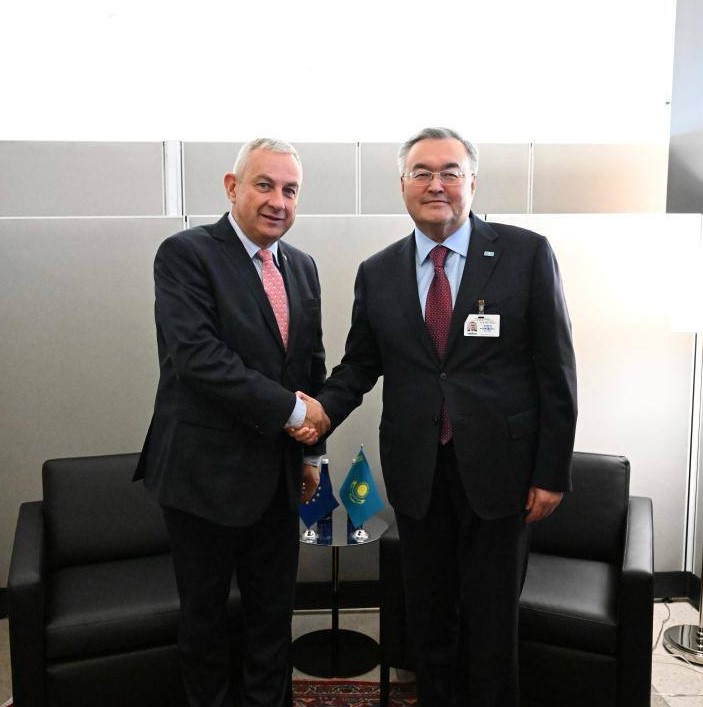
Kazakhstan’s Foreign Minister Mukhtar Tileuberdi discussed these priorities with Jozef Síkela, European Commissioner for International Partnerships, on the sidelines of the UN General Assembly in New York on September 24. The meeting was reported by the Kazakh Foreign Ministry.
Trans-Caspian route moves to the center of Kazakhstan-EU talks
Transport and logistics emerged as one of the central themes of the meeting. Tileuberdi and Síkela discussed joint projects linked to the Trans-Caspian International Transport Route, as well as cooperation through the European Union’s Global Gateway initiative.
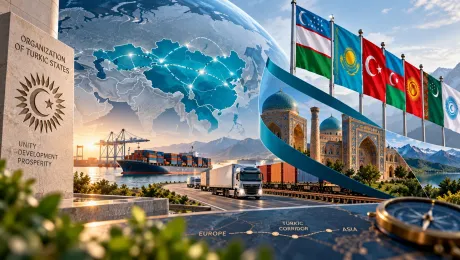
The route connects Central Asia with Europe across the Caspian Sea and the South Caucasus. For Kazakhstan, the practical interest is clear: development of the corridor is tied to ports, railways, logistics hubs, digital systems and trade procedures rather than diplomatic cooperation alone.
The European Commission describes the Trans-Caspian corridor as a land alternative for trade between Europe and Asia. Brussels says the goal is to build a modern route capable of connecting the two regions in no more than 15 days.
According to the Commission, projects along the corridor cover both physical infrastructure — roads, railways, ports and logistics centers — and less visible bottlenecks such as digitalization, interoperability and trade facilitation.
EU targets shorter transit times and higher trade flows
The scale of the ambition goes beyond another transit route on the map.
The European Commission says development of the corridor could cut freight transit times by 50%. It also cites World Bank modelling under which trade flows along the route could increase by as much as three times by 2030.
For Kazakhstan, that makes the discussion relevant to businesses working in freight transport, warehousing, rail infrastructure, ports, digital logistics and cross-border trade.
The EU already lists Kazakhstan among the Central Asian countries involved in its sustainable transport connectivity initiative. Its Kazakhstan partnership page identifies the Trans-Caspian corridor as one of the key areas of cooperation, with a focus on modernizing infrastructure and improving logistics efficiency.
Brussels agreements are moving into the implementation phase
The New York talks also returned to agreements reached during President Kassym-Jomart Tokayev’s official visit to Brussels on June 22–23, 2026.
Transport connectivity was already a major part of that agenda. During the June visit, Kazakhstan and European partners discussed the strategic potential of the Trans-Caspian route, while subsequent contacts focused on implementing agreements reached in Brussels.
The latest meeting broadened the list of areas under discussion. Alongside transport and logistics, Tileuberdi and Síkela addressed energy, digitalization and investment, according to the Foreign Ministry.
Síkela’s portfolio makes that part of the conversation particularly relevant. As European Commissioner for International Partnerships, he oversees cooperation closely connected with Global Gateway investments.
No new funding package was announced in New York
The meeting signaled political support for expanding the economic partnership, but the Foreign Ministry’s statement did not specify new investment amounts, signed contracts, project deadlines or a separate financing package resulting from the New York talks.
That distinction matters for business. The agenda now covers several capital-intensive sectors, but the next measurable step will be the conversion of political agreements into individual infrastructure, energy, digital and investment projects.
Global Gateway already treats the Trans-Caspian corridor as a combination of physical construction and regulatory modernization. That means Kazakhstan’s role in the project will depend not only on new rail lines or port capacity, but also on how efficiently cargo can move across borders and between different transport systems.
Earlier this summer, Kazakhstan’s Foreign Ministry also reported on the results of President Tokayev’s Brussels visit, where transport connectivity and deeper Kazakhstan-EU cooperation were among the issues carried forward. The wider Kazakhstan news agenda can also be followed through MediaMetrics Kazakhstan.